- Category
- Latest news
Russia Is Building Its Own Starlink—and It’s Already Operating Over Ukraine
 Prefer U24 Media on Google
- Authors


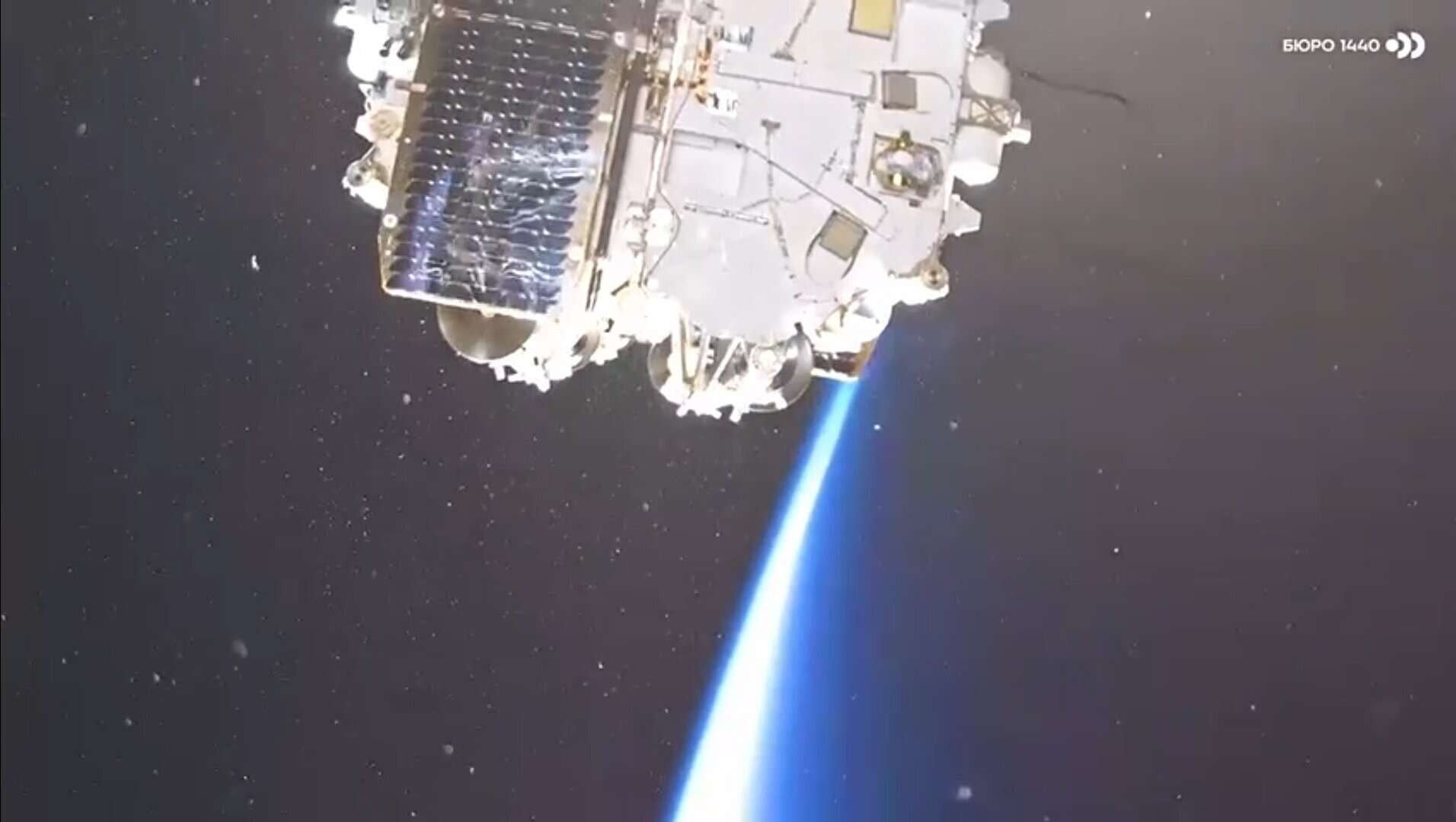
Russian low-Earth orbit satellites developed under the “Rassvet” program may already provide intermittent battlefield connectivity over Ukraine, creating an early-stage alternative to Starlink for Russian forces.
We bring you stories from the ground. Your support keeps our team in the field.
According to Militarnyi on April 16, analysts tracked three operational prototype satellites built by Russian company Bureau 1440 and observed them moving in a coordinated orbital cluster. The satellites were recorded passing directly over Ukrainian territory, creating temporary communication windows lasting approximately 15–20 minutes per pass.
These short intervals are sufficient to establish data links, enabling limited but practical use for military communications, the outlet reports. Even this minimal configuration could already support operational needs, particularly if satellite positioning is optimized for battlefield coverage.
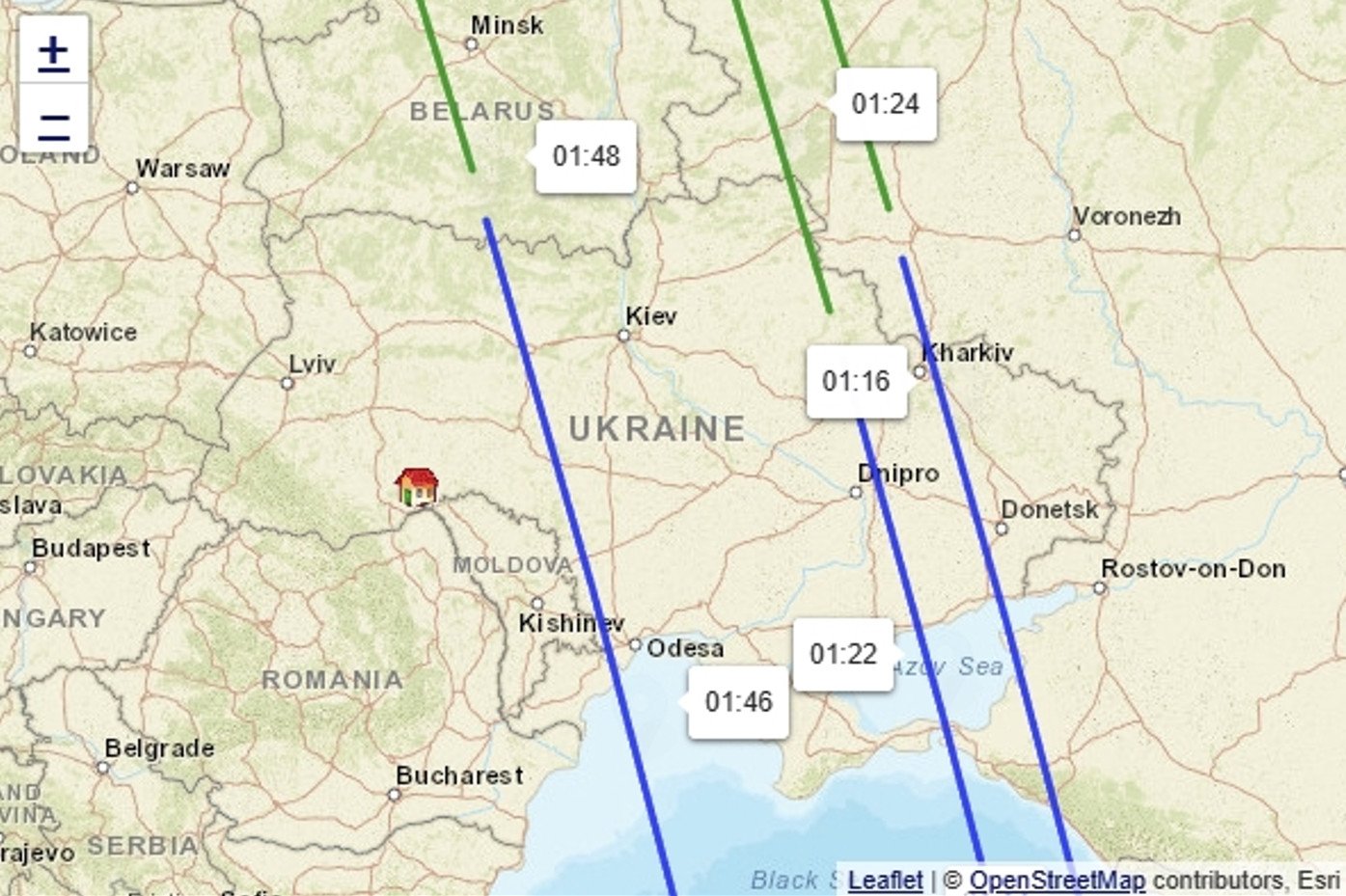
The analysis cited by Militarnyi indicates that a first deployment group of 16 satellites could significantly expand these capabilities. Such a constellation would allow multiple communication windows per day, with total connectivity time potentially reaching several hours daily.
According to the study referenced by Militarnyi, “This underscores the need for immediate countermeasures without waiting for full deployment, as initial use cases may begin well before the system is fully operational.”

The system is expected to support not only troop communications but also drone operations via satellite terminals. Russian forces previously relied on Starlink terminals for similar purposes before access became restricted, prompting efforts to speed up the development of domestic alternatives.
The Rassvet system is designed to deliver data speeds of up to 1 Gbps per terminal with latency of approximately 50–70 milliseconds. This represents a significant improvement over Russia’s existing geostationary satellite communications, where latency can exceed 600 milliseconds and bandwidth is typically much lower.
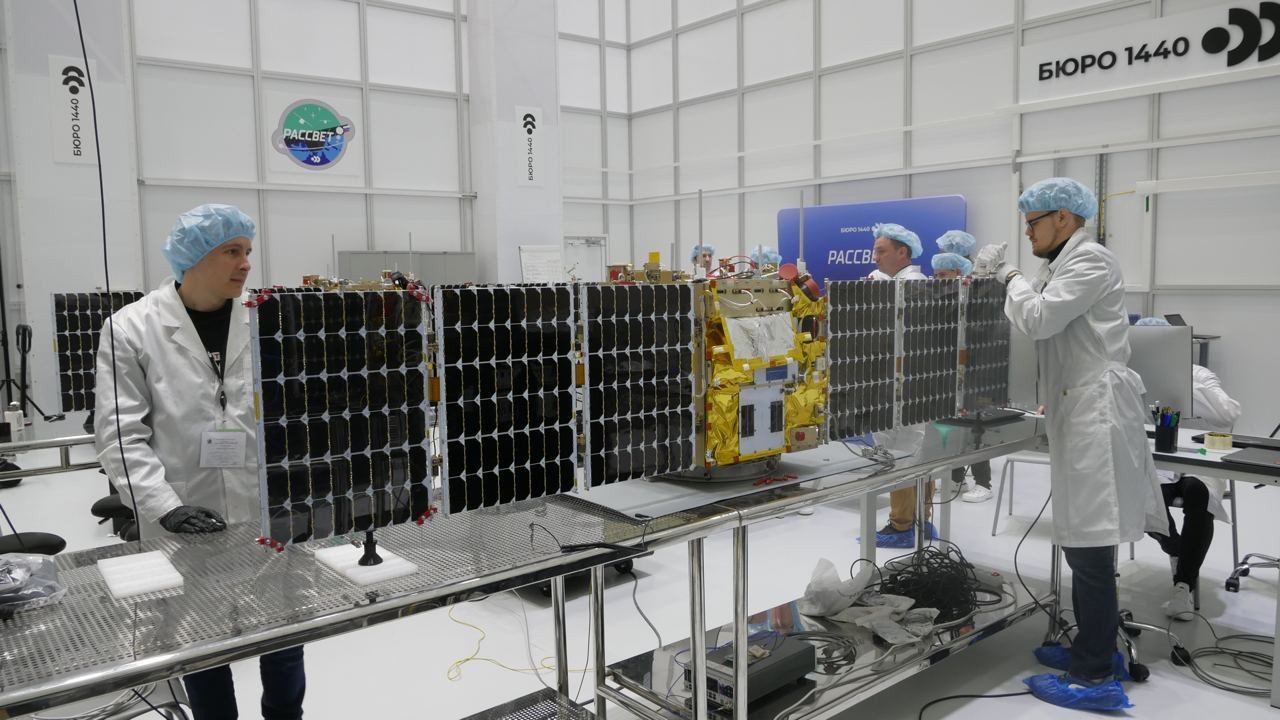
According to Militarnyi, the satellites operate in the Ka and Ku frequency bands, which are more resistant to electronic warfare interference and more difficult to detect with standard electronic intelligence systems due to limited availability of compatible equipment.
The constellation is planned to operate at an altitude of around 800 kilometers—higher than typical Starlink satellites but below OneWeb’s orbital range. The system architecture includes ground-based data processing supported by satellite-level signal routing, with future plans to incorporate inter-satellite laser communication tested on earlier Rassvet-2 prototypes.
Experts cited by Militarnyi suggest that elements of the system’s design may draw on technologies associated with OneWeb satellites that remained in Russia following the start of the full-scale invasion in 2022.
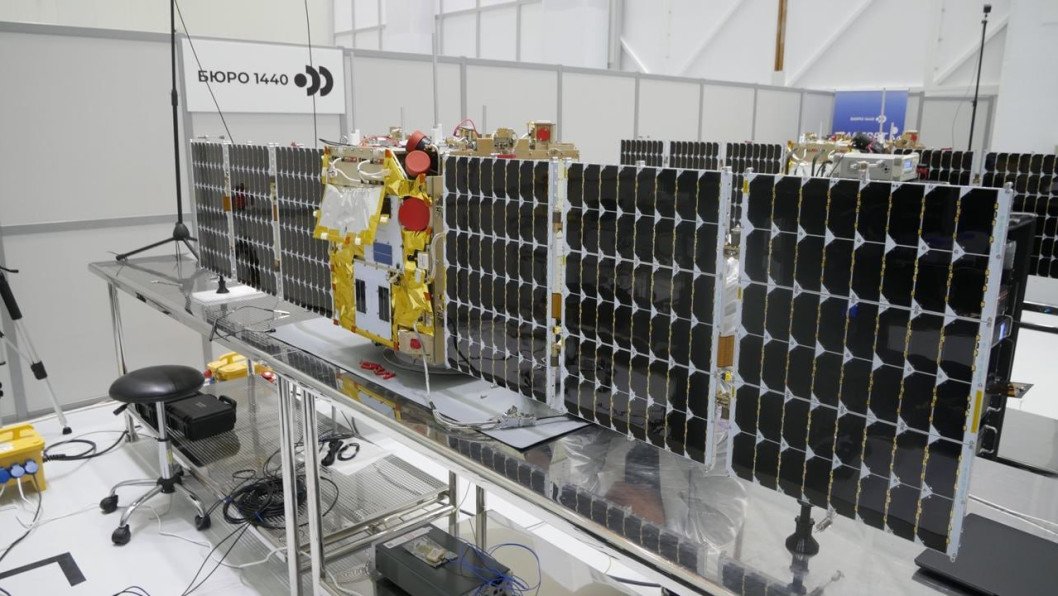
The system is also built around the 5G-NTN (non-terrestrial network) standard, enabling integration with terrestrial communication networks. Onboard relay systems using this protocol have already completed orbital testing and successfully exchanged signals with ground stations.
Ground terminals developed for the system weigh up to 15 kilograms and can deliver up to 1 Gbps throughput. According to Militarnyi, these terminals use phased array antenna technology similar to Starlink, allowing automatic satellite acquisition and stable connection without manual alignment.
The outlet reports that Russia is preparing for serial production of these terminals and may deploy them not only on ground units but also on aerial platforms. According to Militarnyi, potential applications include integration with reconnaissance and strike drones, including platforms derived from the Geran series, as well as possible adaptation for cruise missiles.

The development follows earlier Russian efforts to replace Starlink access on the battlefield. As previously reported, Russian forces transitioned from large, easily detectable satellite terminals to more compact systems such as the “Spirit-030,” which operate via geostationary satellites but offer reduced detectability.
Before that, Russian forces had relied on unauthorized access to Starlink terminals obtained through third-party supply chains to support battlefield communications and drone operations. Ukraine, in coordination with SpaceX, introduced technical restrictions that disabled a significant portion of these terminals by limiting access to registered users.
The impact on Russian units was immediate, with operations disrupted following the loss of secure communication channels. Ukrainian military sources reported a decline in coordination efficiency, while Ukraine’s Defense Ministry adviser Serhiy Beskrestnov said the restrictions created a “catastrophe” for Russian forces on certain sections of the front.
Discuss this article:
-9a7b3a98ed5c506e0b77a6663f5727c5.png)