- Category
- Defense Tech
Russia Secretly Debuted Its New Iskander-1000 in a Ballistic Missile Strike on Kyiv
 Prefer U24 Media on Google
- Authors


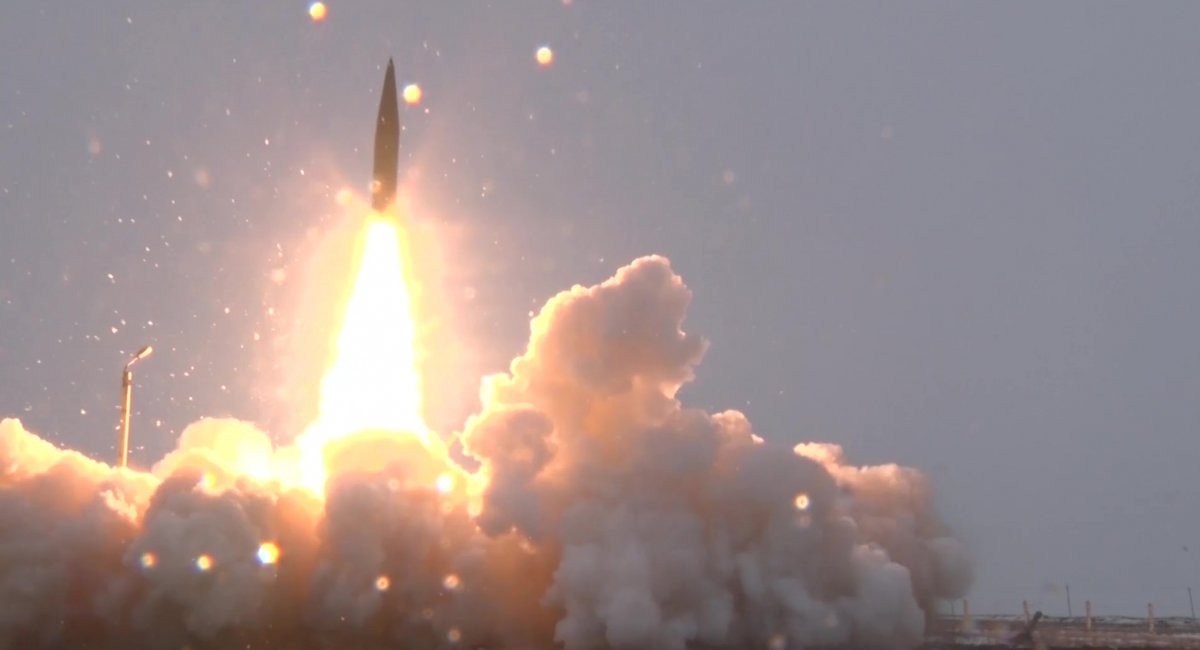
Russia used its newest 9M723-2 ballistic missile, commonly referred to as the Iskander-1000, against Kyiv for the first time during a combined attack on the Ukrainian capital this summer, Ukraine’s Defense Intelligence said on August 27.
The upgraded missile offers Russia substantially greater reach than the earlier 9M723-1 used by the Iskander-M system, according to Ukrainian intelligence.
We bring you stories from the ground. Your support keeps our team in the field.
Its most significant changes are a larger rocket motor and a correspondingly enlarged launcher. HUR says those modifications increase the missile’s maximum strike range to around 550 kilometers, compared with approximately 390 kilometers for the 9M723-1 variant.
Despite the provisional Iskander-1000 designation, Ukrainian intelligence has not said that the version already used against Kyiv can actually fly 1,000 kilometers.
The 9M723-2 is part of a missile system designated Bora-M. Aside from its enlarged propulsion section and launcher, HUR said the remaining components of the new missile are largely identical to those used in the earlier 9M723-1.
Multiple videos show mass Russian Iskander ballistic missile launches toward Kyiv and surrounding areas.
— Clash Report (@clashreport) August 5, 2026
More launch footage appeared in one day than from all previous strikes combined. pic.twitter.com/c4IdLsDIOJ
The first confirmed combat use marks a significant development in Russia’s continuing effort to expand and modernize its ballistic missile arsenal, weapons that have become one of the most difficult threats for Ukraine’s air defenses to counter.
Defense Express reported as early as 2024 that Russia was exploring ways to increase the range of the 9M723. The original missile was developed while the Intermediate-Range Nuclear Forces Treaty imposed restrictions on ground-launched missiles with ranges above 500 kilometers.
Russian discussions at the time suggested that advances in solid-fuel technology and the installation of a new rocket motor could theoretically push an upgraded Iskander ballistic missile toward a range of 1,000 kilometers.
Another option reportedly considered by Russian developers involved using the additional propulsion capability not for range, but for a much heavier warhead.
Earlier concepts discussed increasing the warhead carried by Iskander and Kinzhal missiles from roughly 480 kilograms to as much as 800 kilograms, trading some potential range for significantly greater destructive power.
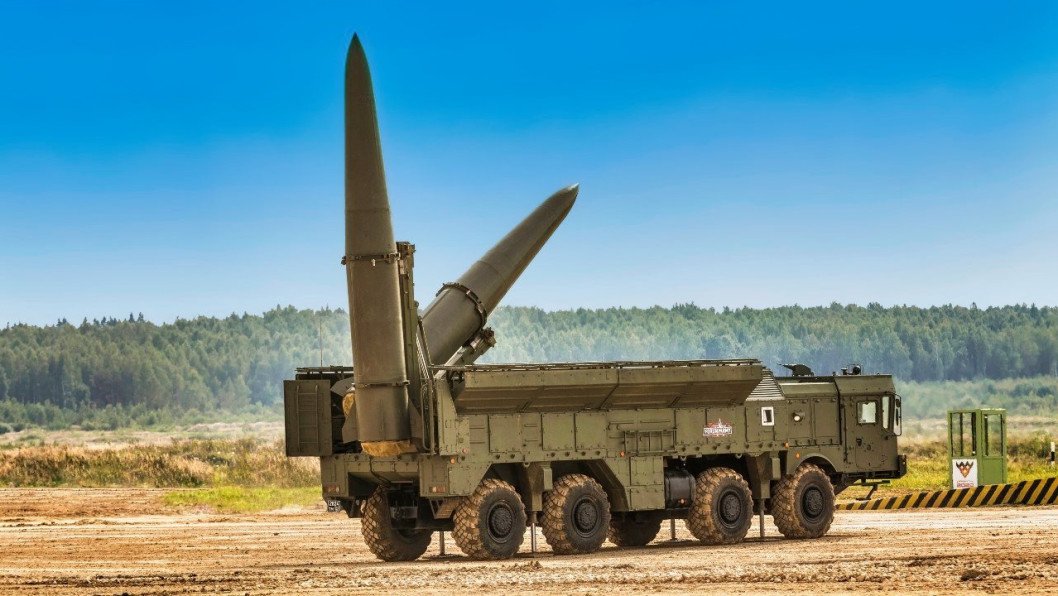
The missile Russia has now actually fielded appears more conservative than those earlier ambitions. HUR’s assessment of a 550-kilometer range still represents a substantial increase, but falls well short of the 1,000 kilometers implied by its unofficial name.
Even that additional reach, however, could allow Russian launch crews to operate farther from Ukraine while continuing to threaten Kyiv and other major cities.
Russia also retains a substantial ballistic missile inventory. As of August 5, Moscow had approximately 130 9M723 missiles for the Iskander-M system allocated to the forces involved in its war against Ukraine.
Separate estimates in July put Russia’s stockpile at roughly 50 Kinzhal air-launched ballistic missiles, alongside around 50 North Korean KN-23, KN-24 and KN-30 ballistic missiles.
Previously, Ukrainian forces struck a Russian Iskander ballistic missile launcher near the border in a rare and potentially significant operation aimed at destroying Moscow’s missile systems before they can fire.
Discuss this article:
-9a7b3a98ed5c506e0b77a6663f5727c5.png)

-111f0e5095e02c02446ffed57bfb0ab1.jpeg "Photo of Roman Kohanets")