- Category
- Interview
A Historian Explains the 1940s Bloodshed Between Ukrainians and Poles and the Road to Reconciliation
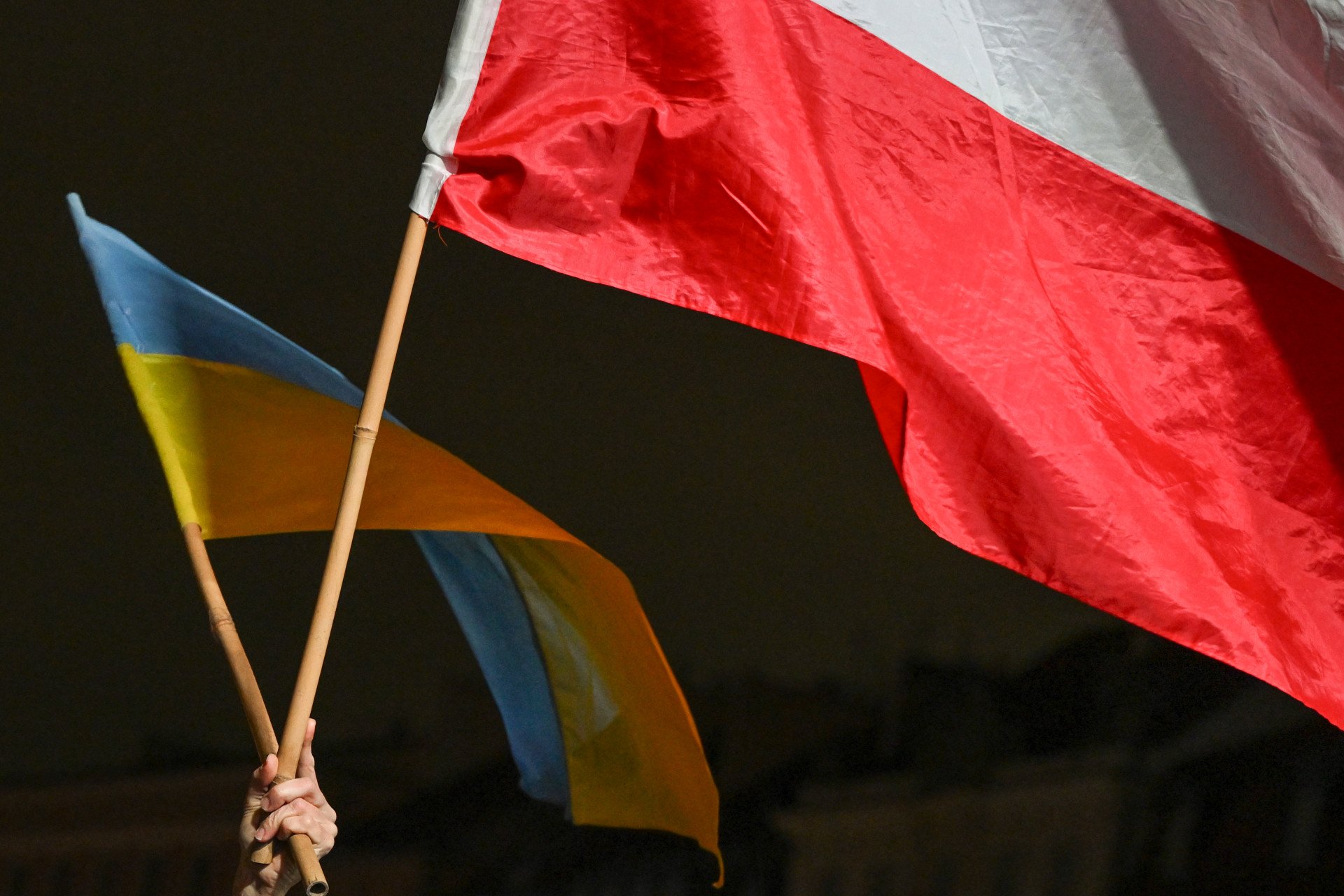
Polish historian Igor Hałagida explains why the violence between Ukrainians and Poles in the 1940s remains contested, and what it will take for both nations to reconcile.
 Prefer U24 Media on Google
- Authors


Relations between Ukrainians and Poles were deeply strained during the 1940s. Underground military organizations representing both nations engaged in numerous clashes and even campaigns of ethnic cleansing, leaving tens of thousands of civilians dead.
Germany and the Soviet Union were also key actors in the conflict. To this day, the period remains one of the most difficult chapters in relations between Ukraine and Poland. Polish historian of Ukrainian descent Igor Hałagida, a professor at the University of Gdańsk, discusses these historical controversies and outlines a difficult—but possible—path toward reconciliation.
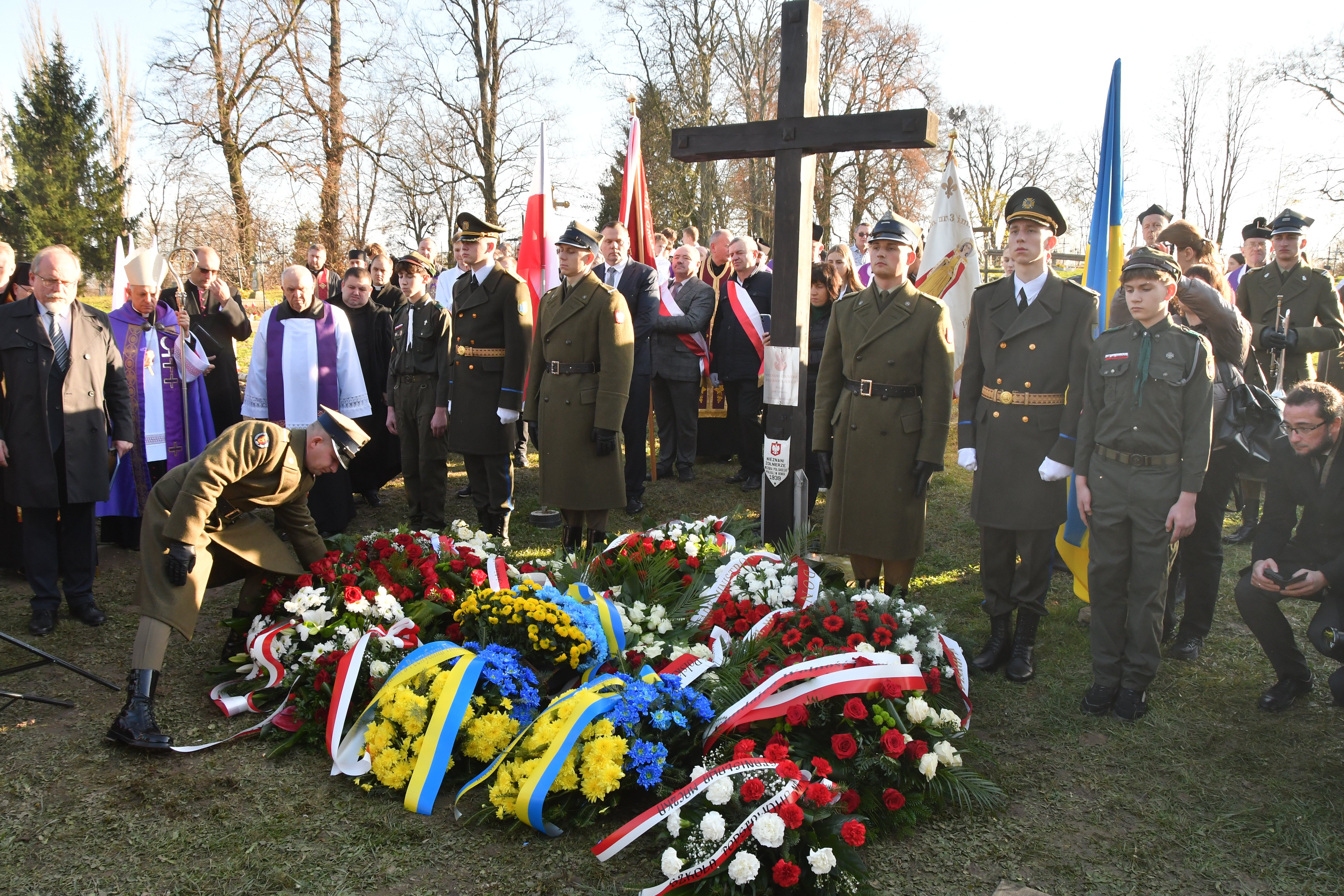
Ukraine and Poland are neighbors and strategic partners, particularly since Russia’s full-scale invasion of Ukraine. At the same time, their close relationship coexists with painful historical disputes—above all over the reciprocal ethnic cleansing campaigns of the 1940s, in which tens of thousands of civilians were killed on both sides. Competing interpretations of those events continue to fuel tensions.
One especially sensitive issue concerns honoring the victims. In 2017, after a series of acts of vandalism against Ukrainian memorials in Poland, Ukraine imposed a moratorium on exhumation work. In 2025, however, Kyiv authorized joint exhumations, and the Polish side began reburials. Other symbolic gestures—including the joint commemoration by President Volodymyr Zelenskyy and then-Polish President Andrzej Duda in Lutsk in 2023, as well as Zelenskyy’s talks with Donald Tusk’s government in 2025—demonstrate a shared commitment to maintaining dialogue. Yet the painful legacy of the past continues to spark contentious statements, particularly from Polish politicians.
What were the underlying causes of the violence that escalated between Ukrainians and Poles during the 1940s?
The Polish-Ukrainian conflict did not begin in the 1940s—its roots go back much earlier. One can point to the 1918–1919 war, which Ukraine lost to Poland, as well as the interwar period, when the Polish state failed to pursue a consistent and constructive policy toward the other nationalities living within its borders, particularly Ukrainians. Many Ukrainians who found themselves under Polish rule at the time regarded it as an occupation.
As a result, during World War II, the conflict entered an acute phase, further intensified by both the Nazi and Soviet regimes. In many ways, this escalation was inevitable because it stemmed from developments that had unfolded over the previous decades. Whether the conflict had to become so exceptionally bloody is another question altogether.
In discussions like this, it’s easy to end up debating who was more to blame. Is it even possible to speak of symmetry or asymmetry in the violence?
I oppose framing the discussion around who was more guilty or who started it. If we go down that path, we’ll keep tracing blame further and further back—to the Cossack era and even the Middle Ages. It’s a road to nowhere.
Yet that is precisely the approach taken over the past 30 years, as Polish and Ukrainian historians have traded arguments in an attempt to prove which side suffered more. I’m not relativizing or minimizing the crimes committed by either side. I’m simply stating where this approach has led us. We have reached a point where there are no longer arguments—only accusations.
In my view, we should instead focus on what unites Poles and Ukrainians. That should be the stories of the victims on both sides. Everyone who lost their life deserves to be remembered, regardless of their nationality.
Speaking as a historian, I believe the Bandera faction of the Organization of Ukrainian Nationalists carried out an anti-Polish ethnic cleansing campaign that claimed several tens of thousands of lives. There were also crimes committed by the Polish side, where Ukrainian civilians were killed, although the number of victims was lower than on the Polish side. Most importantly, it was civilians—both Polish and Ukrainian—who suffered the most.
But there were also periods when Ukrainians and Poles were allies. Why do those episodes so rarely become the foundation for dialogue?
There were indeed many such examples throughout history, including during World War II. One of them was the 1945 agreement between representatives of the Organization of Ukrainian Nationalists and the Ukrainian Insurgent Army on one side, and the Polish anti-communist underground on the other. They recognized that despite all their disagreements, they faced a far greater enemy: the communist regime.
In 1946, the Ukrainian Insurgent Army joined forces with the Polish anti-communist organization Wolność i Niezawisłość (“Freedom and Independence”) to attack the town of Hrubieszów, then under Soviet control. They captured the prison there and freed some of the inmates.
That agreement demonstrates that even people who had recently been shooting at one another could reach an understanding in the face of a common threat and a common enemy. Their cooperation continued until 1947, when the forced resettlement of the Ukrainian population took place—the infamous Operation Vistula.
Your team has already identified 30,000 Ukrainian victims. The Polish death toll was even higher. What overall numbers are we talking about?
Our small research team has indeed identified the names of around 30,000 Ukrainian victims. It’s important to note, however, that roughly one-third of them were killed by Poles serving under either German or Soviet authority—for example, Polish Schutzmannschaft units or members of the so-called extermination battalions. This is only the first stage of our work. We will now try to identify Polish victims by name as well. That’s the most important task—not determining who was more guilty, but recognizing that crimes were committed by both sides and focusing on those who were killed.
The number of Polish victims was indeed higher, but by how much is difficult to determine. Polish historiography often estimates between 80,000 and 100,000—or even more. I believe those figures are inflated and cautiously estimate that between 1939 and 1947, there were around 65,000 to 75,000 Polish victims. That figure also includes Poles killed by Ukrainians serving under German command, including members of SS police regiments. But this is not a competition over numbers—they are secondary. The focus should be on the victims and their names. All of the victims, because this was a tragedy for both nations.
You emphasized that around 10,000 Ukrainians were killed by Poles while serving under Soviet or German command. Why is that distinction so important?
Because there is an argument that these people should not be counted as victims of the Polish-Ukrainian conflict since they died under German or Soviet rule. That’s true in one sense, but to some extent, they were also victims of the Polish-Ukrainian conflict. That’s how they were perceived at the time, and that’s how they are perceived today.
It’s also worth noting that most historians in Poland count Poles who were killed by Ukrainians under German occupation as victims of the Polish-Ukrainian conflict—for example, those murdered in the Huta Pieniacka massacre. If that is the methodology applied there, I see no reason to apply a different standard here. We should be consistent.
How has Polish historiography on Ukrainian issues changed over the past 20 to 30 years?
Research into Polish-Ukrainian relations during World War II began in Poland as early as the 1970s. In Ukraine, by contrast, the first serious studies appeared only in the early 2000s. Ukrainian and Polish historians held meetings, discussions, and conferences. Even then, however, it was clear that there was a significant imbalance between Polish and Ukrainian scholarship on the subject. Only in recent years has Ukraine begun producing an increasing number of valuable studies.
How has Russia’s full-scale war against Ukraine affected attitudes toward those events?
The Polish-Ukrainian historical dialogue began to stall around 2013–2014. Russia played its part. Both in Poland and Ukraine, there was a series of provocations in which “unknown individuals” vandalized memorials dedicated to the Ukrainian Insurgent Army. Those incidents, together with the subsequent refusal in some cases to restore the sites, led to a serious crisis. I am convinced these were Russian provocations.
After Russia’s full-scale invasion, discussions about a tragedy that took place nearly a century ago initially faded into the background. But now politicians have started talking about it again—which is unfortunate, because first and foremost, this is the work of historians.
At the same time, everyone bears some responsibility for how unproductive the discussion has become. Polish historians continue to promote the view that only Ukrainians were guilty. Ukrainian scholars, meanwhile, have largely ignored the subject. There are only a handful of studies on Polish-Ukrainian relations written by Ukrainian historians. Against this backdrop, there is a third party—Moscow—which constantly stokes the flames in an effort to inflame the conflict. The situation has become so complicated that I’m not sure our generation will manage to reach any real consensus.
But unlike in Poland, these issues are rarely discussed in Ukraine. Even though Ukrainians also lost tens of thousands of people, the subject does not seem to fuel conflict with Poland.
Polish society is simply much more deeply immersed in history. Even if you compare the institutions responsible for historical research and memory, the Polish Institute of National Remembrance has a huge budget and employs around 2,000 people. Its Ukrainian counterpart has only about 20 employees. Moreover, Ukrainian historical scholarship, which only recently gained the freedom to develop independently, has countless other issues demanding attention.
To conclude, what is a realistic path toward reconciliation between Ukraine and Poland on this historical issue?
I think it requires a combination of efforts by historians, politicians, and society as a whole. Scholars in both countries should focus not on their disagreements or on trying to prove who was more guilty, but on what they share—and on the tragedy that befell both nations. Politicians, meanwhile, need to be extremely careful in their public statements. Unfortunately, they too often use this painful subject for domestic political purposes and, at times, for populist rhetoric.
FAQ
What was the Organization of Ukrainian Nationalists (OUN)?
The Organization of Ukrainian Nationalists (OUN) was a political movement founded in Vienna in 1929 to fight for Ukraine’s independence, while much of the country was under Soviet and Polish rule.
What was the Ukrainian Insurgent Army (UPA)?
The Ukrainian Insurgent Army (UPA) was a Ukrainian nationalist military formation established in 1942 that fought for an independent Ukrainian state. It fought both Nazi Germany and the Soviet Union during and after World War II, while some of its underground units remained active into the 1960s.
What was the Polish anti-communist organization Wolność i Niezawisłość (WiN)?
Wolność i Niezawisłość (“Freedom and Independence”) was a Polish civilian-military anti-communist resistance organization established in 1945 to oppose Soviet rule and restore Poland’s independence.
Discuss this article:

-206008aed5f329e86c52788e3e423f23.jpg "Photo of Oleksandr Moiseienko")
-f3430f0449615e9897dff835086ac204.jpg "Ukraine Broke With a Soviet-Era Military System and Rebuilt It Around the Soldier")
-e126c16a85d580738cf2d57e760b80a3.jpeg "Photo of Vladyslav Greziev")