- Category
- Interview
How Do You Identify Thousands Killed In War? Ukraine's High-Tech Forensics Experts Have The Answer

“The sooner we defeat [Russia] and bring justice to fallen and impacted Ukrainians, the safer we become in real terms.”
 Prefer U24 Media on Google
- Authors


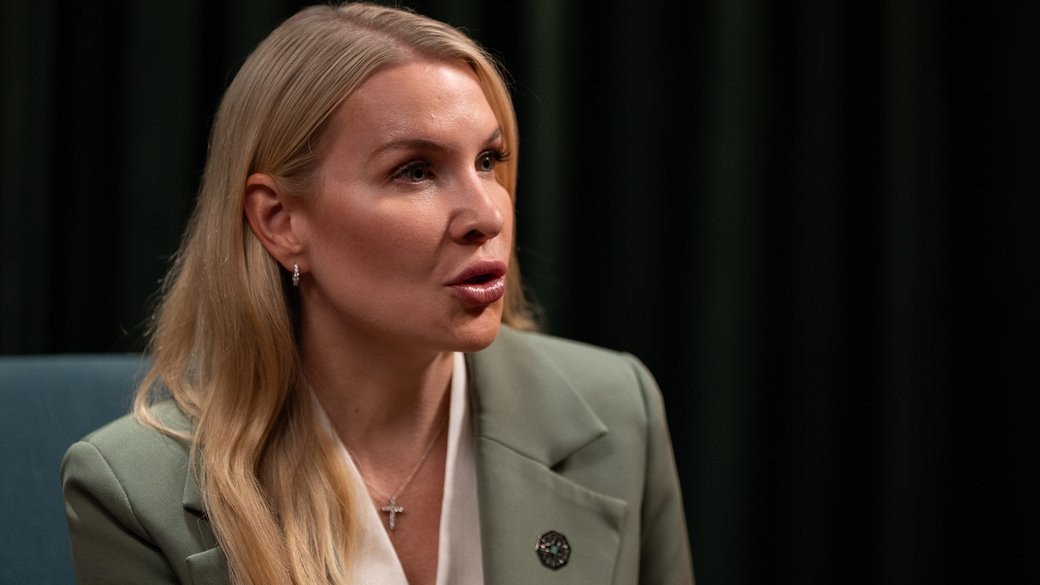
As President of the Weatherman Foundation , Dr. Meaghan Mobbs–also a US Army veteran–spoke to me with the clear-eyed conviction of a commander who can see the path forward and is determined to stay the course. Behind her work is the belief that by struggling with the atrocities of today, we can safeguard our homes from those who would subject us to the horrors to come.
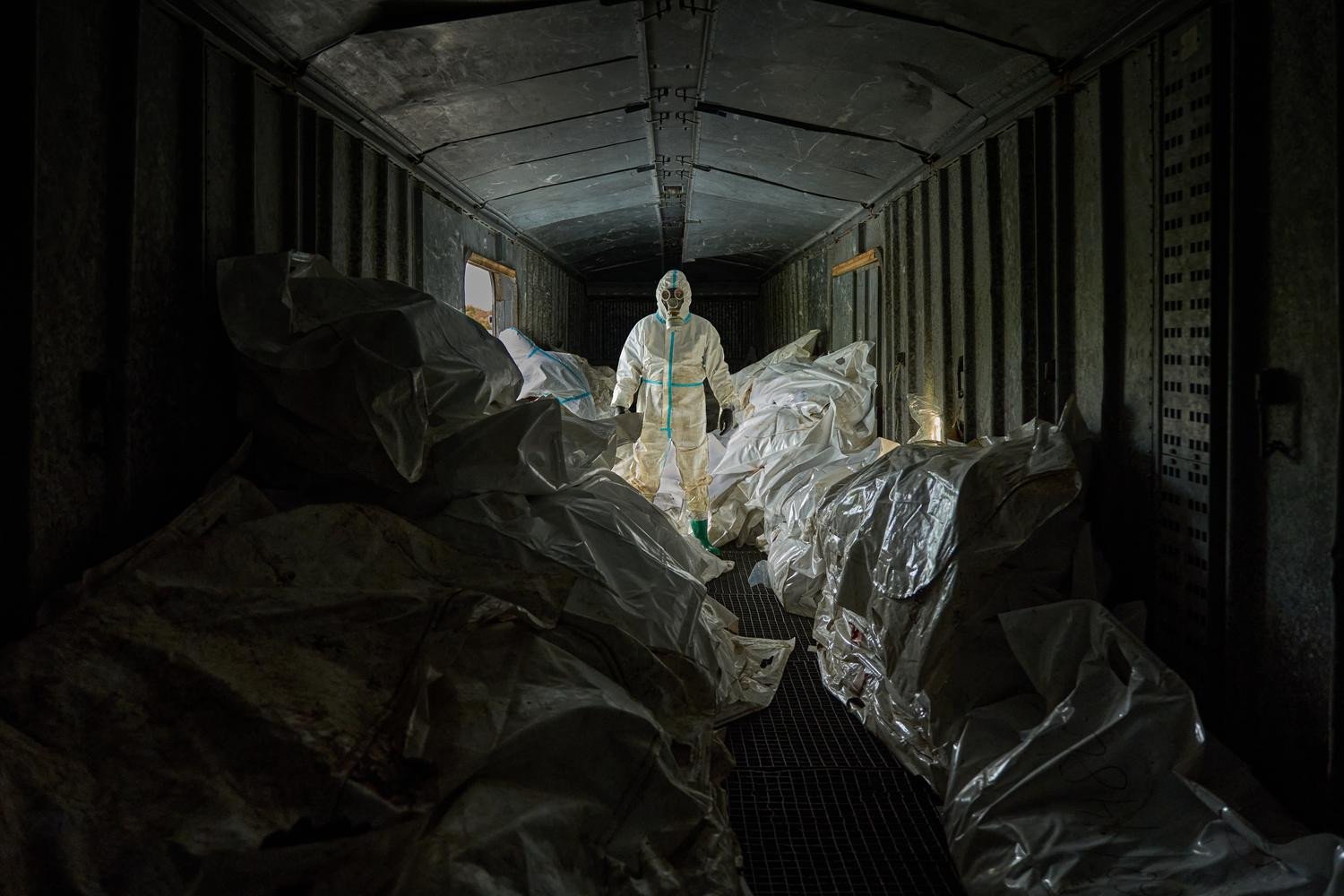
Standing at the helm of the Weatherman Foundation, Dr. Mobbs leads a team that trains and equips Ukraine’s impossibly-stretched forensic experts to address the herculean task of naming and honoring Ukraine’s fallen military servicemen. Ukraine’s forensic experts must contend with a grim question that lurks in the shadows of every headline, image, and newsreel that comes out of this war: How do we deal with the backlog of over 26,000 repatriated bodies and remains requiring identification, more than 15,000 of which have yet to be identified?
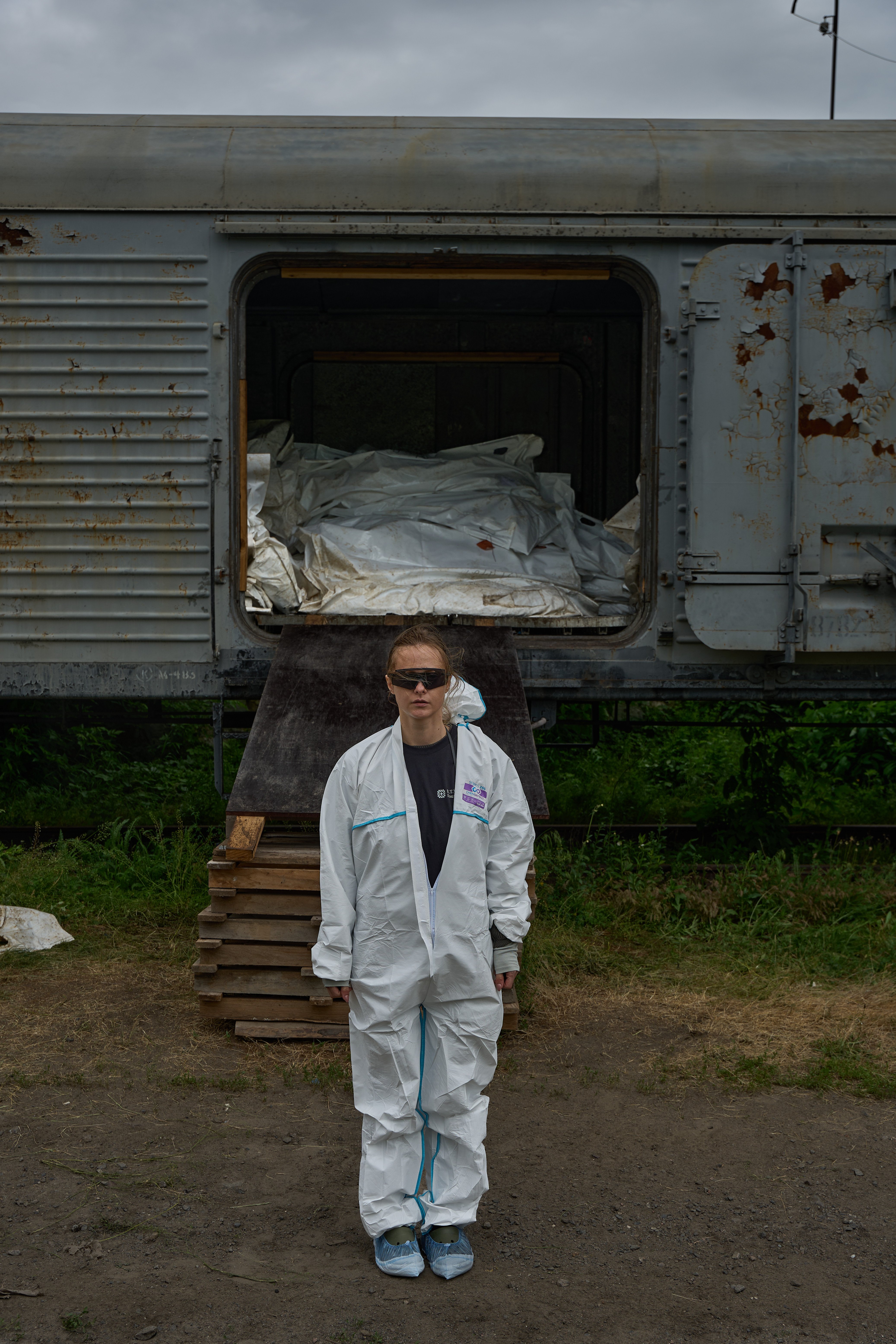
When I spoke with Dr. Mobbs, she drew on her US Army career in Afghanistan—in addition to her ongoing role as a nexus between the American people and Ukraine’s silent, often unsung heroes—to explain to me why this work has technological and political implications far beyond the war we see daily in high definition through our various screens.
When you look at the sheer numbers—over 26,000 repatriated bodies and over 15,000 remains awaiting examination—how did we reach a point where the scale of repatriation outpaced traditional forensic capabilities?
I mean, I think this speaks to the broader, full-scale war. Quite frankly, Ukraine wasn't prepared for the full scale of this conflict, though that isn't to cast aspersions—I don't think anyone could have anticipated it. Even the United States does not have the infrastructure or capability to address this size of conflict and identify this many remains.
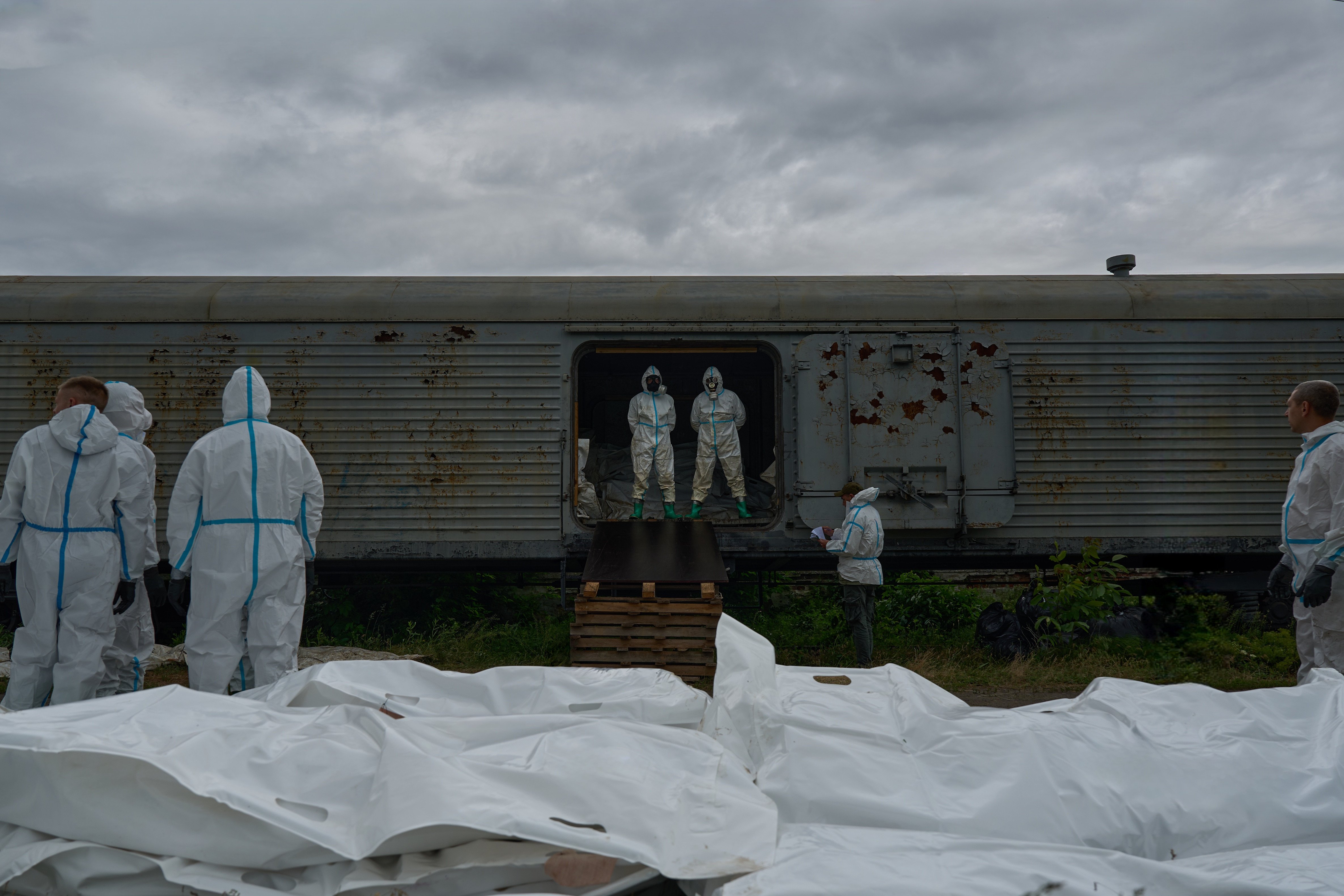
The problem became cumulative. In the beginning months, when things were extraordinarily uncertain and kinetic, remains were picked up and placed in various locations. As the war continued, those initial remains were moved further and further away from their recovery points. Moreover, because the battlefield is so dangerous—whether from earlier artillery or current drone threats—recovering remains is increasingly challenging.
Capacity multiplied by time, danger, and the full-scale nature of the conflict led us to where we are now. Thankfully, the government is finally recognizing the significance of this problem set and is truly beginning to pivot toward it. We've experienced great cooperation because they recognize how this impacts society, and if they don't address it holistically, it will have cascading effects.
In wartime forensics, time is the enemy. What are the greatest risks of delay when it comes to DNA degradation and evidence collection?
I’m going to use another equation: delay equals time multiplied by conditions. DNA starts to break down at death. First, it begins to break down from the body's own enzymes, and then from heat, moisture, and microbes. Over time, based on all of those conditions, it can become so fragmented that it sometimes requires two or three profiles or tests to get a full profile.
We know that fire is the worst possible thing for DNA because it destroys the organic parts of the bones early. Much of what is left—especially in burned remains—becomes extraordinarily difficult to test deeply, requiring multiple tests to build a full profile.
On top of that, you have storage and capacity challenges. Every week that a set of remains goes without a cold chain , a case becomes more challenging because you lose the possibility of conducting a single test for a full DNA profile.
A bunch of different factors combine here, which is why this is so critically important. Some of the work we're doing focuses on more than just DNA: it involves collecting a full biometric profile of every set of remains, alongside necessary qualitative work, like looking at personal effects on the body, to assist with a full identification profile just in case DNA becomes impossible, improbable, or extremely difficult.
The team at the Weatherman Foundation works right alongside Ukrainian forensic medical bureaus. What are some of the most critical high-tech tools and identification algorithms being introduced to accelerate this pipeline?
Firstly, I want to give lots of credit to the forensic specialists, who are oftentimes the unsung heroes in this process. They work in extremely challenging conditions with very little resources and support to do some of the hardest work of this conflict. I know that you've been with our team on the ground, so you've seen firsthand how extreme the exposure to the remains and all of these different conditions is—even for the most hardened expert. Over time, that cumulative exposure is extremely difficult.
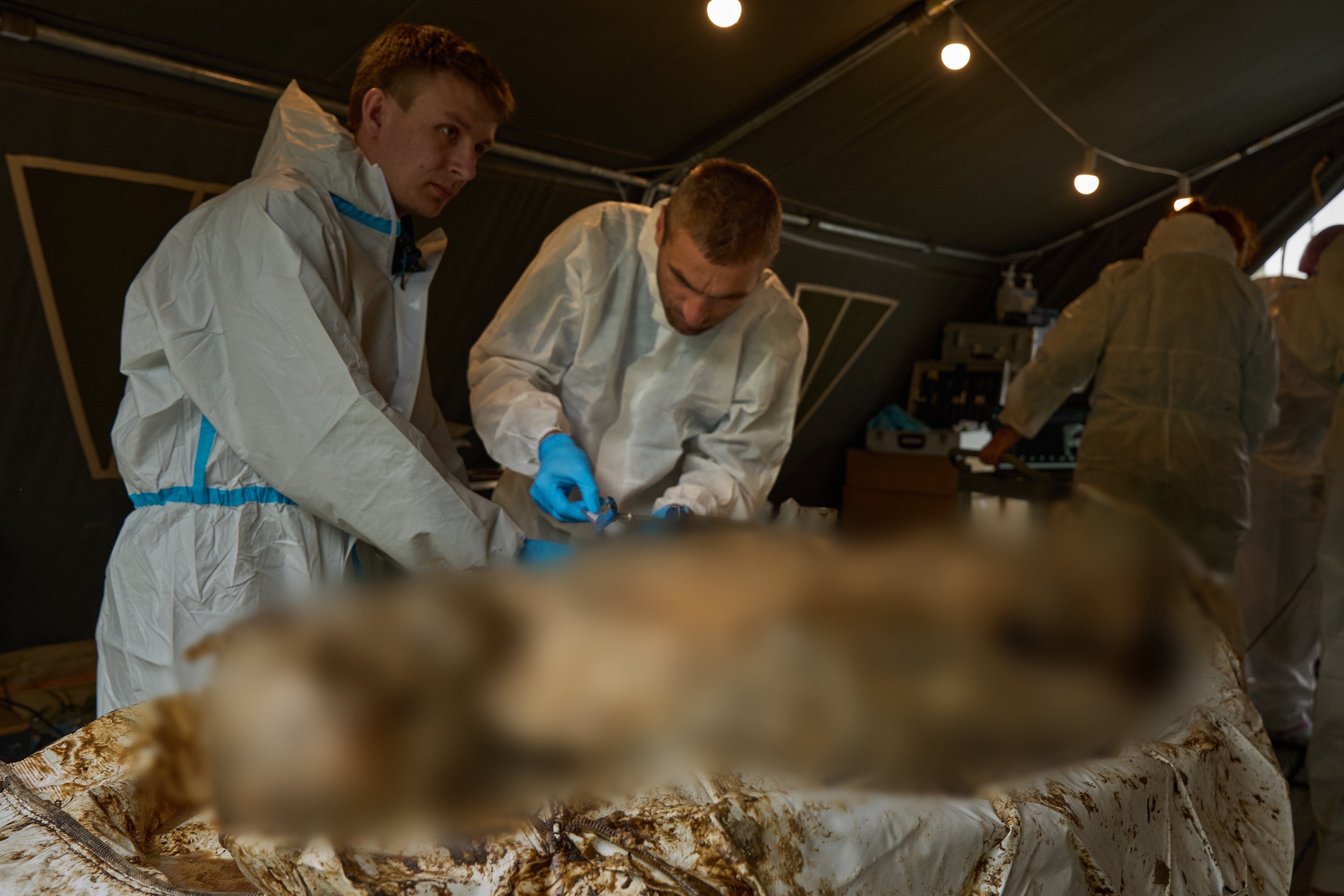
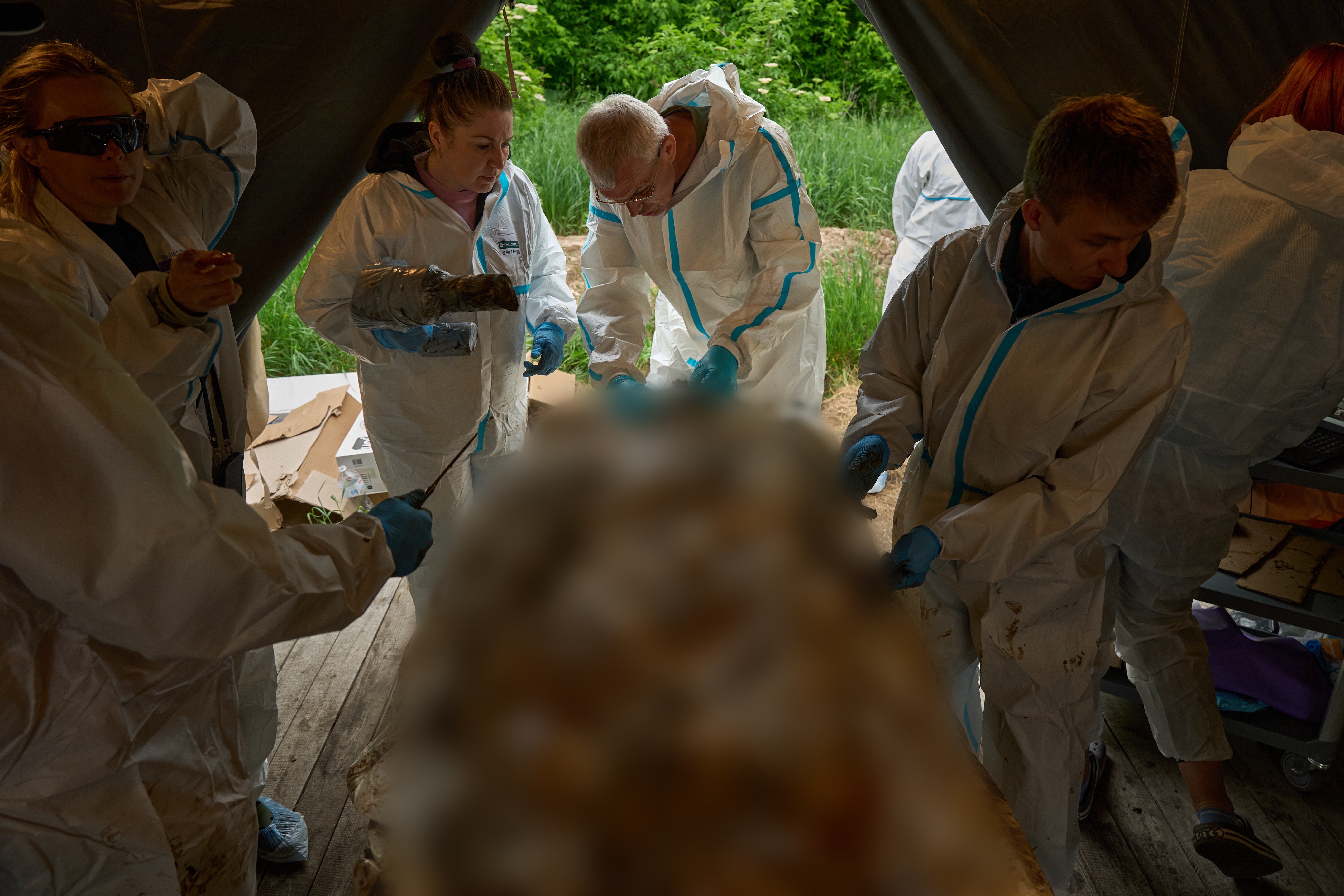
When it comes to technology, I would say that in some ways, it's more about process and procedure. What really needs to happen, is that every set of remains should have a full biometric profile completed—including dental, fingerprinting, DNA, and qualitative personal effects—in order to increase the likelihood of a potential match.
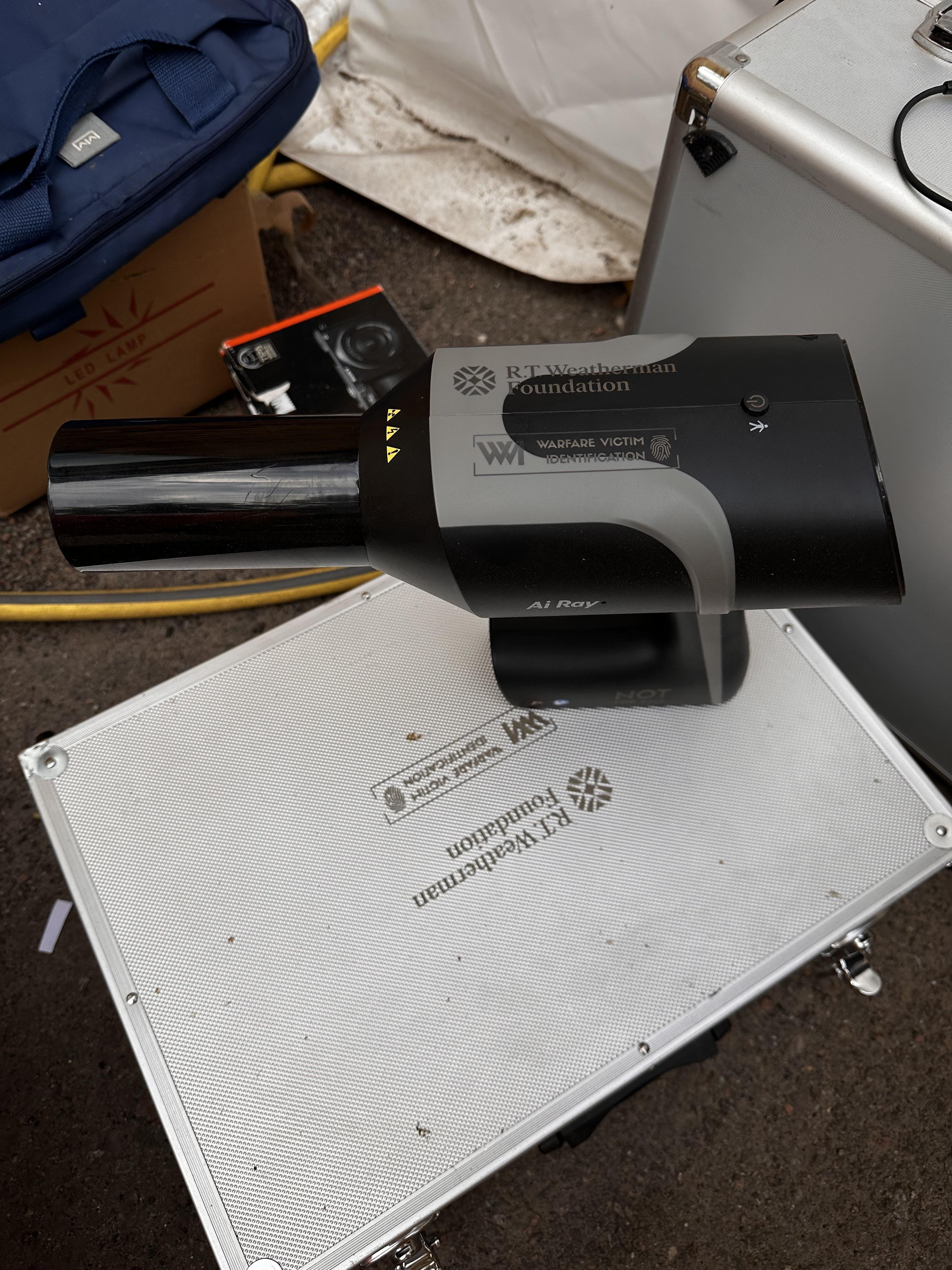
We've been able to assist with some of that. For example, for dental identification, we have provided portable dental X-rays, which many bureaus previously didn't have. That isn't a particularly advanced technology, but it helps specifically with the mobile nature of this current job, since specialists are doing identifications in the field and at major collection points rather than in a robust identification facility.
Another tool is using full-spectrum cameras for tattoo identification, especially when you are dealing with degraded flesh or skin conditions. These cameras can highlight tattoos in ways you simply can't see with the naked eye. We've also been repurposing those portable dental X-rays for fingerprinting—finding new, innovative ways to identify remains by taking traditional technology and utilizing it for a different purpose.
So, it really is less about major technological advancements. It's more about being agile and flexible in the field, using an "all-of-the-above" approach for identification, and being willing to do the hard work of going back and completing a full biometric profile on every single set of remains if one doesn't already exist.
While labs deal with the physical remains, families are facing a terrifying “secondary front.” How are enemy actors targeting relatives of the missing with cyber-attacks, blackmail, and manipulation?
This is one of the most devastating things that I think so many weren't prepared for—both in Ukraine and, I would argue, the broader West. We were not prepared for this type of information environment that exploits ambiguous grief and takes advantage of it.
What we know from a psychological perspective is that grief can be a vector for radicalization, especially ambiguous grief where you're looking for answers to questions that no one can seem to provide. What we are seeing is that Russians are targeting these families, utilizing things like deepfakes and AI to say, 'We have evidence of your loved one; send money or provide information about this particular location.'
We're going to see more exploitation by the Russians of this situation, which is why we've argued that the identification of remains is not just a humanitarian issue—which it obviously is—it's a national security priority for Ukraine to provide that closure and make sure this ambiguity isn't exploited by the Russians.
We've also seen international families targeted by Russian trolls online, especially before their loved one's remains have been found, sending them horrific pictures or messages. The intent is to so depress and disenfranchise the person that they lose confidence or belief in the government and the cause, turning their grief into a weapon for Russia.
And I'm sure you know this, Jamal: the Russians are extraordinary at cyberattacks as well. They're utilizing their skill sets to target identification database systems and things like that in order to corrupt the process. When they do that, they dissolve trust in society and the Ukrainian government. What you see then is fracture and democratic unrest, which can cause even more issues down the line.
You provide OSINT workshops specifically for coordinators working with these families. How does open-source intelligence and digital defense protect grieving families while they wait for answers?
We just did our first OSINT course with family coordinators in order to make sure that they are beginning to understand how to best protect themselves and their families. One of the saddest stories that I've heard was a woman who knew her husband was dead. She spent countless hours searching Russian Telegram [channels] just for evidence that he was gone, because that would allow her then at least to grieve and begin to move forward with her life.
Searching Russian Telegram exposes you to a whole host of other things that are extraordinarily dangerous, both for your emotional stability and around manipulation, persuasion, and radicalization. We want to make sure that these families—who are already going through something so horrific—are protected in the information space, and that they know how to effectively search for information. We give them the tools so that they can do that, because they also want to be part of the process. Their loved one is gone; they want to help search and find answers, and we want them to have that sense of agency while staying protected.
That is also some of the work that we're beginning to do, because we realize this gap can be exploited significantly by Russia, but also by other bad actors.
When the public hears about tens of thousands of unidentified remains, it can feel like an impossible mountain to climb. What gives you and your team confidence that every single hero can—and will—be identified?
It's because I believe in the Ukrainian people and my team. At the end of the day, this is the most human thing I've ever been engaged in. When I was in the army, I was a quartermaster officer, a logistician, and one of the job specialties under the overarching quartermaster branch is mortuary affairs. As I was training as a young officer, it was drilled into me: the necessity of returning every name and returning every person home.
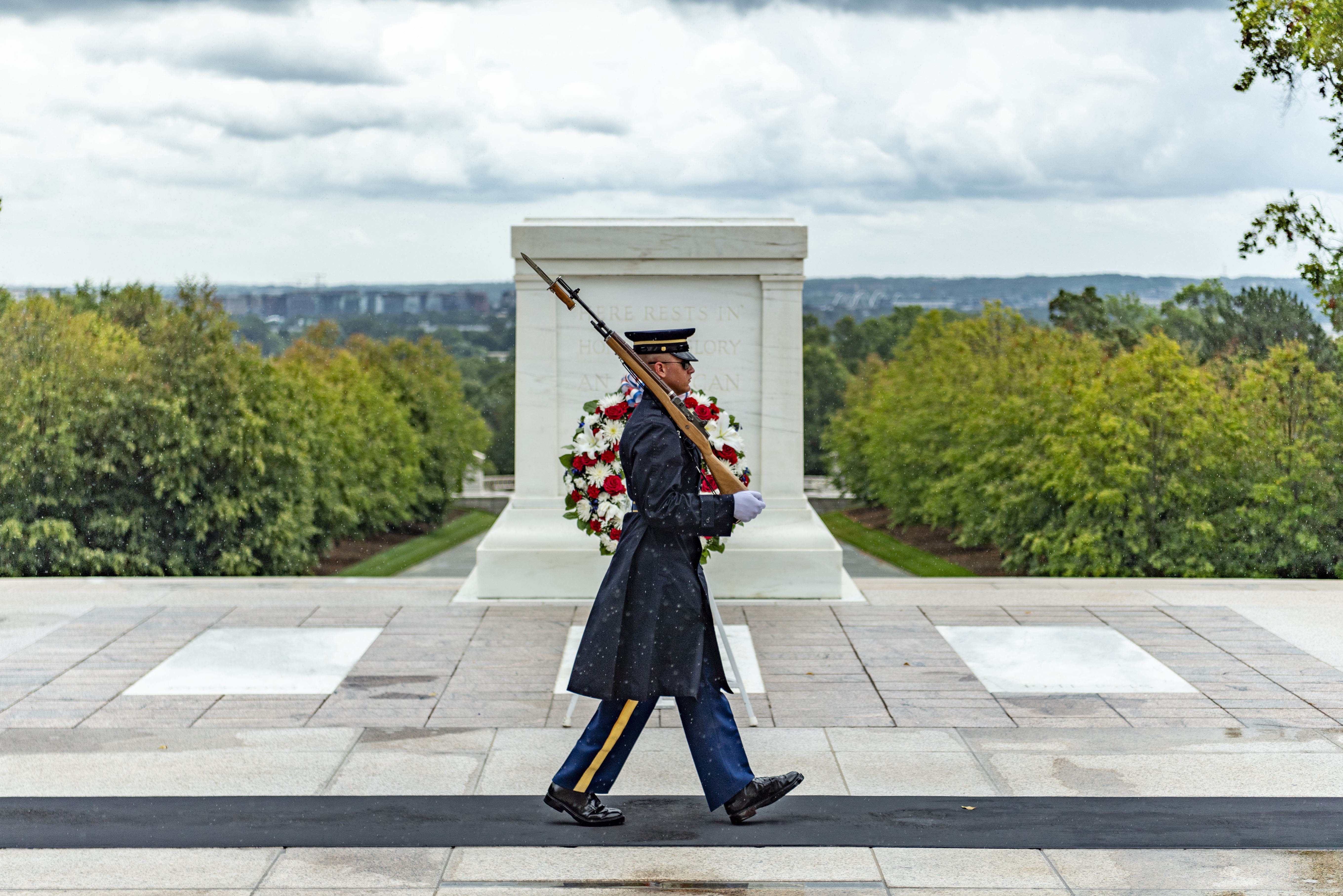
It's why we have the tradition in America—even of the Tomb of the Unknown Soldier —where a soldier always maintains vigilance over those remains, and those remains are continuously honored, because we understand that when you send someone to fight and possibly die for your country, you have engaged in a sacred compact with that family. You are saying that, amidst everything, we will make sure your son, husband, wife, or daughter comes home, even if that means in their corporeal form.
Ukrainians believe in the nature of that sacred compact and the necessity of finding a spiritual closure. I know they are not going to stop until every remain is returned home. I know we're not going to stop because, as part of this, what Russia ultimately wants to do is erase Ukraine. Part of preventing that erasure is making sure service and sacrifice are so venerated and honored that it becomes a bulwark, a resilience necessity for the people of Ukraine. What gives me hope is simply knowing we're not going to quit, Ukrainians aren't going to quit, and we're just going to keep doing this work until everyone is brought back.
Ultimately, this isn't just a scientific or logistical challenge; it's deeply personal. When you look at the forensic experts and Ukrainian specialists on the ground, what does success look like to you?
It looks like bringing everyone home, of course. It also is making sure that these kind of unsung heroes are also honored and recognized for all the work that they're doing.
And then it moves towards memorialization. Success is not just returning every name home. It's making sure that once they're returned home, that they're not forgotten. There's a saying, that ultimately you die two deaths: the first is when you actually die, your body dies. And the second time is the last time someone says your name.
And so part of our work is, yes, every name will be returned, everybody will be brought home, and then every name will be remembered. It's not just enough that we identify; we must also memorialize and honor in order to ensure that their place in society is forever recognized.
From your vantage point—operating directly on the ground with the Weatherman Foundation while also having had a macro-level view of international negotiations—how do the grueling, human-scale realities of identifying thousands of fallen soldiers inform the broader conversation about what is at stake for Ukraine and its international allies?
In America especially, we have failed to recognize that the more quarter we give to Russia—the more we let them get away with—America's [children] will eventually face these very real things, because our adversaries aren't going to change. The brutality in which they're willing to engage is not going to shift simply because the person they're waging war on shifts. They're going to stay exactly who they are.
So, how remains are being treated, how prisoners of war are being treated, and what's happening to women, girls, and boys under occupation—all of those deeply humanitarian issues should be informing the broader conversation around negotiations. Specifically, as part of any just peace settlement, there has to be a dedicated humanitarian vector that addresses all of these questions: the return of remains, the return and treatment of POWs, the unlawful detention of civilians, and the return of stolen Ukrainian children.
Unfortunately, I think that is a missing piece of the broader negotiations, which are focused on some grand peace bargain—something that, by the way, I think is completely unlikely and never going to happen. What they should be focused on, in many ways, is the very human element of this war. Because right now, it's easy for Americans to say, 'It's over there; it's not us.' But one day, it will be our sons and daughters. And if we have failed to protect other sons and daughters, then we will have ultimately failed to protect our own.
Discuss this article: