- Category
- Investigations
Russia Secretly Built Iran a 24-Helicopter Attack Fleet. Leaked Files Expose a Much Bigger Arms Pipeline
Internal Russian defense documents reveal two major arms programs supplying Iran with attack helicopters and armored vehicles—along with the companies, training systems, offshore payments, and sanctioned vessels that support them.
 Prefer U24 Media on Google
- Authors

-46f6afa2f66d31ff3df8ea1a8f5524ec.jpg "Photo of Jess Daly")
In December 2025, five components moving through Russia’s defense industry for a foreign customer came with an unusual instruction: rewrite their labels in English and remove the words “export delivery.”
The components were linked to a Russian arms contract with Iran.
The request is just one detail in a much larger paper trail reviewed by UNITED24 Media. Years of internal Russian defense-industry documents reveal two major weapons programs: the supply of 24 Mi-28NE attack helicopters and a separate plan involving more than 200 Spartak armored vehicles. The documents trace far more than transactions for military hardware.
Russian companies built training infrastructure, trained Iranian personnel to operate and maintain the equipment, arranged maritime transport aboard a sanctioned vessel, and routed multimillion-euro payments through an offshore intermediary.
Beginning in 2020 and stretching into at least 2029, the documents reveal a military-industrial partnership built not around a single deal, but for the long term.
Russia’s Mi-28NE program for Iran
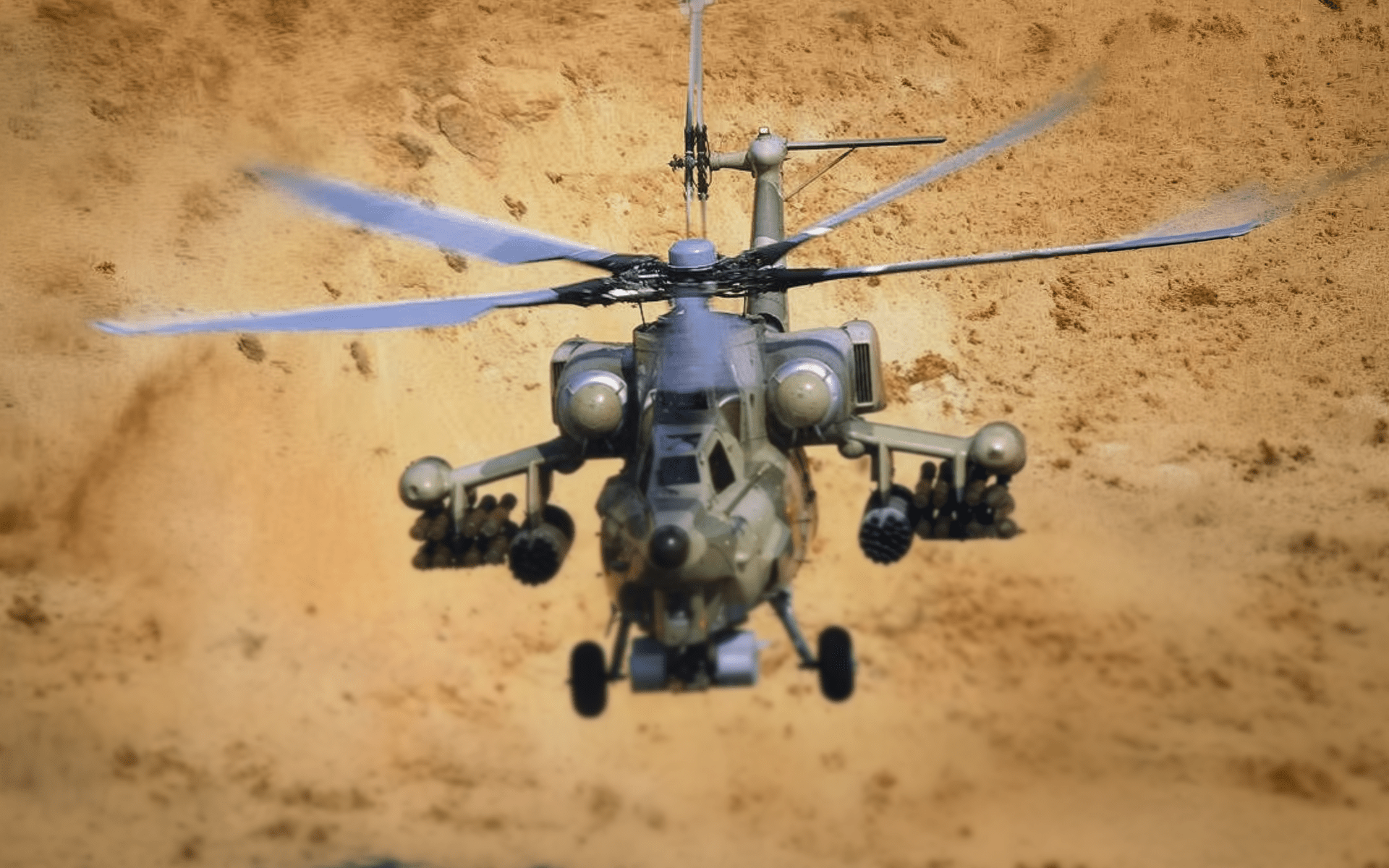
Russia supplied Iran with 24 Mi-28NE attack helicopters in 2025, according to documents reviewed by UNITED24 Media.
The Mi-28NE is the export version of Russia’s Mi-28 attack helicopter. The program can be traced to an arms-export contract signed on June 29, 2020, involving Rosoboronexport, Russia’s state-controlled military export intermediary.
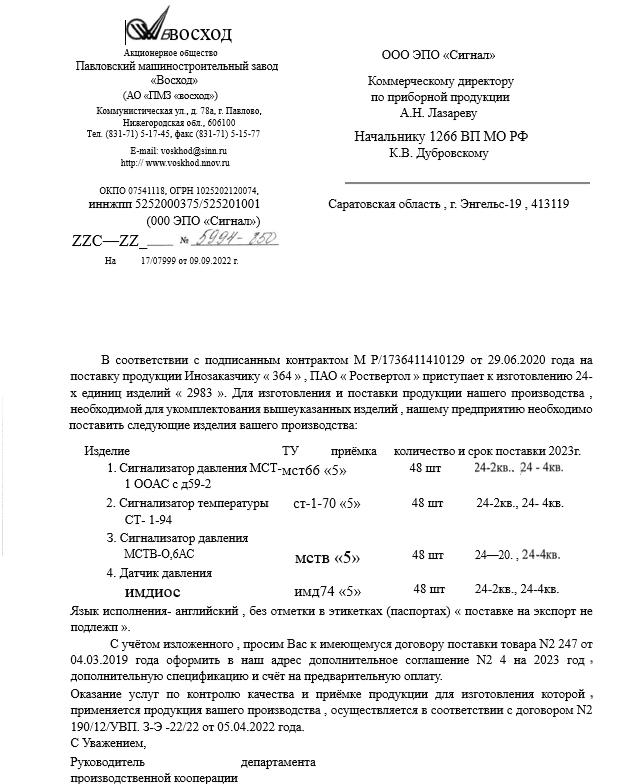
The records rarely name Iran or the helicopters directly. Iran appears under several designations, including “Foreign Customer 364,” “GP 364,” and “K-10.” The Mi-28NE is referred to as “product 2983.”
These codes appear again and again across years of documents from different Russian companies, exposing the wide network and supply chain behind the contract, and apparent attempts to conceal its details.
In October 2022, the Pavlovsk Machine-Building Plant Voskhod stated that Rostvertol, the Russian manufacturer of the Mi-28NE, was preparing to produce 24 helicopters identified as “product 2983.”
Sitting at the center of the contract is Rosoboronexport, a state-owned company that handles more than 85% of Russia’s military exports. However, fulfilling an order for 24 attack helicopters requires a broader network of specialized manufacturers.
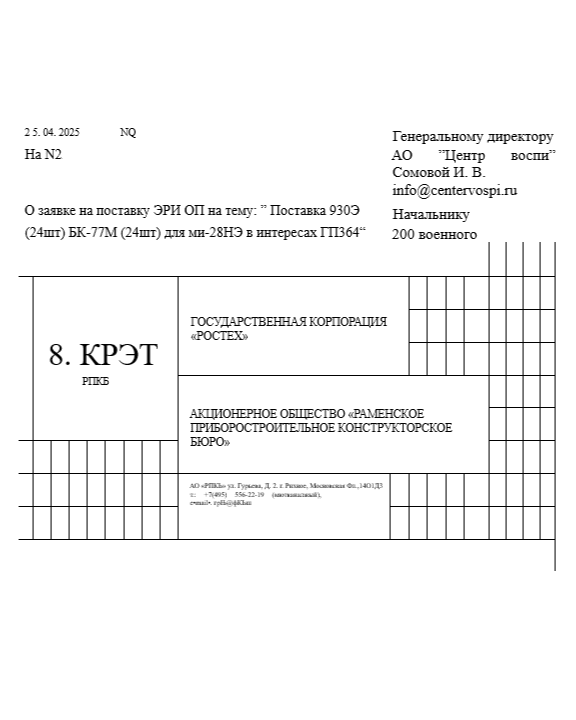
The Ramenskoye Instrument-Making Design Bureau—producing avionics and other aviation systems—requested equipment connected to the same batch of 24 Mi-28NEs.
In September 2024, Russian aerospace manufacturer AEROSILA received a request related to the production of the helicopters “in the interests of GP 364”—one of the codes used for Iran.
AEROSILA subsequently asked another Russian defense manufacturer, EPO Signal, to provide prices for two products under expected conditions for 2026 and 2027.
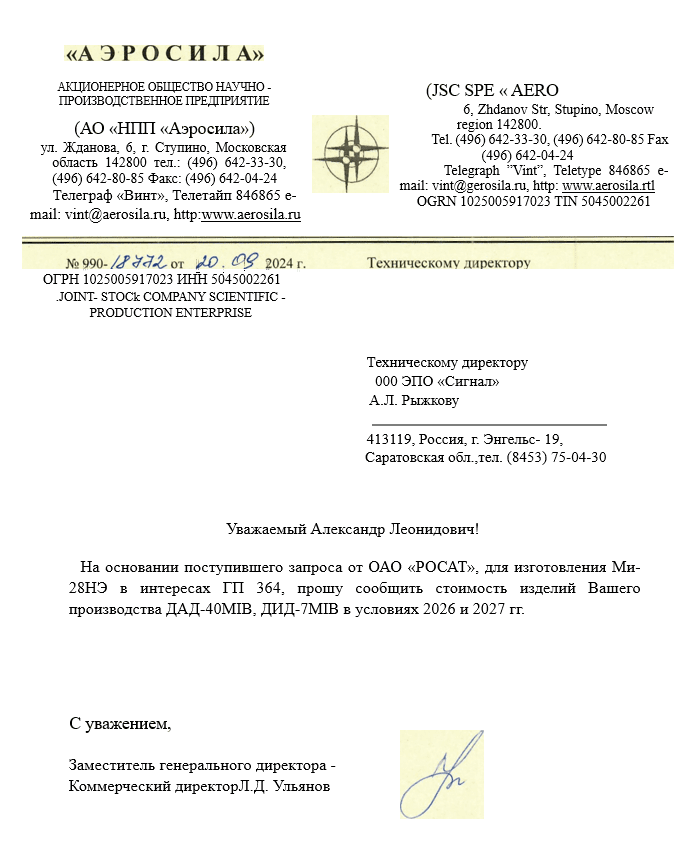
The dates reveal something much larger than a single delivery of 24 helicopters, but a program extending years beyond them.
Russia built a Mi-28NE training system for Iran
Even earlier, Russia was putting in place the infrastructure to train Iranian personnel to fly the helicopters.
In October 2022, Russian aviation technology company Dinamika reported that it was carrying out work under the same Iran-linked contract involving Rosoboronexport.
Its role was to supply a “comprehensive simulator on a dynamic platform for the Mi-28NE helicopter.” Dinamika also requested supporting contract documents, equipment labels, and certificates of conformity for the simulator.
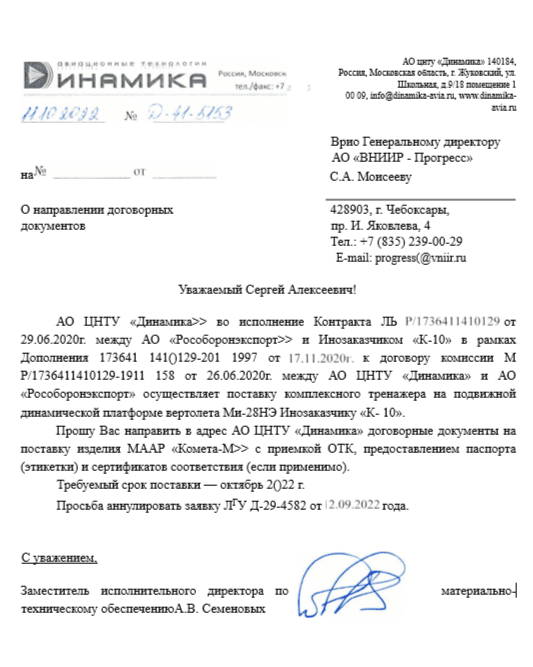
The simulator shows that the program extended beyond the transfer of aircraft and continued after the delivery of the 24 helicopters.
In December 2025, Rostvertol continued work under the same Iran-linked contract, including five components manufactured by EPO Signal.
For this shipment, Rostvertol ordered the labels to be rewritten in English and the words “export delivery” removed.
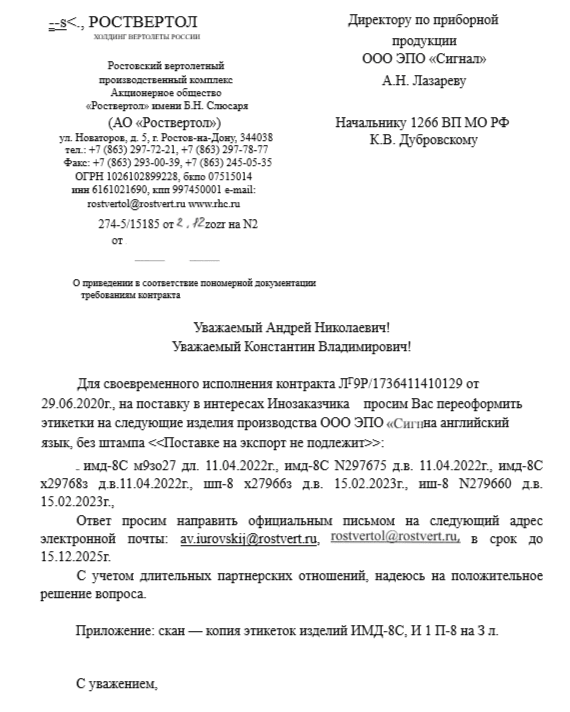
The records do not explain the reason for the instruction; however, the instruction was notable: a Russian defense manufacturer working under an Iran-linked arms contract explicitly requested that its export shipment label be removed.
Every Russian company across the contract has been sanctioned for supporting Russia’s war against Ukraine. Therefore, the coded references to Iran and the request to strip “export delivery” from component labels become all the more significant. UNITED24 Media has previously documented how Russia uses offshore companies and opaque ownership structures to make sanctioned cargo and its movements harder to trace.
What the documents do explicitly establish is that more than five years after the contract was signed—and after the documents state that the 24 Mi-28NEs had been delivered—sanctioned Russian manufacturers are continuing work under the same contract, with procurements extending years into the future.
Russia’s Spartak Armored Vehicle program for Iran
A separate group of documents reveals another Russian weapons program involving Spartak armored vehicles manufactured by the Arzamas Machine-Building Plant, or AMZ.
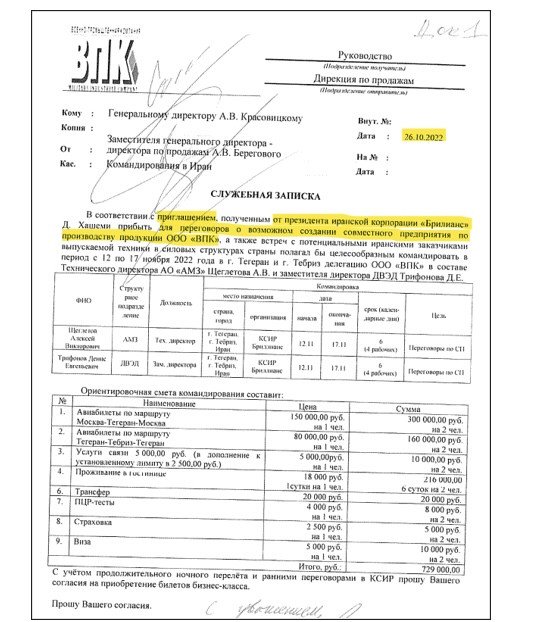
The earliest plans identified by UNITED24 Media date to October 2022, when Russian records described a proposed joint manufacturing venture between AMZ and Brilliance Industrial Company, an Iranian vehicle and machinery business based in the Aras Free Economic Zone.
By 2024, the discussions moved from plans to a signed contract.
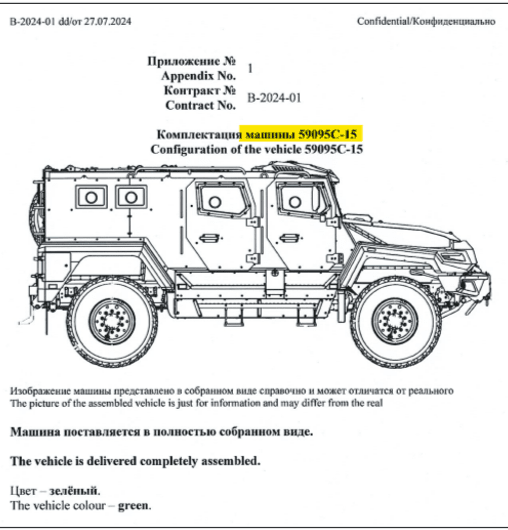
In July that year, AMZ and Brilliance signed an agreement for two Spartak armored vehicles worth a combined $570,000. What began with two vehicles soon expanded into a much larger program.
More than 200 Spartaks planned for Iran
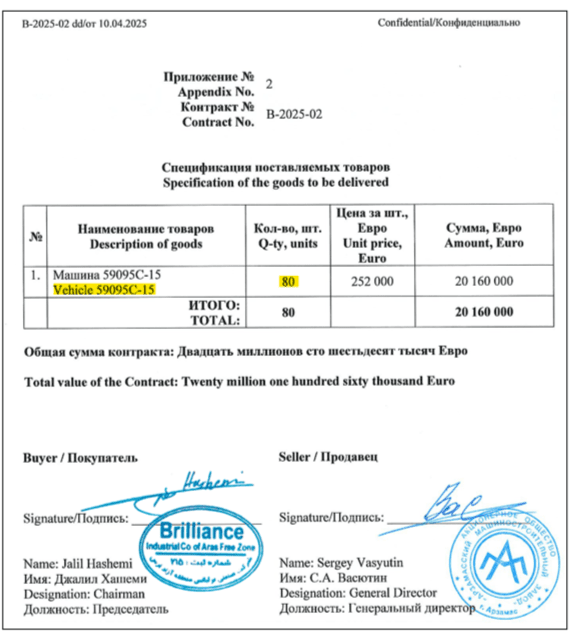
In April 2025, two Spartaks became 82. A second contract added 80 Spartaks worth €20.16 million, identifying the Tehran-based Pishgham Sanate Gharb as the immediate consignee and Iran’s Ministry of Interior as the final recipient.
The 80-vehicle order was not the last. An internal sales strategy prepared by Russia’s Military Industrial Company, or VPK, set out plans for the delivery of up to 120 additional Spartaks in 2026 and 2027.
That would bring the program to more than 200 Spartaks while documents also anticipated further deliveries in 2029.
Russia and Iran were discussing other armored vehicles as well. The same documents refer to the potential future delivery of 10 Atlet vehicles.
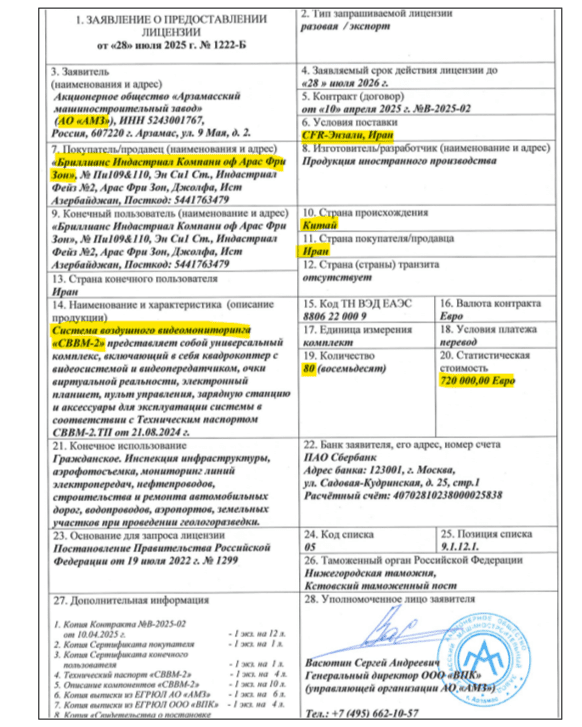
The 2025 package also included 80 Chinese-made SVVM-2 airborne video surveillance systems. An export license application estimated their combined value at €720,000.
The documents do not identify the Chinese manufacturer or explain how the systems entered the Russian supply chain. However, this finding sits within a much wider network of military and dual-use trade connecting the three countries. In March 2026, Iranian Foreign Minister Abbas Araghchi confirmed that Russia and China were providing military assistance to Tehran as part of a broader strategic partnership.
Training, sanctioned shipping and offshore payments
As with the Mi-28NE contract, the Spartak program covered more than the delivery of military hardware.
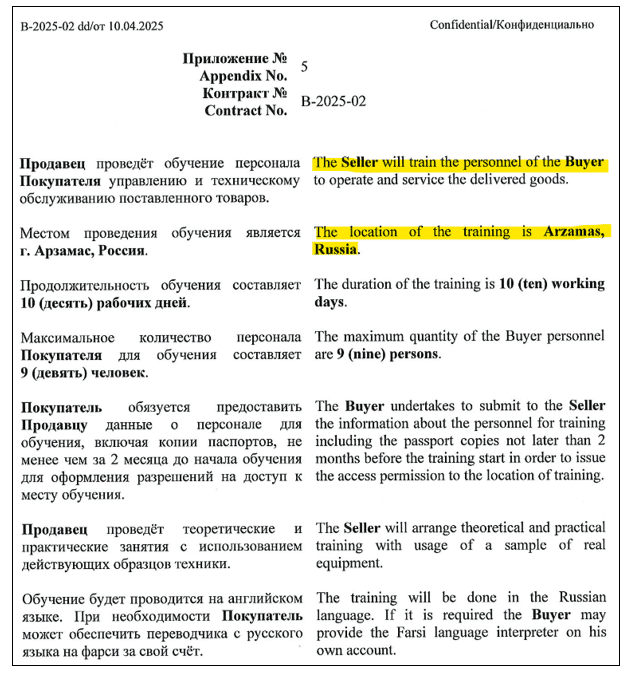
Iranian personnel traveled to Arzamas in Russia—where AMZ manufactures the vehicles—to receive training in their operation and maintenance.
Russia also arranged a maritime route for the vehicles. At least 36 Spartaks were scheduled to be transported aboard the Russian cargo ship Kompozitor Rakhmaninov. The US has sanctioned the vessel for carrying military cargo between Russia and Iran.
Russia had prepared not only a maritime route for the Spartaks, but also a separate mechanism for moving the money.
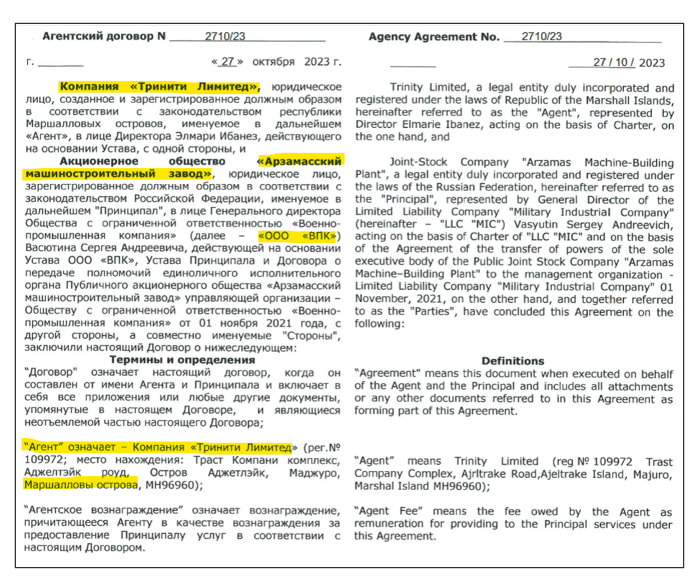
Payments under the €20.16 million contract were to be handled in euros through an offshore intermediary. The documents name Trinity Limited LLC, registered in the Marshall Islands, as responsible for handling the financial settlements between AMZ and Brilliance.
The documents do not identify which banks were to handle the payments. What they do show is that the two sanctioned countries established a separate financial route for the multimillion-euro deal, just as they used a US-sanctioned vessel for transportation.
Across both programs, Russia was doing more than selling Iran helicopters and armored vehicles. The documents reveal a broader infrastructure built around the deals: training crews and technical personnel, supplying simulators and components, arranging maritime transportation, and establishing an offshore payment mechanism.
At the same time, the contracts sought to conceal Iran by using customer codes, while explicit references to exports were removed from shipment labels. The documents reveal not two isolated arms deals, but a systematic military supply channel capable of operating despite sanctions—and planned to remain active until at least 2029.
Discuss this article:


-111f0e5095e02c02446ffed57bfb0ab1.jpeg "Photo of Roman Kohanets")