- Category
- Investigations
Unboxing Russia’s Geran-4 Drone: Nearly All Its Electronics Are Made Abroad
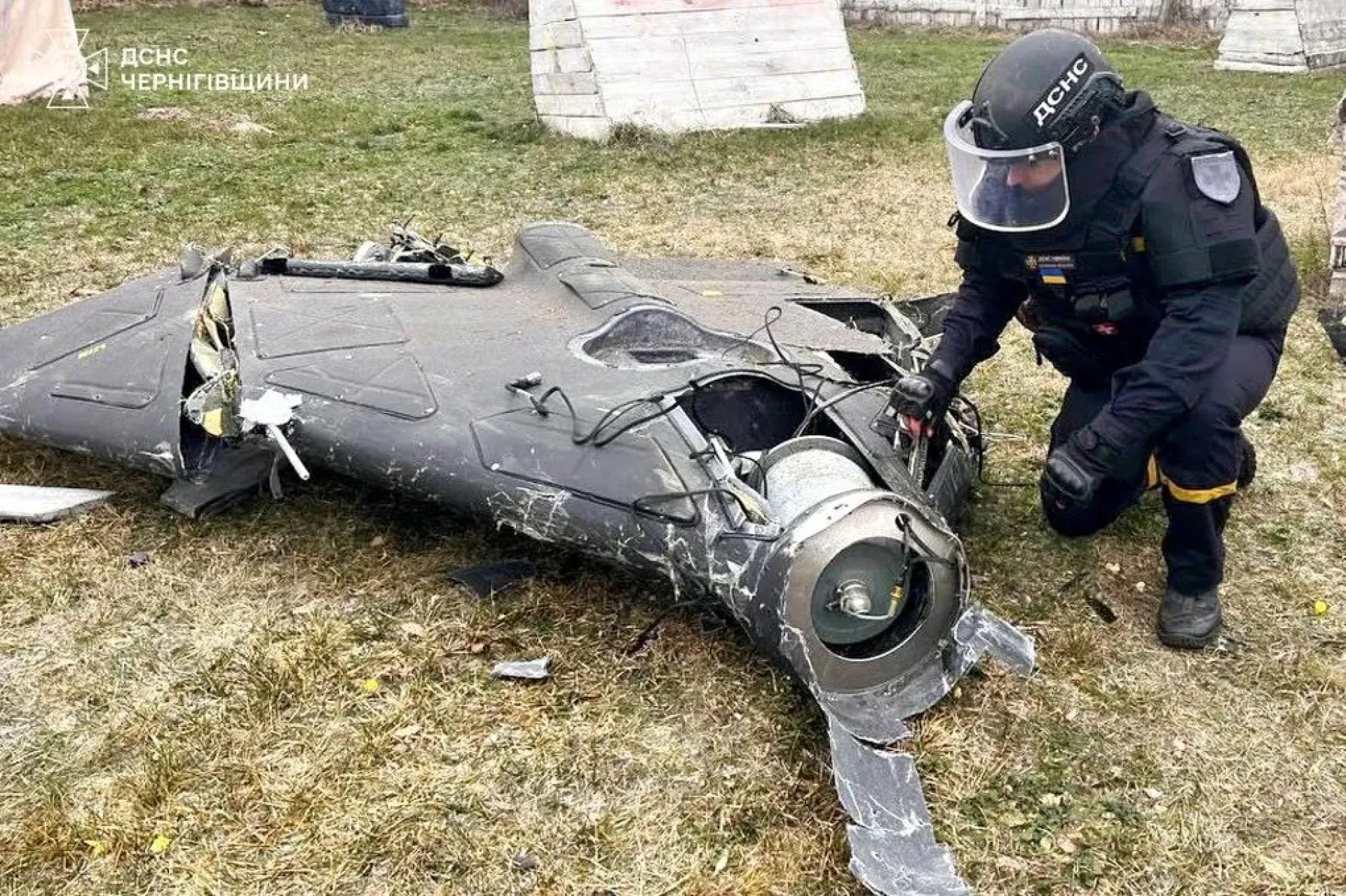
A Geran-4 smashes into a building in the middle of the night, far from the frontline. Inside it are a British microcomputer, a Chinese jet engine, and American computer chips, showing how Russia’s drone manufacturing depends on foreign components.
 Prefer U24 Media on Google
- Authors

-605be766de04ba3d21b67fb76a76786a.jpg "Joseph Place")
The jet-powered Geran-4 drone is a deadly threat to Ukrainians, hitting homes, educational facilities such as schools, medical centers, and animal shelters often within minutes of an air alert. Yet, while the Russians are using them to terrorise civilians, they are made of parts from all around the world. We explore what is inside these drones.
What is the Geran-4 and how does it work?
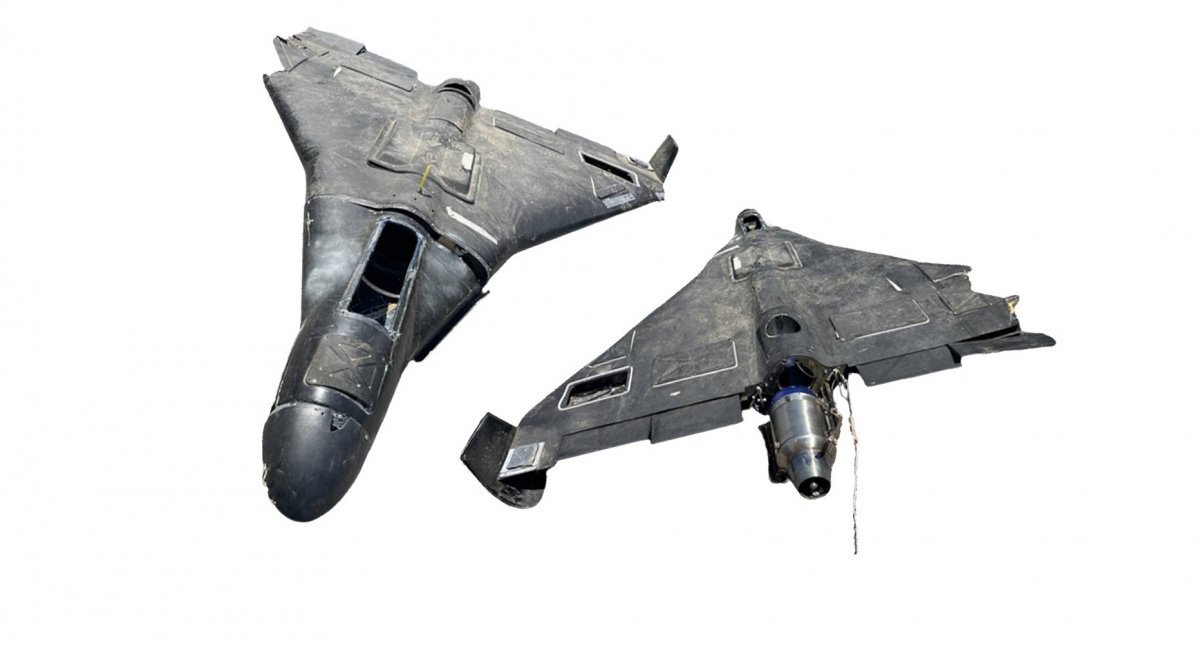
The Geran-4 is a Russian jet-powered drone that was a major upgrade over its predecessor, the Geran-3, but it retained core features. They are much harder to intercept than regular drones.
These drones are one-way attack drones, launched from areas bordering Ukraine, guided over long ranges and equipped with advanced autonomous target-detection systems, allowing minimal to no human input in the final moments before striking. They remain connected via SIM cards and GSM modems. These drones feature a modem with a 300 KM range, which also acts as a signal relay, so each drone also relays and strengthens each other’s signals when travelling together.
The Geran-4 retains the characteristic delta-wing shape of Shahed-type drones, but it is powered by a jet engine, allowing it to reach significantly higher speeds than the propeller-powered drones from Iran and Russia, which were usually cruising around 180 km/h. Geran-4s travel around 500 km/h, though they have been observed at even higher speeds of 960 km/h. They can reach much greater heights, around 8 km in altitude, and have been observed flying distances of around 700 km. They also have more complex navigation and anti-interception tools.
Which countries’ technology is inside the Geran-4?
Radio Free Europe/Radio Liberty (RFE) recently examined the components of one of these drones, allowing us to see the share of foreign-made ones.
Ukrainian intelligence (HUR) has detailed the foreign parts that they find inside these drones. Larger parts, including the engines sometimes, are assembled in Russia using foreign components, and in general, almost everything is from abroad.
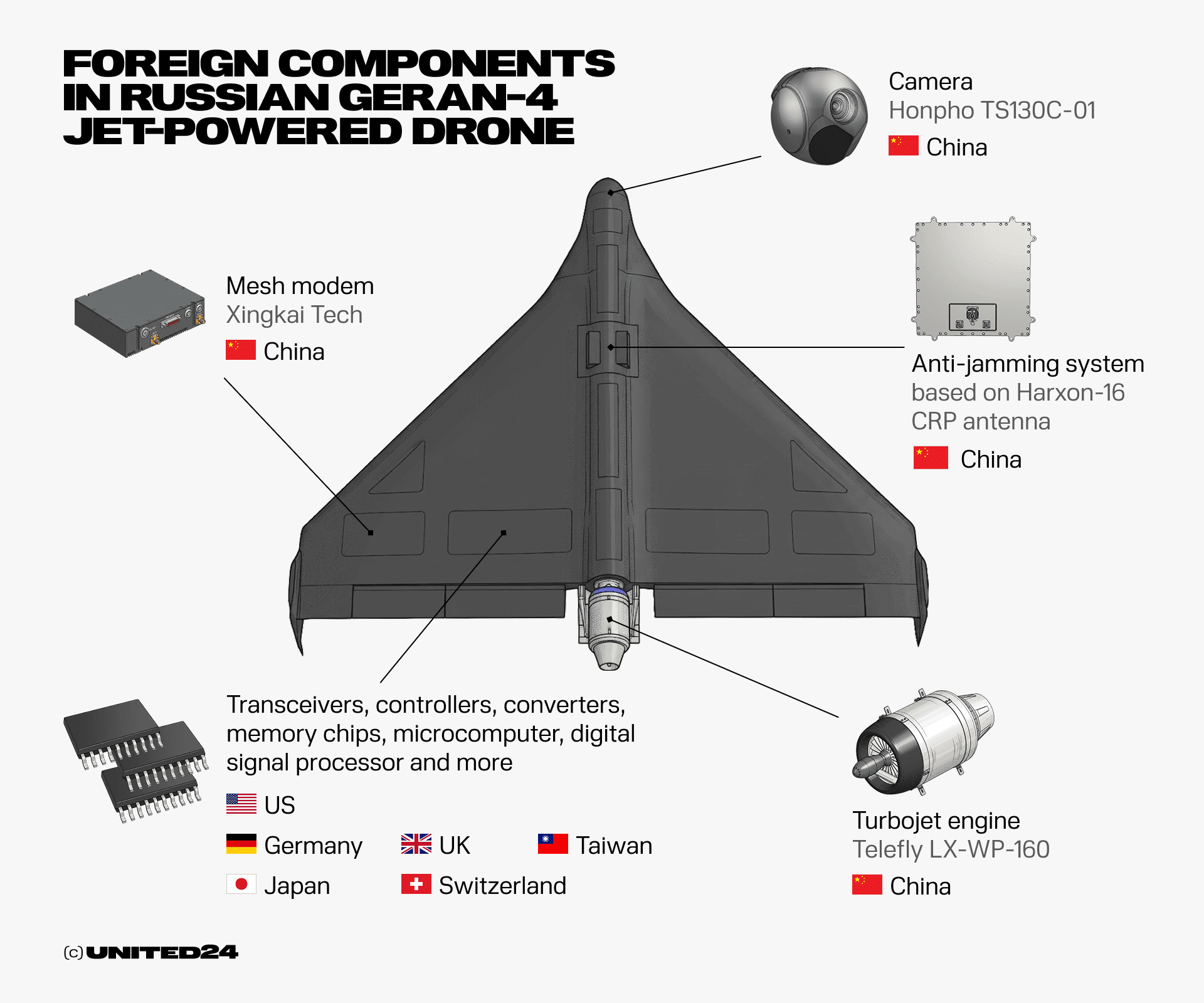
Here are some of the key parts from abroad:
Chinese Telefly LX-WP-160 turbojet engine (though sometimes assembled in Russia with Chinese components)
Chinese mesh modem
Foreign SIM cards (from Ukraine, Belarus, and EU countries)
Circuit boards from Texas Instruments
Relays from FOTEK Controls in Taiwan
Transceivers from Maxim Integrated Products or Texas Instruments in the USA
Memory chips from Micron Technology in the USA
Microcontrollers from STMicroelectronics in Switzerland
Raspberry Pi microcomputers from the UK
There’s also an array of conductors, connectors, transistors, and more from the USA, China, Germany, the UK, and Japan. 45 foreign parts and eight unidentified have been found by HUR, and RFE/RL say that almost the entirety of these drones are made with foreign parts. Different manufacturers’ components may be utilised, so it is difficult to assess a total number or percentage.
-69d03af11a3e9f45431b68b50d18e51c.png)
How much does the Geran-4 drone cost?
The cost is around $50–70,000 each, according to an air defense source who spoke to the Economist. The most expensive part of the drones is the engine, around $35–40,000, according to Major General Vadym Skibitsky, deputy head of the Defense Intelligence of the Ministry of Defense.
The other components can vary, but many are off-the-shelf items; for example, the microcomputers are mass-market civilian products and therefore relatively inexpensive. The cost of the whole drone was cut in half due to Russia's 3D-printed turbojet parts, according to The Economist.
Why Western chips keep reaching Russian drones
Sanctions from the USA, EU, UK, etc. on Russia forbid the export of military-purpose goods, among other products that could be used for military purposes, aviation, and other areas of the economy. Theoretically, this should prevent the sale of computer chips that end up in Russian drones, but there are challenges regarding dual-use products. Additionally, what happens is a trail of intermediaries and third parties, like Armenia, the UAE, India, Türkiye, and others, buying civilian products and reselling them to Russia. The British defense think tank the Royal United Services Institute and Reuters investigated this approach in 2023. Additionally, the civilian use of many of these chips means they are easily sold and resold without major scrutiny.
If Texas Instruments sells to a company in the UAE seemingly for industrial or civilian use, this company could sell to a second Emirati company, which is then selling to Russia. Texas Instruments may not know anything after its initial sale, which was fully compliant.
Another method is by repurposing civilian technology for drones; they can better evade sanctions (which also makes the manufacturing of these drones cheap). For example, chips from washing machines, dishwashers, and other appliances. Exports of these devices have reportedly increased to Central Asia.

What could slow Geran-4 production?
Essentially, a combination of stronger due diligence from Western manufacturers when it comes to exporting their parts, found in Russian drones, and greater scrutiny on the third-party intermediaries who are exporting to Russia.
The Center for European Policy Analysis (CEPA), a Washington-based think tank recommends a database of high-risk products, better integration of compliance and legal bodies that operate “in silos”, stronger requirements on sellers to flag bulk sales, stronger “know your customer” rules to be applied to manufacturers of chips, and a task force to focus on catching third-party sellers in Central Asia and the Caucasus.
Pressure on China to move away from trading with Russia would also undermine the production process, as many of the key parts, especially for the engine, are made in China. China formally restricts export of drones and certain components for military purposes, however, through intermediaries and directly from companies, many parts are sent to Russia to be repurposed for drones and missiles. This gap between export laws and enforcement needs to be filled.
The prevalence of foreign parts shows how heavily Russia is dependent on non-domestic products and network of sanctions-evading companies to create drones to regularly attack Ukrainian cities. Russia cannot manufacture enough of these components domestically at the scale needed — this creates a vulnerability.
Discuss this article:
In a Nutshell
-4a56a6b482ec132402c16ef6fcabf9a2.png)

-111f0e5095e02c02446ffed57bfb0ab1.jpeg "Photo of Roman Kohanets")


-b7da0e3033ba5fc9d5f47439cb28c6ad.png "Illustration featuring the logos of AI chatbots Claude (left) and Mistral (right). (Illustration: UNITED24 Media)")