- Category
- Investigations
Russia’s War Machine Has a Western Technology Problem China Still Can’t Solve
Russia has replaced Western suppliers of industrial equipment with Chinese companies. But an analysis of four years of Russia’s largest metalworking machine tool exhibition reveals that these machines still rely on Japanese, German, and other foreign technologies—even when their manufacturers are under sanctions.
 Prefer U24 Media on Google
- Authors


At the Metalloobrabotka 2026 exhibition in Moscow, Chinese company Ningbo Blin Machinery is displaying a metalworking machine tool. Its control panel bears the name of Japan’s FANUC, one of the world’s largest manufacturers of computer numerical control (CNC) systems. Such equipment is used to produce high-precision metal components, including those for the aerospace, missile, and defense industries.
The presence of a Japanese control system on a Chinese machine tool would not, in itself, be unusual. Except for one detail: Ningbo Blin Machinery has been under European Union sanctions since 2024 and UK sanctions since 2025.
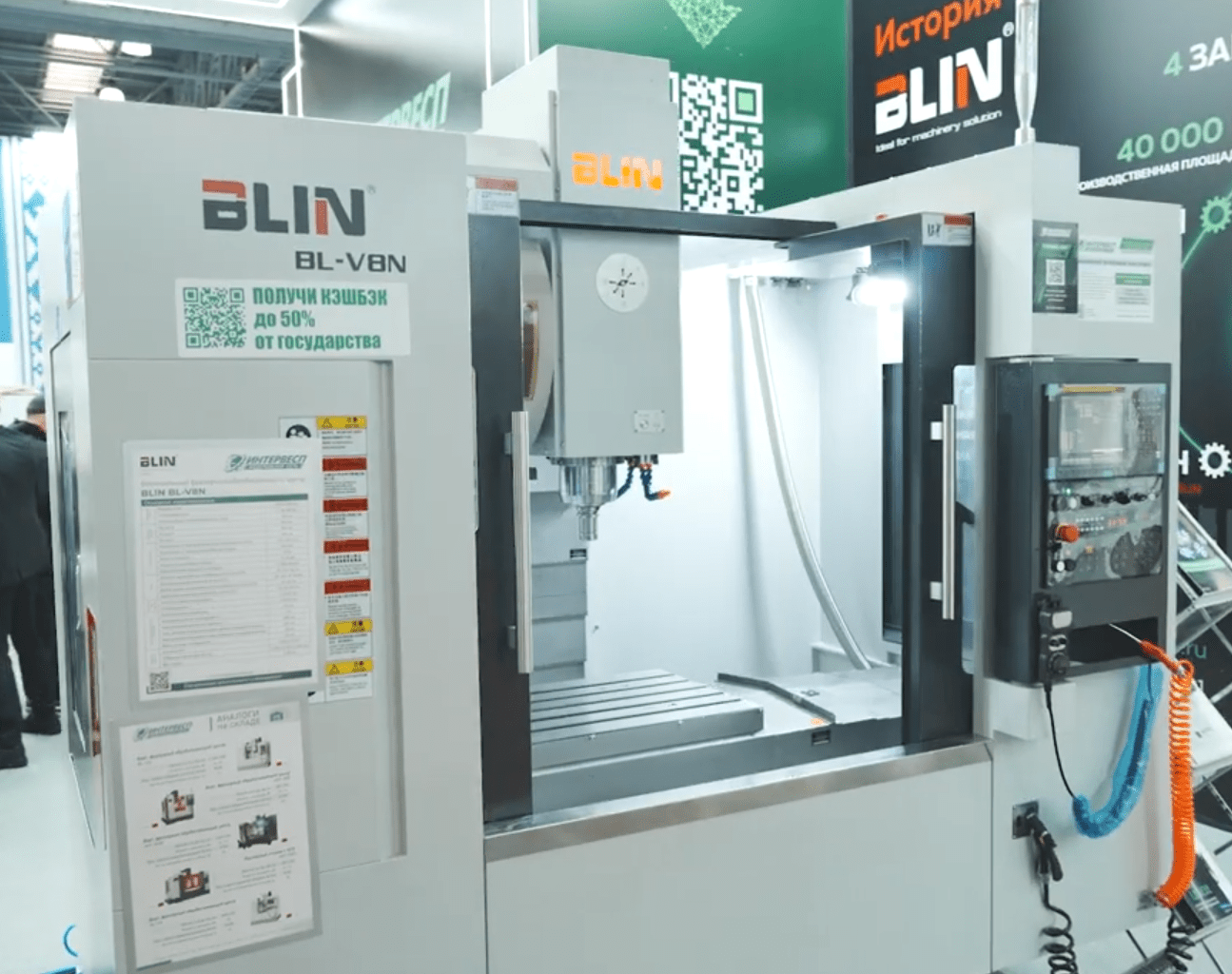
Nevertheless, its equipment featuring a Japanese-made control system was on display at the Moscow exhibition in 2026.
How the Chinese company obtained the system, when it was manufactured, and how it ended up installed on a machine tool exhibited in Russia remain unknown. FANUC has previously stated that it is taking steps to prevent its technology from reaching Russia.

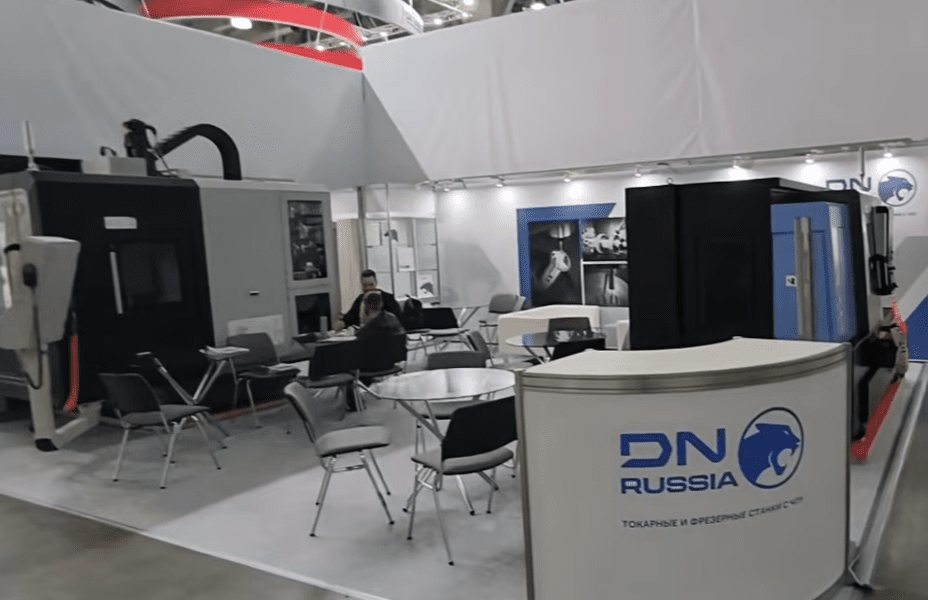
And this is not an isolated case. At the same exhibition in 2026, Russian company DN RUS was offering equipment from South Korea’s DN Solutions, whose manufacturer had announced that it was suspending deliveries to Russia following the start of the full-scale invasion. Five-axis machine tools manufactured by DN Solutions had previously been identified at a facility linked to the production of Russia’s Lancet attack drones.
These cases illustrate one of the central challenges facing Western efforts to restrict Russia’s access to advanced manufacturing technologies. Even when a finished machine tool is manufactured in China, its most critical components may originate in Japan, Germany, the United States, or other countries that have imposed export restrictions on Moscow.
Following its full-scale invasion of Ukraine, Russia sharply increased military production. Defense manufacturers received substantial government funding, while access to modern industrial equipment became critical to expanding the production of ammunition, missiles, drones, and other military hardware.
At the same time, the United States, the European Union, Japan, the United Kingdom, and their partners tightened export restrictions on Russia for high-precision machine tools and technologies that could be used in military manufacturing. But these restrictions did not bring Russia’s industrial equipment market to a halt. Instead, they reshaped its supply chains.
An analysis of materials from Moscow’s Metalloobrabotka exhibition between 2023 and 2026 shows how Chinese companies replaced Western manufacturers while remaining dependent on technologies from countries that have imposed sanctions on Russia. Meanwhile, the latest exhibition suggests that access to certain categories of sophisticated equipment is becoming more difficult.
Four years of sanctions: what has changed?
After 2022, China rapidly emerged as Russia’s leading supplier of metalworking machine tools. Amid massive financial injections into Russia’s military-industrial complex, annual deliveries reached tens of thousands of machines, with Chinese equipment becoming the dominant source of imports. Yet replacing suppliers of finished machinery did not mean abandoning Western technology.

This dependence extended beyond control systems. The 2025 exhibition catalog listed components from Japan’s Mitsubishi Electric and Yaskawa, as well as Germany’s Siemens and Heidenhain. Industrial automation technologies and measuring equipment were also represented at the exhibition, including products from Germany’s KUKA and Sweden’s Hexagon.
By 2026, signs were emerging at Moscow’s Metalloobrabotka exhibition that Russia was facing growing difficulties accessing certain categories of high-precision equipment.
Video footage from the exhibition showed noticeably fewer sophisticated five-axis machine tools—machines capable of manufacturing high-precision components with complex geometries, including parts used in the aerospace and missile industries.
In conversations with prospective buyers, representatives of Chinese manufacturers spoke of the need to obtain special export licenses and cited cases in which Russian buyers had been denied permission, particularly when the end user was linked to the defense industry.
These developments come amid tighter Chinese export controls. In December 2024, China introduced restrictions on exports of certain categories of high-precision machine tools. The measures do not impose a blanket ban on deliveries to Russia but require export licenses for equipment meeting specific technical criteria.
Statements by exhibition participants captured on video suggest that the new requirements may be creating significant obstacles for some Russian buyers.
The visibility of certain Western technologies has also changed. In 2024, researchers identified nine control systems manufactured by Germany’s Heidenhain and Siemens on Chinese machine tools. By contrast, these systems were almost entirely absent from video footage recorded at the 2026 exhibition.
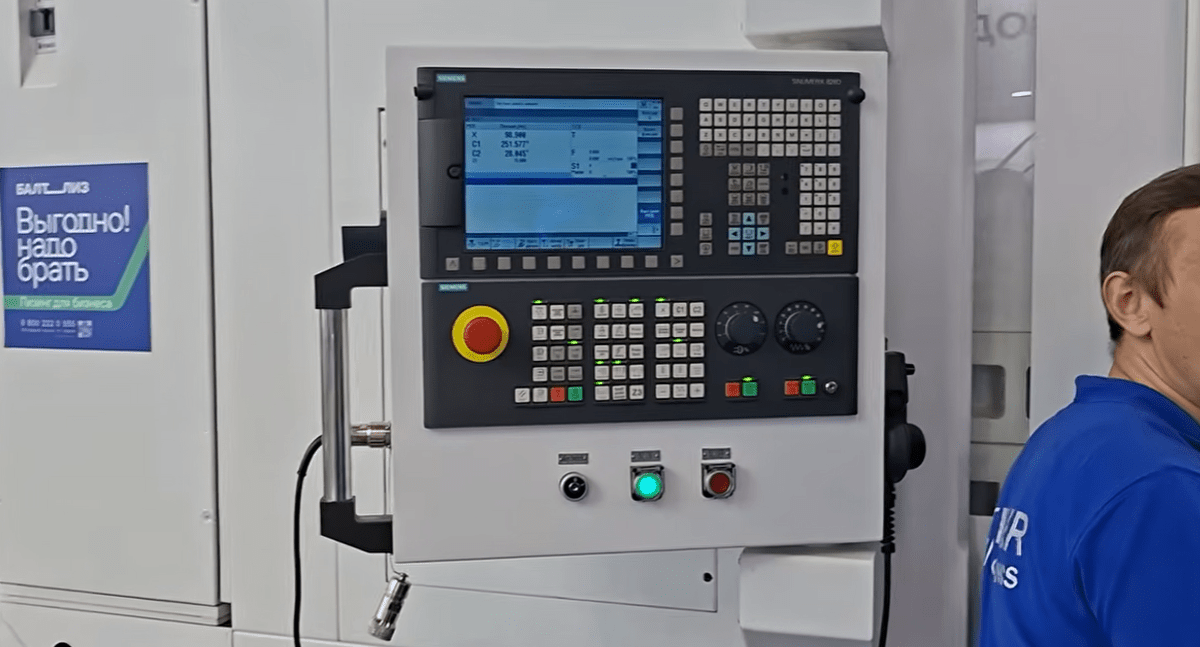
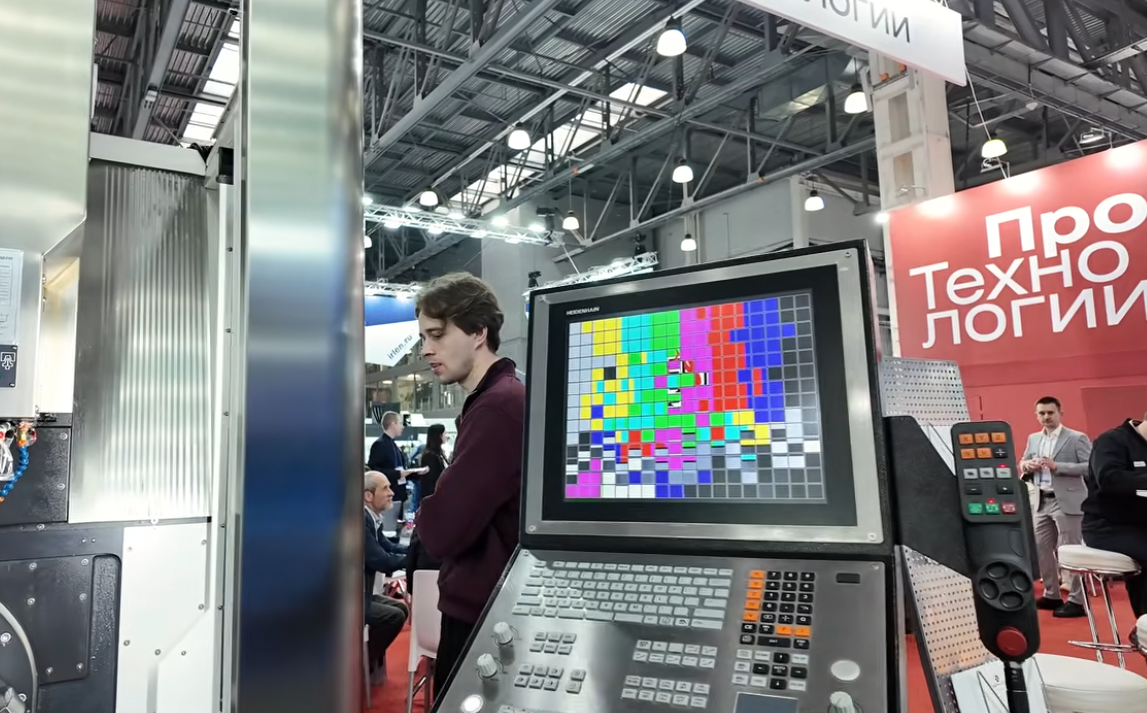
This alone does not prove that Siemens deliveries to Russia have declined: exhibition footage does not capture the entire market. Still, the contrast between the two years is striking. Meanwhile, Japan’s FANUC continues to appear on machine tools from various manufacturers, including equipment produced by sanctioned Ningbo Blin Machinery.
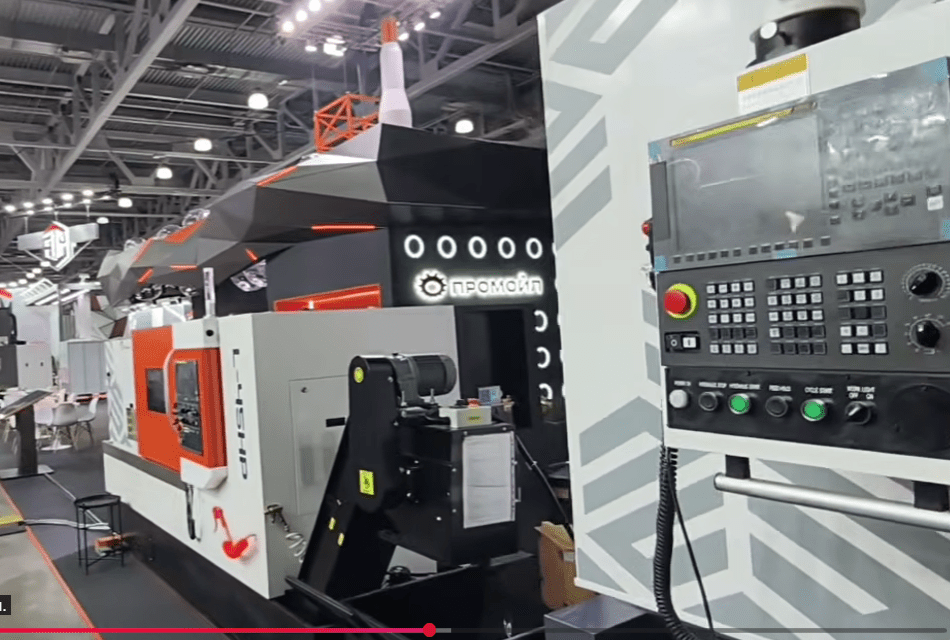
Four years of observations at the Moscow exhibition demonstrate how restrictions are gradually changing the conditions under which Russia can purchase industrial equipment. Access to some sophisticated machine tools appears to be becoming more difficult, while certain Western control systems are becoming less visible.
Yet the underlying dependence remains. Russia has learned to buy Chinese machines instead of Western ones, but those machines may still operate using technologies from countries seeking to restrict Russian military production.
The 2026 Moscow exhibition revealed both sides of this situation: Chinese manufacturers are now reporting that Russian defense customers are being denied export approvals, yet Japanese control systems continue to appear on their machine tools.
For countries seeking to restrict Russian military production, controlling exports of finished machine tools is only part of the challenge. Equally important is tracking the movement of individual components through manufacturers and intermediaries in third countries before they end up in equipment available to Russian buyers. For now, such controls exist de jure, but de facto, they have not resolved the problem.
Materials and analysis provided by the Cyber Forces of the Armed Forces of Ukraine.
Discuss this article: