- Category
- Investigations
Chinese Jet Engines Gave Russia’s Geran Drones a Deadlier Upgrade. Now Iran Is Eyeing Them
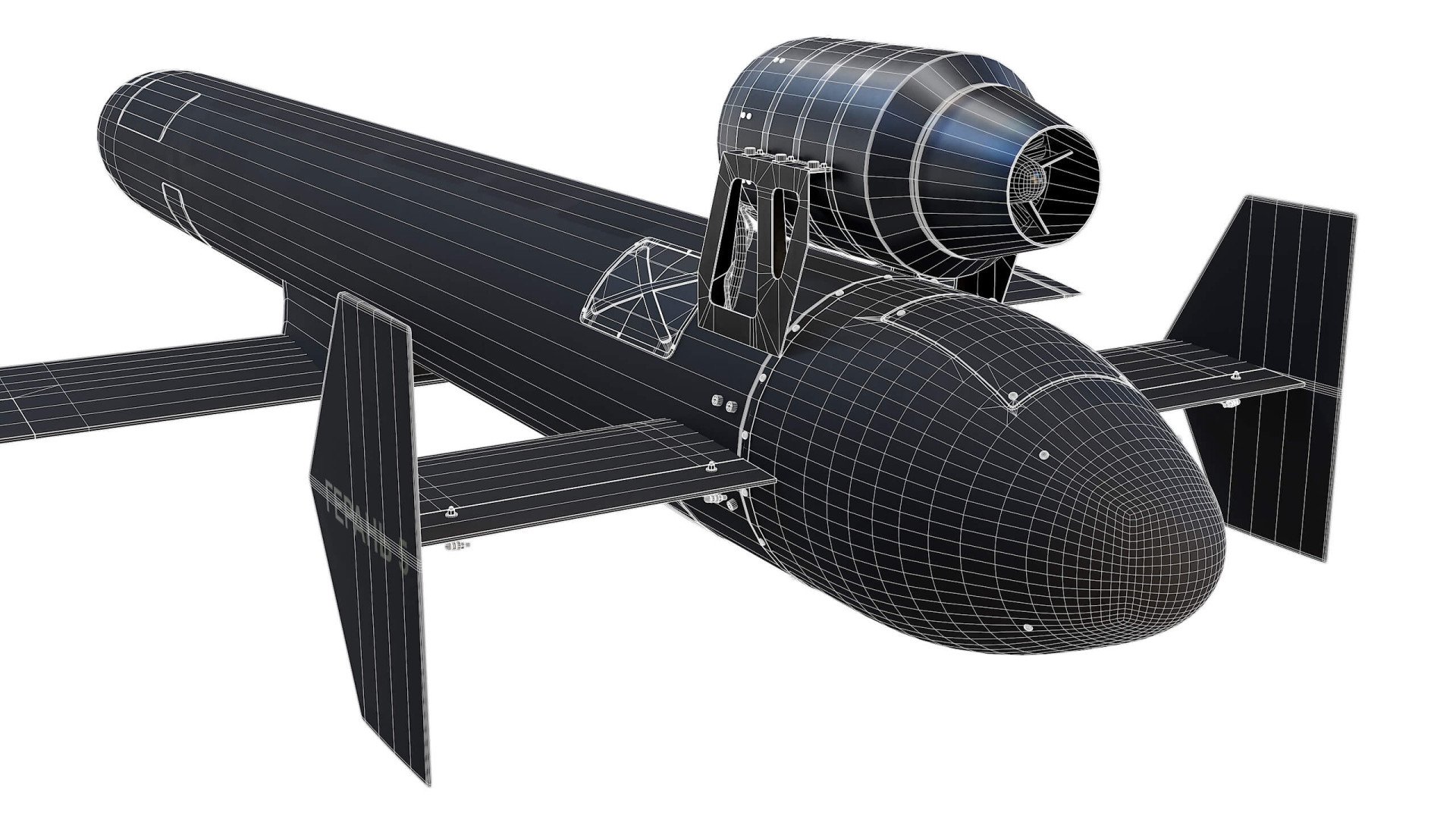
Russia is striking Ukraine with a new generation of jet-powered attack drones that are faster, harder to intercept, and equipped with Chinese-made engines. A UNITED24 Media investigation traces the Russian links behind those engines as Moscow moves to produce its own version.
 Prefer U24 Media on Google
- Authors

-206008aed5f329e86c52788e3e423f23.jpg "Photo of Oleksandr Moiseienko")
While Russia has made no obvious gains on Ukraine’s eastern front, it has decided to focus on key Ukrainian cities, intensifying its attacks with jet-powered drones that are still difficult to neutralize. This became possible largely thanks to a Chinese jet engine that, according to Beijing’s assurances, should not have reached Russia under its stated export-control rules.
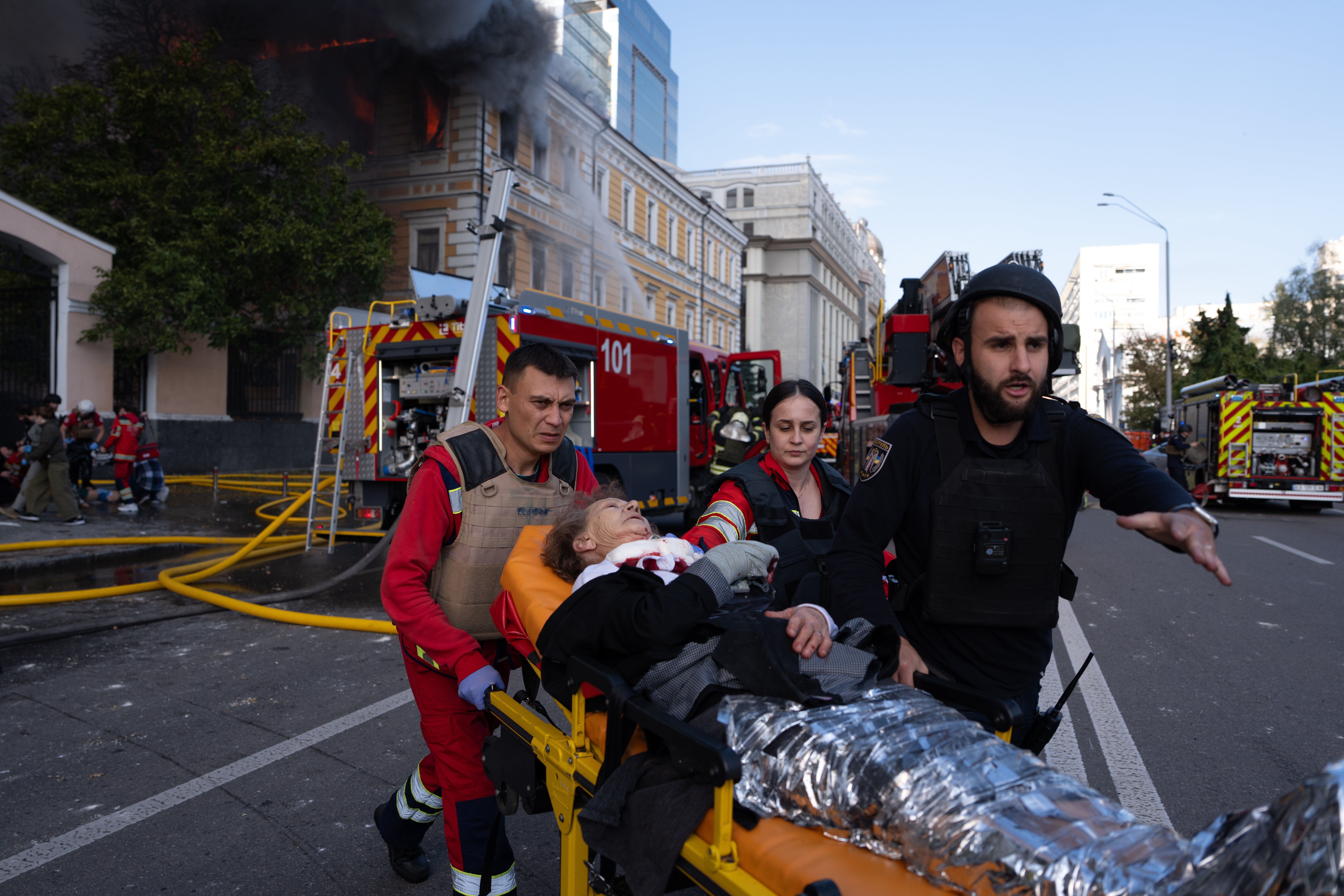
For Kyiv residents, this story has very tangible consequences. Strikes on bridges, gas stations, schools, and medical facilities make ordinary routes through the city dangerous even in broad daylight.
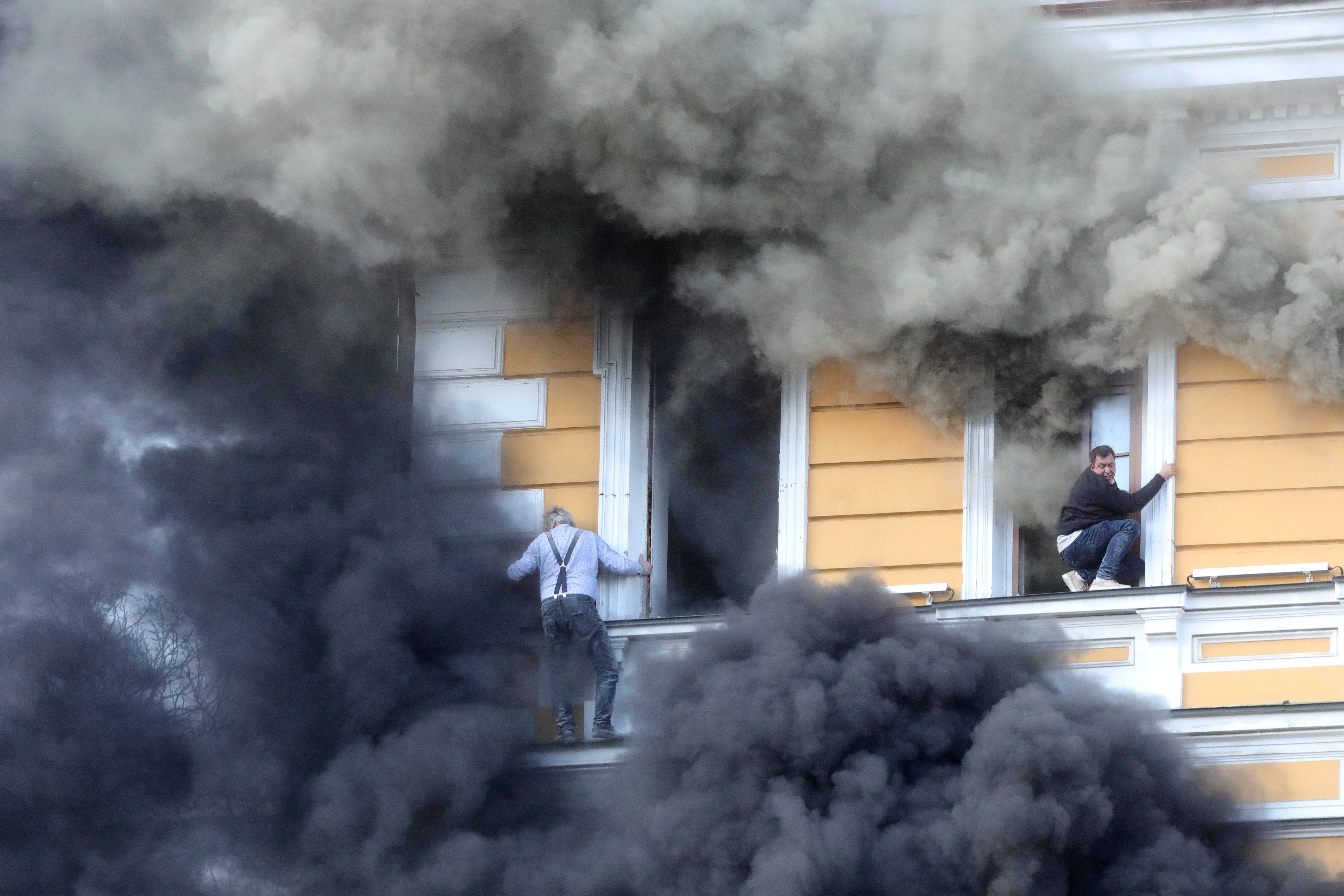
China’s policy of “peaceful rise,” promoted by Beijing since the mid-1990s, stands in stark contrast to the reality in Kyiv, where virtually no place feels entirely safe. The spread of Chinese technology into Russian weapons came crashing into Kyiv’s scientific community when researchers at the Academy of Sciences were forced to jump from windows to escape an attack.
Now Ukrainian intelligence is reporting the next step: the Russian manufacturer in Alabuga is installing its own version of the Telefly engine, potentially enabling the technology to spread further among Russia’s allies.
From a Chinese engine to a Russian-made copy
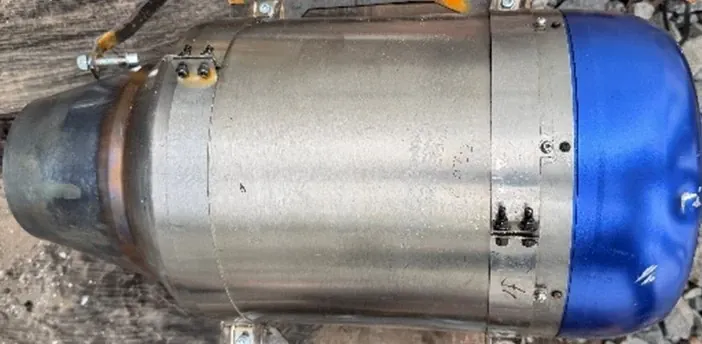
Ukraine’s Defense Intelligence (HUR) has released information about a new version of the Geran-4 that Russia began using this fall. The drone is equipped with the Susanin electro-optical navigation system, upgraded navigation equipment, and a specialized warhead designed to strike bridge structures and power transmission line supports.
The report contained another important detail: the Chinese Telefly turbojet engine had been replaced by a Russian-made version produced at the Alabuga facility.
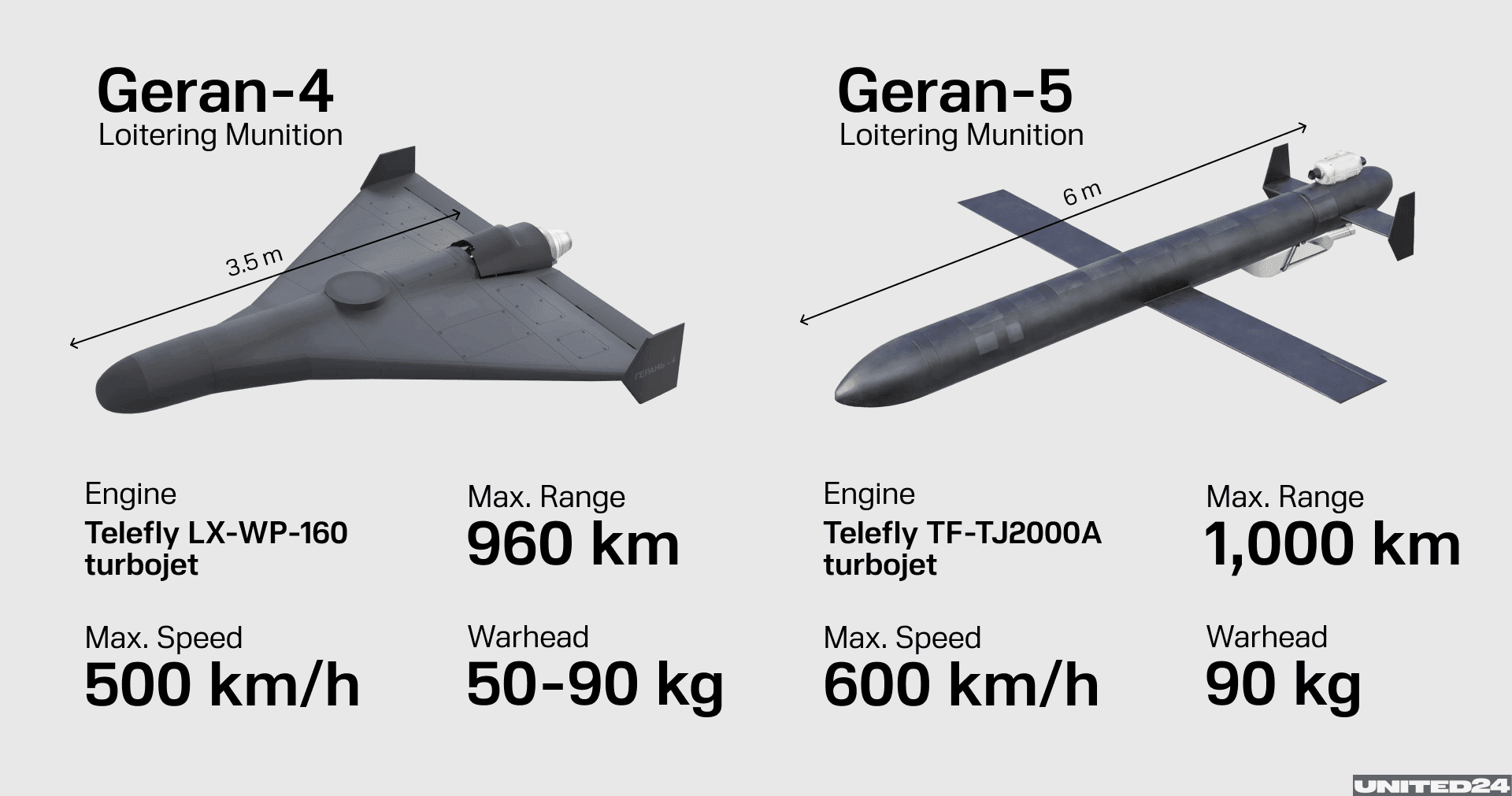
Before this, Ukrainian intelligence had documented the use of Telefly powerplants in several Russian jet-powered drones. The company’s engines are used in both the jet-powered Geran-4 and its modified successor, the Geran-5.
These drone variants bear little resemblance to the original prototypes of Iran’s Shahed, whose technology Russia once obtained from Iran. Jet-powered drones shorten the time between an air-raid warning and an explosion, while newer modifications are being adapted to destroy infrastructure. Their appeal lies in their effectiveness and low cost. In effect, Russia has obtained the equivalent of a cruise missile at a cost of only around $120,000.
At the same time, even with a localized engine, Russia still relies on Chinese technology and components.
What Telefly’s different catalogs reveal
Before Russia localized production, technology supplied by the Chinese company Telefly represented a breakthrough in its ability to terrorize civilians.
On Telefly’s English-language homepage, the company appears primarily to be a supplier of computer and telecommunications equipment. Its product menu includes graphics cards, network cards, servers, memory, and transceivers. There is no jet-engine category. References to engines can no longer be found on the Russian-language homepage either.
Changing the language, however, reveals a different product range. The German-language version, for example, still has a page for the TF-TJ2000 advertising its use in cruise missiles.

The brand is linked to Shenzhen Xianghao Communication Equipment Co., Ltd., according to corporate registration records. The company was registered in Shenzhen on June 20, 2010, and was previously known as Shenzhen Huasen Communication Technology Co., Ltd.
Its legal representative, Dai Xingwang, owns 60% of the company. The remaining 40% belongs to Jia Jiangyan, who is also listed as a member of the company’s supervisory body.
Separately, Telefly Telecommunications Equipment Co., Limited is registered in Hong Kong and was incorporated on March 29, 2010. This name is used on the brand’s website and in some documents concerning products registered by Russian companies.
Doing business with Russian companies has not prevented Telefly from claiming on its website that it partners with Nvidia and offering Nvidia equipment for sale. In February 2026, the Russian company Kompaniya Sovremennye Tekhnologii registered four declarations of conformity for Nvidia Jetson equipment that also listed Telefly, according to materials obtained by our newsroom. Jetson devices are compact computing modules capable of processing video and running artificial intelligence algorithms, including aboard drones.

How Chinese jet engines boost Russia’s Geran drones
Jet-powered Gerans have created a new challenge for Ukrainian air defenses. While Ukraine developed interceptor drones to counter conventional strike UAVs, the new engine has enabled Russia to offset these new Ukrainian air-defense capabilities.
The Geran-5 has a cruising speed of 450–600 kilometers per hour, a range of approximately 950 kilometers, and a 90-kilogram warhead, HUR reports. In terms of its characteristics and method of employment, the drone approaches the capabilities of a cruise missile.
A ready-made Chinese engine gave the Russian manufacturer a key component for this weapon. Manufacturing such an engine requires precision machining, appropriate materials, balancing of rotating components, and testing. The ability to purchase a complete power plant allowed Russia to develop jet-powered drones without waiting to establish its own engine production.
The military applications of the product were not concealed in its technical description. On Telefly’s German-language website, the listed applications for the TF-TJ2000 explicitly include unmanned aerial vehicles, cruise missiles, and high-speed reconnaissance systems.
In other words, the company itself advertised the engine for missile applications. This makes scrutiny of buyers and the end use of its products a central issue in light of Chinese leaders’ pledges to enforce export controls on dual-use technologies.
China’s export controls face questions over Russian drone engines
Chinese authorities have repeatedly stated that China does not supply lethal weapons to parties to the war and that it controls exports of dual-use products.
-69d03af11a3e9f45431b68b50d18e51c.png)
Following talks with Xi Jinping in Paris in May 2024, European Commission President Ursula von der Leyen said the two sides had discussed China’s commitment not to provide Russia with lethal equipment. In July 2025, Chinese Foreign Minister Wang Yi also said China was not supplying lethal weapons to parties to the conflict and was strictly controlling dual-use goods, including drones.
In September 2024, China introduced updated export restrictions covering certain drones and related equipment. The list includes specified categories of engines. Products covered by the restrictions require a license as well as documentation identifying the end user and end use.
This is not a blanket ban on the sale of all engines to Russia. Establishing a violation would require examining the product's specifications, the date of export, and the relevant licensing documents.
However, the presence of Telefly products in several types of Russian strike drones already raises questions about the effectiveness of these controls. What end users did sellers identify? Did Chinese authorities verify that information? And what happened after public evidence emerged that the engines were being used in Russian weapons?
Tracing Telefly’s business ties to Russia
The documents we obtained contain several pieces of evidence of Telefly’s trade with Russia.
A trade database record dated December 27, 2023, concerns the shipment of an XH-1000N engine from China to Russia. The exporter is listed as Shenzhen Telefly Telecommunications Equipment Co., Ltd. The Russian importer’s name is concealed in the available record. The transaction predates the updated Chinese restrictions that took effect in September 2024.
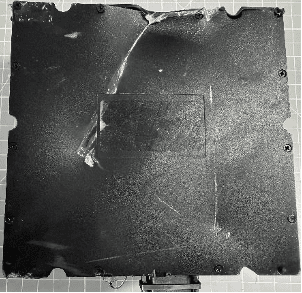
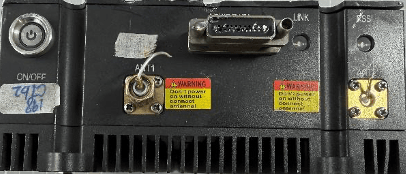
Other records concern equipment. The Russian company Furnitura LLC, established on January 9, 2025, registered a declaration for an RYQ-5 balancing machine in October of that year and another for an RYQ-15 test stand manufactured by Telefly in March 2026.
Following reports that engine production has been localized, these documents warrant particular attention. Balancing and testing are parts of the powerplant manufacturing process.
A separate court document records the shipment of another type of product. In a case heard in September 2024, Telefly is listed as the shipper of polyurethane tubing, while FEY LLC in Kazan is named as the recipient. This confirms a trading relationship, but not the supply of engines.
Another company, Kompaniya Sovremennye Tekhnologii LLC, according to the materials provided, filed four declarations in February 2026 for Nvidia Jetson products, each covering 4,000 units. Telefly appears in the documents, including as the laboratory that conducted testing. Such computing modules can be used for computer vision and autonomous navigation.
How Russia localized a Chinese-powered engine
Localization poses a greater challenge for export controls. A finished engine has a model designation, casing, and serial number. Production, however, can be sustained through numerous individual shipments of parts, materials, machine tools, testing equipment, and technical documentation.
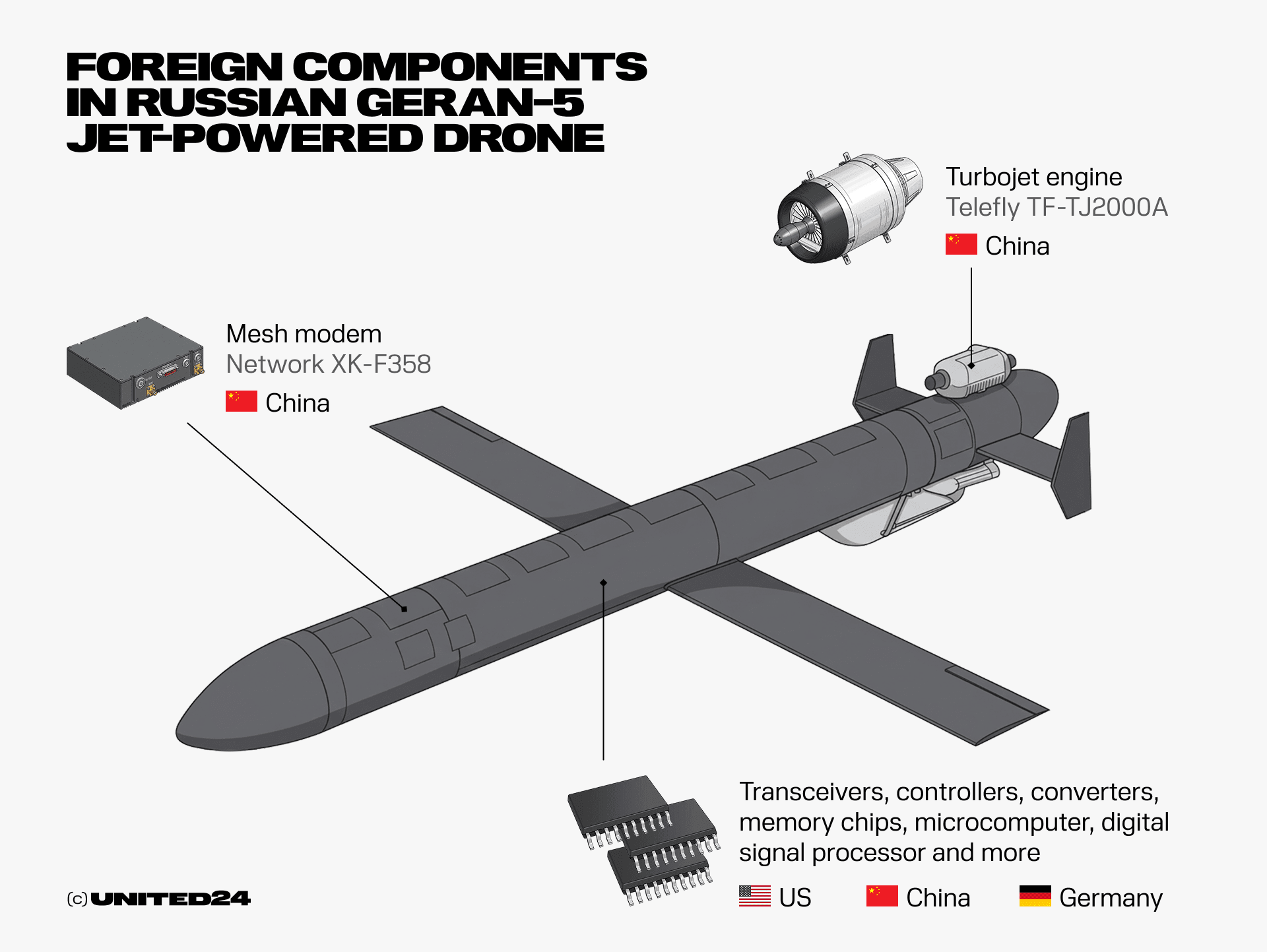
Localization of the TRD-200 engine in Alabuga has not eliminated Russia’s dependence on China. At the facilities of JSC SEZ PPT Alabuga, the engine is assembled from Chinese-made parts, with the necessary fitting performed using machine tools. Thus, Chinese components remain at the core of the finished Russian product: export controls must cover not only engines but also the parts that enable their continued production.
Some of these goods also have civilian applications. Effective controls, therefore, require scrutiny of end users and of links between transactions that, viewed individually, may appear to be ordinary commercial trade.
It remains unknown whether Telefly transferred engine-production technology to Russia. The Russian version may have been developed by copying purchased engines or through some other process. However, documents concerning Telefly equipment provide grounds for examining whether Chinese involvement was limited to the sale of finished engines.
Even if assembly takes place in Alabuga, dependence on foreign components and production equipment remains.
How Russia’s Geran drone technology could reach Iran
Iran has already approached Russia to obtain upgraded Geran drones, according to a Financial Times report citing Western security officials and a source close to the Kremlin. The report concerns a request for drones, not specifically Telefly engines, and does not confirm that any delivery has been completed.
But this interest points to a possible next stage. Weapons that Russia is refining through attacks on Ukraine could become export products. Production know-how could spread along with the finished systems.
The consequences of access to Chinese engines could outlast the shipments themselves. If a buyer has learned to manufacture a copy, halting exports of finished products no longer eliminates the capabilities that those exports helped create.
For Beijing, this is a test of its own stated policies. Chinese engines have been found in Russian weapons; Ukrainian intelligence is now reporting that Russia has localized production of the powerplant. Without scrutiny of engines, components, equipment, and technical services, the stated controls would leave open a pathway to weapons used to attack Ukrainian cities—weapons that actors outside Russia are already seeking to acquire.
The problem extends far beyond China.
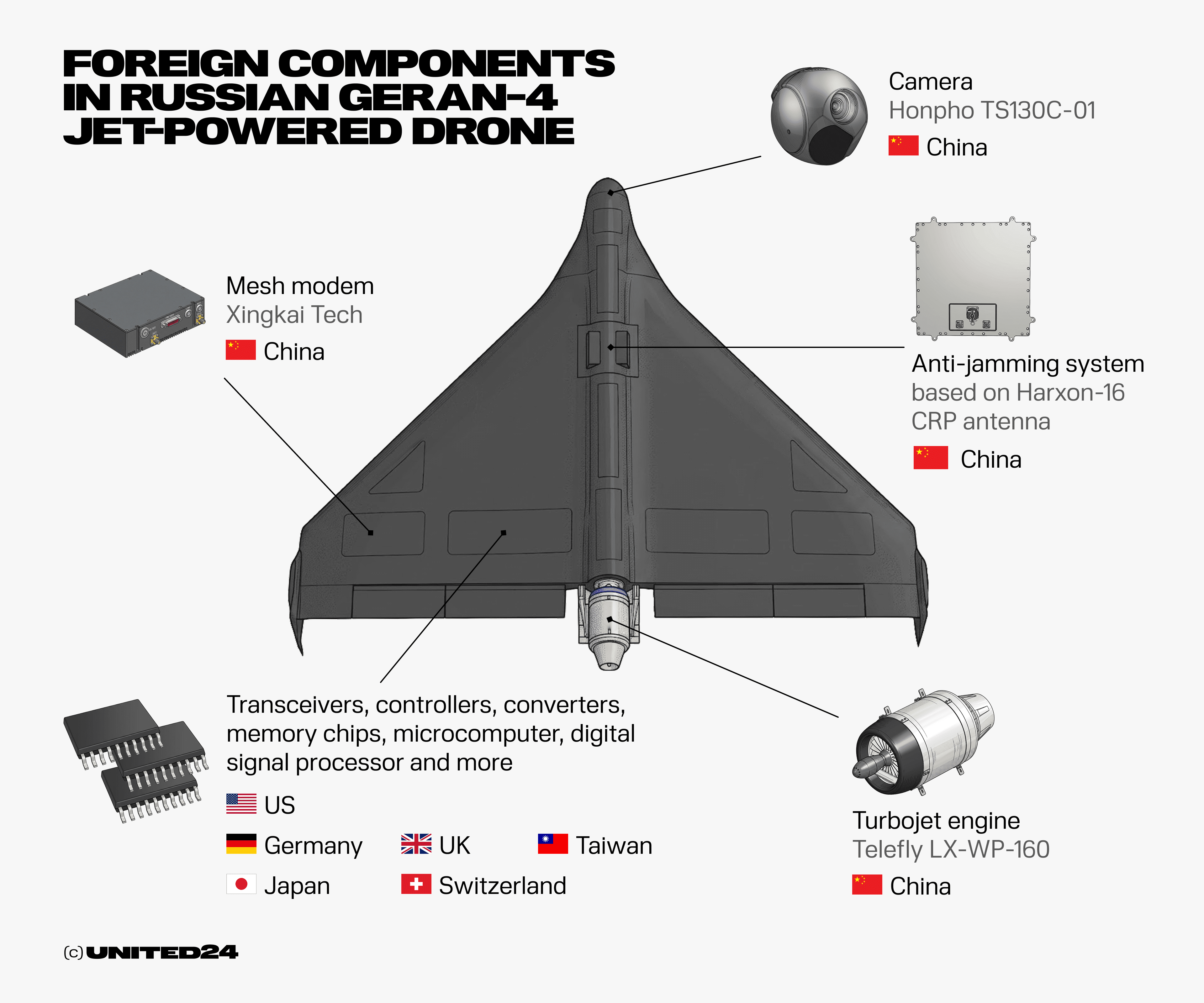
A list of Geran-5 components showed that its electronic systems contain products from US companies Texas Instruments, Monolithic Power Systems, and CTS Corporation, as well as Germany’s Infineon Technologies.
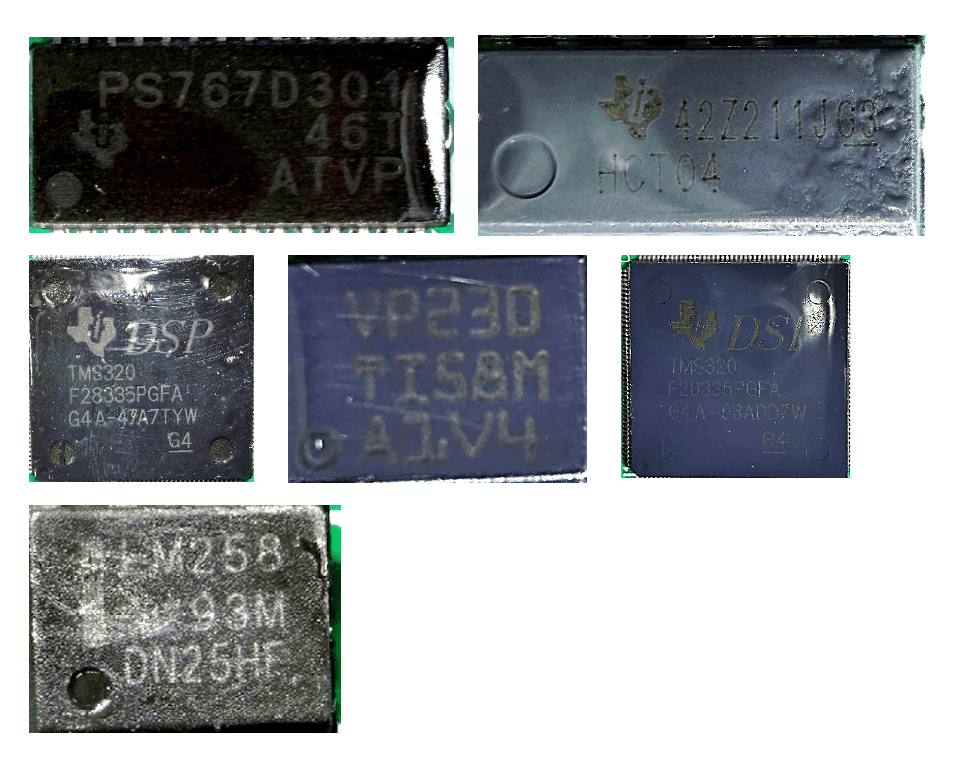
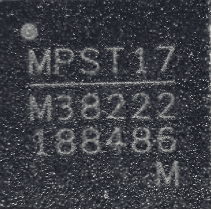
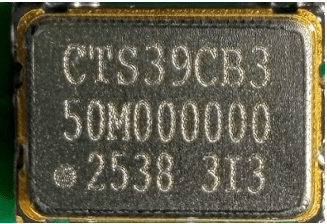
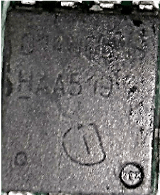
These components are used in the Russian strike drone’s navigation equipment and power-distribution system. For one CTS oscillator, the document lists a manufacturing date of September 2025, indicating that the issue is not limited to prewar inventories.
The presence of these components raises questions about the effectiveness of controls over intermediaries and end users. Russia continues to use international supply chains to manufacture weapons—and the Chinese engine is only one element of that dependence.
Discuss this article:
-9a7b3a98ed5c506e0b77a6663f5727c5.png)


-111f0e5095e02c02446ffed57bfb0ab1.jpeg "Photo of Roman Kohanets")