- Category
- Investigations
A Swiss Company Involved in Russia’s Search For Gold: Who Is Behind Mali’s New Refinery?
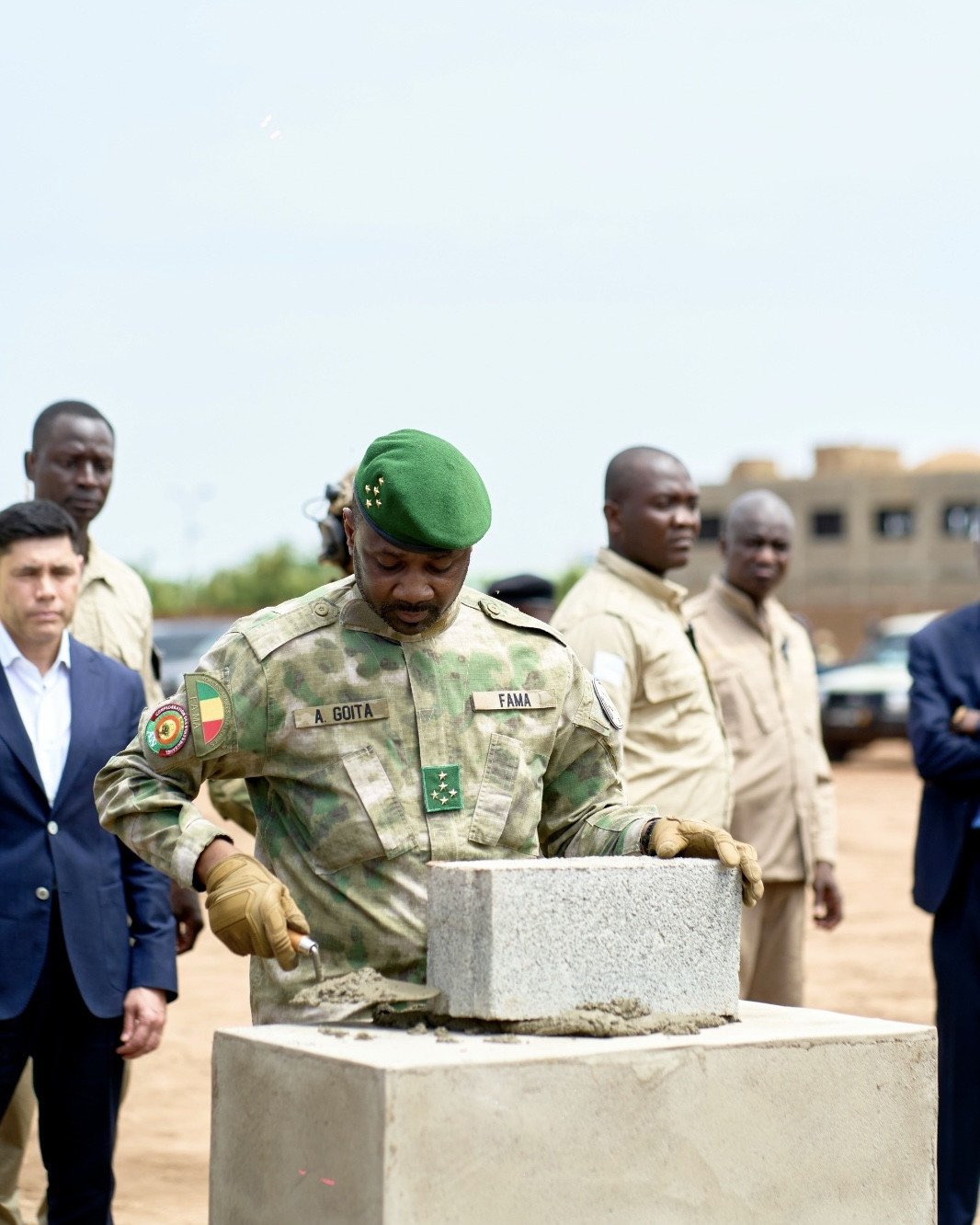
When Mali’s military ruler Assimi Goïta laid the foundation stone for a new gold refinery near Bamako, his government named two foreign partners: Russia’s Yadran and a company registered in Geneva. Our investigation found that the Swiss firm was run for nearly eight years by a former Russian lawmaker from Tatarstan, where Yadran is also based. He handed control of the company’s signature to his daughter, and the firm moved into the raw materials sector. Months later, he turned up at the groundbreaking of the new mine in Mali.
 Prefer U24 Media on Google
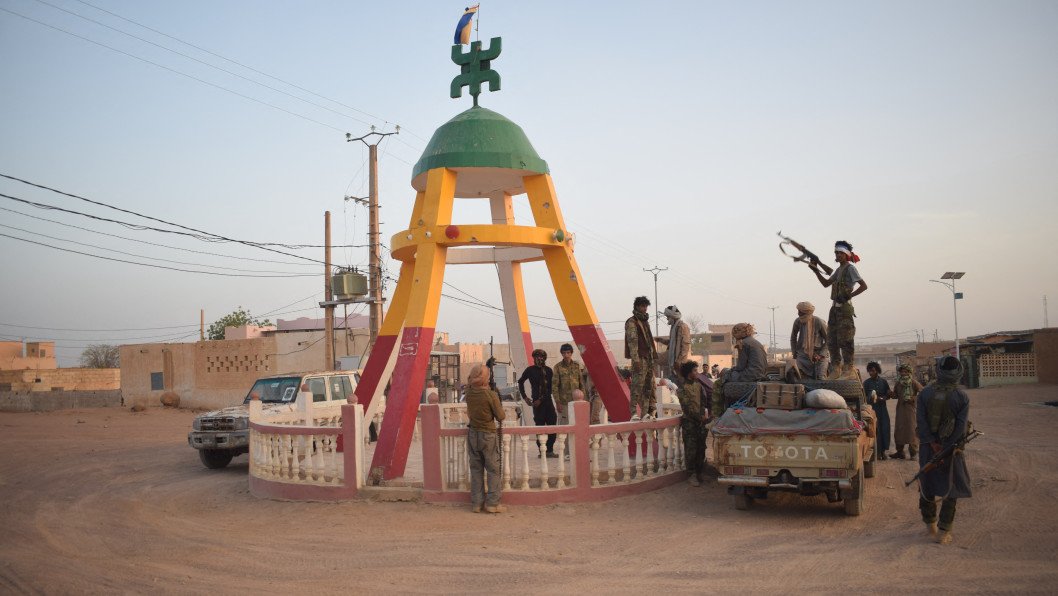
In June 2025, the Wagner Group announced it was ending its mission in Mali. Russia maintained its military presence through the Africa Corps, which took over from Wagner and operates under the Russian Defense Ministry. The transition brought Moscow’s military presence under more direct state control and preserved its influence with Mali’s junta.
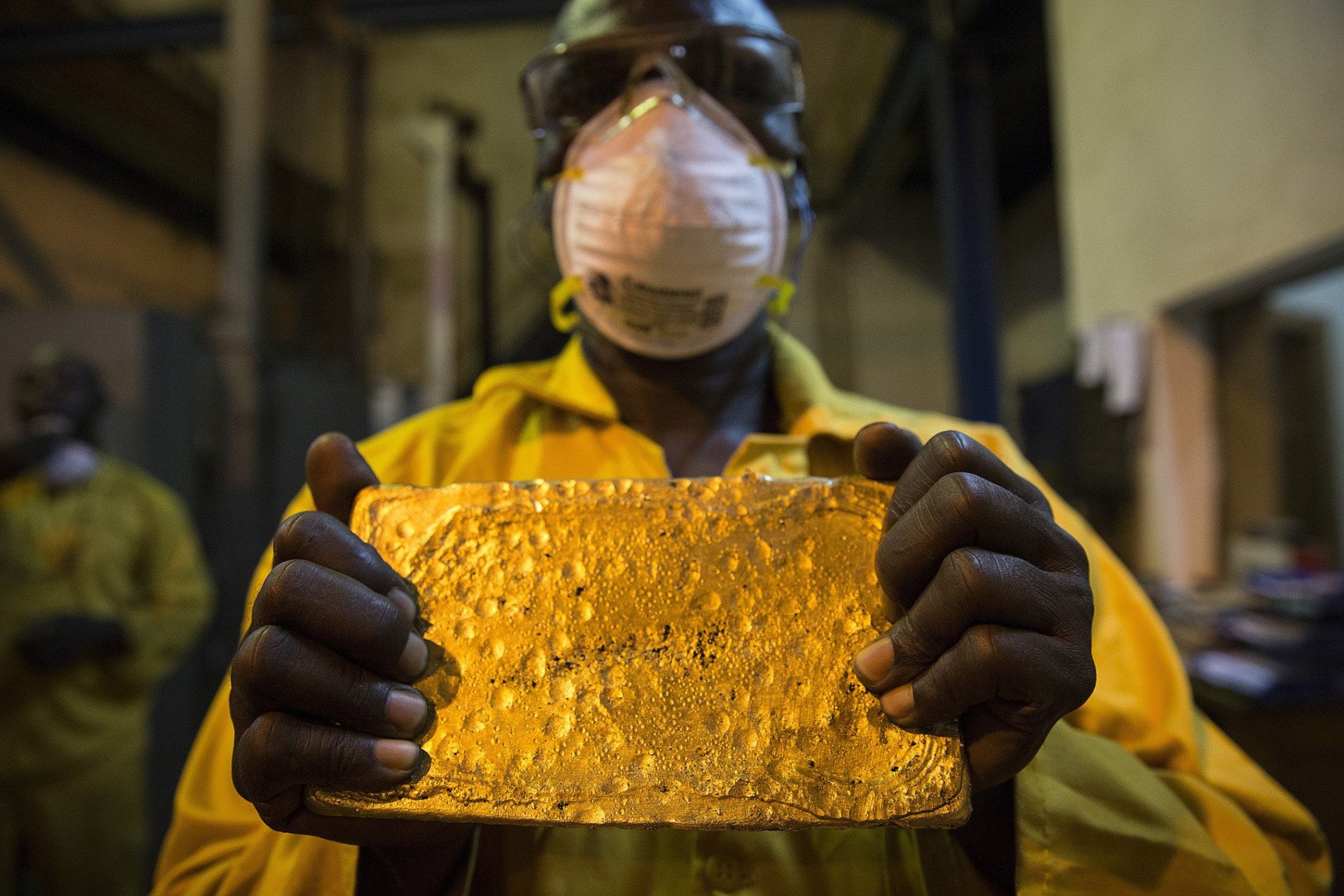
One of the largest joint economic projects between the junta and Russia is a gold refinery under construction in Sénou, near Bamako’s international airport. The facility is designed to process up to 200 metric tons of gold a year and is expected to serve Mali and other countries in the Sahel, including Burkina Faso, which is also under military rule. The refinery was slated to open in December 2026.
The venture is called SOROMA-SA. Under the announced ownership structure, the Malian state is to hold a 62 percent stake, with Russia’s Yadran group holding the remaining 38 percent.
Yadran is led by Irek Salikhov, a businessman from Tatarstan who chairs the group’s board. Its core business is in the oil industry. In October 2024, Salikhov met with Goïta in Bamako to discuss establishing a gold refinery and other areas of economic cooperation. Eight months later, he attended the groundbreaking.
When Mali’s Ministry of Mines announced the start of construction, it named another partner alongside Yadran: a Geneva-registered firm by the name of Swiss Investment Company. The announced ownership structure allocated all shares to the Malian state and Yadran. Malian authorities gave no details about the Swiss firm’s role.
The Russian side acknowledged that the refinery’s financing could extend beyond its two announced shareholders. In September 2025, Andrei Maslov, who coordinates work on Africa at Russia’s Ministry of Economic Development, raised the possibility of bringing in co-investors. Yadran also referred to strategic partners whose names it declined to disclose, citing confidentiality agreements.
A Swiss Company Pivots to Raw Materials
Swiss Investment Company was incorporated in Geneva in April 2011 with a share capital of 100,000 Swiss francs. Its original articles of association listed international coffee trading, construction and infrastructure projects among its activities.
The company left little public trace in the years that followed. It changed its registered address twice, and in August 2022 a court declared it bankrupt. The ruling was overturned 13 days later.
The most significant changes came in 2024, shortly before the Russian-Malian gold project became public. The company changed its leadership in March. In September, it amended its articles of association, dropping coffee trading and adding investment in raw material extraction and trading. The following month, Russian and Malian representatives publicly discussed establishing a joint gold refinery.
The filings show that the company positioned itself to enter the raw materials sector around the time Russia and Mali were discussing the refinery. Its formal role in the project remains unclear. Its leadership, however, provides a link between the Geneva firm and the ceremony in Sénou.
The Russian Businessman Behind the Geneva Firm
From April 2016, Swiss Investment Company was headed by Rafael Gimalov, a businessman from Tatarstan and a former member of Russia’s State Duma.
Gimalov served as deputy agriculture minister of the Tatar Autonomous Soviet Socialist Republic. After the Soviet Union collapsed, he became a co-owner of one of Russia’s first major private oil companies, making his fortune during the 1990s.
Russian media also identified Gimalov as a beneficial owner of Motovilikha Plants, a defense manufacturer in Perm that produces artillery systems, including multiple rocket launchers.
In March 2024, after nearly eight years at the helm of Swiss Investment Company, Gimalov stepped down. His daughter, Aliya Gimalova-Tulskaya, succeeded him and gained sole signing authority on behalf of the company.
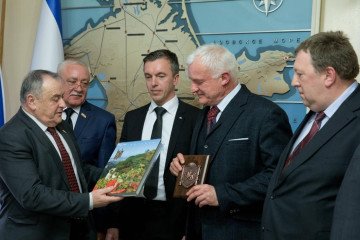
In June 2025, Gimalov traveled to Mali for the SOROMA-SA groundbreaking. A photograph released by the Malian ministry shows him among those attending the ceremony. His presence links the Geneva firm’s former head to the refinery project in which Malian authorities named the company as a partner.
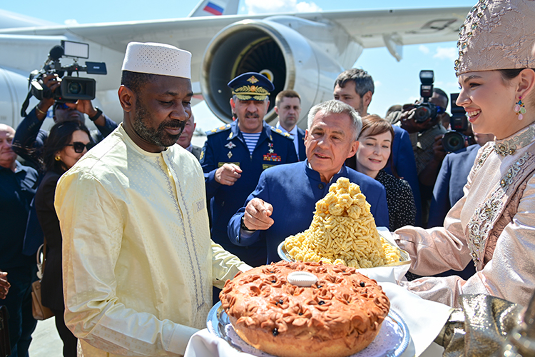
Gimalov and Yadran’s Salikhov both come from Tatarstan. A week after the groundbreaking, Goïta traveled to Kazan, where he met with Rustam Minnikhanov, the head of Tatarstan. Russian Deputy Defense Minister Yunus-Bek Yevkurov, who oversees Russian military operations in Africa, including the activities of the Africa Corps, also took part in the visit.
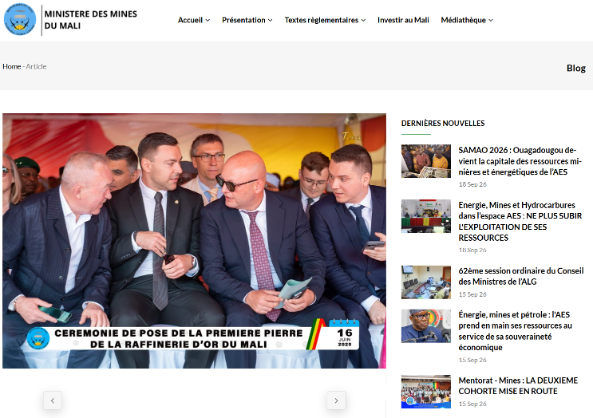
Those contacts unfolded in the same month that Russia shifted its military presence in Mali to the Africa Corps. As Moscow brought its forces under direct control by the Ministry of Defence, a business group from Tatarstan broke ground on a refinery with the Malian government, which also named a Geneva company led by the daughter of a former Russian lawmaker as a partner.
The Swiss Connection Draws Scrutiny in Bern
On October 23, 2025, the European Union imposed sanctions on Russia’s Yadran Group, which is involved in building the refinery. Switzerland followed suit in December.
The Geneva company’s role in a project involving a sanctioned Russian firm drew scrutiny in the Swiss parliament. In parliamentary question No. 25.8235, the government was asked whether Swiss Investment Company’s involvement complied with Swiss law and sanctions restrictions.
In its reply, the Swiss Federal Council confirmed that the authorities were aware of the refinery’s construction and were monitoring developments, including compliance with sanctions. The council did not say whether the authorities had found any violations by Swiss Investment Company.
The question goes to the heart of Russia’s relationship with Mali. Moscow provides military support to Goïta’s government while expanding its presence in strategic sectors of the Malian economy. The Sénou refinery brings those ties into focus and leaves an open question for Swiss authorities: what role does the Geneva firm play in a project with a sanctioned Russian partner?
Discuss this article: