- Category
- Investigations
Russian Propaganda Isn’t All-Powerful. Authoritarian Control Is
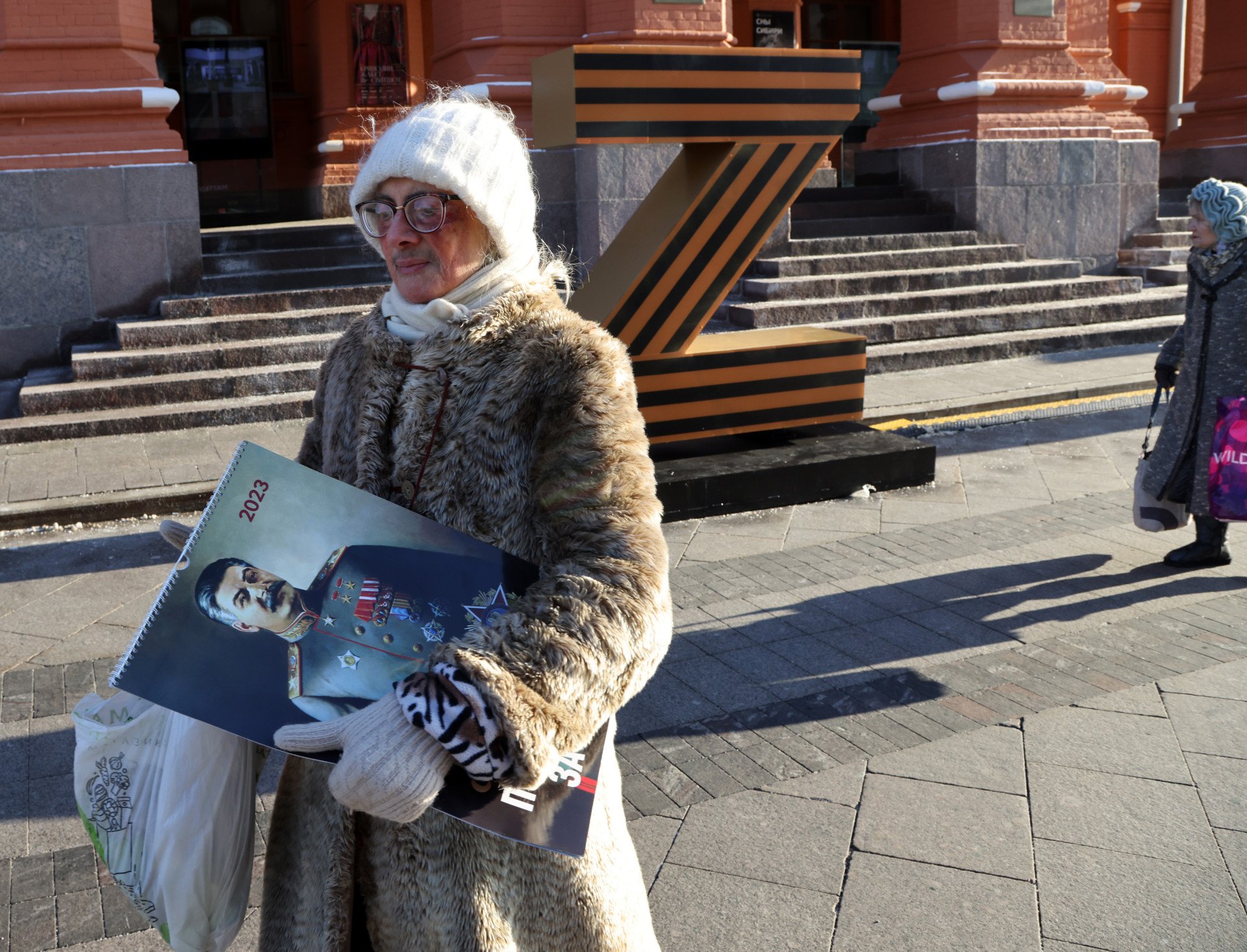
It is undeniable that propaganda permeates Russian society. At the same time, this is not about a population with “washed brains,” but about propaganda as an inseparable element of Russian power. Wherever Russian state control is present—including in the occupied territories of Ukraine—propaganda is present as well.
 Prefer U24 Media on Google
- Authors

-7ab3d055d78b4fffc2530930d91ffaa7.jpg "Khrystyna Borovkova")
Russian propaganda, a vivid example of which is the story of the “crucified boy”—a fabricated 2014 television report claiming that Ukrainian soldiers publicly crucified a Russian-speaking child in Sloviansk, Donetsk region—has become one of staple example of Russian fake news.
Yet Russian propaganda, which has portrayed Ukraine as a monster since 2014—the year Russia invaded Ukraine—is not limited to communication tools such as fake stories, bot farms or RT (formerly: Russia Today) networks operating around the world. What is often described as the “success” of Russian propaganda is more accurately the result of a broader system of influence created by Russia’s authoritarian government at home, in occupied territories and abroad to advance its political interests.
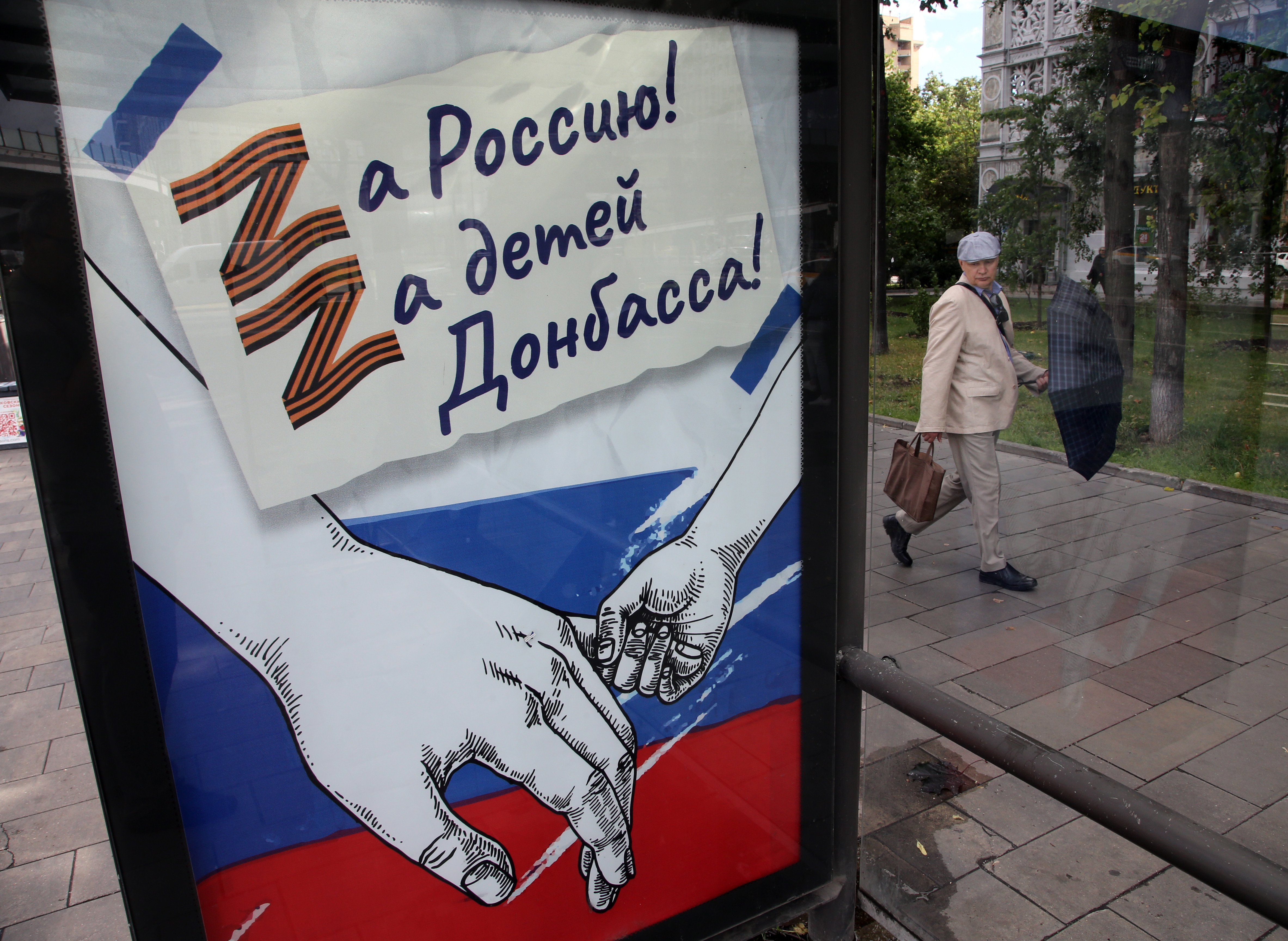
One of those interests is promoting the notion that Russian propaganda itself is all-powerful.
To understand why Russian propaganda appears so “effective,” we must examine it through the lens of social psychology.
We bring you stories from the ground. Your support keeps our team in the field.
Russian propaganda doesn’t really “brainwash” people
Contrary to common notions of “brainwashing,” propaganda as a set of communication messages never truly convinces or motivates people—that is, it does not force them to see “white” as “black.” If it did, it would encounter people’s resistance and fail to achieve its goals.
At the same time, if a person lacks sufficient information or if an issue is not important to them, they may form their attitude under the influence of propaganda messages without realizing it. In this way, propaganda avoids a direct confrontation with human will.
If the claim is constantly promoted that Indigenous peoples on remote Pacific islands are cannibals, many people may believe it, or at least not question it. Not because they were persuaded by rational arguments, or because it was said by an influential person with authority, but because the subject has little significance for them: they will never meet these people and are unlikely even to watch a documentary about them. In this case, the illusion of truth and group biases play a greater role than the source's authority.
But if someone says, “Ukrainians are Nazis,” the reaction will be different. People who live in Ukraine or have real experience interacting with Ukrainian society see that there is no display of Nazi symbolism or persecution of small ethnic groups, and that people of different backgrounds coexist in everyday life. That is why such propaganda collides with direct experience and provokes far greater resistance.
Therefore, propaganda is much less effective with people who are openly opposed to something or who have a clear understanding of it—that is, people with established beliefs. This also points to how citizens of any country can be protected from Russian propaganda: by having stable internal attitudes—in this case, national values formed within the individual.
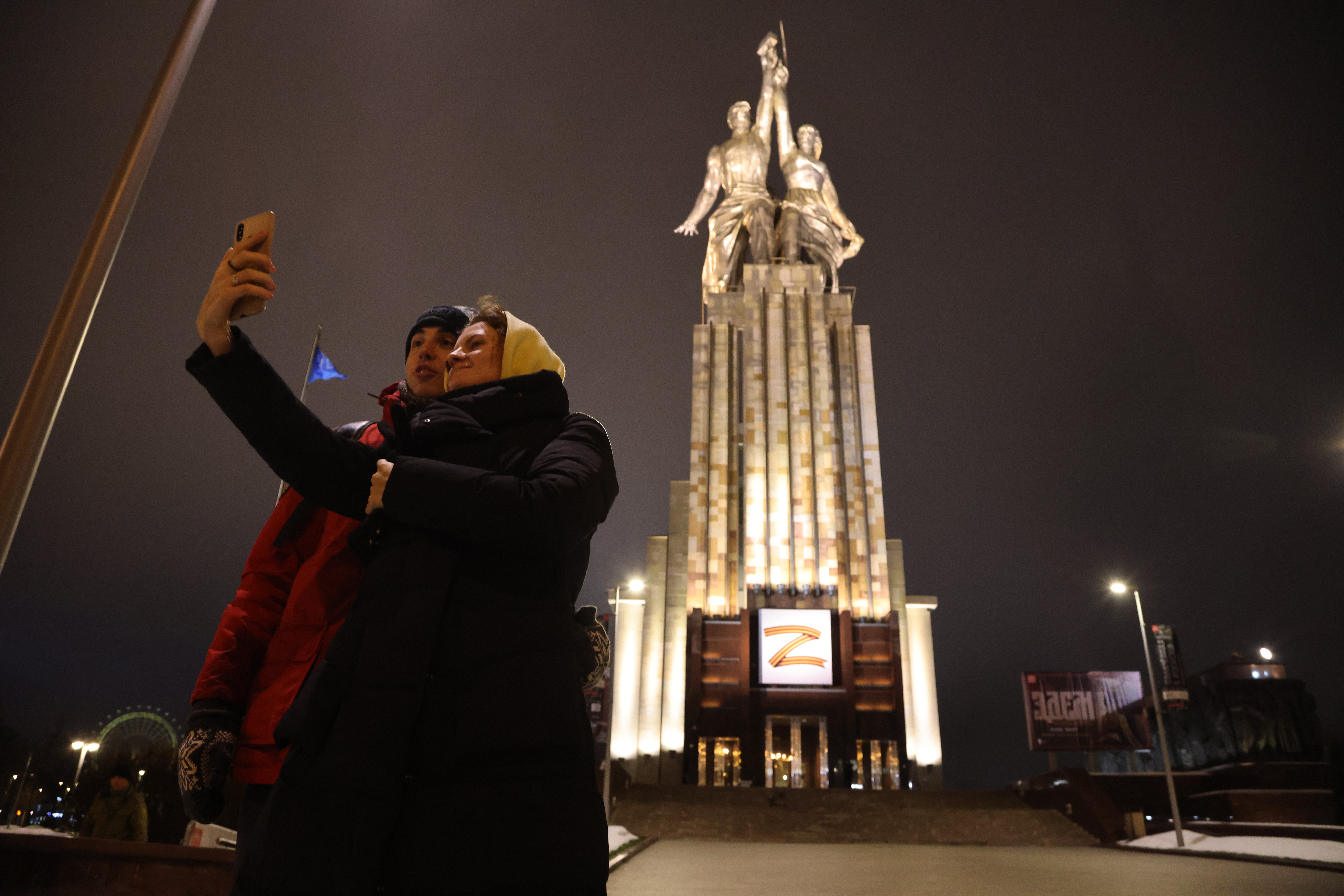
For a long time, the main approaches to countering disinformation were based on the assumption that it was enough simply to explain certain facts to a person and provide information—the deficit model. At the same time, this approach does not account for the social-psychological dimension, which emphasizes that what matters is not only the content of the explanation, but also who provides it, how it is presented, and in what context it is presented and received.
When Ukrainians, including President Volodymyr Zelenskyy, once tried to appeal to Russians en masse by explaining why the full-scale invasion was an act of mass violence, or by telling them about Russian massacre in Bucha, they ran into a phenomenon known in social psychology as intergroup bias. In this case, information is evaluated not so much by its content as through the lens of belonging to an “in-group” or an “out-group.” In such a situation, even factually significant messages can be rejected, especially if they conflict with group identity or prior beliefs.
For ordinary Russians, Ukrainians are an out-group—one of many others. Accordingly, accepting the fact that one’s own group—Russians—may be responsible for horrific crimes, including in Bucha, is psychologically difficult. In addition, it affects a person’s self-image by linking their group identity to the terrible actions of its members and raising the issue of personal responsibility. Therefore, it is easier for the average Russian to reject such information. Propaganda, in turn, interprets this as its own success. This is not about “propaganda that has processed the consciousness of the average Russian,” but about the mechanisms of group identity at work.
Moreover, when a person living an ordinary everyday life encounters mass condemnation of Russia—which, in their perception, is a normal country—the mechanism of in-group cohesion is activated, strengthening the “us versus them” divide. This, in turn, encourages a defensive reaction in the form of further rejection of outside messages, stronger group loyalty, and reduced trust in external sources.
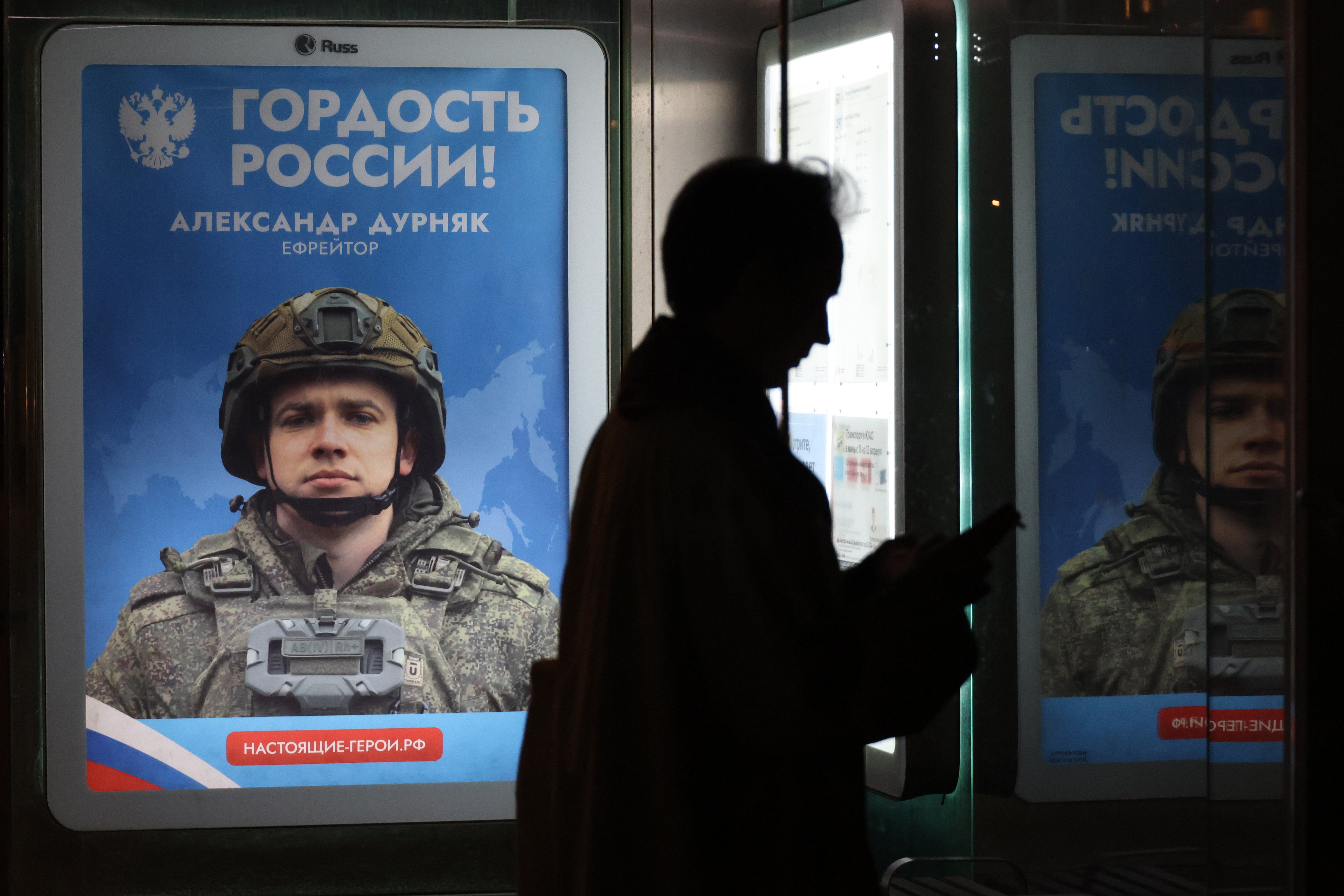
These processes are well known and are taken into account by propaganda, which overlays them with corresponding communication frames—including “Russophobia,” “confrontation with the West” and the need to unite in the face of an “external NATO threat.” It is important to emphasize that this does not mean propaganda sets the tone. Rather, Russian state communication messages adapt to already existing social-psychological mechanisms and exploit them for their own interests.
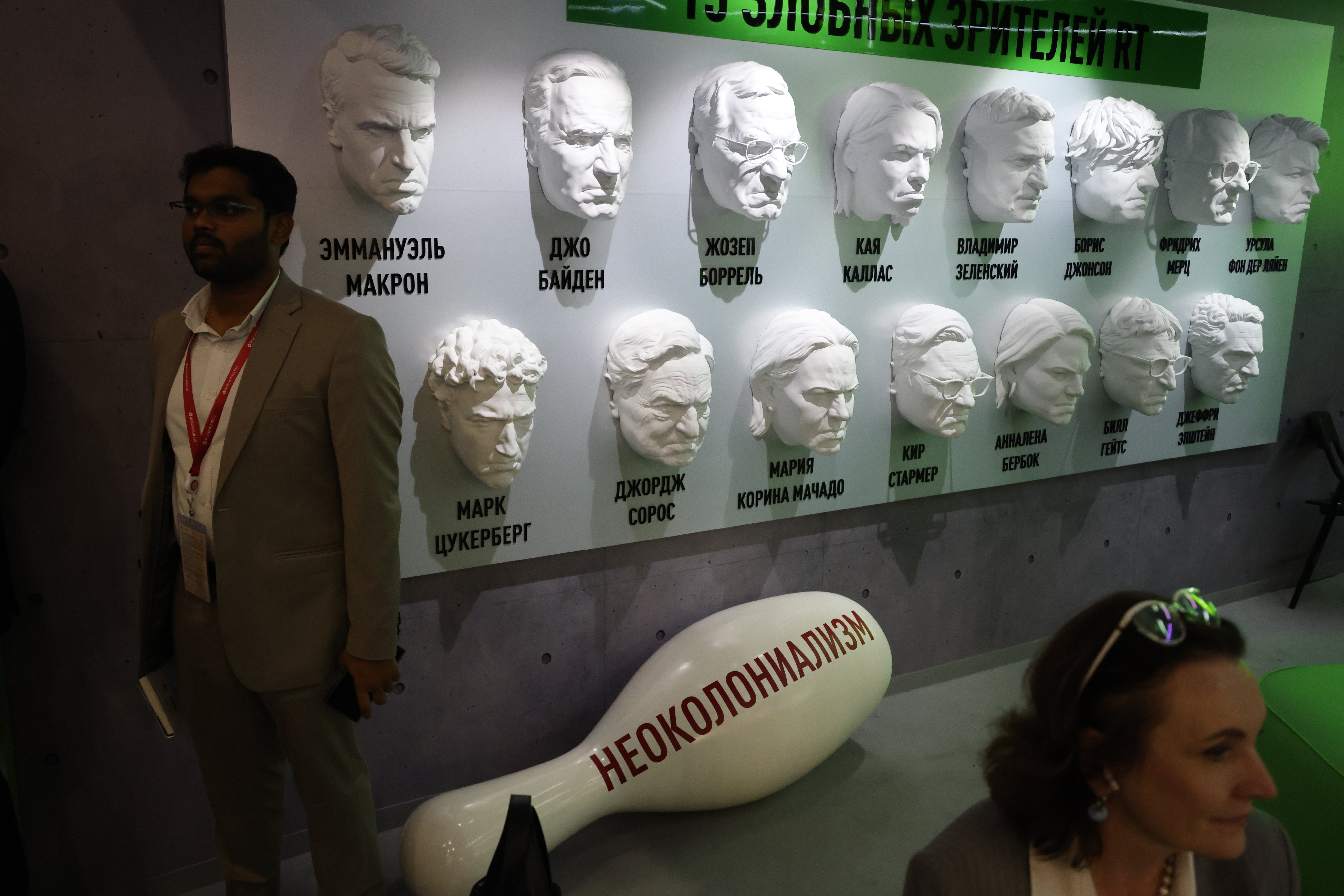
Therefore, to break this effect of Russian group cohesion, an effective strategy is to strengthen its internal differentiation—that is, to break up the group from within by amplifying its separate elements.
Peter Pomerantsev describes a similar strategy in his book How to Win an Information War. Sefton Delmer, a British journalist and director of black propaganda during World War II, created radio broadcasts for German audiences. In these messages, the Nazis were portrayed as corrupt and morally degraded people with base, including unpatriotic, values, while also representing only a small part of German society. At the same time, Delmer appealed to a “different,” traditional German identity—in particular, Prussian military ethics, which he partly idealized and elevated. As a result, the average German who loved and respected his country, even as his country’s government was carrying out the Holocaust in Europe, trusted these messages because they directed harsh criticism not at the country as a whole, but at a narrow group of the Nazi elite. This allowed Delmer to create a split in German society at the time.
Thus, to repeat, propaganda does not so much persuade as amplify and emphasize processes already present in society. But where, then, does the perception of Russian propaganda’s effectiveness come from?
Total сontrol over the information space in Russia and occupied Ukraine
When Russia invaded Ukraine in 2022, it immediately began hunting local journalists, forcing them to cooperate with the Kremlin or intimidating them. Kherson journalist Oleh Baturin was abducted by Russians, who tortured him and held him captive. In total, at least 40 cases of intimidation, abduction, and beating of journalists have been recorded in Zaporizhzhia, Kharkiv, and Luhansk regions, while 20 journalists remain in Russian captivity. Russian troops also broke into media offices, forcibly seizing property and equipment.
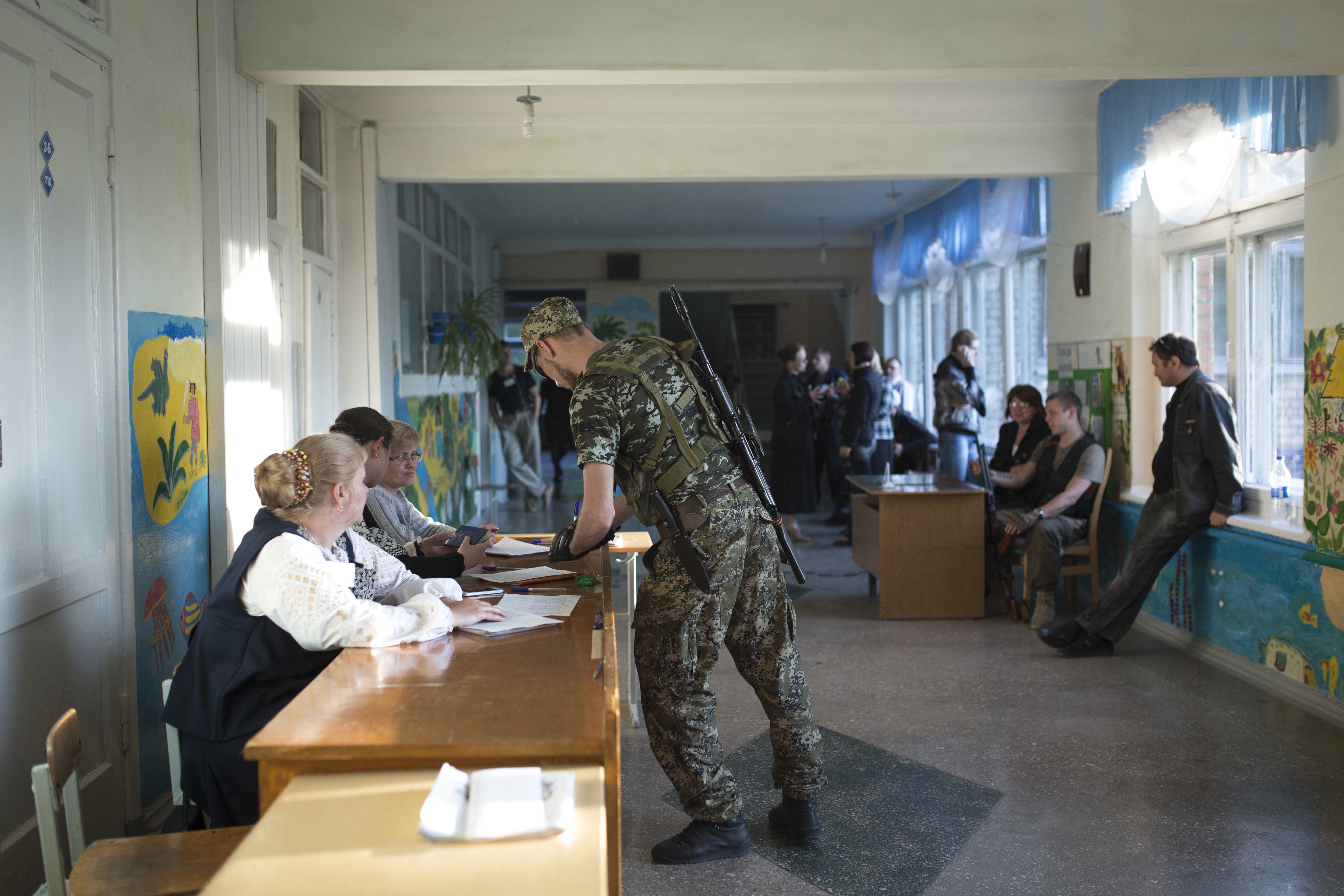
Russia was establishing control over the information space. The keyword here is control, not the substance of the message itself.
In Russia and in Ukraine’s temporarily occupied territories, the media field has effectively been completely cleared out, and alternative opinions have been made impossible even on personal social media pages, because expressing them can lead to imprisonment. For example, publishing posts that contradict Russian propaganda about the “special military operation,” including antiwar messages—the so-called “discrediting of the army”—can bring a sentence of 15 years in prison.
Into the cleared media space, Russia sent Sergey Kiriyenko, first deputy head of the Russian presidential administration, and journalist Oleksandr Malkevich to introduce the messages it needed. Both are under sanctions from Ukraine, the EU, the United States and other countries. There, an entire network of channels was deployed, including Telegram channels and websites that produce text and video content.
Such control enables shaping a dominant agenda and reproducing the same narratives for years. Sergey Kiriyenko was also assigned to oversee Russian influence on elections in Moldova and Hungary; Romania has stated that Russia attempted to influence its elections.
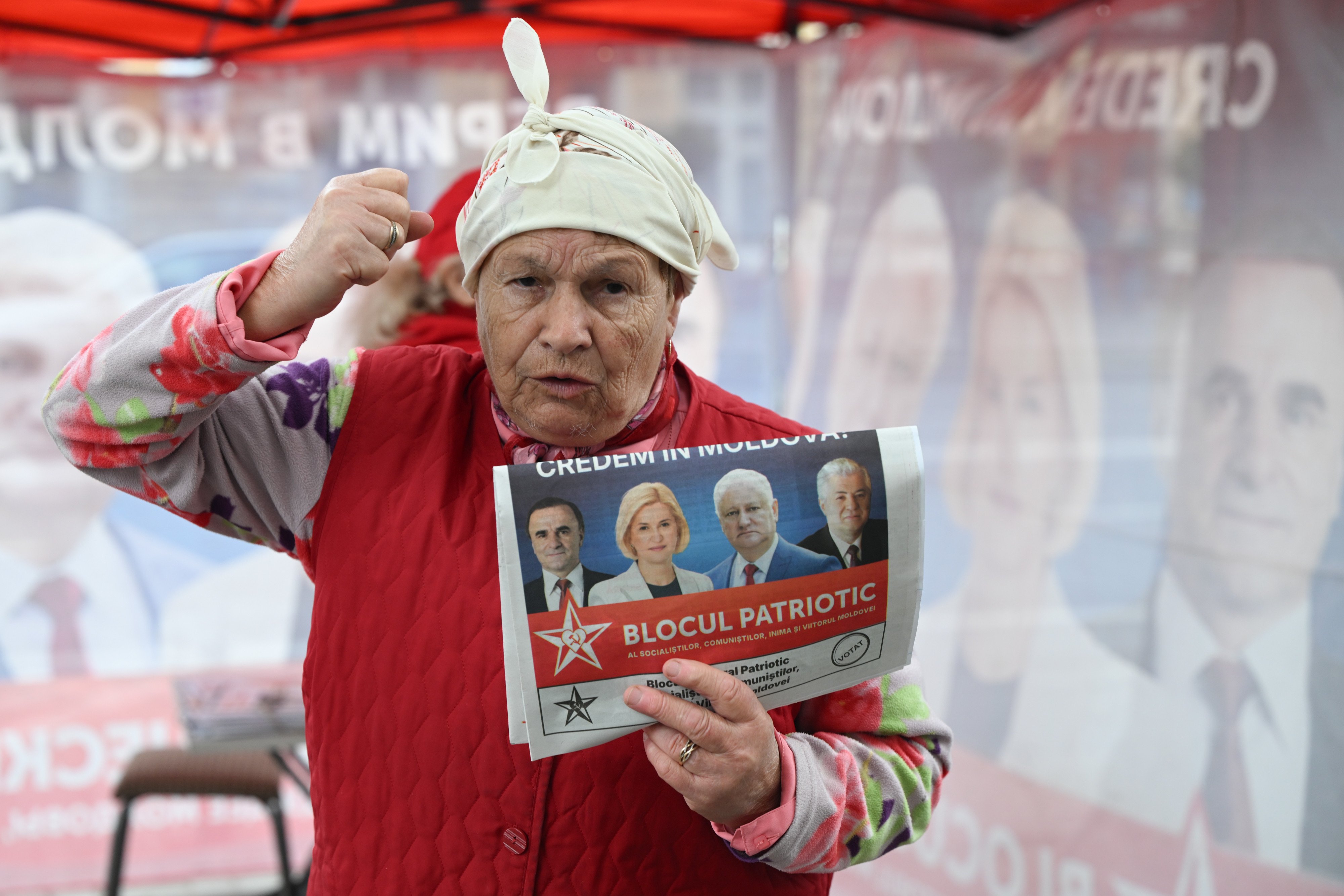
This creates the illusion-of-truth effect—a cognitive bias in which information is perceived as more plausible because it is repeated many times. Russian propaganda messages are spread by various actors: state officials, politicians, and representatives at various levels of government, both inside Russia and beyond, including on international platforms such as UN meetings. These narratives are also repeated by pro-Russian media in Ukraine and Europe, operating in different languages.
It is this level of control over the information environment that enables the consistent repetition of messages. As a result, part of the audience may assume: if so many different sources say this so often, it may be true.
Control over the media field is also important because Russian propaganda cannot survive in a healthy media environment. Messages such as one about employees of the occupation prosecutor’s office in the Nyzhni Sirohozy district of Kherson region congratulating children at the Verkhni Sirohozy kindergarten on the upcoming New Year—with the children performing songs and poems in return, after which the prosecutor spoke with the head and staff of the institution—would hardly appear in the media of an ordinary country in such a form and context as they do in the propaganda media of occupied Kherson region.
Similar and other supposedly positive messages about how someone came, helped, and solved a problem are also aimed at creating the impression—framing—that the Russian occupation authorities in Ukrainian territories are supposedly a change for the better, while everything the Ukrainian authorities allegedly did was bad. In other words, Russian occupation authorities set the framework of perception and promote their own interpretation, relying on control of the media field.
The occupation authorities try to legitimize themselves by providing services, because this strengthens the perception of them as supposedly functioning authorities. That is why controlled media churn out messages such as “we are repairing,” “we are solving problems,” “we are in control”—in other words, “we are the legitimate authority.”
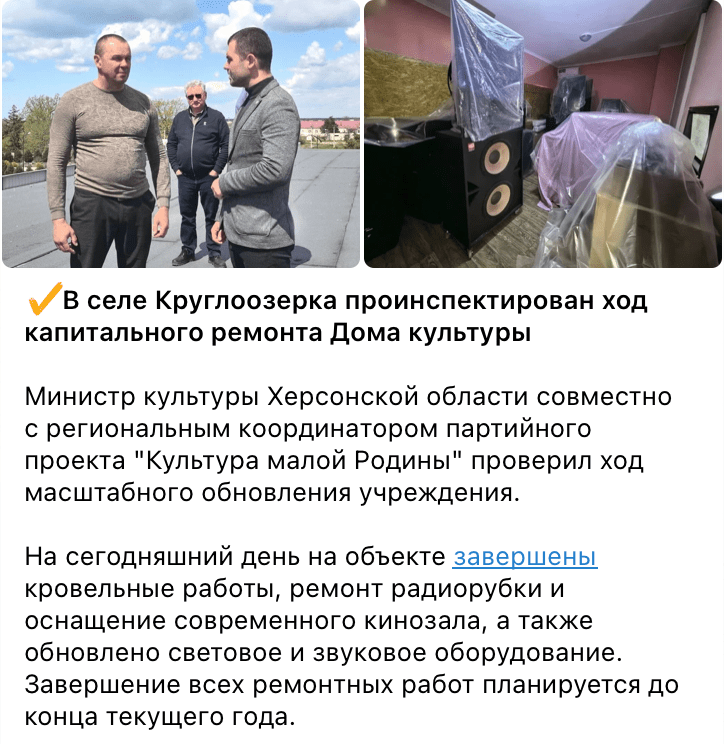
The Russian authorities’ cash payments, including pensions, to people in the then-occupied Kherson served the same purpose: to shape a positive attitude and demonstrate who controlled power.
Some pensioners who received Russian rubles calmly converted them into hryvnias and developed no positive attitude toward Russia; they simply made proper use of the occupation administration in their own interests. This is possible when there is a strong Ukrainian identity, which helps people maintain psychological boundaries, avoid blaming themselves for receiving the money, and feel no obligations toward the Russian occupiers. Another antidote to these and similar actions by the Russian occupation authorities is preserving Ukrainian support in the occupied territories as much as possible.
Conformity and social pressure unite
In the example of the temporarily occupied Nyzhni Sirohozy district of Kherson region, we see not only the involvement of media, but also the direct participation of the occupation prosecutor’s office employees who came to children on organizational orders. The authoritarian system of power amplifies the effectiveness of Russian propaganda: public-sector workers in the occupied territories of Ukraine and in Russia act in accordance with key propaganda messages. This applies to schools, hospitals, clubs, municipal enterprises, and religious organizations. For example, the Church of the Holy Prophet Elijah in the city of Saky in occupied Crimea raised funds for a vehicle for Russian troops on the Kherson front.
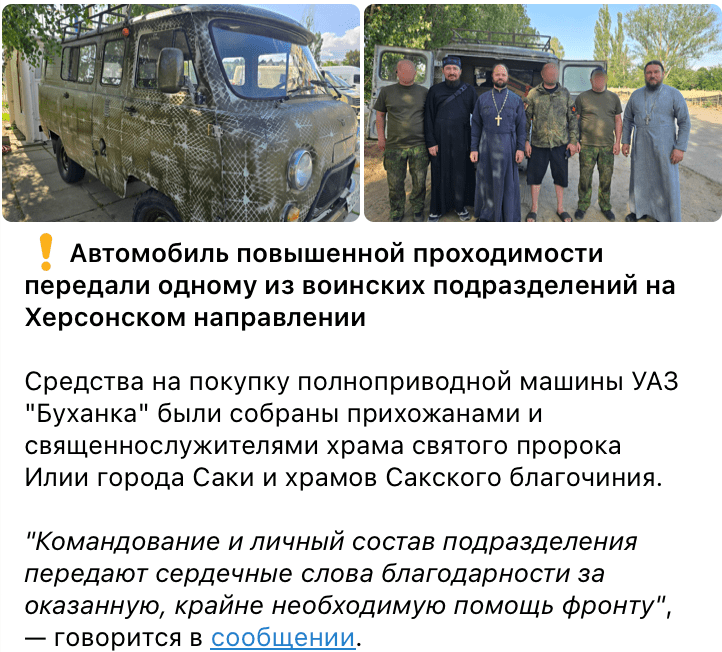
Such involvement of nearly all social actors and institutions in occupied communities in propaganda activity—the forms and scale of which are practically impossible to fully list—has serious consequences. Imagine yourself in such conditions and try to express an opinion that everyone around you is silent about — other people, the media and social networks. You cannot refer to an alternative public source of information or another opinion, because none exists, while messages come from everywhere about how it is “right” to help Russian troops. Under conditions of total control over the media space, it is social pressure and conformity—outward adherence to norms despite internal disagreement—that ensure propaganda’s “effectiveness.”
This also includes the social-psychological phenomenon of pluralistic ignorance. This is a situation in which most members of a group privately disagree with a certain norm but mistakenly believe that others support it, and therefore continue to act against their own convictions. This phenomenon may explain support for authoritarian leaders, as well as why mass protests do not arise in authoritarian countries and in territories occupied by Russia, because people think everyone around them has resigned themselves.
Stanisław Lem described this well in his eleventh story about Ijon Tichy. When Tichy arrived on a planet of robots that spread propaganda of hatred toward humans, he saw that all the inhabitants displayed identical reactions, with no conflicts or disputes, and that society looked “too harmonious.” But it later turned out that all the robots on the planet were disguised humans, each merely pretending to be a robot because each believed he alone was human. Such a system existed because everyone saw only others' public loyalty and concluded that the majority sincerely supported it. As a result, even those who disagreed continued to reproduce the official norms of behavior. The #MeToo movement is also an example of this: what had been tolerated and kept silent for decades suddenly ceased to be perceived as acceptable.
Thus, the system is sustained not only by fear or direct coercion, but also by mutual silence and the illusion of social consensus. In other words, authoritarian or excessively controlled systems can remain stable even without constant violence. It is enough to create an environment in which people do not see an alternative opinion and begin to mistakenly believe that support for the system is universal. That is why protests in such societies can emerge sharply and unexpectedly—not because people suddenly changed their views, but because they suddenly saw that others shared their dissent as well.
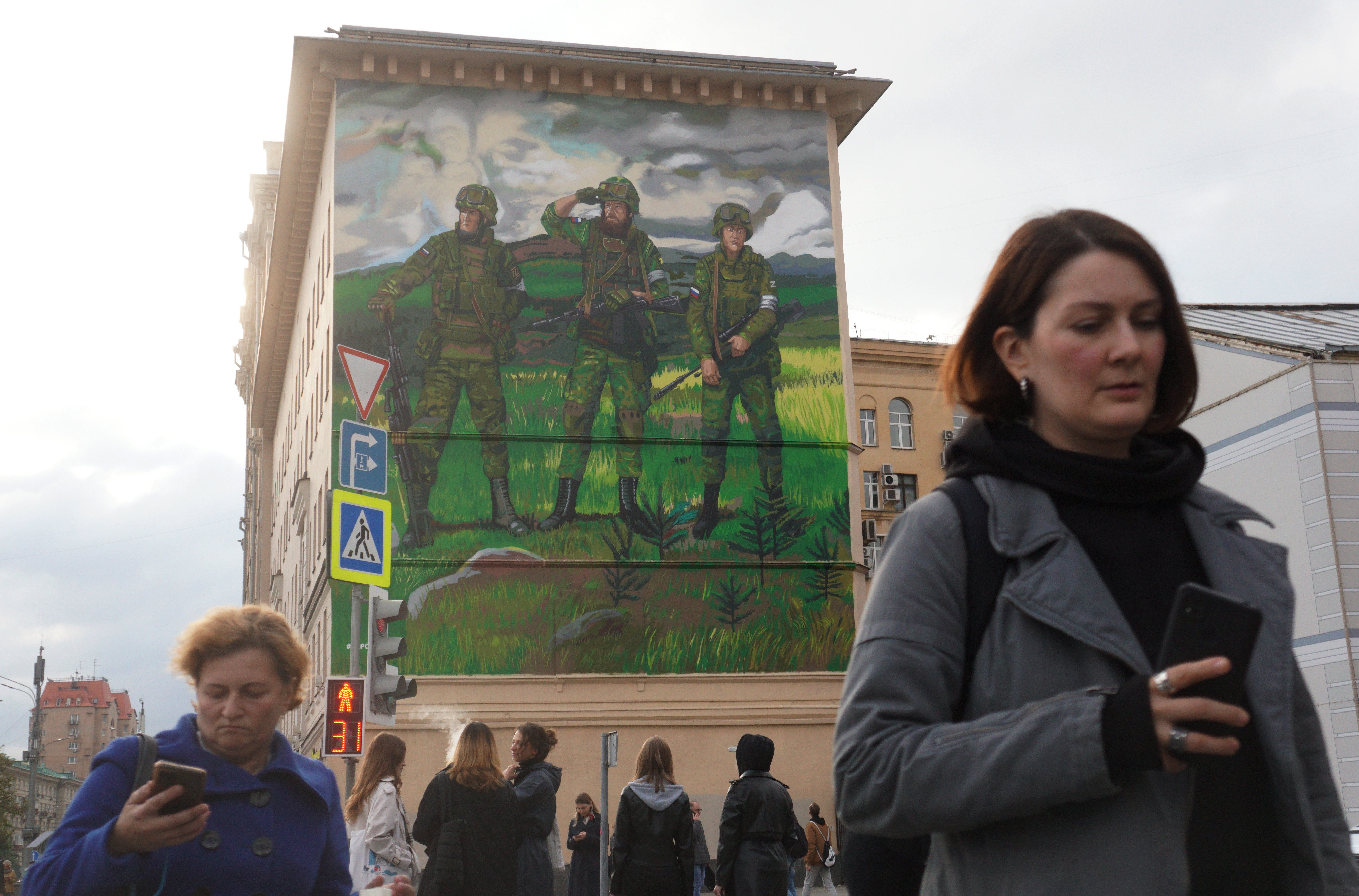
A few words should be said about the use of violence by the Russian army and security forces. Its use demonstrates to the civilian population that it is better not to openly argue with them. Such tactics are explained by the fact that people do not necessarily need direct experience of reinforcement for certain behavior. Observing the consequences of other people’s behavior also affects their own expectations. If we see someone punished for certain behavior, we do not need to experience punishment ourselves to develop the expectation that such behavior will likely be punished.
How authoritarian systems create new social norms
Control over the media space and institutions helps form certain social norms, which are reinforced by material incentives—money, benefits, and social status.
The financial component is important for foreigners as well: former Austrian Foreign Minister Karin Kneissl received tens of thousands of euros for cooperation with Russia, while former German Chancellor Gerhard Schröder receives nearly $1 million a year from Russian-controlled energy companies. Under such conditions, participation in the war for some people becomes not so much the result of ideological conviction as a rationalized choice tied to the possibility of financial gain or social recognition. Otherwise, why would Russia set such high payments, which the average Russian could not earn in a lifetime?
Propaganda helps such a person resolve the cognitive dissonance between going to war to kill and, of course, seeing himself as a good and decent person. Propaganda relieves his pangs of conscience—it helps reduce his internal moral conflict. Therefore, propaganda offers moral justification: “defending the homeland,” “fighting the enemy,” a “historic mission” or “liberation.” Undoubtedly, when such people are asked, they say they believe in the goal of the “special military operation,” because, like all people, they need consistency between their behavior and their thoughts. They are already in the “special military operation”—regardless of the reasons they ended up there—and they must explain it to themselves somehow.
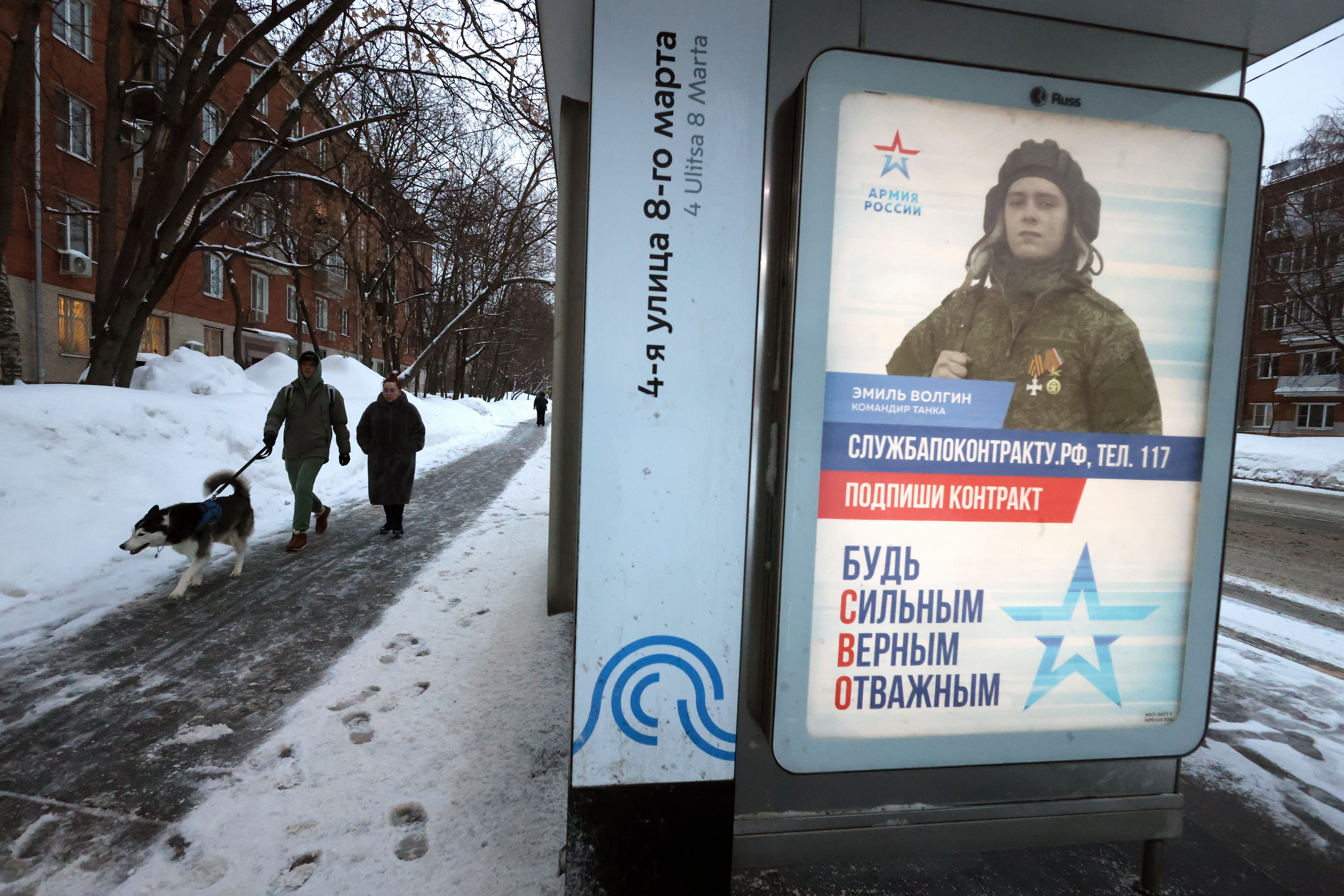
After making the decision, and especially after directly participating in the war, a person begins to psychologically adjust his beliefs to his own actions in order to reduce the internal conflict between his behavior and his moral ideas about himself. Of course, the more questions a person has about the current Russian government, the more alternative life strategies he has and the higher his level of self-reflection, the easier it is for him to resolve this cognitive dissonance by refusing to take part in the war, surrendering or switching to Ukraine’s side. But this is not always the case, especially when a person has lived in such poverty that participation in the “special military operation” offers prospects of social status or financial stability. In such a situation, propaganda helps rationalize one’s own participation in the war. To reduce the influence of this propaganda, it is important to continue “kinetic sanctions” that limit the flow of foreign-currency resources into Russia and its ability to finance these positive incentives.
Therefore, their “faith,” as well as the views of people in the occupied territories of Ukraine, are not evidence of propaganda’s effectiveness. They demonstrate how control over the media field, authoritarian rule, positive and negative incentives—money and repression—that is, social pressure, conformity, and new social norms, have worked on part of the population. Entering an environment where participation in the war is normalized and morally approved, a person increasingly questions their own actions less often and more often accepts the group’s dominant views as “normal” and socially acceptable. That is why propaganda is dangerous: it normalizes what is not normal. But propaganda is only part of a system of power, incentives, and control over the media field that Russia establishes within its borders and in occupied territories.
Thus, the Russian authorities possess no secret knowledge of influence technologies, and their propaganda is not superpowered. We have already been able to see this in Hungary’s elections, when special services were sent there to help Orbán. As it turned out, Russian propaganda does not “survive” in conditions of a free media market and freedom; it is merely an appendage of authoritarianism, where control over society is sufficiently high. It is that control, rather than propaganda itself, that is the factor explaining why propaganda is “effective.” In this case, propaganda is only the cherry on top, complementing the system. It is important to view this system as a whole to make the right decisions and avoid exaggerating the image of Russian power’s omnipotence when it is unnecessary.
Russian society and the question of responsibility
Understanding the socio-psychological mechanisms behind Russian propaganda, including its operation in Ukrainian territories occupied by Russia, should not create the illusion of diminished responsibility. If we set aside the issue of Ukrainians living under occupation—who are the sole victims in this situation—and legally prosecute those who, while holding leadership positions, distorted social norms and created pressure, as well as those directly involved in the war, what remains is the ordinary Russian citizen.
Russian society must ask itself: Why did this happen? How did an entire country tolerate an aggressive attack against a neighboring state without mounting mass resistance? This process must come from within society itself and aim to acknowledge what happened and rethink it to rebuild the system.
Russia has never undergone a genuine societal reckoning with its own past. There was no widespread reassessment of the Soviet legacy—the Gulag, mass deportations, and the man-made famine; the few attempts that were made were too weak and quickly faded away. Nor was there a broad public discussion of the Chechen wars—of what happened to civilians there and what it meant for the country that carried it out. As a result, this amnesia gradually evolved into rehabilitation: Stalin became an “effective manager,” and the Soviet past was recast as a “great era.”
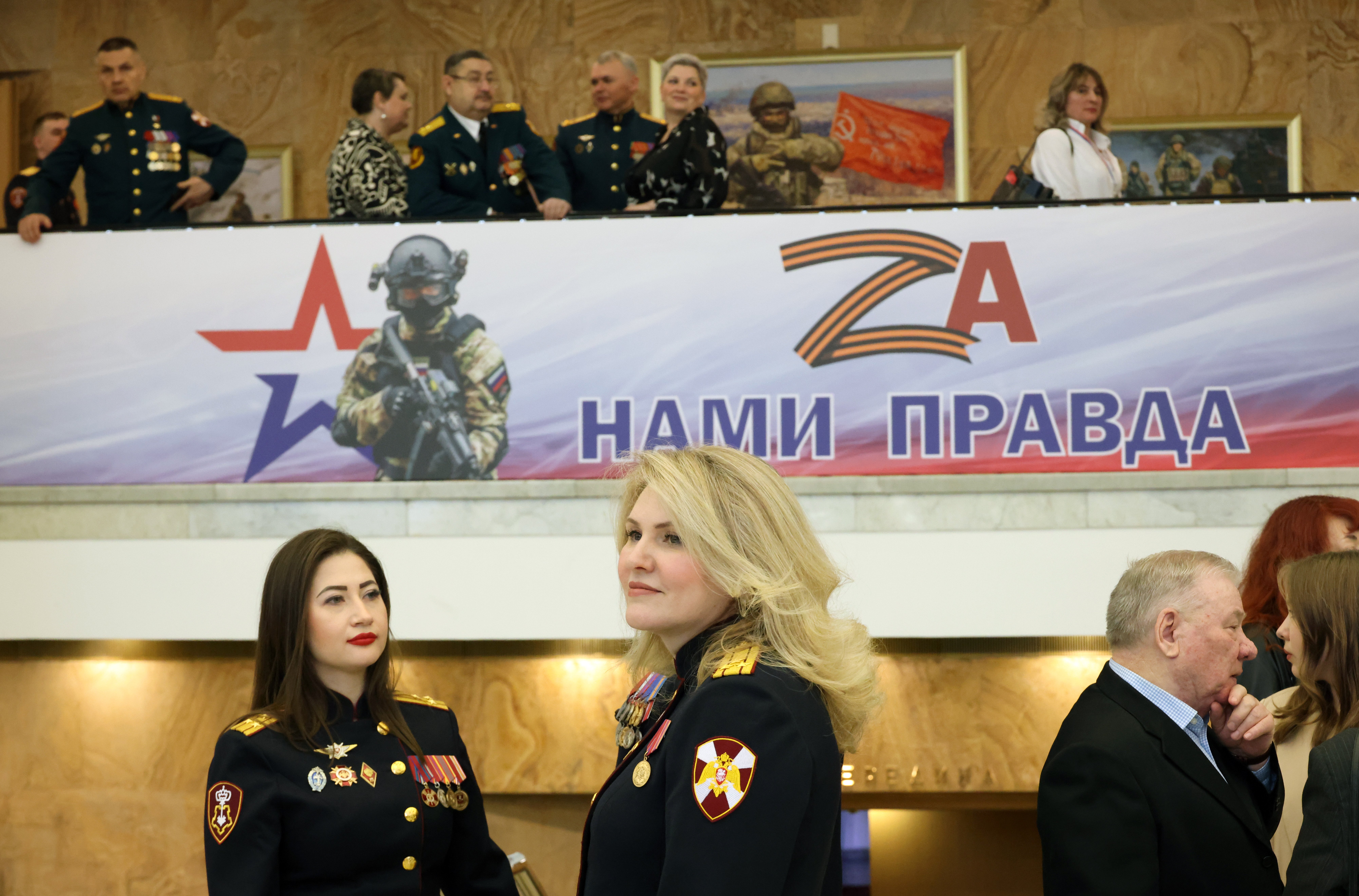
Each subsequent step taken by the Kremlin was built on the fact that the previous one had never been widely examined or condemned. This is precisely why the absence of Vergangenheitsbewältigung—the process of coming to terms with the past—made the full-scale invasion of Ukraine a logical continuation of an entire society’s unfinished work on itself. A society that failed to reckon with the Gulag, never delivered a moral judgment on the wars in Chechnya, never questioned the 2008 invasion of Georgia, or the 2014 occupation of Crimea, proved equally unprepared to confront the events of 2022. That is where its responsibility lies.
At the same time, there is also a need for intervention by the broader European community. Even in cases of ordinary group ostracism, efforts are directed not only toward the instigator and the victim but also toward bystanders—those who did nothing because, supposedly, no one else did anything either. Something similar must be undertaken with regard to Russian society as well.
Discuss this article:
-4a56a6b482ec132402c16ef6fcabf9a2.png)



-206008aed5f329e86c52788e3e423f23.jpg "Photo of Oleksandr Moiseienko")