- Category
- Latest news
Leaked Calls Expose Hungary and Slovakia as Secret Kremlin Backchannel Inside EU
 Prefer U24 Media on Google
- Authors

-72b63a4e0c8c475ad81fe3eed3f63729.jpeg "Photo of Cyril Barabaltchouk")
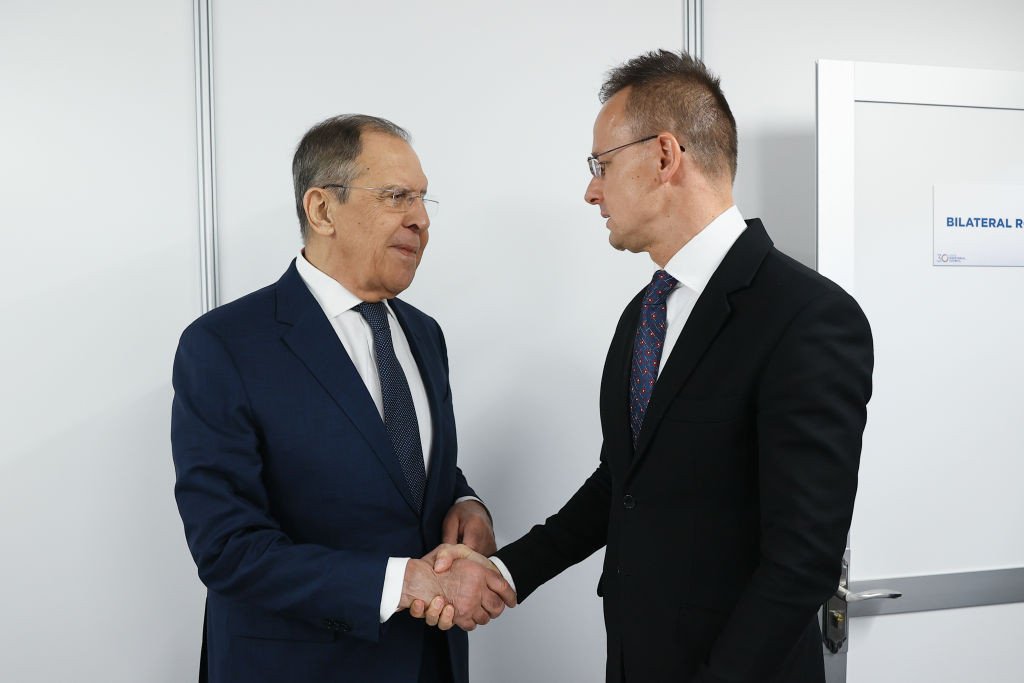
Leaked phone calls between Hungarian Foreign Minister Péter Szijjártó and his Russian counterpart Sergey Lavrov have exposed the extent of Budapest’s role as a Kremlin informant within the European Union, The Insider reported on March 31, 2026.
Transcripts and audio recordings reviewed by a consortium of investigative partners indicate that Szijjártó has been operating as a strategic asset for Moscow, providing real-time intelligence on confidential EU deliberations.
We bring you stories from the ground. Your support keeps our team in the field.
In one recorded call from August 2024, Szijjártó appeared visibly anxious about his standing with the Kremlin, asking Lavrov, “Did I say something wrong?” after a visit to St. Petersburg. Lavrov reassured him that the Russian media was highlighting his “pragmatic” defense of Hungarian interests. The materials, acquired by The Insider, demonstrate that Szijjártó has gone beyond mere diplomacy, actively lobbying for the removal of Russian oligarchs from EU sanctions lists.
Specifically, Lavrov requested help for the sister of Alisher Usmanov, Gulbahor Ismailova, to which Szijjártó replied, “Together with the Slovaks we are submitting a proposal to the European Union to delist her. We will submit it next week and we will do our best in order to get her off.”
Hungary and Slovakia have increasingly aligned their foreign policies to obstruct critical European Union support for Ukraine, most recently blocking a €90 billion ($103 billion) loan package intended for 2026–2027. Prime Minister Viktor Orbán and his Slovak counterpart, Robert Fico, have tied their support for Ukraine to the restoration of Russian oil flows via the Druzhba pipeline, which was disrupted following a Russian missile strike in early 2026.
While 25 of the 27 EU member states have signaled their intent to move forward with the aid, Budapest and Bratislava continue to use their veto power as leverage, leading to accusations from Kyiv that the two nations are using energy security as a tool for political blackmail.
The investigation suggests that Hungary and Slovakia have formed a coordinated front to shield Russian interests. During his conversations, Szijjártó was remarkably deferential, at one point telling Lavrov, “I am always at your disposal.” He also shared sensitive details from EU Foreign Affairs Council meetings, including specific arguments made by other ministers regarding energy profits.
Former Lithuanian Foreign Minister Gabrielius Landsbergis, whose confidential comments were leaked to Moscow by Szijjártó, compared the Hungarian official to a Cold War-era spy. Landsbergis noted that every generation has its own Kim Philby and remarked that Szijjártó appears to be playing that role with enthusiasm, The Insider wrote.
-283d77c1379d612e6f72cf1b6de7dacb.png)
The collusion extended into the energy sector, where Szijjártó communicated with Russia’s Deputy Energy Minister, Pavel Sorokin. The Hungarian minister reportedly sought Russian-authored talking points to justify his opposition to EU sanctions targeting Moscow’s shadow fleet of oil tankers.
In a June 2025 call, Szijjártó complained that the EU was excluding him from certain documents because they could not identify a clear Hungarian interest in protecting Russian tankers. He asked Sorokin for help, stating, “If your staff can help me identify the direct and negative effects on Hungary, I would be very grateful, because if I can show something like that, you would give me a completely different opportunity.”
He further boasted about his success in diluting sanctions packages, claiming he had managed to remove 72 out of 128 entities from a proposed list and successfully protected Russian banks, according to The Insider.
This high-level coordination comes at a critical time for the Hungarian government. Independent polling indicates that Prime Minister Viktor Orbán’s Fidesz party is trailing behind the opposition Tisza party ahead of upcoming elections. The Insider reports suggest the Kremlin has assigned top political strategist Sergey Kiriyenko to covertly assist Orbán’s campaign, which has increasingly mirrored Moscow’s narratives by accusing critics of being “Ukrainian proxies.”
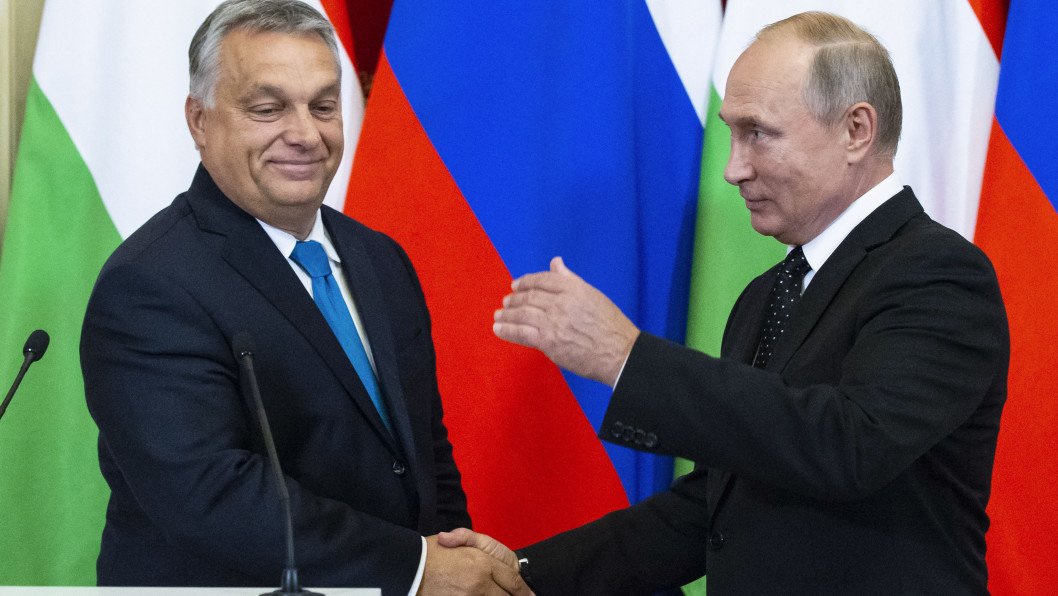
As the EU considers limiting the flow of confidential material to Budapest, the leaked calls provide hard evidence of what many in Brussels have long suspected: that the Kremlin has a mole at the table of every major European and NATO meeting.
This investigation followed the European Union’s decision to restrict Hungary’s access to classified intelligence. EU leaders took the unprecedented step after security agencies confirmed a pattern of information leaks to Moscow, noting that confidential deliberations from EU and NATO meetings were being relayed to the Kremlin in real-time.
It signaled a complete breakdown in trust between Budapest and its Western allies, as evidence mounted that Foreign Minister Péter Szijjártó was routinely updating his Russian counterpart during high-level strategy sessions regarding the Russian invasion of Ukraine.
Discuss this article:

-c439b7bd9030ecf9d5a4287dc361ba31.jpg "Photo of Katherina Popilnichenko")