- Category
- Latest news
CAESAR at Scale—How 120 Howitzers Are Changing the Firepower Equation in Ukraine
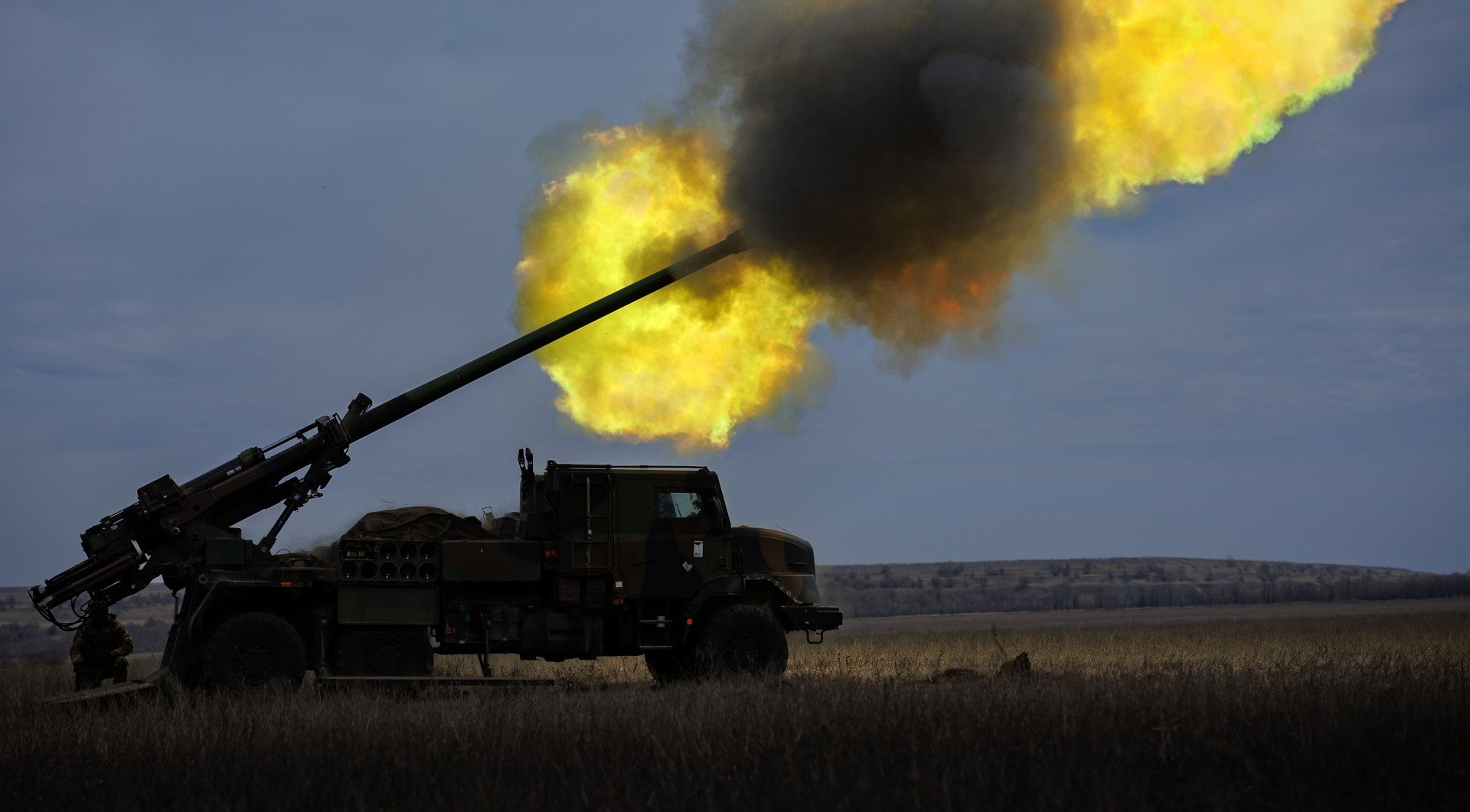
Once a symbol of limited Western aid, France’s CAESAR truck howitzer has become a cornerstone of Ukraine’s long-range warfare. Roughly 120 of the 155 mm systems now operate across the front, a scale that signals how Kyiv has learned to mass-produce precision, mobility, and survivability into a single artillery concept—and how Europe’s defense industry is adapting in real time.
 Prefer U24 Media on Google
- Authors


Ukraine is now operating roughly 120 French-made CAESAR 155 mm truck howitzers on the front line, a KNDS France executive said—a shift that signals Western wheeled artillery moving from piecemeal donations to a fleet-level capability with direct battlefield consequences, according to defense media outlet Army Recognition on October 28.
“The lessons learned in three years of combat in Ukraine—where 120 CAESARs are now deployed—give us an outstanding position to offer the United States Army a state-of-the-art weapon,” Olivier Travert, KNDS France’s marketing and sales director, said.
🇫🇷-made CAESAR self-propelled howitzer in service with #UAarmy
— Defense of Ukraine (@DefenceU) October 2, 2025
📹: @United24media pic.twitter.com/EMeuqIrQsg
What 120 CAESARs mean on the battlefield
CAESAR is a 155 mm/52-caliber gun mounted on a high-mobility truck chassis. The design pairs long reach and modern digital fire control with rapid “shoot-and-scoot” mobility—a combination that has proved attractive in Ukraine’s ISR-saturated, high-attrition environment.
The system’s strengths include quick displacement times, lower logistics overhead than heavy tracked guns, and the ability to integrate into sensor-to-shooter networks that use UAV spotting and counter-battery radar.
At the reported scale of ~120 guns, commanders can widen counter-battery windows, increase sustained rates of fire across multiple axes, and put more pressure on Russian logistics and artillery concentrations.
According to Army Recognition, for Kyiv, the operational payoff is not just more barrels but the ability to orchestrate distributed, high-tempo fires that complicate an adversary’s defensive calculus.
CAESAR self-propelled howitzer in service with Ukrainian forces. Powerful. pic.twitter.com/0qRMtEdQm8
— NOELREPORTS 🇪🇺 🇺🇦 (@NOELreports) June 7, 2023
Industrial and procurement implications
KNDS has been explicit about converting battlefield data into an industrial strategy. The company recently announced a strategic teaming agreement with Leonardo DRS to offer CAESAR to the US Army—and in those same briefings, executives pointed to Ukraine’s experience with roughly 120 systems as proof of the design’s combat survivability and maturity.
That commercial push underlines how battlefield performance can accelerate procurement conversations and integration work for allied forces.
#Ukraine: A #Danish 🇩🇰supplied CAESAR 8x8 155mm self-propelled howitzer in service with the Ukrainian Army somewhere on the front. #Kyiv #UkraineRussiaWar #UkraineWar #UkrainianArmy #USA
— Weapons Illustrated (@Weapons_Illust) December 26, 2023
Nice to see the CAESAR 8x8 155mm self-propelled howitzer in winter conditions. pic.twitter.com/7XQw1m1XQt
From a budgeting and sustainment perspective, CAESAR’s wheeled architecture reduces through-life costs and eases strategic mobility (airliftability and on-road transit) compared with tracked self-propelled guns, Army Recognition notes.
These factors—plus the system’s iterative software and platform upgrades driven by combat use—make it an economical option for partner nations scaling artillery capabilities quickly.
-47615cb2aee5813817294da821ba9633.png)
Why this matters beyond Ukraine
A 120-gun CAESAR presence is a meaningful datapoint for NATO planners and defense industrialists: it shows that a lean, mobile, digitally managed 155 mm concept can scale under fire, absorb losses, and keep operating given robust ammunition resupply and networked sensors.
For Ukraine, the immediate tactical outcome is deeper interdiction and greater counter-battery capability; for partners, it’s a live demonstration that wheeled artillery can be an affordable, fast-fielded building block for modern fires forces.
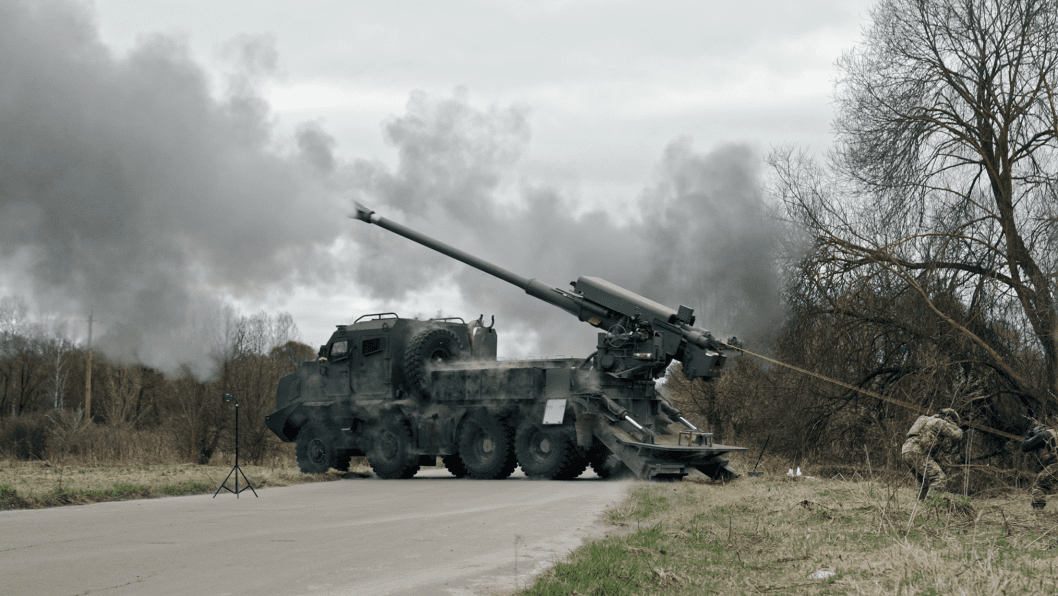
Earlier, reports emerged that the new batch of CAESAR self-propelled howitzers the Czech Army was set to receive next year will be modified to take into account lessons learned from Ukraine.
The Ministry confirmed that 62 French-made CAESAR howitzers, manufactured by the French defense company KNDS, will replace the aging DANA artillery systems, which are expected to remain in service until 2027.
Discuss this article:
-9bd5e1532102621f8fb1c4ba871a3171.png)


-111f0e5095e02c02446ffed57bfb0ab1.jpeg "Photo of Roman Kohanets")

-72b63a4e0c8c475ad81fe3eed3f63729.jpeg "Photo of Cyril Barabaltchouk")