- Category
- Latest news
EU Responds to Ukraine’s Anti-Corruption Operation: A Key Test for Reforms
 Prefer U24 Media on Google
- Authors


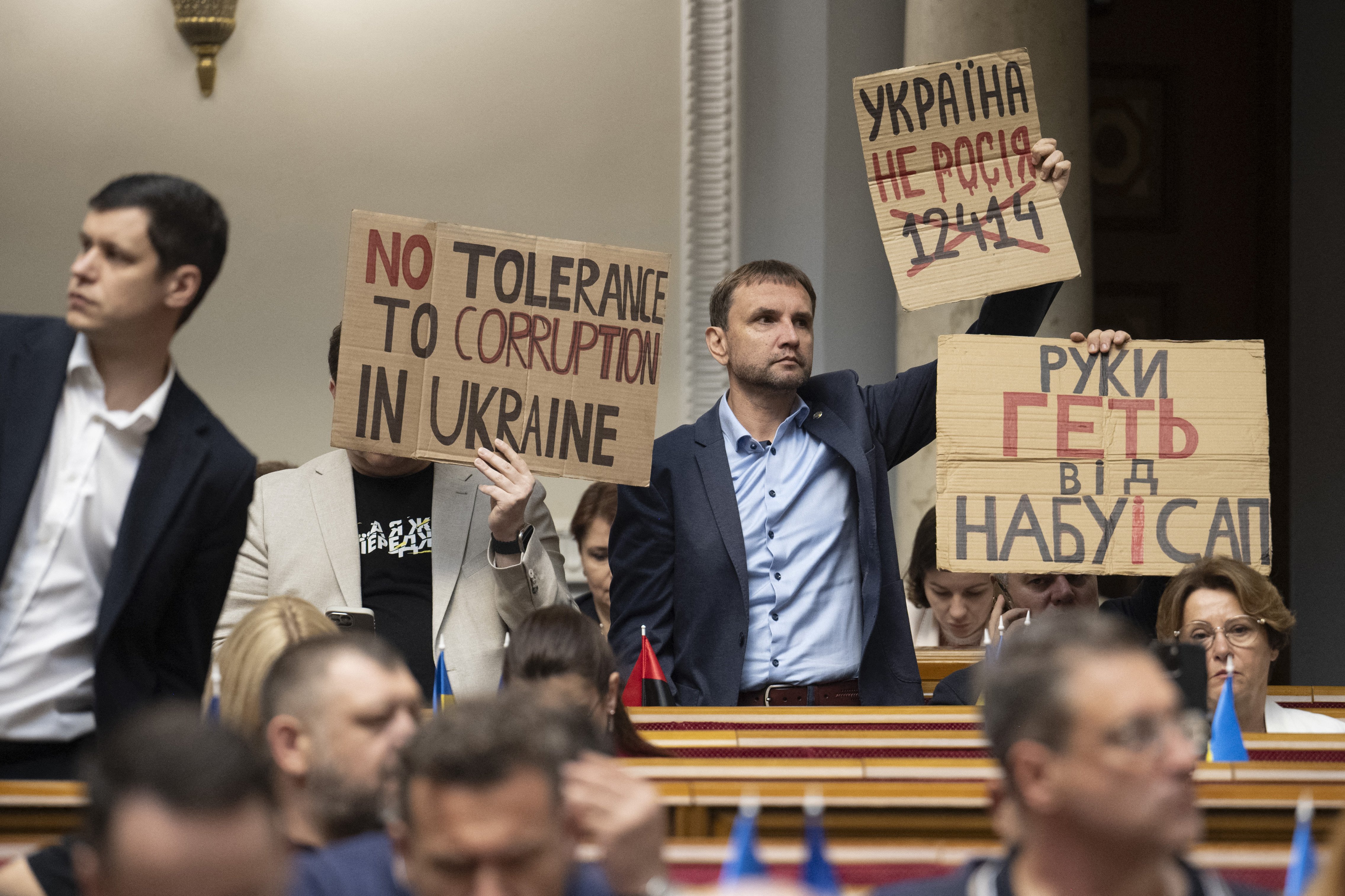
On November 10, Ukraine’s National Anti-Corruption Bureau (NABU) and the Specialized Anti-Corruption Prosecutor’s Office (SAPO) launched Operation “Midas”, a large-scale investigation into alleged corruption within the energy sector.
In response, on November 13, President Volodymyr Zelenskyy signed a decree imposing three-year sanctions against two individuals implicated in the case. The sanctions include a full range of restrictive measures under Ukrainian law—including asset freezes, bans on capital outflows, and a complete halt to trade and transit operations involving the sanctioned individuals.
They are also prohibited from participating in privatization, acquiring land, increasing shares in Ukrainian companies, and engaging in public procurement or defense contracts.

The Ministry of Foreign Affairs has been tasked with informing Ukraine’s international partners—including the European Union, United States, and other allied nations—of the sanctions and initiating discussions about coordinated international restrictions.
Ukraine’s actions have received a response from the European Union, which sees the investigation as a signal of institutional maturity and progress in anti-corruption reform.
A European Commission spokesperson Guillaume Mercier commented that the efforts by NABU and SAPO reflect ongoing reform in Ukraine, noting that effective anti-corruption enforcement remains a core requirement for EU membership.
“This investigation shows that anti-corruption bodies are in place and functioning in Ukraine. The fight against corruption has been central to our enlargement package, which provides a general position on the matter, ‘ he said.
“Let me stress that the fight against corruption is key for a country to join the EU. It requires continuous efforts to guarantee a strong capacity to combat corruption and the respect for the rule of law.”
Speaking at a midday press conference, EU Chief Spokesperson Paula Pinho added:
“I think it’s really important to underline that [these] investigations which are taking place in Ukraine show that the anti-corruption [measures] work, and institutions are there to precisely fight against it.
And this is obviously an area to which we pay particular attention—also in the context of the accession process.”
At the G7 Foreign Ministers' Meeting in Canada, German Deputy Foreign Minister Johann Wadephul reaffirmed his country’s military support for Ukraine, while also emphasizing the importance of continued reform.
“A decisive fight against corruption in Ukraine is needed to ensure that Western support remains strong,” Wadephul said, adding that allies stand with Ukraine in these efforts, as reported by ntv.
Meanwhile, EU Ambassador to Ukraine Katarína Mathernová, commenting on the situation, echoed sentiments expressed by EU foreign policy chief Kaja Kallas at the G7 foreign ministers' meeting in Canada:
“The energy corruption scandal is very serious, and the timing is extremely unfortunate,” Kallas said.
Mathernová added:
“Corruption exists in many countries — it’s like cancer, eating the societies from within. What matters is how quickly and decisively authorities respond. Ukraine’s reaction so far shows determination.”
Earlier, it was reported that during an investigation by Ukraine’s National Anti-Corruption Bureau (NABU), Prime Minister Yulia Svyrydenko announced that the government is preparing a “comprehensive decision” concerning all state-owned companies, including those in the energy sector.
Discuss this article:
-331a1b401e9a9c0419b8a2db83317979.png)