- Category
- Latest news
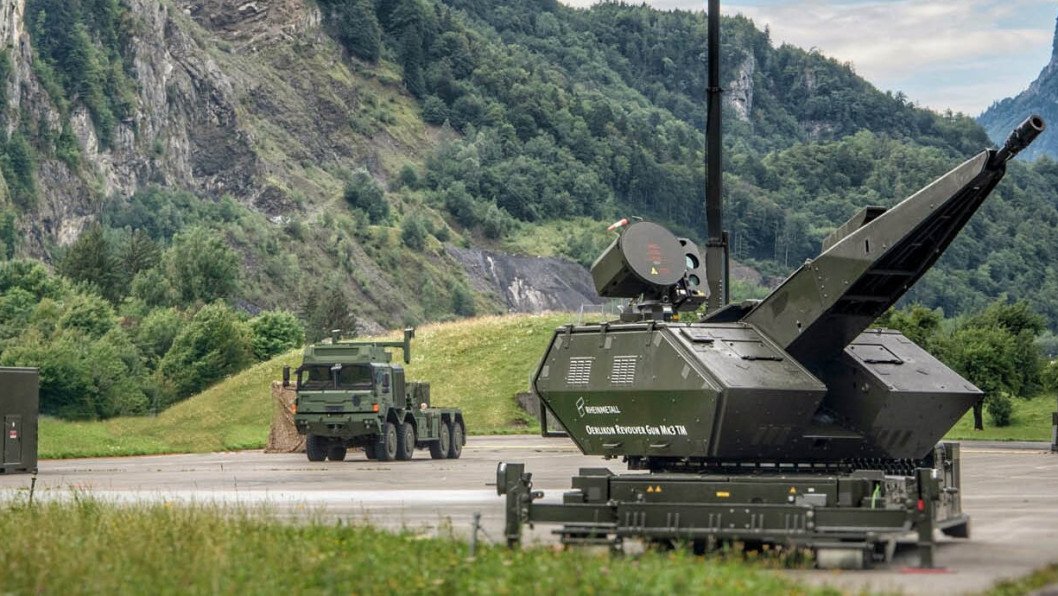
Fearing Shaheds, Germany Moves to Mass-Produce Ukraine-Proven Skynex Air Defense Systems
 Prefer U24 Media on Google
- Authors


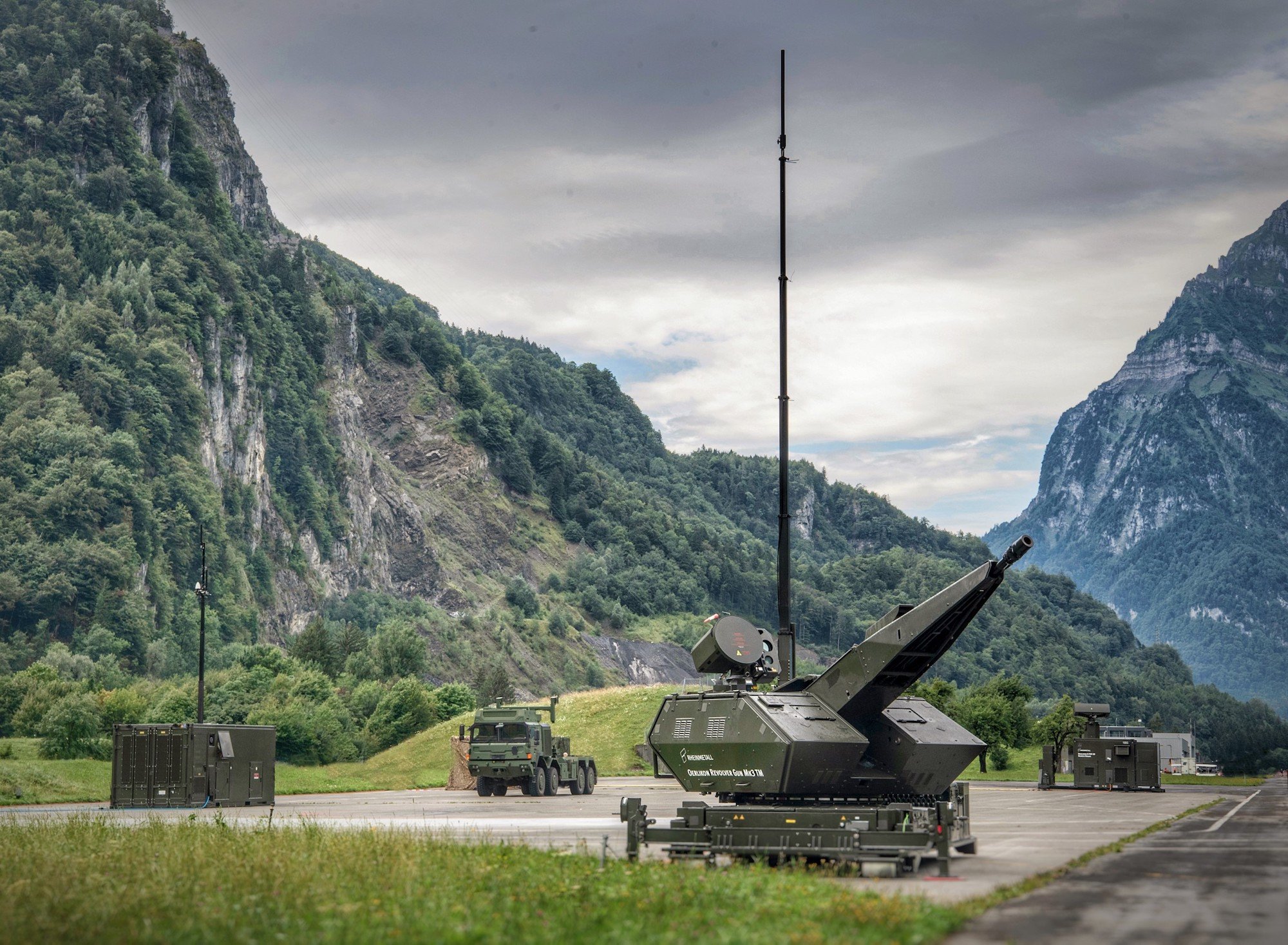
Germany’s defense industry is preparing for a sharp increase in demand for anti-drone systems, driven in large part by lessons learned from Ukraine’s fight against Russian aerial attacks, according to Defense Express on March 30.
Defense giant Rheinmetall plans to ramp up production of gun-based air defense systems—including the Skynex and Skyranger families—to as many as 400 units annually by 2027, according to a company presentation to investors.
We bring you stories from the ground. Your support keeps our team in the field.
These systems are specifically designed to counter threats such as Iranian-designed Shahed attack drones, which have been widely used by Russian forces against Ukrainian cities and infrastructure.
From dozens to hundreds—scale-up underway
Following planned expansion efforts, Rheinmetall expects to reach a production rate of up to eight air defense systems per week.
The company is also working to strengthen and diversify its supply chains to support sustained output growth.
🇩🇪🇨🇭🇮🇹 Rheinmetall is building out production capacity for ~400 Skynex/Skyranger systems per year.
— Colby Badhwar (@ColbyBadhwar) March 29, 2026
I don't know why European governments don't order substantially more of these both for Ukraine & themselves. https://t.co/G0jckuVSBe pic.twitter.com/hRIXMrS6FC
For comparison, Rheinmetall previously reported a production capacity of around 200 systems per year as of September 2025—meaning the planned expansion would effectively double output.
Manufacturing capacity is being increased across multiple countries.
Facilities in Switzerland and Italy are each expected to produce around 140 systems annually, while German-based production is projected to reach about 100 units per year.
Combined, that totals roughly 380 systems—slightly below the initially stated 400-unit target.
New production lines are already being equipped, with upgrades in Switzerland expected to come online in the first quarter of 2026, followed by Italy and Germany later in the year.
🚨🇮🇹 Italian Army Receives First Skynex Air Defense System.
— Defence Index (@Defence_Index) December 26, 2025
The Italian Army has officially taken delivery of its first Skynex air defense system from Rheinmetall. The handover took place on December 18, 2025, at the Comando Artiglieria Controaerei in Sabaudia.
Skynex provides… pic.twitter.com/R2SxVkjScM
Built for the drone war
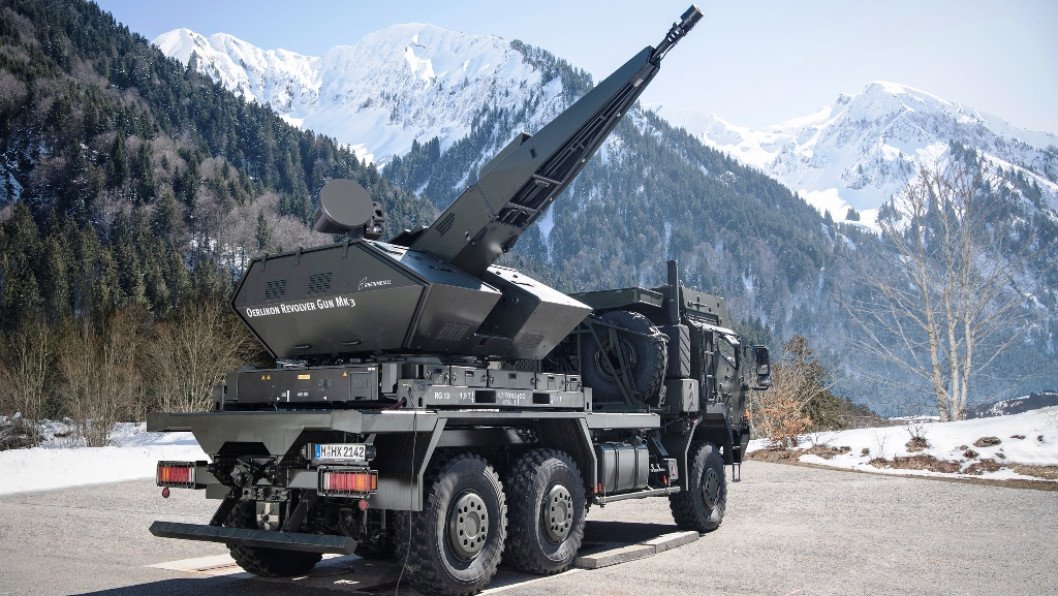
Both Skynex and Skyranger systems are designed to counter low-cost aerial threats, particularly drones and cruise missiles.
They use rapid-fire autocannons and advanced targeting systems to engage incoming targets at short range—offering a cost-effective alternative to expensive missile-based air defense systems.
Ukraine is already using these systems in combat.
Skynex platforms have demonstrated effectiveness not only against drones but also against cruise missiles, while Skyranger 35 systems mounted on Leopard 1 chassis have been supplied to Ukrainian forces since late 2025.
🚨 Breaking | Defence Procurement
— The Sacred Scroll (@SacredScroll) December 15, 2025
The Netherlands has ordered Rheinmetall’s Skyranger anti-drone cannon systems in a deal worth under €1 billion.
🔹 Designed to counter drones, loitering munitions & low-flying threats
🔹 Uses 35 mm programmable air-burst ammunition
🔹 Highly… pic.twitter.com/qE0zS40iWB
High demand across Europe
Demand for these systems is growing rapidly across Europe as countries reassess their air defense needs.
Germany and the Netherlands have already placed orders for the Skyranger 30, while Belgium is considering acquiring the system to protect its NASAMS air defense units.
Switzerland is expected to procure Skynex systems as well.
The Bundeswehr alone is estimated to require between 500 and 600 such systems in the long term.
However, cost remains a limiting factor. A battery of four Skynex or Skyranger systems is estimated at around $68.9 million, making large-scale procurement a significant investment for European governments.
Limits and challenges
A significant portion of Rheinmetall’s production capacity is located in Switzerland, which imposes export restrictions that could limit direct deliveries to Ukraine.
However, those facilities can still fulfill contracts for other countries, indirectly supporting broader European rearmament efforts.
Production timelines also remain a factor.
Manufacturing a single system can take close to a year, meaning the full impact of expanded production capacity will likely become visible only by mid-to-late 2027.
Earlier, Rheinmetall Chief Executive Officer Armin Papperger stated that a lack of financing—not industrial capacity—is currently the main factor restricting the scale of military assistance that could be delivered to Ukraine.
Discuss this article: