- Category
- Latest news
From War Zone to Space Lab: How Ukrainian 16-Year-Old Refugee Helps Develop Solar Power for Satellites in UK
 Prefer U24 Media on Google
- Authors


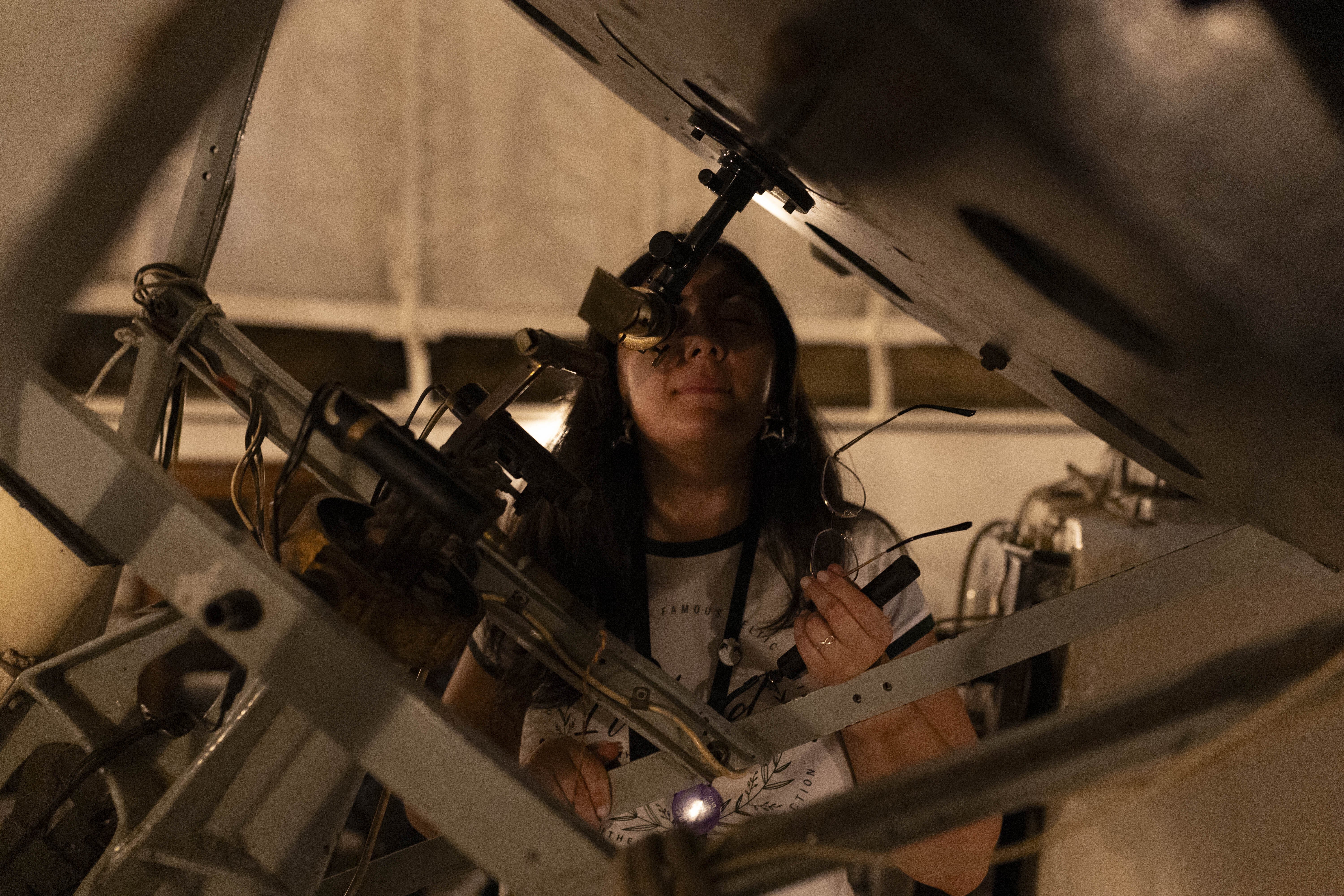
A 16-year-old Ukrainian girl who fled Russia’s invasion is now contributing to cutting-edge research on space-based solar technology in Wales, becoming the first school pupil to complete an internship at Swansea University’s Centre of Integrative Semiconductor Materials (CISM).
As reported by BBC on November 17, Kateryna arrived in the UK in 2022 with her mother and grandmother, spending ten months living in a single hotel room in Swansea. Despite these challenges, she has been described by her lecturer as an “exceptional and brilliant student” and is now working alongside senior scientists on semiconductor technology for satellites.
Her internship focuses on the performance of space-based solar panels exposed to extreme temperature changes in orbit.
“We have to make sure the semiconductors will work efficiently in those temperatures, but also the satellite can be hidden behind the earth so it will experience very cold temperatures,” she explained. “We have to make sure the semiconductors will withstand that temperature range and continue to work.”
Internships at CISM are usually reserved for third-year physics undergraduates, yet her project will now be continued by students several years older. Dr Gregory Burwell, senior lecturer in Swansea University’s physics department, called her work “exceptional” and said her success has “set a high benchmark for future programmes.” He highlighted her contribution to research on “photovoltaics in space,” which could one day produce uninterrupted solar energy by capturing sunlight 24 hours a day.
Dr Burwell noted that traditional silicon solar panels are “too heavy to absorb enough light” for use in orbit.
“So, we're interested in developing thin filmed photovoltaics to generate more power with less weight which is important when launching satellites,” he said. “Kateryna's achievements demonstrate the impact of giving talented students meaningful access to advanced facilities and mentoring.”
Kateryna, who left Kyiv at age 13, now studies five A-level subjects—further maths, maths, physics, chemistry, and computer science—at Bishop Gore School, along with the Welsh Baccalaureate.
According to BBC, eight thousand Ukrainians have relocated to Wales since the invasion, many living in temporary accommodation like the hotel where Kateryna and her family stayed. She said she is grateful for continued support for Ukrainians, especially as Russian attacks on energy infrastructure intensify.

“Many people are stranded without electricity and towns without water or gas,” she said. “Many people in the Ukraine have deserted their homes because the front lines are getting more dangerous, so help is still needed and it's important to talk about it.”
Earlier, a ten-year-old Ukrainian refugee, Zlata Bilous, received a gold medallion bravery award in Australia after rescuing a friend from drowning at Hillarys Boat Harbour in Perth.
As noted by the Government of Western Australia, Zlata arrived in the country in 2022, unable to speak English and without knowing how to swim—obstacles she had to overcome before her lifesaving act.
Discuss this article: