- Category
- Latest news
Georgia’s Black Sea Petroleum Refinery Plans to Fully Replace Russian Crude
 Prefer U24 Media on Google
- Authors


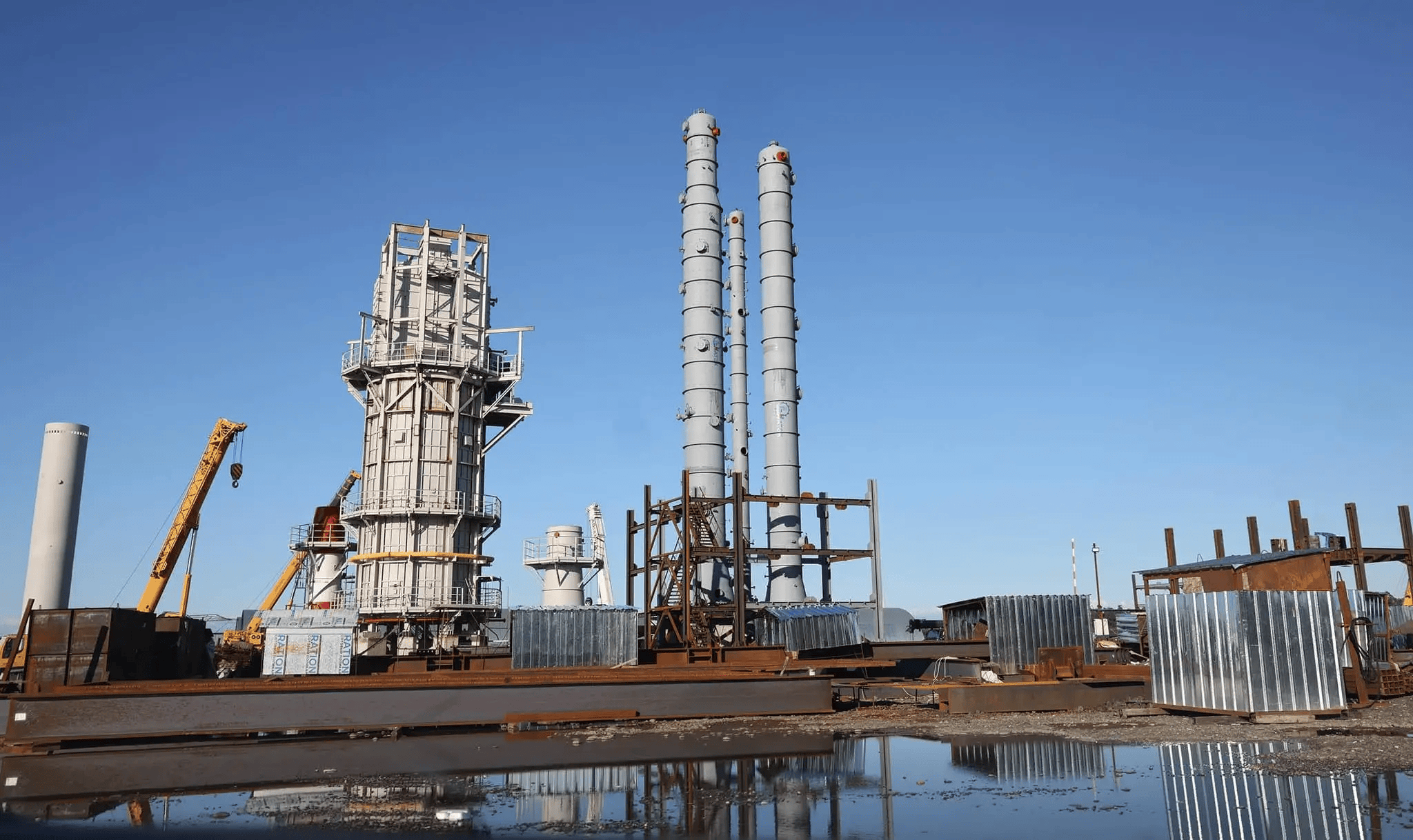
Black Sea Petroleum (BSP), the first full-scale oil refinery in Georgia, has announced plans to fully replace Russian crude with alternative sources, a strategic decision aimed at expanding its market opportunities, particularly in the European Union.
In an interview with Business Weekly on March 30, David Potskhveria, CEO and co-founder of Black Sea Petroleum, emphasized that the company will no longer accept or use Russian oil at its Kulevi Oil Refinery, Georgia’s only refinery.
We bring you stories from the ground. Your support keeps our team in the field.
“Our task is to completely replace existing Russian crude. We are working first with Turkmen oil, and in the next stage, we plan to use Kazakh and other alternative sources,” Potskhveria said. The shift to alternative sources is designed to ensure BSP can continue to operate in a changing market while circumventing the restrictions that affect Russian-derived products.
The move is particularly timely, as the European Union has reinforced its sanctions against Russia, which has forced many companies to reconsider their sources of crude. By switching to Turkmen, Kazakh, and other non-Russian oil sources, BSP is positioning itself to regain access to EU markets, where demand for refined petroleum products remains strong.
However, there are logistical challenges to overcome. The planned transit of Turkmen crude via Azerbaijan’s railway system has encountered delays, despite previous agreements.
“Unfortunately, and somewhat unexpectedly, rail transit through Azerbaijan for our direction has become difficult,” Potskhveria explained.
He added that the postponement of Turkmen crude shipments has affected BSP's ability to diversify its supply chain. However, once the railway supply chain is fully operational, it will open the door to other sources, including Kazakh oil, which will further diversify BSP’s crude imports.
BSP's decision aligns with the broader geopolitical and economic shifts affecting the oil industry, as the European Union has imposed a ban on petroleum products refined from Russian oil.
The move comes as European Council has officially adopted new regulations aimed at phasing out all imports of Russian pipeline gas and liquefied natural gas (LNG), advancing the EU's effort to reduce its reliance on Russian energy as part of the REPowerEU strategy.
The new regulations will implement a gradual ban on Russian gas imports. The prohibition on pipeline gas imports will take effect six weeks after the regulations are implemented, with temporary transition periods for existing contracts. By the start of 2027, a full ban on LNG imports will be enforced, and pipeline gas imports will cease completely by the fall of 2027.
Meanwhile, the United States Coast Guard has authorized the passage of a Russian-owned tanker carrying crude oil toward Cuba, alleviating some of the energy supply pressure on the island, which had been facing restricted fuel access due to policies under the Trump administration.
The decision, reported by The New York Times, came after the tanker, which is carrying around 730,000 barrels of oil, was located just miles from Cuba’s territorial waters.
This shipment is seen as a temporary solution to Cuba’s ongoing energy crisis, offering the island several weeks’ worth of fuel reserves. The delivery also comes at a time when Cuba is under mounting economic pressure, exacerbated by limited imports and tightening US sanctions. Analysts have noted that this oil shipment could ease some of the strain on the Cuban government’s resources.
Discuss this article:
-4a56a6b482ec132402c16ef6fcabf9a2.png)






-111f0e5095e02c02446ffed57bfb0ab1.jpeg "Photo of Roman Kohanets")

-72b63a4e0c8c475ad81fe3eed3f63729.jpeg "Photo of Cyril Barabaltchouk")