- Category
- Latest news
Illegal Migration Threat Forces Poland to Extend Checks at German and Lithuanian Borders
 Prefer U24 Media on Google
- Authors

-72b63a4e0c8c475ad81fe3eed3f63729.jpeg "Photo of Cyril Barabaltchouk")
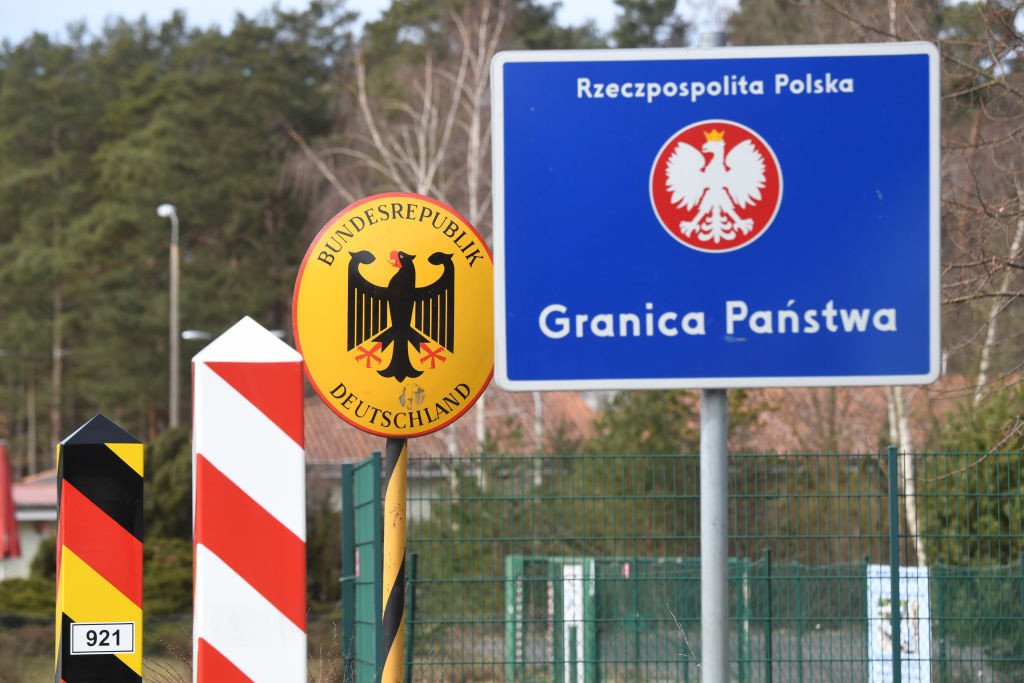
Poland’s Ministry of Internal Affairs and Administration has officially extended temporary border controls with Germany and Lithuania for an additional six months, Polskie Radio reported on March 28.
The order, which takes effect on April 5, 2026, will extend the targeted inspections through October 1, 2026, as Warsaw continues to address the serious threat of illegal migration along its frontiers.
We bring you stories from the ground. Your support keeps our team in the field.
The extended border checks will be operational across at least 63 designated crossing points. The operation relies on a multi-agency approach, with the Polish Border Guard leading the efforts, supported by the national police and the military’s Territorial Defense Forces.
During these inspections, authorities maintain the right to stop selected vehicles for compliance and security checks, Polskie Radio wrote.
The geographic breakdown of the controlled crossings heavily focuses on Poland’s western edge, with approximately 50 checkpoints located along the Polish-German border and 13 situated on the Polish-Lithuanian border. Notably, the new directive once again includes Muskau Park (Park Mużakowski) on the German border.
This specific checkpoint is highly significant for the region, serving as a vital artery for pedestrian and bicycle tourism, as well as cross-border cultural events held within the park grounds.
The continuation of these checks falls under the legal framework of the Schengen Borders Code. The code allows a Member State to temporarily restore internal border controls for up to six months in the event of a foreseeable, serious threat to public order or internal security.
-95f6bcc4daa5579b0f4d10991f1e0fad.jpg)
If the threat persists beyond the initial half-year period, the state may extend the controls in subsequent periods of no more than six months, capping at a maximum total duration of two years. To comply with European law, Poland is required to notify other Member States, the European Parliament, the EU Council, and the European Commission in advance, accoring to Polskie Radio.
The timeline of Poland’s border measures reflects this incremental legal approach. The controls were initially introduced on July 7, 2025, for a one-month period, before being extended from August 6 to October 4, 2025. A subsequent order maintained the checks from October 5, 2025, until the current April 4, 2026 expiration, necessitating this latest six-month extension to maintain internal security.
Poland’s decision to maintain internal border controls with its western neighbors is directly tied to the severe, ongoing hybrid war orchestrated by Russia and Belarus on its eastern frontier. Since 2021, Russia and Belarus have systematically weaponized migration as a tool to destabilize the European Union, artificially funneling thousands of migrants from the Middle East and Africa toward the Polish border.
This strategy has recently escalated in sophistication; Polish authorities recently discovered reinforced, Hamas-style underground smuggling tunnels dug beneath the Belarus border, designed to bypass surface-level barriers. By maintaining a constant flow of weaponized migration, the Kremlin aims to strain Polish border resources, sow political division across the EU, and distract from the Russian war against Ukraine.
Discuss this article:

-c439b7bd9030ecf9d5a4287dc361ba31.jpg "Photo of Katherina Popilnichenko")