- Category
- Latest news
Japan Scales Production of Terra A1 and A2 Interceptor Drones Built in Ukraine, Eyes Jet Systems
 Prefer U24 Media on Google
- Authors




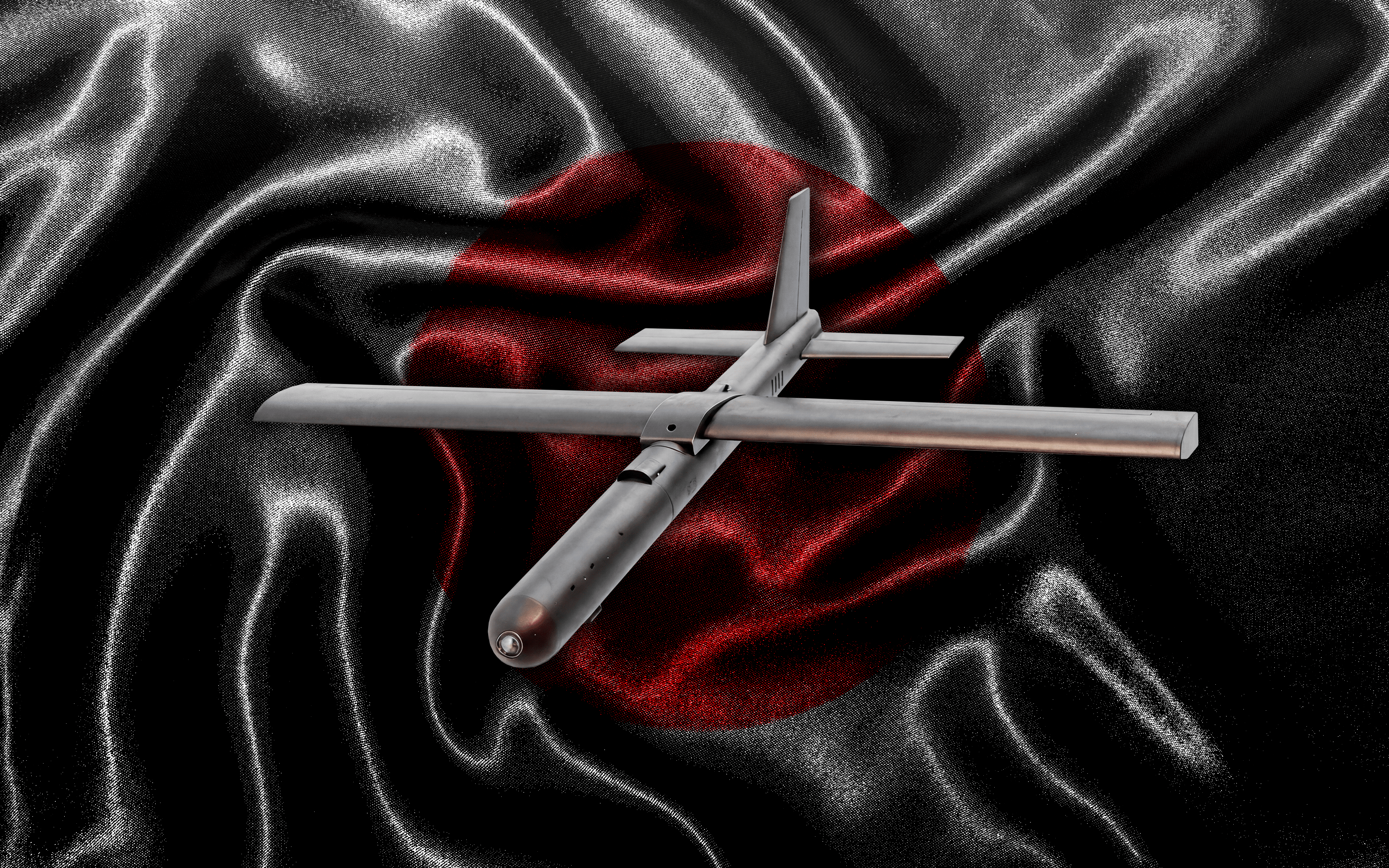
Japanese aerospace company Terra Drone is expanding production of Ukrainian-made interceptor drones while preparing to invest in next-generation jet-powered systems, signaling a deepening partnership between Japanese capital and Ukraine’s rapidly evolving defense tech sector.
Speaking during a presentation visited by a UNITED24 Media correspondent on April 28, Terra Drone CEO Toru Tokushige said the company is scaling up manufacturing of the Terra A1 and Terra A2 interceptor drones, with production in Ukraine handled by local firm Amazing Drones.
We bring you stories from the ground. Your support keeps our team in the field.
The Ukrainian company has already secured Japanese investment, while additional talks are underway with other domestic manufacturers.
Tokushige highlighted Ukraine’s unique strengths in defense innovation, particularly its speed of development and relatively low production costs, but acknowledged persistent challenges in scaling.
“Ukraine has its advantages: speed of development and low cost. But there are also challenges—lack of experience in mass production and operating in global markets, as well as shortages of key technologies. Many processes are still manual, which complicates scaling, especially beyond the country. That’s why the development of autonomous systems is critically important, and that is exactly what is expected from us,” he said.
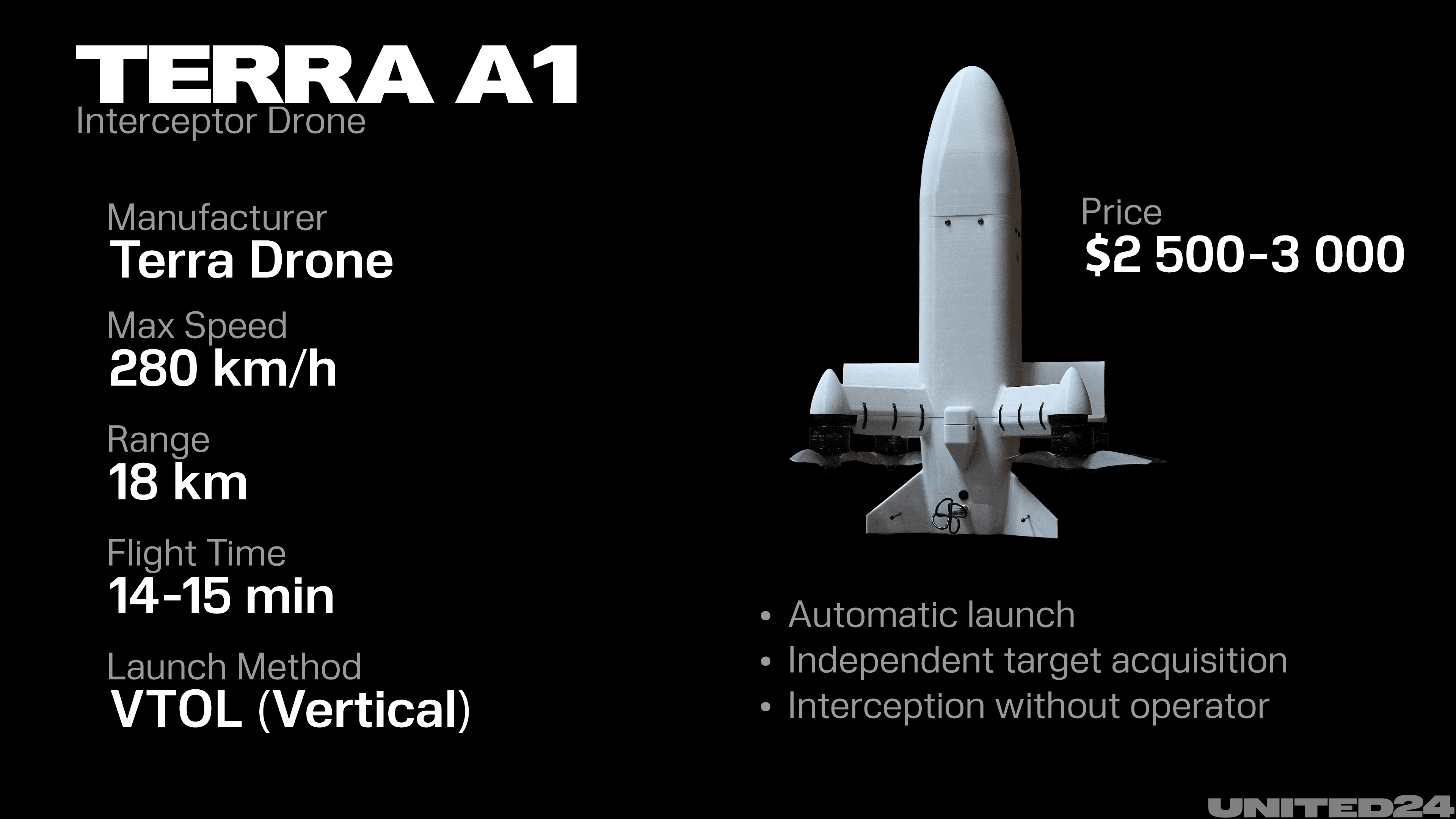
The company’s interceptor drones are already being tested in combat conditions. According to Terra Drone, the Terra A1 system has successfully intercepted a Shahed-type drone.
“One of our A1 drones has already successfully intercepted a ‘Shahed.’ This is critical, because in the military field, what matters most is not certifications but proven performance in combat. Without that, it is impossible to sell,” the company said.
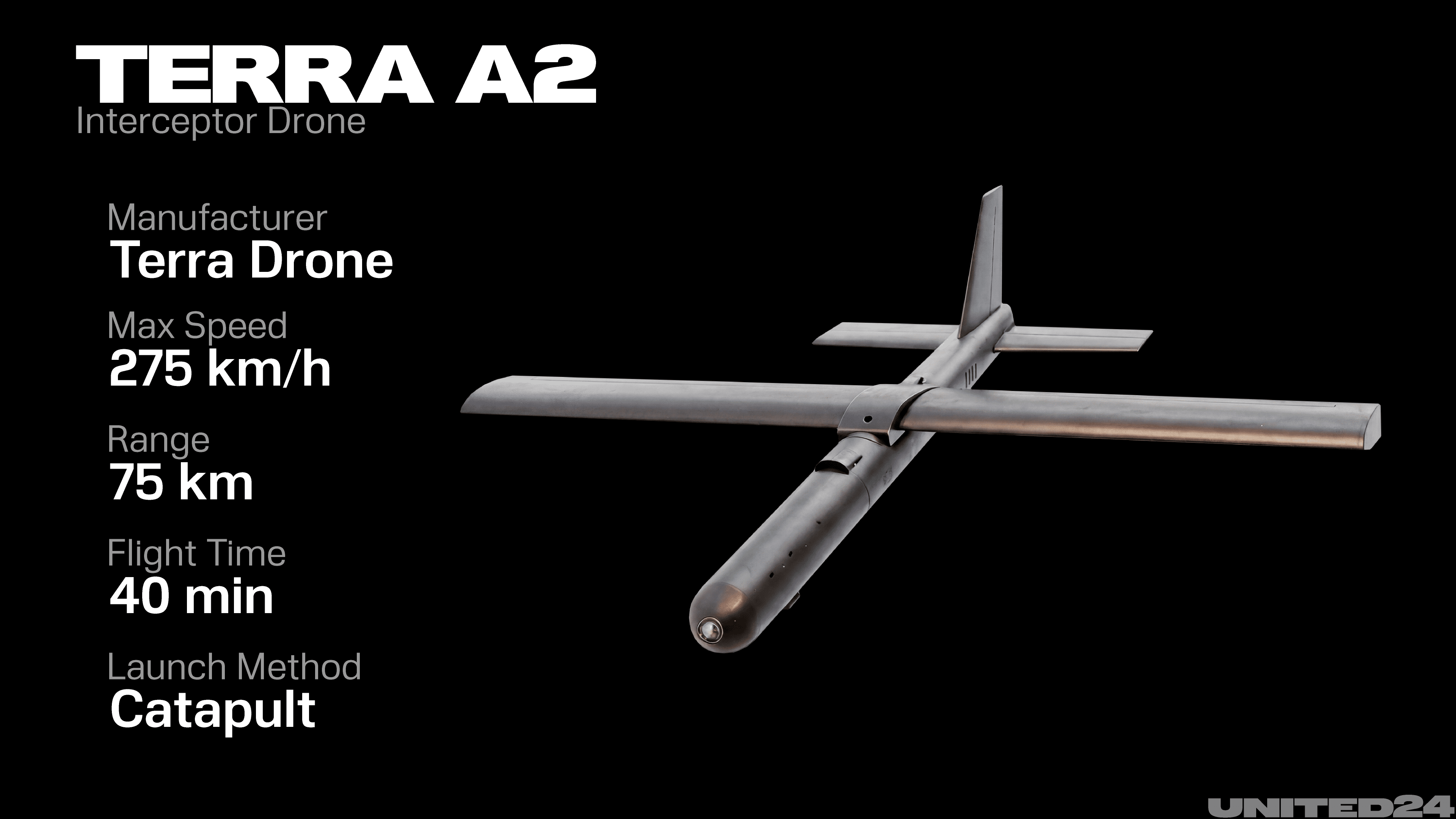
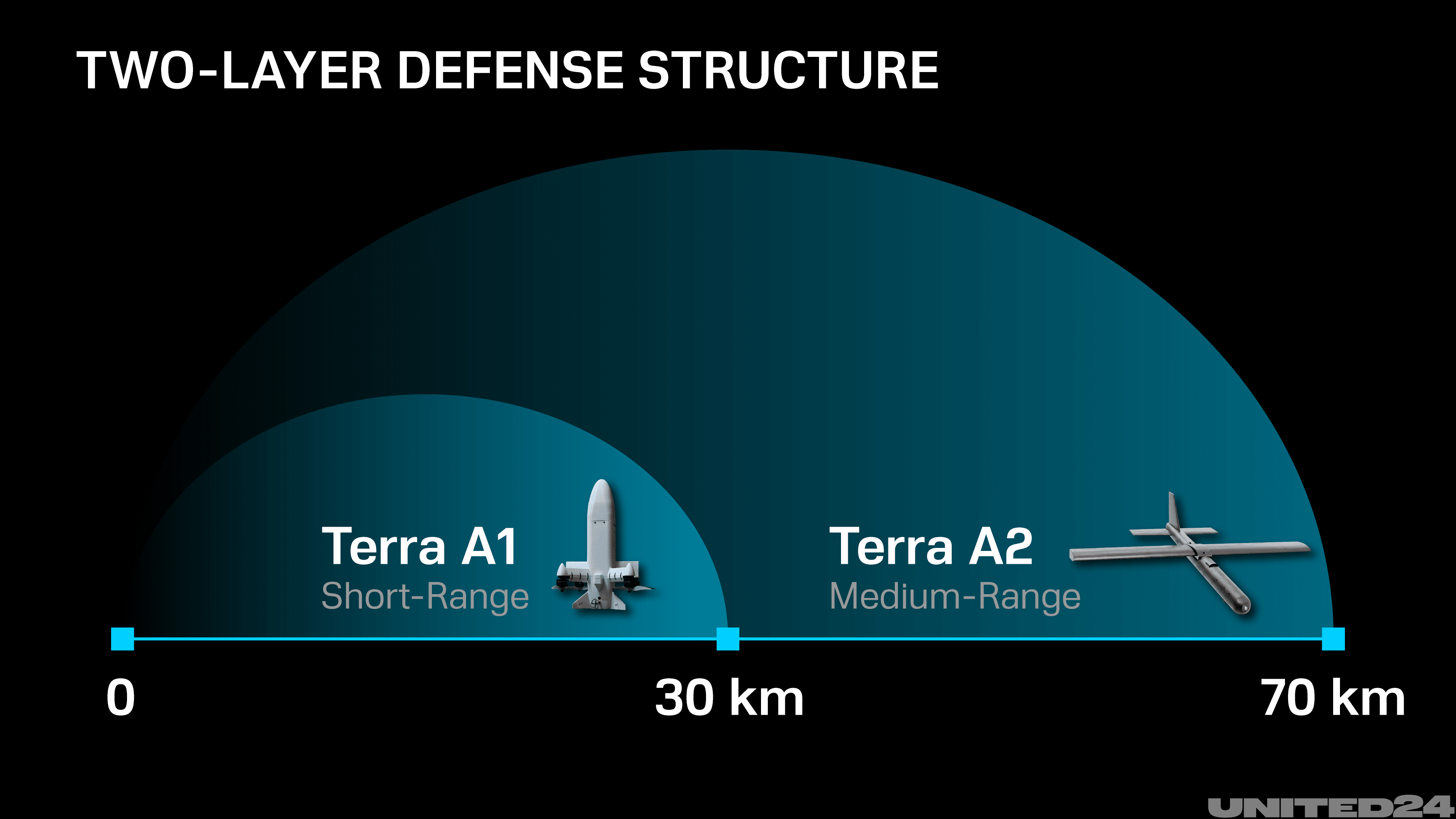
Terra Drone is now building a layered defense concept combining two types of interceptor drones. The Terra A1 serves as a short-range, rapid-response system designed for terminal defense, while the fixed-wing Terra A2 provides mid-range coverage, capable of patrolling, detecting, and intercepting targets at greater distances.
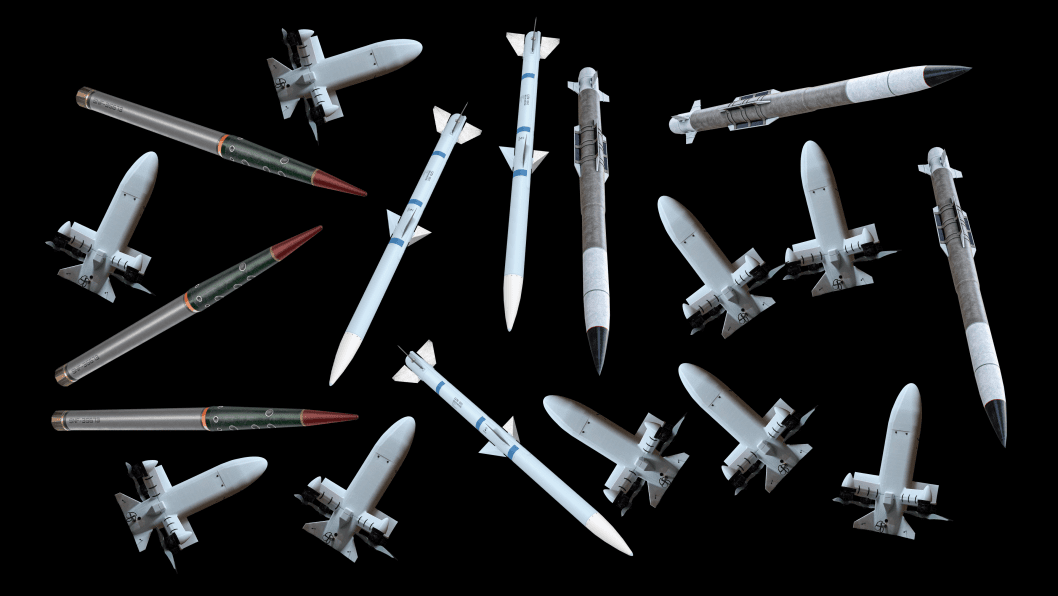
“It is impossible to defend using just one type of system. You need multiple layers — short, medium, and long range, with different speeds. Our A1 is one layer, and the new A2 is the middle layer. Another type is also under development,” Tokushige explained.
The Terra A2, a fixed-wing interceptor, is designed for extended operations, offering significantly greater range and endurance than smaller drones. It can reach speeds of around 310 km/h, remain airborne for up to 40 minutes, and cover distances of up to 75 kilometers at altitudes of up to 5,000 meters.
“Our Terra A2 drone can stay in the air for about 40 minutes, patrol an area, and immediately intercept targets. After that, another unit is launched, allowing us to cover gaps in defense,” Tokushige said, adding that relatively few companies are currently working with fixed-wing interceptor designs, giving Terra Drone a competitive advantage.
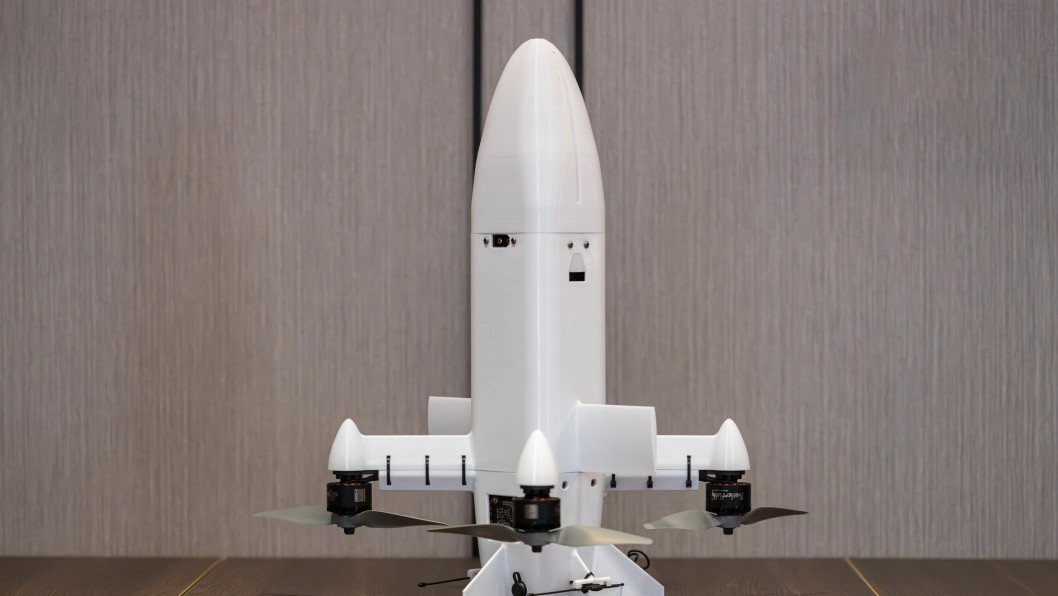
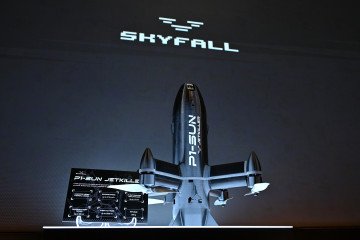
Beyond these systems, the company is also looking toward jet-powered drones as the next phase of development. Early concepts suggest significantly higher speeds and longer strike ranges, with prototypes expected to reach speeds of up to 440 km/h and operate at distances of up to 140 kilometers.
“In Ukraine, such solutions are already being developed—jet drones or low-cost missiles. The pace of development here is not 10–20 years like in traditional defense industries, but literally six months. That’s why startups are critically important,” Tokushige said.
Terra Drone is also working to integrate artificial intelligence into its platforms, enabling drones to autonomously detect and engage targets, further reducing reliance on human operators.
Looking ahead, the company aims to bring Ukrainian-developed systems to international markets, with early participation in Japanese tenders already underway.
“Specific financial figures are not yet available, but the potential is hundreds of millions of dollars in the defense segment alone,” Tokushige said.
Earlier, reports emerged that Japan’s Terra Drone was considering joint production of Ukrainian-developed drones on its own territory, as part of a broader defense-tech partnership with Kyiv.
Discuss this article: