- Category
- Latest news
Moscow Reverts to 90s Communication Tools as Internet Outages Cause Chaos
 Prefer U24 Media on Google
- Authors



In the wake of widespread internet outages in Moscow, there has been a notable surge in demand for alternative communication tools, including pagers, radios, and landline phones.
As reported by The Moscow Times on March 12, based on data from the online marketplace Wildberries, these items have become crucial for both businesses and individuals looking to maintain communication.
We bring you stories from the ground. Your support keeps our team in the field.
Between March 6 and March 10, sales of pagers, which are primarily used for communication between clients and staff, saw a 73% increase compared to the same period in February. Radio sales rose by 27%, and landline phone sales grew by 25%.
The disruption began on March 3, with mobile internet and voice communication services experiencing widespread outages. In many areas, especially in the city center, the network was completely down, and in other places, only "whitelisted" sites were accessible.
Russian presidential spokesman Dmitry Peskov explained that the shutdowns were implemented for “security” purposes, claiming that Ukraine was using “increasingly sophisticated methods for attacks.” He added that the authorities would continue to limit communication for as long as necessary.
The ongoing disruption has significantly affected various sectors, including courier services, taxis, car-sharing, and retail businesses. Experts estimate that the daily economic losses caused by these restrictions could reach up to $12,5 million.

In addition, Moscow residents and visitors have been turning to physical maps and guides for navigation. Sales of city atlases and guides increased by 48% between March 6 and March 10 compared to the previous week, highlighting the growing reliance on traditional methods for finding their way around during the communications blackout.
As of March 10, Moscow residents have experienced five consecutive days of mobile internet disruptions across much of the Russian capital, with the most severe outages concentrated in central districts, as reported by Agenstvo.
The outlet analyzed user comments on Downdetector from the past five days, which highlighted specific areas where mobile internet service was unavailable.
The disruptions were reported across every administrative district of Moscow, except for New Moscow. The majority of complaints came from the Central Administrative District, where outages were reported in 9 out of its 10 districts.
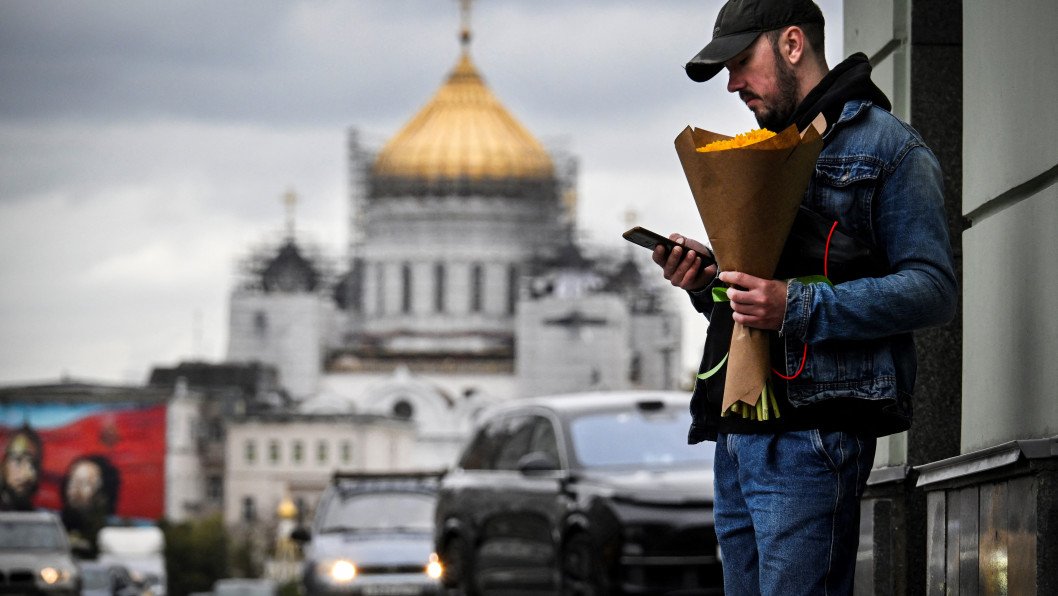
In some instances, only a limited set of government-approved websites and services remained accessible during the mobile internet restrictions. However, in other cases, even these services were affected and became unavailable.
In 2025, Russian telecommunications providers disabled 18.45 million SIM cards at the request of Roskomnadzor, representing a 76% increase compared to the previous year.
A representative from Roskomnadzor explained that the blocks were triggered by violations of communications regulations, such as the use of incorrect subscriber data, the lack of foreigner information in the Unified Biometric System, and instances where the limit on the number of SIM cards per subscriber was exceeded.
Discuss this article:
-4a56a6b482ec132402c16ef6fcabf9a2.png)