- Category
- Latest news
Ukraine’s Drone Warfare Shows Two Battalions Could Be Wiped Out in a Day in NATO Drills
 Prefer U24 Media on Google
- Authors


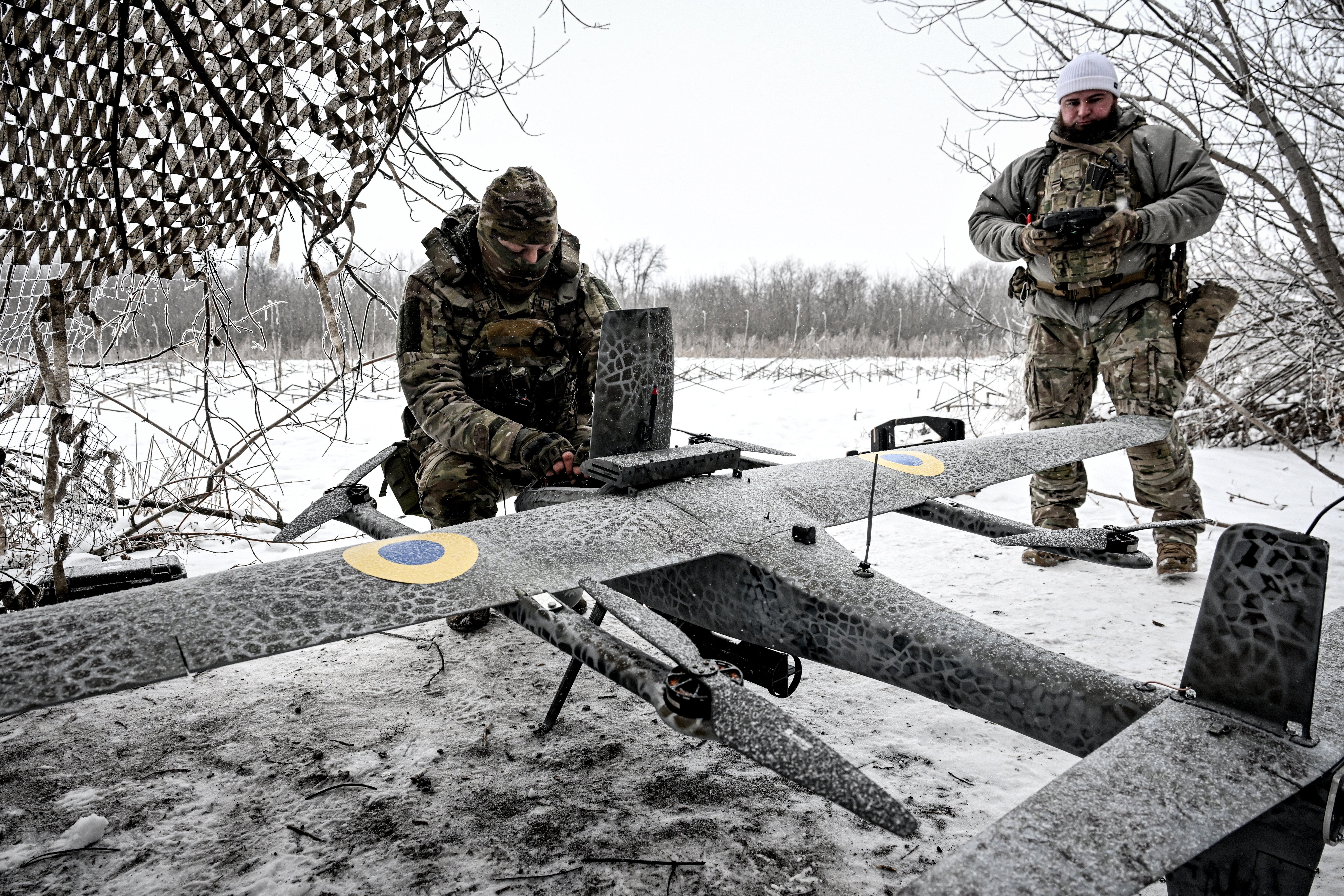
Russia’s war against Ukraine has already reshaped global military thinking, but the WSJ reported that a major NATO drill last May revealed how unprepared Western forces remain for high-intensity combat dominated by drones and real-time battlefield intelligence, according to a report by The Wall Street Journal on February 12.
The exercise, called Hedgehog 2025, brought together more than 16,000 troops from 12 NATO countries alongside Ukrainian drone specialists, including personnel temporarily drawn from the front. The scenario simulated a “contested and congested” battlefield saturated with unmanned systems.
We bring you stories from the ground. Your support keeps our team in the field.
The overall outcome for NATO forces was “horrible,” he added, saying the opposing side was “able to eliminate two battalions in a day,” leaving units effectively unable to continue fighting.
“The aim was really to create friction, the stress for units, and the cognitive overload as soon as possible,” said Lt. Col. Arbo Probal of the Estonian Defence Forces, describing the intent to test how quickly soldiers could adapt under pressure.
According to the WSJ, one simulated offensive involving thousands of troops—including a British brigade and an Estonian division—quickly revealed a critical flaw. Advancing forces failed to account for the extreme visibility created by drones.
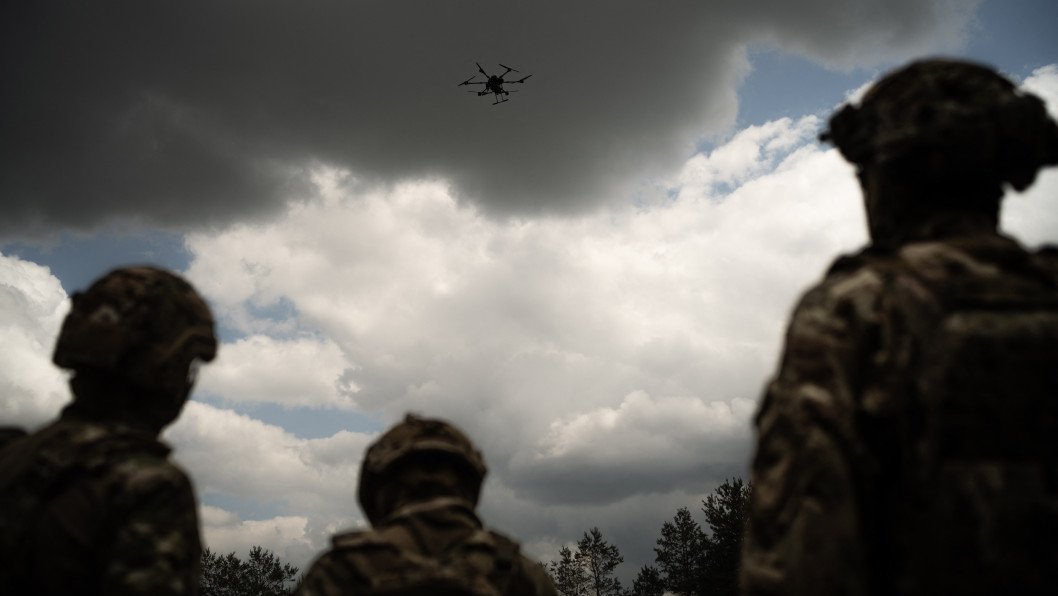
The NATO battle group was “just walking around, not using any kind of disguise, parking tents and armored vehicles,” one participant recalled. “It was all destroyed.”
Ukrainian teams relied on Delta, a battlefield-management system that gathers real-time intelligence, applies artificial intelligence to analyze data, identifies targets, and coordinates strikes across units. The system enables a rapid kill chain—spotting, sharing, and striking targets within minutes.
A small Ukrainian-led adversary group of roughly ten personnel carried out a counterattack that mock-destroyed 17 armored vehicles and conducted 30 simulated strikes in about half a day, the WSJ reported.
Another opposing unit led by Estonian unmanned-systems coordinator Aivar Hanniotti deployed more than 30 drones across an area smaller than four square miles. Even with fewer drones than typically seen on Ukraine’s real front lines, concealment proved nearly impossible.
-1b33507f90e18b55850e79309ca95b5d.jpg)
“There was no possibility to hide,” Hanniotti said. “We quite easily found cars and mechanized units, and we were able to take them out quite fast with strike drones.”
WSJ reporting noted that the drill shocked participating officers and highlighted how Ukraine’s combat experience is reshaping European security thinking. Estonian officials said exercises like Hedgehog demonstrate the limits of learning from videos or reports alone.
The exercise also underscored broader structural challenges—from slow strike coordination to restricted data sharing inside NATO—that contrast with Ukraine’s faster, more networked battlefield approach.
-ea26f8a6e5d0915a8777021dd19575c3.jpg)
“Lessons are not learned when they are identified,” said retired Gen. David Petraeus. “Rather, they are only learned when you develop new concepts, write new doctrine, change organizational structures, overhaul your training, refine leader development courses, set out new materiel requirements that drive the procurement process, and even make changes to your personnel policies, recruiting, and facilities.”
Despite Estonia’s efforts to adapt training, doctrine, and defense investment for the drone era, Ukrainian experts warn that many NATO members still misunderstand the realities of modern war. Maria Lemberg of the Ukrainian nonprofit Aerorozvidka said some armies continue training soldiers using outdated doctrines not suited to today’s battlefield.
One commander who observed the exercise concluded: “We are f—.”
Asked about that reaction, Probal said the goal was to force participants to think critically and avoid complacency. From his perspective, he said, “mission accomplished.”
Earlier, Representatives of the NATO-Ukraine Joint Analysis, Training, and Education Centre (JATEC) participated in the Red Hyena 45 strategic war game in the United Kingdom, contributing Ukrainian battlefield experience to inform elements of NATO’s long-term policy toward Russia.
Discuss this article:


-c439b7bd9030ecf9d5a4287dc361ba31.jpg "Photo of Katherina Popilnichenko")