- Category
- Latest news
NATO Puts M1A2 Abrams and Challenger 2 Tanks on Display in Estonia to Flex on Moscow’s T-90s
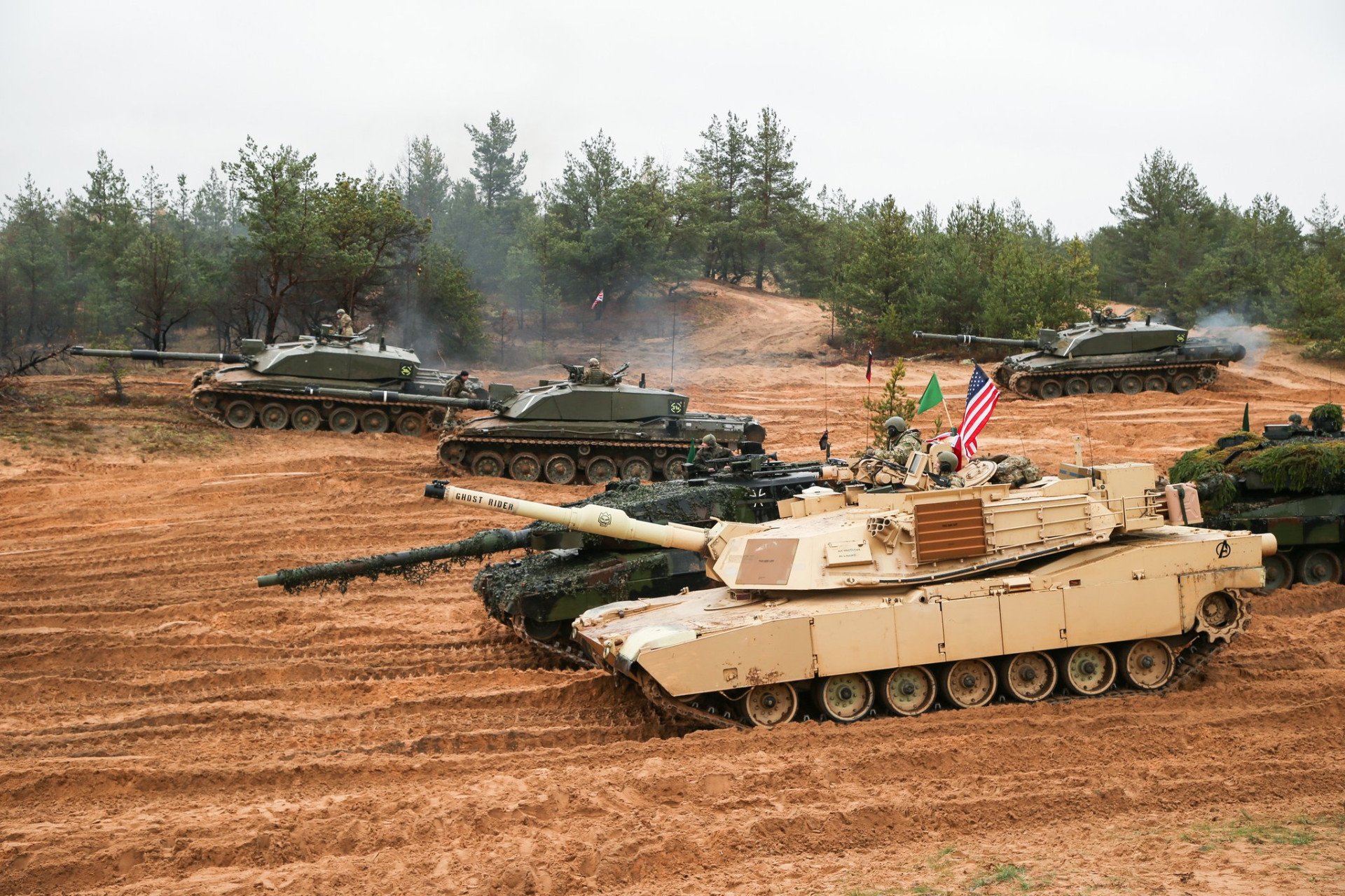
With Russian T-90s just across the border, the US and UK lined up their heaviest armor this week on Estonian soil, putting Abrams and Challenger 2 tanks side by side in a choreographed show of NATO unity and deterrence.
 Prefer U24 Media on Google
- Authors


American M1A2 Abrams and British Challenger 2 main battle tanks stood side by side this week at Camp Tapa, Estonia, in a public display meant as much for Moscow as for local audiences, defense media outlet Army Recognition reported on October 5.
The October 2 ceremony doubled as both a troop rotation milestone and a calculated act of deterrence along NATO’s most exposed frontier.
US's #Abrams and UK's #Challenger 2 tanks unite in #Estonia in a clear #NATO signalhttps://t.co/By1H50fsxs @sentdefender @Osinttechnical @OSINTWarfare @NATO @NSPA_NATO @NATO_AIRCOM @TheSun @MailOnline @DailyMirror @Daily_Express @FT @BBCOne @nytimes @WSJ @washingtonpost…
— Army Recognition (@ArmyRecognition) October 5, 2025
The event brought together the US Army’s 6th Squadron, 9th Cavalry Regiment, 1st Cavalry Division, and the British Army’s AJAX Squadron under Operation Cabrit.
By aligning two of the West’s most recognizable tanks on Baltic soil, Washington and London sent a clear message: NATO heavy armor is not only rotational but integrated, interoperable, and combat-ready.
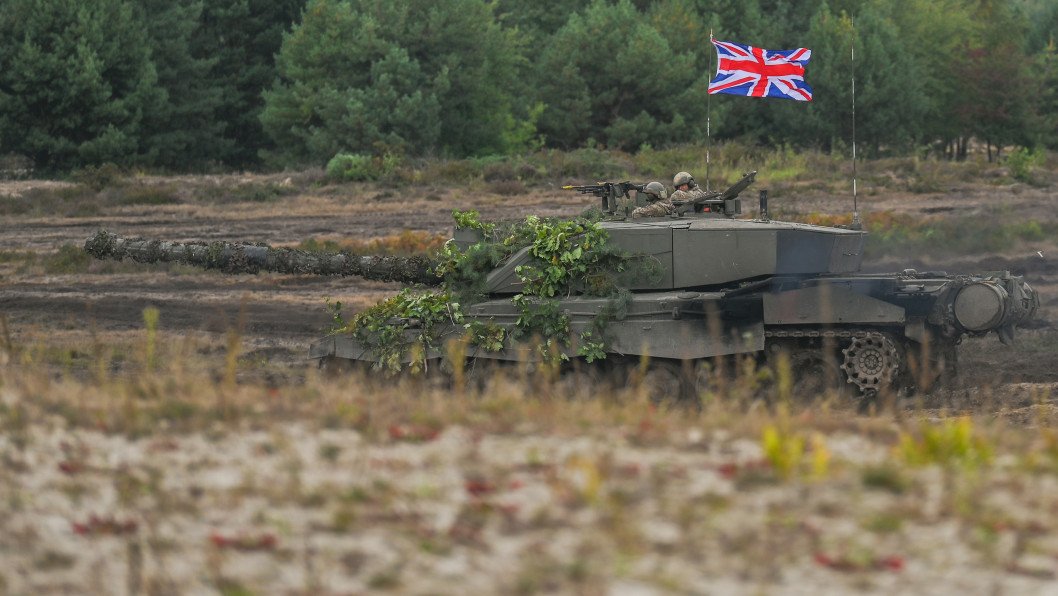
Abrams and Challenger: different lineages, shared purpose
The Abrams and Challenger 2 reflect distinct design philosophies but complement each other in the field.
The American M1A2 emphasizes speed, networked lethality, and rapid maneuver. Its 120 mm smoothbore gun, advanced thermal sights, and digital fire-control enable high-tempo operations, while its powerful gas turbine engine prioritizes acceleration and flexibility over fuel economy.
The British Challenger 2, by contrast, is optimized for endurance and accuracy. Its 120 mm rifled gun delivers first-round precision at long ranges, and its crew-centric design prioritizes survivability and sustained performance in prolonged engagements.
Together, the Abrams and Challenger 2 form a balanced battlegroup: Abrams spearhead fast-moving assaults, while Challengers anchor positions and provide accurate supporting fire.
NATO integration on the Baltic front
The late-September rail and road deployment of US Abrams into Estonia underscored NATO’s logistical muscle: the ability to move, stage, and sustain heavy armor close to Russia’s border.
By combining US sustainment capacity with British reconnaissance-led targeting, the alliance demonstrated not just symbolic presence, but practical warfighting integration.
Against Russian T-90M units across the border, NATO tanks enjoy superior sensors, more reliable ammunition resupply, and stronger crew protection.
But the real edge lies in the system: intelligence, artillery, engineers, and electronic warfare assets that enable armor to breach, hold, and counterattack under enemy surveillance.
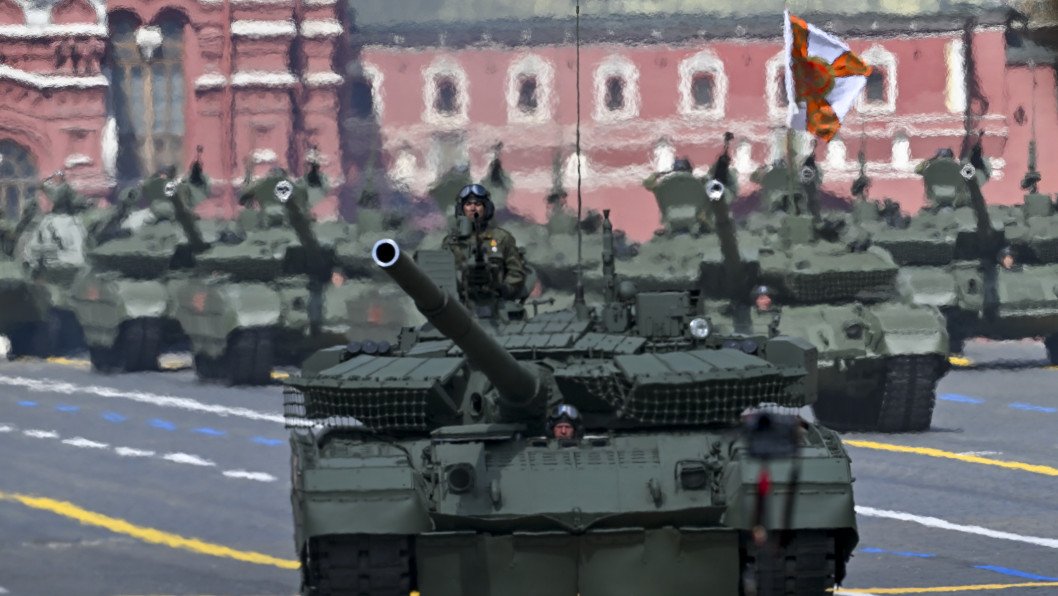
Strategic Signaling to Moscow
According to Army Recognition, geostrategically, the positioning of Abrams and Challenger 2s at Camp Tapa places NATO’s heaviest assets within immediate reach of key approaches such as the Narva corridor and the Suwałki Gap.
Their presence shortens response times, raises the costs of any Russian incursion, and provides Tallinn with visible reassurance that NATO’s strongest forces are ready to engage.
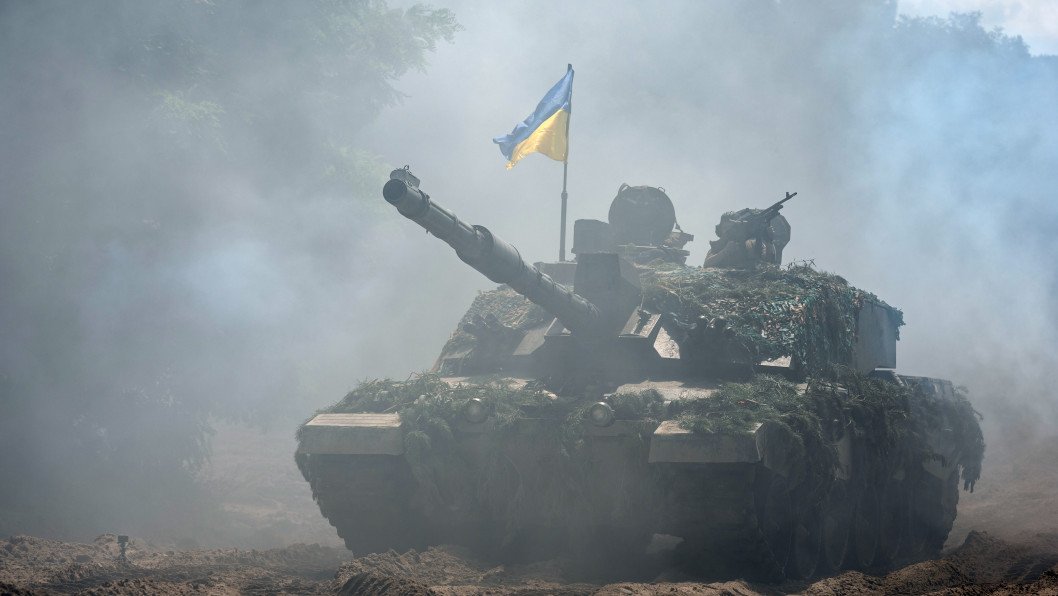
Earlier, Russia’s Ministry of Defense began auctioning off dozens of destroyed tanks and armored vehicles as scrap metal.
The auction includes T-80, T-72B3, and T-62 tanks, along with infantry fighting vehicles, armored personnel carriers, and MT-LB multipurpose armored tractors.
Officially, the listings describe the lots as “ferrous and nonferrous scrap metal,” yet photos clearly show destroyed combat vehicles with visible battle damage.
Discuss this article:



-c439b7bd9030ecf9d5a4287dc361ba31.jpg "Photo of Katherina Popilnichenko")