- Category
- Latest news
Pentagon Signals New Era of Drone Warfare With $1B Ukraine-Inspired Push
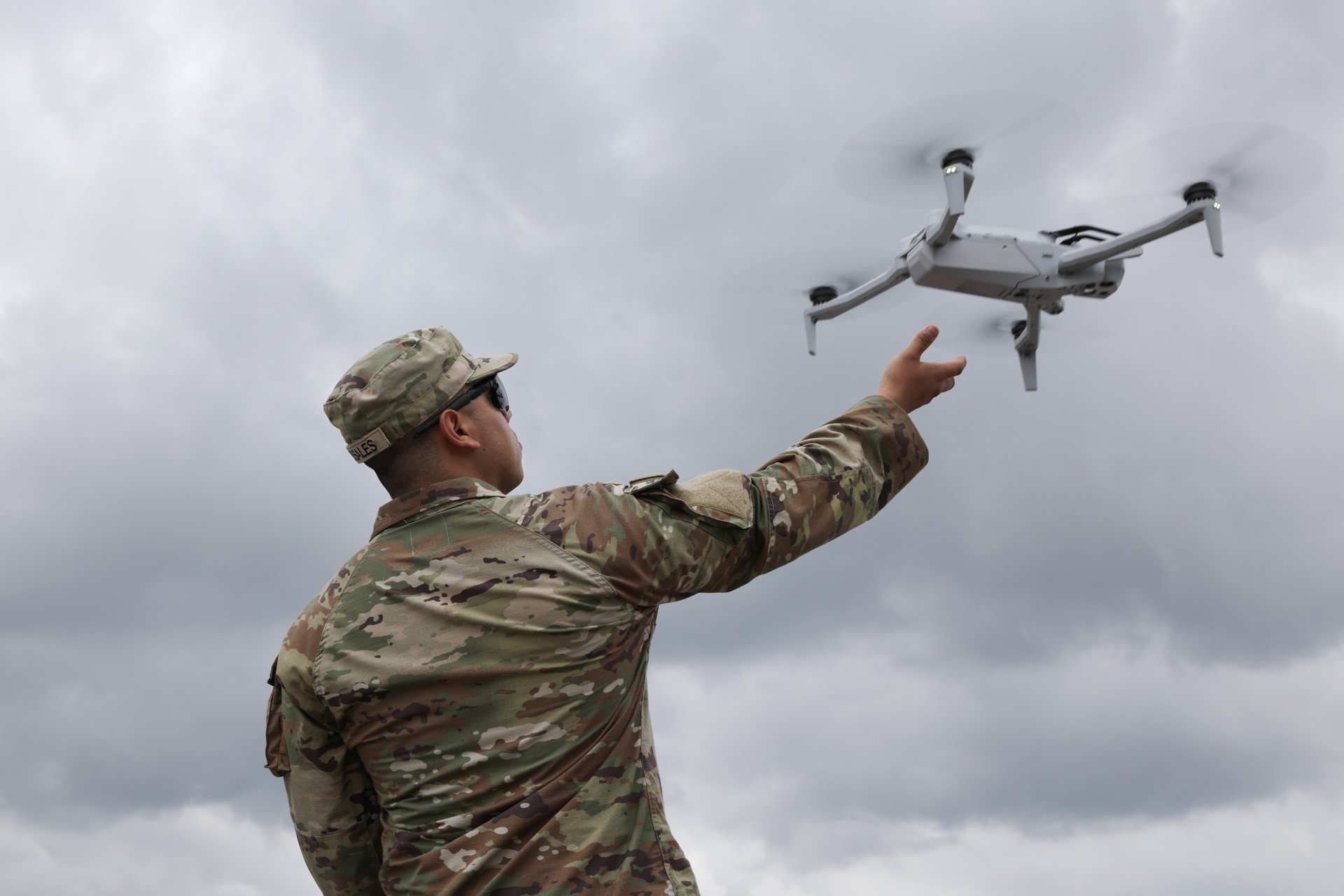
The Pentagon has launched a sweeping $1 billion initiative to purchase hundreds of thousands of one-way attack drones over the next two years, a major shift toward mass-fielding lower-cost unmanned systems, according to The War Zone.
 Prefer U24 Media on Google
- Authors




The Pentagon has formally unveiled the Drone Dominance Program (DDP), a new effort to rapidly acquire vast numbers of inexpensive one-way attack drones and overhaul how the military buys and deploys these systems. The move directly implements a July directive from War Secretary Pete Hegseth that reshapes drone procurement across the entire force, The War Zone reported on December 2.
We bring you stories from the ground. Your support keeps our team in the field.
The Pentagon has fallen far behind lessons emerging from Ukraine, where both sides are using drones on an industrial scale. Despite those warnings, the US military has been slow to adopt cheap, lower-end unmanned systems on a broad basis.
The DDP marks Washington’s attempt to change course—even if its goals remain conservative compared to the “millions of drones” used in Ukraine and Russia, TWZ noted.
🇺🇸Us Army 75th Ranger Regiment drone operators #drone #UsArmy #Ranger pic.twitter.com/UPCDwALpQJ
— Drones de guerra (@dronesdeguerra) December 3, 2025
Mass procurement targets through 2028
The Department of War “expects to order 30,000 drones with deliveries to be fulfilled by July 2026. By 2027, Drone Dominance intends to purchase over 200,000 drones that can produce lethal effects in the toughest battlefield environments,” according to the DDP website.
The Pentagon ultimately plans to buy more than 300,000 systems by early 2028.
“Through the drone dominance program, $1 billion from the Big Beautiful Bill will fund the manufacture of approximately 340,000 small UASs for combat units over the course of two years,” the department said.
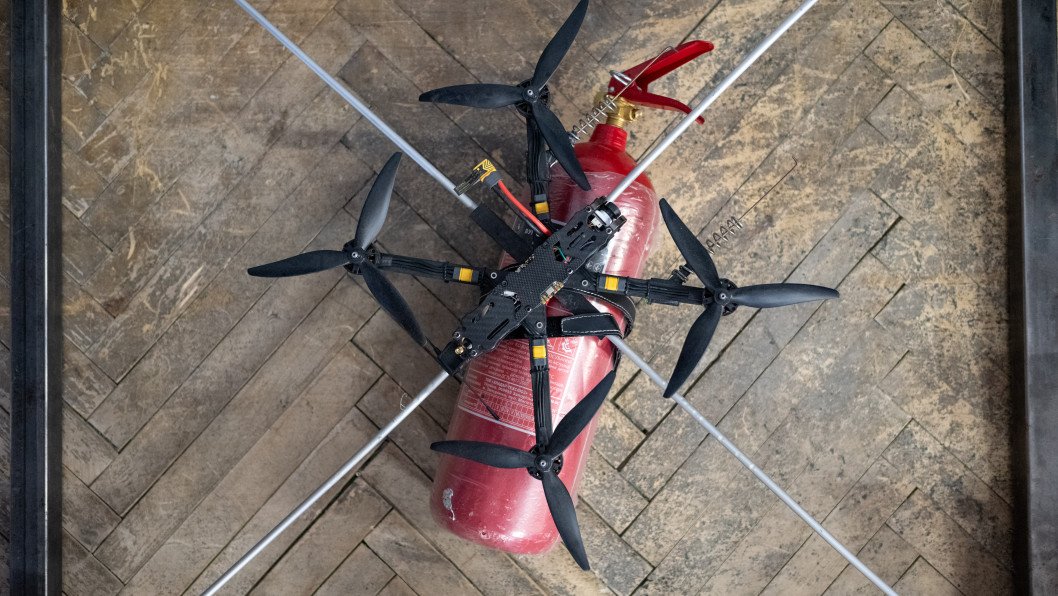
The War Zone reported that the program represents the most aggressive US drone-acquisition push in history.
A Request for Information (RFI) notes that the DDP is designed to spur rapid, large-scale manufacturing, stating that “The Drone Dominance Program is designed to help industry organize around the need for low-cost, supply-chain secure sUAS manufacturing at scale, urgently.”
The Pentagon intends to place the $1 billion in fixed-price contracts over four phases using existing federal procurement authorities under 10 U.S.C. 4022.
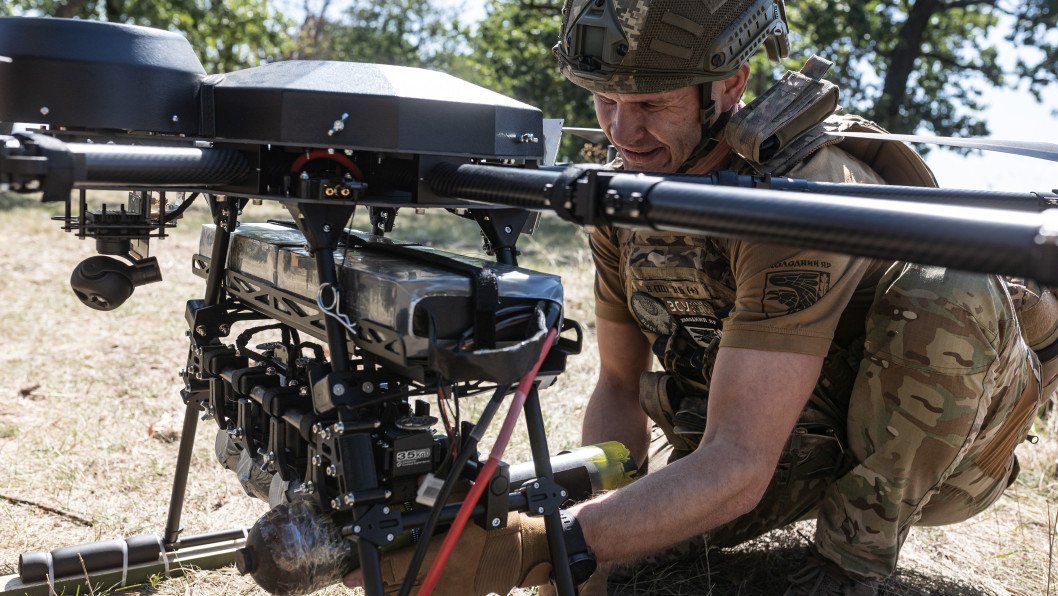
Gauntlet competitions and rapid delivery cycles
Each phase “begins with a Gauntlet challenge event and ends with completed delivery of production-quality UAS,” the RFI states. Drone systems will be flown by military operators and graded on mission performance during the trials.
According to TWZ, after each phase, the Pentagon expects to buy more drones at progressively lower cost—dropping the per-unit price from $5,000 to roughly $2,300.
✨ #ProjectFlytrap 4.5: The 5th Battalion tested cutting-edge c-UAS tech at Putlos, Germany! Our air defenders engaged and captured drones, enhancing @NATO's deterrent capabilities. 🤝 #AirDefense #cUAS #NATO #EFDL #ThisIsUSAREURAF #TIC pic.twitter.com/E7BW84GpDh
— U.S. Army Europe and Africa (@USArmyEURAF) November 26, 2025
Following Phase II, the number of vendors will be reduced, with five finalists ultimately selected for Phase IV between August 2027 and January 2028.
The RFI does not spell out exact drone types, but based on expected cost levels, The War Zone says the Pentagon is clearly targeting FPV drones and small quadcopters similar to those saturating battlefields in Ukraine.
Hegseth’s July memo offers further clues. “Most notably, certain types of smaller uncrewed aerial systems (UAS) will now be treated as ‘consumables,’ more akin to hand grenades and other kinds of ammunition, than aircraft,” TWZ summarized.
The US Army are accelerating the integration of unmanned aerial systems, drawing on lessons learned from the war in Ukraine. In 2025, the Pentagon initiated a comprehensive “drone force” program, recognizing the decisive role of small UAVs—ranging from FPV strike platforms to
— 𝔗𝔥𝔢 𝕯𝔢𝔞𝔡 𝕯𝔦𝔰𝔱𝔯𝔦𝔠𝔱△ 🇬🇪🇺🇦🇺🇲🇬🇷 (@TheDeadDistrict) August 23, 2025
1/ pic.twitter.com/TtPUXbINDY
Lower-level commanders are now authorized to directly procure and field these systems.
The first DDP competition is set for February 16, 2026, with 25 invited vendors.
“Participants will be selected based on responses to a Request for Solutions (RFS) anticipated to post 17 December,” the RFI explains.
Competing systems will be evaluated on the “achievement of two missions, likely to include 10 km strike across open territory and a 1 km strike in simulated urban territory,” both with a minimum 2 kg dummy warhead.
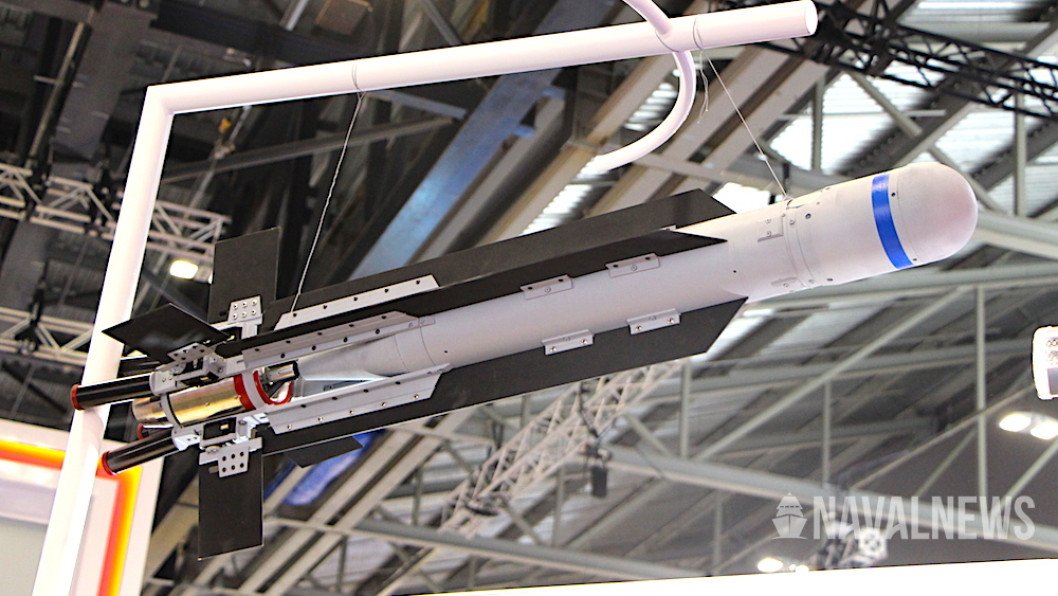
After that, the challenges “will substantially increase in difficulty and operational realism, including significant Counter UAS challenges.”
Public leaderboards and high stakes
In a rare move for Pentagon acquisitions, DDP results will be publicly displayed on a leaderboard, though it remains unclear how that will be accessed.
After the first phase, up to 12 vendors will receive fixed-price orders of at least 1,000 drones, with payments issued upon delivery.
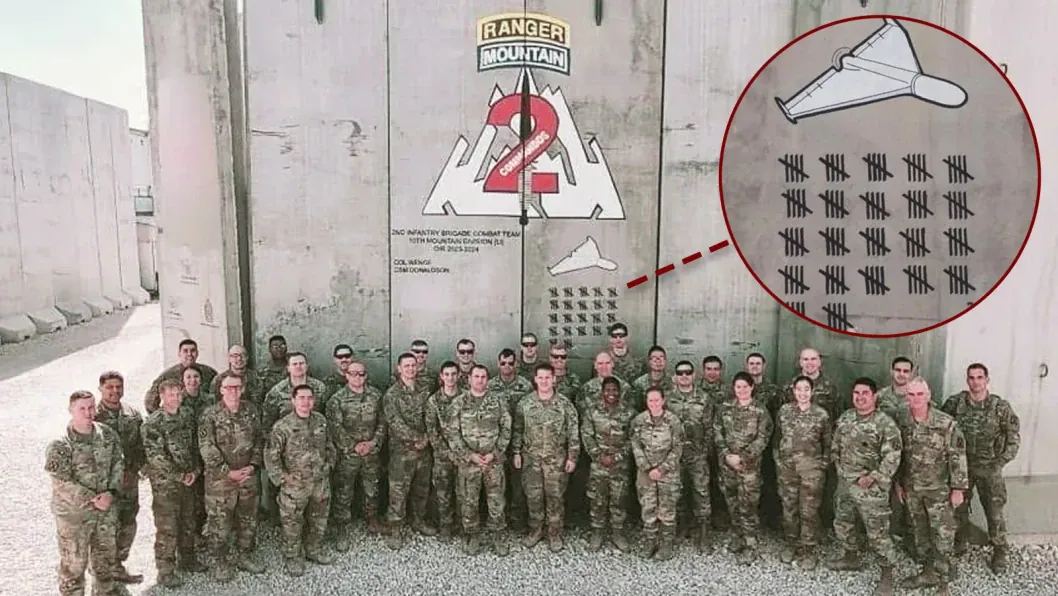
“Vendors will bear development and manufacturing risk,” the RFI notes. “The government will pay a fixed price only for units that are delivered, inspected and accepted.”
Another unusual detail: vendors eliminated early will not be barred from later phases. Instead, companies are “strongly encouraged to participate in later phases,” the DDP document says.
According to The War Zone, while individual contract values may be relatively modest, the long-term stakes are enormous. Companies that become reliable suppliers for mass-produced battlefield drones stand to shape the future of US unmanned warfare.

TWZ stated that the effort addresses a long-standing gap in US readiness: the lack of a scalable industrial base and a coherent doctrine for mass-produced drones. The DDP, it said, is a long-overdue step toward correcting that.
Earlier, the Dutch Ministry of Defense signed a major deal to purchase 100 drone-detection radars, which have been battle-tested in Ukraine, accelerating efforts to protect airbases and critical infrastructure amid a growing number of drone-related incidents across the country.
Discuss this article:



-c439b7bd9030ecf9d5a4287dc361ba31.jpg "Photo of Katherina Popilnichenko")