- Category
- Latest news
Putin’s Undersea Nuke Fleet Rocked by Kamchatka Megaquake—What If the Worst Happens?
A record-breaking earthquake off Russia’s Kamchatka Peninsula has triggered tsunami alerts across the Pacific and raised urgent questions about the safety of nuclear weapons stored near one of the world’s most active seismic zones. How vulnerable is Russia’s undersea arsenal — and what does this mean for global security?
 Prefer U24 Media on Google
- Authors


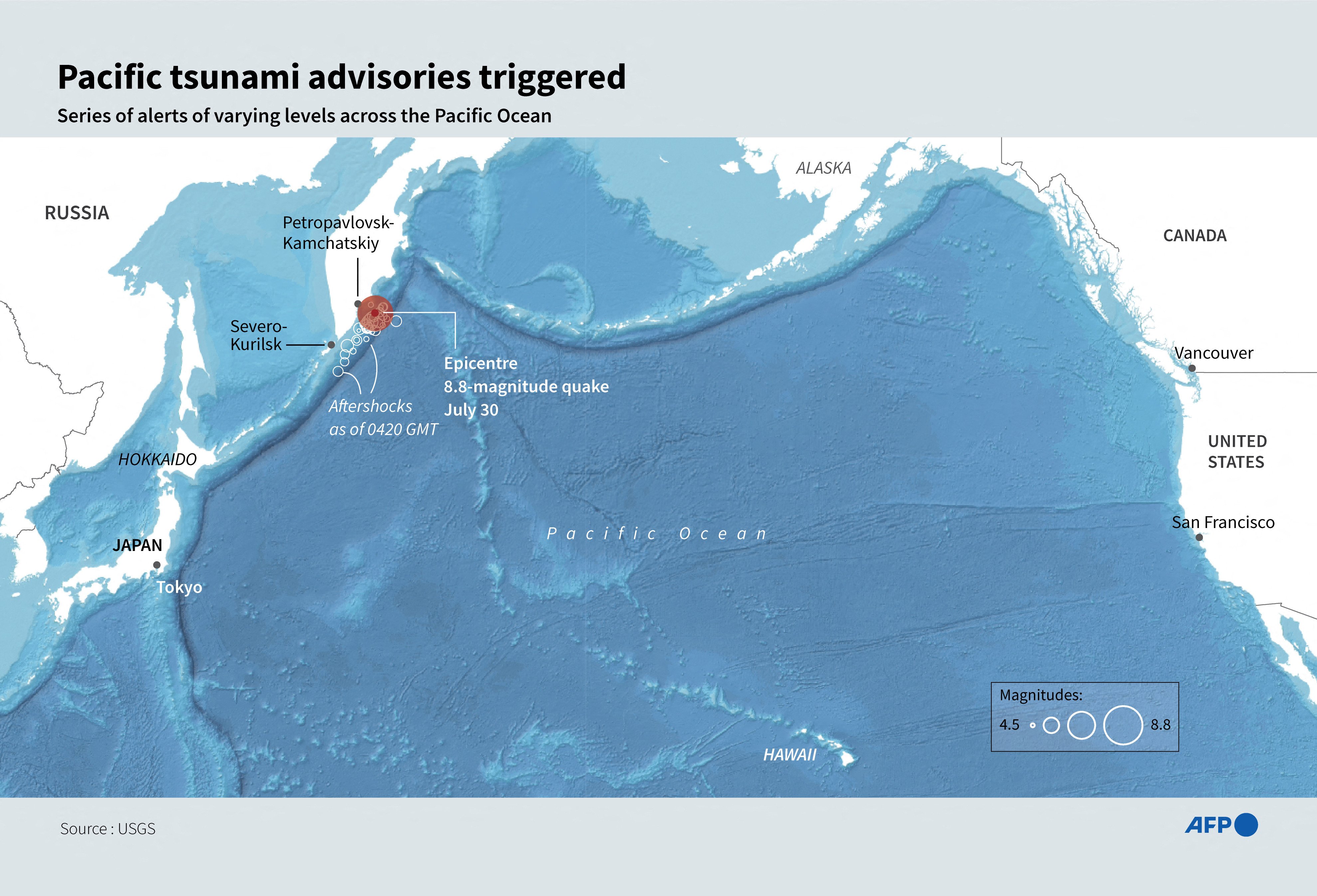
On July 30, a powerful earthquake struck off the coast of Russia’s Kamchatka Peninsula, triggering tsunami warnings from Japan to Chile and raising concerns over the security of one of Russia’s most strategically significant military sites — the Rybachiy nuclear submarine base.
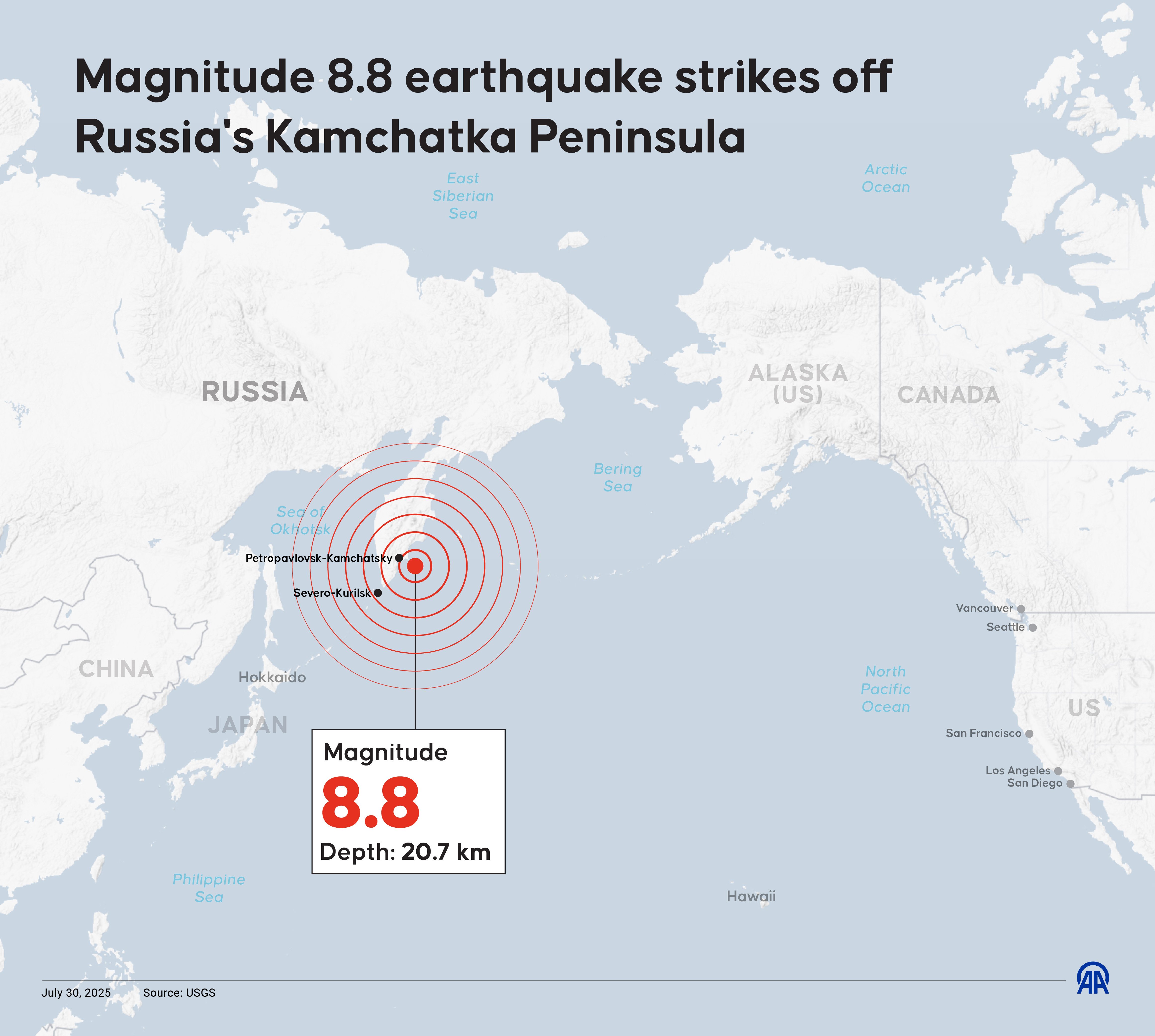
According to Russia’s Geophysical Survey, the quake occurred approximately 149 kilometers southeast of Petropavlovsk-Kamchatsky and registered a magnitude of 8.7, later upgraded to 8.8 by the United States Geological Survey.
The tremor originated at a shallow depth of 19.3 kilometers, making it particularly intense. Russian seismologists described the event as the strongest in the Kamchatka seismic zone since 1952.
Tsunami waves hit eastern russia
The quake triggered multiple tsunami waves, with a height of up to four meters recorded near the Vodopadnaya meteorological station in the Yelizovo district and along the Kuril Lake shoreline.
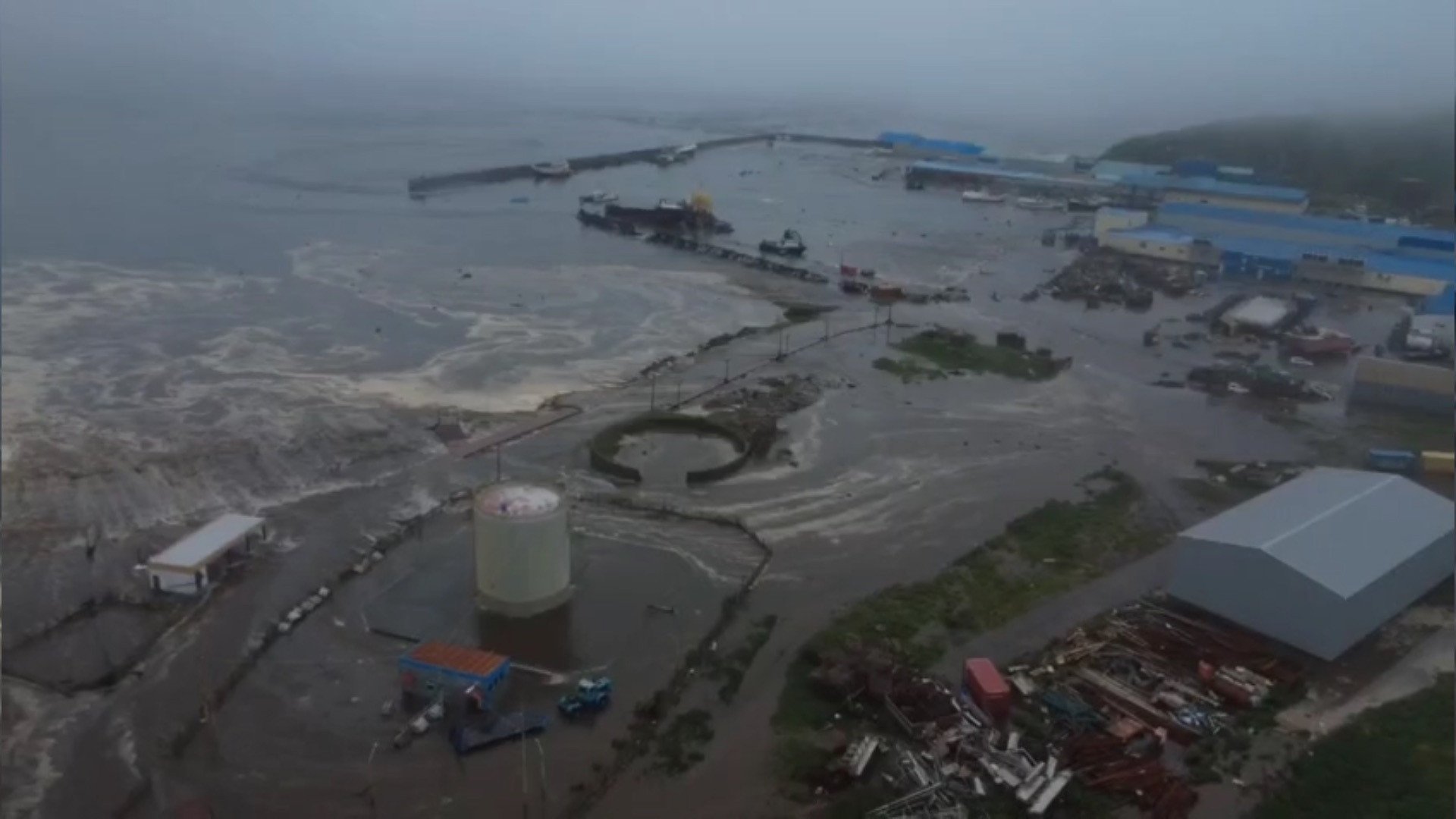
In Severo-Kurilsk, Sakhalin region, tsunami waves inundated port infrastructure and a fish processing facility, dislodging ships and sweeping them into the nearby strait. Over 2,700 residents were evacuated, and a state of emergency was declared.
❗️A powerful earthquake of 8.5 (!) points shook the Russian Kamchatka, and on the coast tsunami waves reached 4 meters - the Russians are in panic, traffic jams on the highways due to mass evacuation pic.twitter.com/g3ysXRZkcw
— Гакрукс (@Gakruks1) July 30, 2025
Russian authorities confirmed structural damage in several towns. In Petropavlovsk-Kamchatsky, where the ground shaking reached intensity level 7, part of a kindergarten wall collapsed.
A woman sustained injuries at the local airport, while others reported minor traumas during evacuations. The Ministry of Emergency Situations reported increased medical calls related to blood pressure spikes and seizures, though no fatalities were officially recorded.
Seismic activity near Russia’s nuclear submarine hub
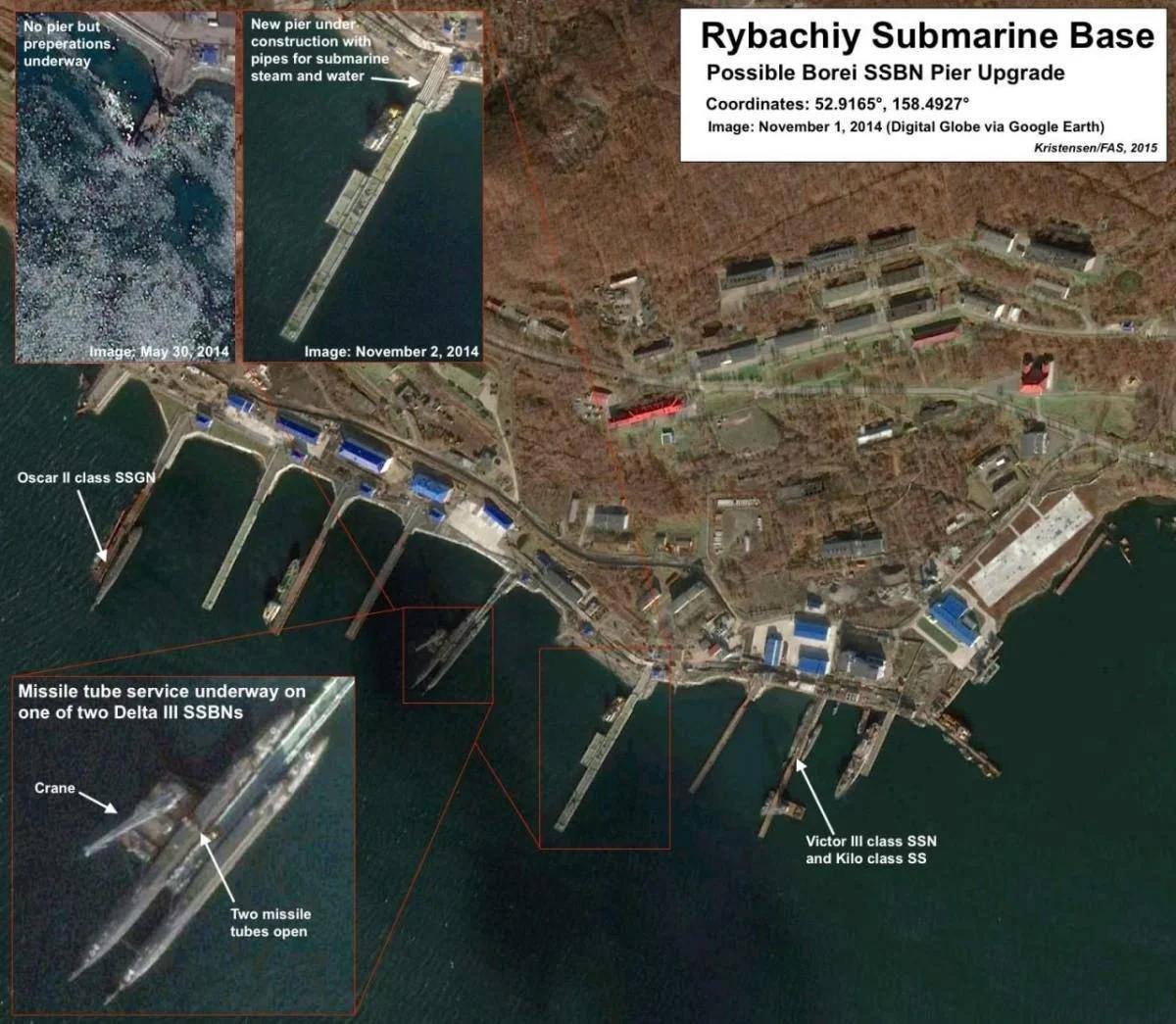
The earthquake’s epicenter lies just 130 kilometers from the Rybachiy submarine base in Vilyuchinsk — home to one of Russia’s largest concentrations of nuclear weapons and strategic delivery platforms. The base is a core component of the Russian Pacific Fleet and hosts multiple classes of nuclear-powered submarines, including:
Project 667BDR “Delta-III”: submarine K-44 Ryazan, equipped with 16 R-29R ballistic missiles, each carrying three nuclear warheads.
Project 955 “Borei”: submarines Alexander Nevsky and Vladimir Monomakh, each armed with 16 Bulava missiles carrying multiple independently targetable warheads (up to 96 warheads per vessel).
Project 955A “Borei-A”: includes Prince Oleg, Generalissimus Suvorov, Emperor Alexander III, and Prince Pozharsky, featuring upgraded stealth and strike capabilities.
Project 949A “Oscar-II”: includes Tomsk, Omsk, and Irkutsk, each with 24 cruise missiles including Zircon hypersonic weapons.
Project 885M “Yasen-M”: submarines Novosibirsk and Krasnoyarsk, each with up to 40 cruise missiles (Kalibr, Oniks, Zircon).
Project 971 “Shchuka-B”: Magadan and Kuzbass, equipped with up to 28 Kalibr cruise missiles.
Special-purpose submarine “Belgorod”: carrier of nuclear-powered Poseidon underwater drones and cruise missiles.
Collectively, these submarines are capable of launching hundreds of nuclear warheads and represent a core element of Russia’s strategic deterrent.
What Does This Mean for Global Security?
The quake’s close proximity to the Rybachiy submarine base — where Russia stores nuclear-armed submarines and long-range missiles — raises concerns about the seismic resilience of such high-risk military infrastructure.
While modern submarines are built to withstand underwater pressure and shocks, land-based infrastructure, including missile storage depots, docking systems, and nuclear maintenance facilities, is far more susceptible to seismic damage.
If any part of the command-and-control systems were compromised, the consequences could be severe — not just for Russia, but for global nuclear stability.
Unlike civilian nuclear plants, whose safety protocols are heavily scrutinized, military facilities often operate under a veil of secrecy. It remains unclear what emergency protocols, if any, were activated at Rybachiy following the quake — and whether Russia is prepared to handle a cascading crisis at a base housing submarine-launched ballistic missiles (SLBMs) capable of reaching the United States or Europe.
For now, no damage to the submarine fleet has been reported. But the fact that one of the world’s most dangerous nuclear stockpiles sits atop one of the world’s most active seismic zones is a strategic paradox that demands international attention.
A failure at Rybachiy — whether involving warhead storage, missile fueling systems, or loss of submarine command infrastructure — could lead to uncontrolled radiation leaks, accidental missile launches, or total loss of containment over nuclear assets.
In a worst-case scenario, this could trigger regional contamination or even misinterpreted signals within global nuclear command chains. Given the secrecy surrounding Russian military operations, early warning or international coordination would be nearly impossible.
Disruption of civil infrastructure and emergency response
Footage from Kamchatka shows flooded streets, damaged port infrastructure, and collapsed buildings. In the Kamchatka Oncology Center, medical personnel continued surgery during the tremor, physically stabilizing the patient while the operating room shook.
Doctors in Kamchatka kept calm during the powerful earthquake
— TIger NS (@TIgerNS3) July 30, 2025
— and never stopped the surgery.
The patient is doing well, according to the Health Ministry!#Tsunami #Earthquake #China#Russia #Hawaii #Japan #Sismo #Temblor #Tsunamiwarning #揺れ #地震 pic.twitter.com/Y38Hdyybyc
Internet service was temporarily disrupted across the region, and natural parks suspended tourist routes. The Kamchatka government declared a regional emergency. Authorities noted that no damage was reported to power infrastructure.
More than 50 aftershocks followed the initial quake, several of them strongly felt. Russian seismologists warned that aftershocks — some potentially reaching magnitude 7.5 — could persist for a month, with renewed tsunami threats not ruled out.
Tsunami warnings across the Pacific Rim
Tsunami alerts were issued across the Pacific, including in Japan, the United States, Mexico, Peru, and Chile.
In Japan, over 200,000 people were evacuated. Waves reaching 1.3 meters were recorded in Kuji port, Iwate Prefecture. One fatality occurred when a woman died during evacuation after her vehicle veered off the road.
Tsunami waves hit Japan’s Hokkaido after major alert.
— Massimo (@Rainmaker1973) July 30, 2025
Waves up to 4 meters (13 ft) slammed Kamchatka, with 30 cm (12 in) waves now reaching Hokkaido. Authorities warn of ongoing risks and urge coastal evacuations.pic.twitter.com/vcZVWuA5sB
Rail services were suspended in the country’s northeast, and the decommissioning team at the Fukushima Daiichi nuclear plant was temporarily evacuated.
In the United States, Hawaii’s Civil Defense ordered evacuations from low-lying areas, and the Coast Guard instructed all vessels to leave ports. Waves up to two meters were observed around Midway Atoll, and tsunami alerts extended to Alaska.
URGENT: People in Maui, Hawaii are trying to escape the tsunami and are BEGGING Oprah to open the private road on her property.
— Baatein Stock Ki (@BaateinStockKi) July 30, 2025
She’s reportedly still refusing.
In a crisis, blocking an escape route is inhumane.#Tsunami #Maui #Oprah #LetThemOut pic.twitter.com/JeqeVwDcyS
Kamchatka, a seismically active region bordered by the Pacific, Bering, and Okhotsk Seas, sits atop the Pacific Plate boundary. With a population of around 300,000, its capital Petropavlovsk-Kamchatsky hosts much of the peninsula’s infrastructure.
Earlier in July, Russia commissioned the Knyaz Pozharsky, its latest Borei-A class nuclear-powered ballistic missile submarine, equipped with 16 Bulava SLBMs and advanced stealth features. The vessel, unveiled in a ceremony attended by Vladimir Putin, will operate under the Northern Fleet and marks a continued push to modernize Russia’s sea-based nuclear deterrent.
Discuss this article:

-c439b7bd9030ecf9d5a4287dc361ba31.jpg "Photo of Katherina Popilnichenko")