- Category
- Latest news
Royal Navy to Fire Lasers by 2027—DragonFire Marks Europe’s First Combat Laser Warship
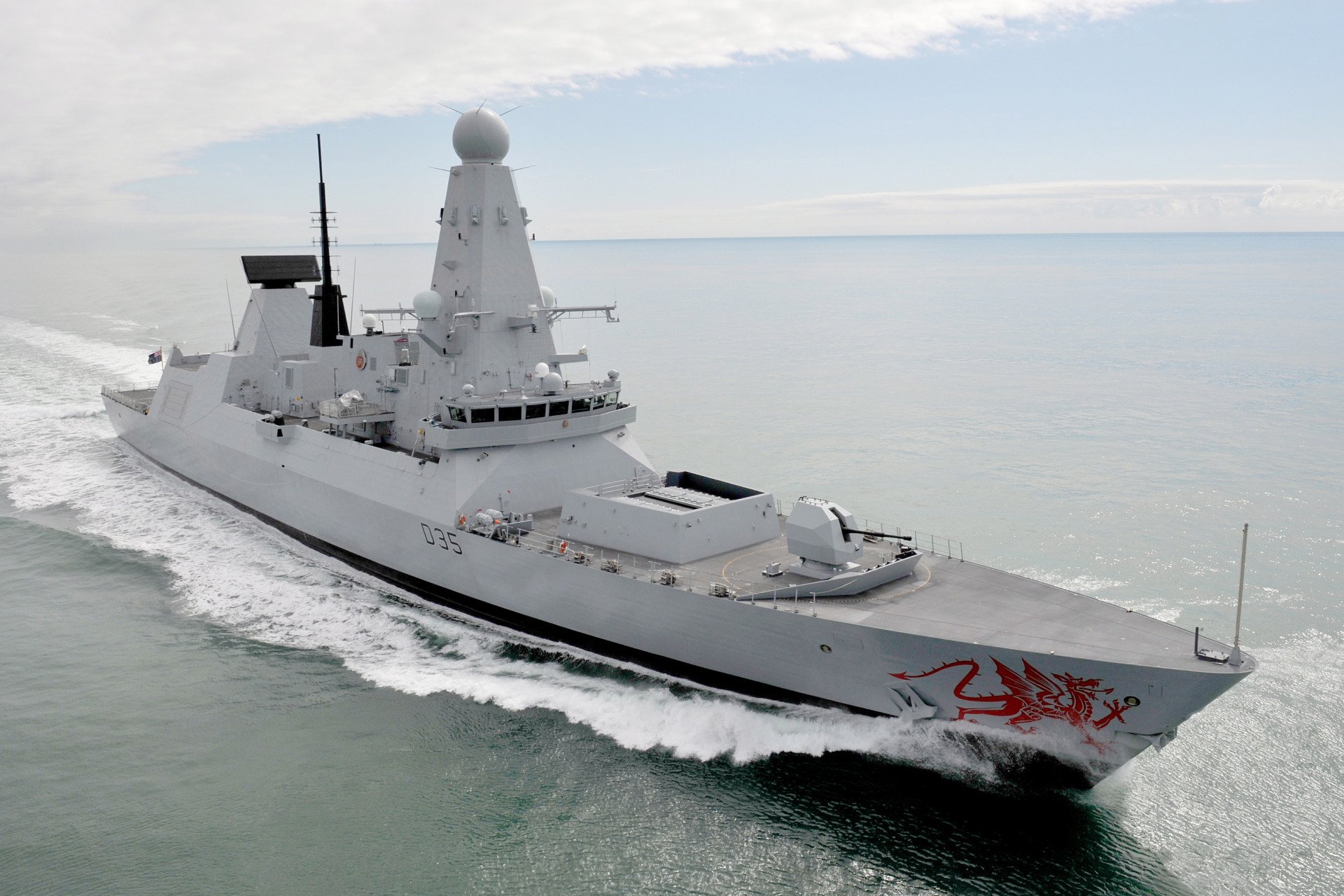
The United Kingdom is set to become the first European nation to deploy a shipborne combat laser, with the Royal Navy preparing to field the DragonFire high-energy weapon on Type 45 destroyers by 2027—a move military analysts say may redefine how NATO fleets counter drones and saturation attacks.
 Prefer U24 Media on Google
- Authors


Britain has confirmed plans to equip its Type 45 destroyers with the DragonFire high-energy laser weapon system by 2027, which would make the United Kingdom the first European nation to deploy a shipborne combat laser in front-line naval service, according to Army Recognition on December 7.
We bring you stories from the ground. Your support keeps our team in the field.
British officials say the program is moving from demonstration to operational integration after successful trials, and the Royal Navy now views the capability as central to future defenses against drones, loitering munitions, and other low-cost aerial threats.
According to Army Recognition, the decision underscores a changing technological and economic reality at sea, where warships face growing volumes of inexpensive drones and cannot rely exclusively on missile batteries costing hundreds of thousands of dollars per intercept.
🇬🇧 The UK’s DragonFire laser has shot down high-speed drones in new trials, with above-the-horizon tracking and pinpoint accuracy at a kilometre. A £316m contract now pushes the system toward a Type 45 destroyer by 2027. pic.twitter.com/6sjHq1aYzH
— UK Defence Journal (@UKDefJournal) November 20, 2025
From prototype to warship
The DragonFire program—developed by MBDA UK in partnership with QinetiQ and Leonardo—is not designed as a technology experiment but as a combat-ready system. British defense leaders say trials have demonstrated the laser’s ability to track and burn through small airborne targets at tactically significant ranges, and expectations are that shipboard integration will accelerate once power and cooling upgrades on the Type 45s are complete.
Army Recognition notes that if the system deploys on schedule, it will be the first operational high-energy naval laser in Europe, placing the UK ahead of continental partners still testing laboratory-scale demonstrators.
Looking mighty fine on a crisp, sunny afternoon (today) is the @RoyalNavy Daring Class (Type 45) destroyer HMS Dragon inbound to @HMNBDevonport Plymouth. Video courtesy of @StephenJagger4 pic.twitter.com/EogK95Bh5q
— Warships IFR (@WarshipsIFR) November 21, 2025
DragonFire employs a 50-kilowatt-class infrared laser using coherent beam-combining—merging multiple fiber-laser modules into one focused beam. This allows precision energy delivery and sub-millimetric accuracy at a distance.
Live-fire tests at the Hebrides missile range proved the system could track and destroy drones traveling at over 650 km/h, scoring hits with precision reportedly capable of striking a target the size of a coin at roughly one kilometer.
🇬🇧LASER WEAPON UK
— Chyno News (@ChynoNews) November 21, 2025
After a recent successful test of the new DragonFire laser weapon system £316m is being invested to continue developing the weapon.
The "game-changing" system is planned to be installed on a Type 45 destroyer within two years.
🎥Royal Navy pic.twitter.com/DARb9ruxRz
Defense designed for drone swarms
The weapon is intended to defeat the type of threats that have reshaped battlefields in the Middle East and Eastern Europe: reconnaissance drones, explosive loitering munitions, and unmanned surface craft used in coastal waters.
While DragonFire is not yet optimized to destroy high-velocity anti-ship missiles, program officials say future power increases and deeper radar integration may expand that envelope.

The most disruptive component, however, is economic. Each shot costs roughly £10, compared to missile interceptors that can run into the hundreds of thousands.
As Army Recognition emphasizes, the cost savings fundamentally change how commanders approach prolonged engagements and drone-swarm scenarios—where traditional magazines can be depleted in minutes.

Strategic implications for the Royal Navy
The Type 45 destroyer—a 152-meter, 8,500-ton air-defense ship equipped with the Sea Viper missile system and SAMPSON radar—will be the first platform to carry DragonFire.
Initial integration is expected to begin on HMS Diamond, which is currently undergoing a major refit in Portsmouth, with sea trials anticipated by late 2026.
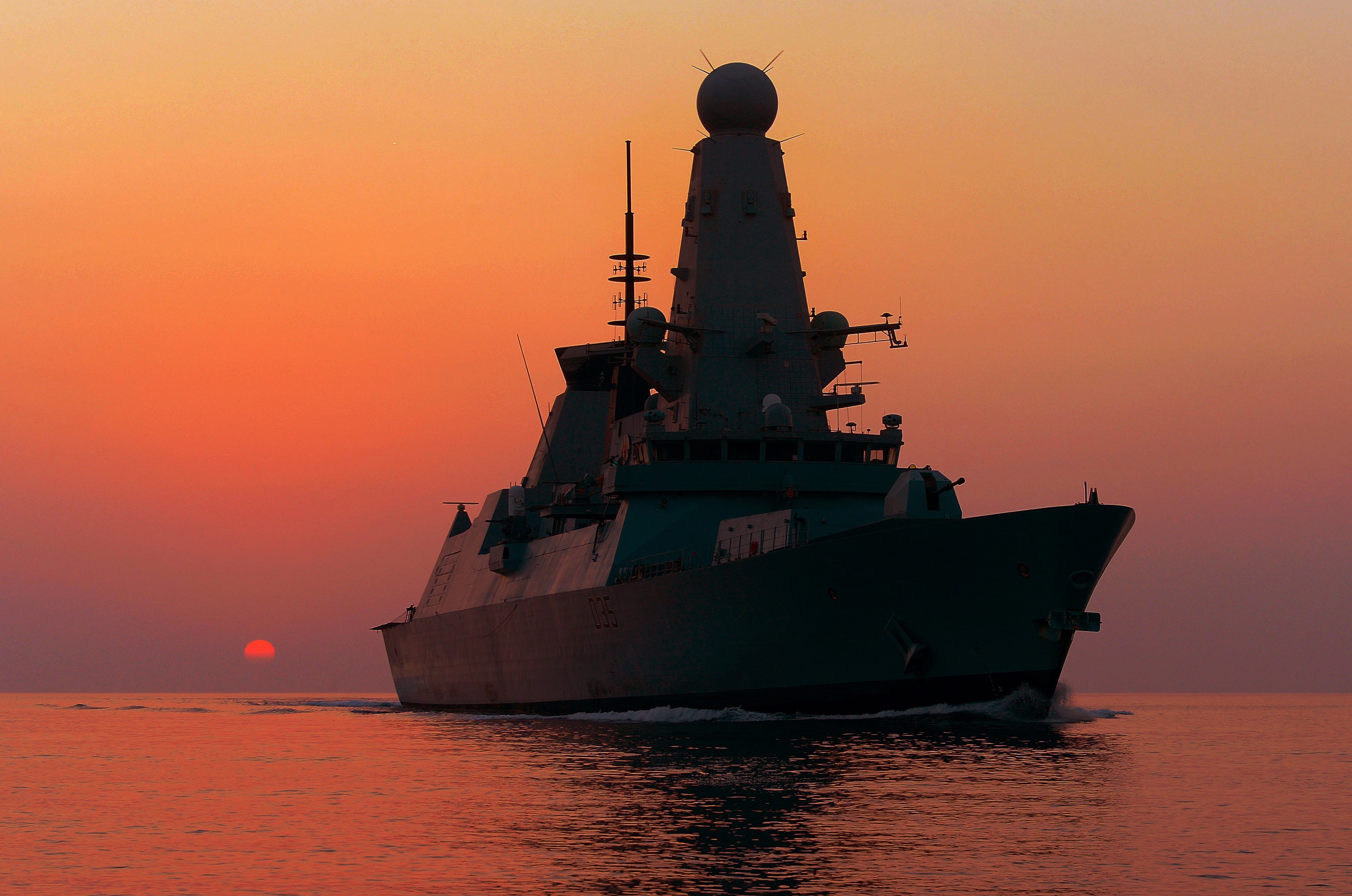
A £316 million contract awarded earlier this year supports the program and the creation of industrial capacity across multiple UK sites. European allies—some of whom have also faced increased drone intrusions near military and critical infrastructure—are closely watching implementation.
With rapidly evolving drone warfare, low-cost mass attacks, and soaring missile-defense expenditures, DragonFire represents the beginning of energy-based ship defense as a practical reality, not a futuristic concept.
Set lasers to stun...
— Royal Navy (@RoyalNavy) November 20, 2025
The MOD today pumped £316m into DragonFire after latest trials proved the increasing effectiveness of the air defence laser.
Due to be fitted to Type 45 destroyers, the weapon destroyed drones moving at over 400mph.https://t.co/kvESGZwYmb pic.twitter.com/MtSOn9Puoz
As Army Recognition reported, Britain is positioning itself as the first mover in Europe’s transition toward directed-energy naval weapons — a step likely to shape NATO planning in the decade ahead.
Earlier, the UK and Norway were set to sign a historic defense agreement that would create a joint naval fleet focused on tracking Russian submarines in the North Atlantic.
This partnership aims to protect vital undersea cables, which are increasingly vulnerable to Russian threats.
The pact, named the Lunna House agreement after the World War II Norwegian resistance base in the Shetland Isles, is supported by a £10 billion UK-Norway warship deal signed in September. The deal will see the construction of Type 26 frigates at BAE Systems’ Glasgow yard, forming a fleet of at least 13 anti-submarine ships from both nations, with Norway contributing five ships.
Discuss this article:


-6b3c58bbcf8c8f2f38775f349181b1ab.jpg "Recruits, supervised by instructors, cover a distance on Day Zero of Basic Military Training at the 118th Separate Mechanised Brigade of the Ukrainian Armed Forces on April 5, 2026. (Source: Getty Images)")