- Category
- Latest news
Russia Arrests 18 People During Nationwide Protests Against Internet Restrictions
 Prefer U24 Media on Google
- Authors


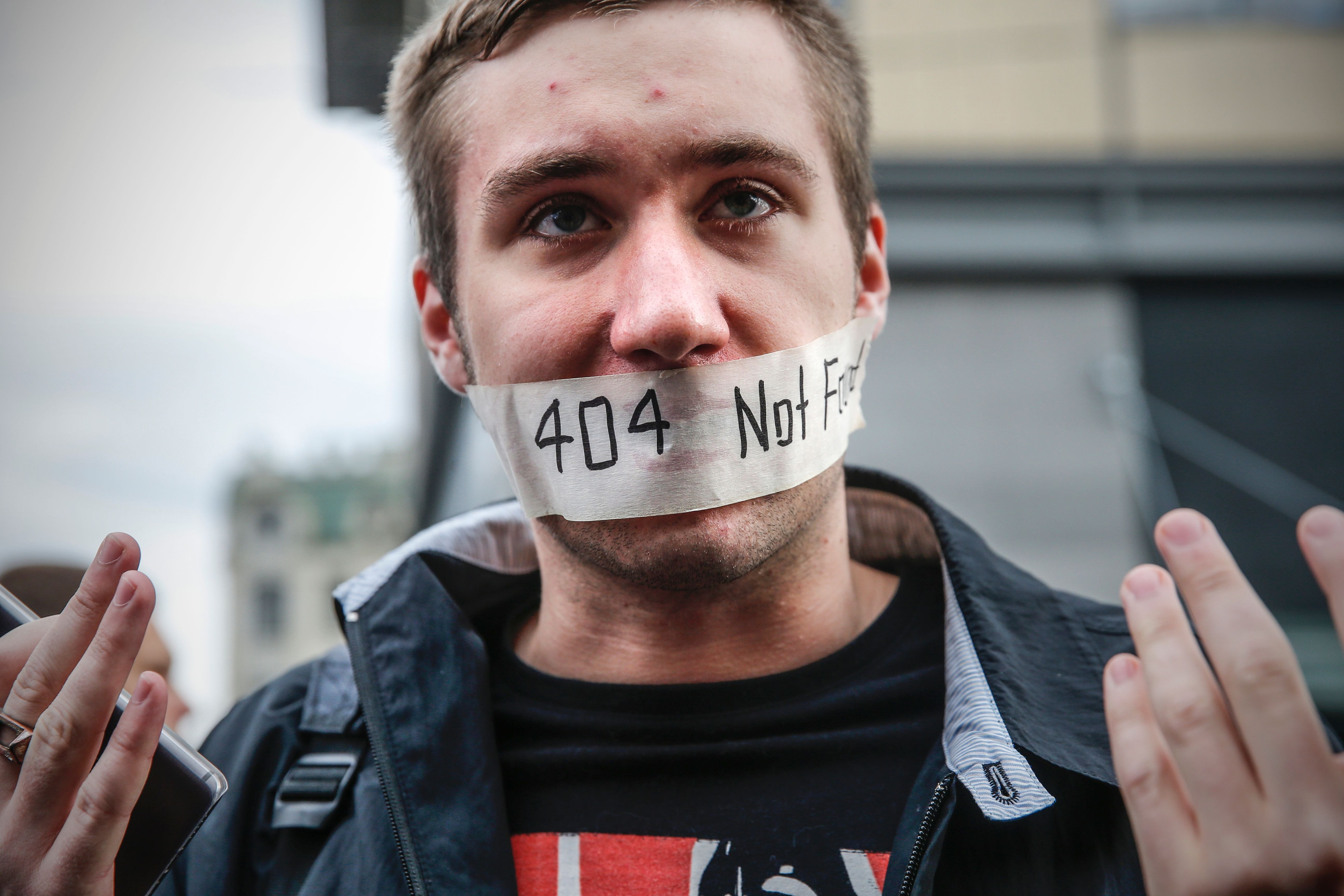
At least 18 people were detained in several Russian cities during protests against internet restrictions held on March 29, according to the monitoring group OVD-Info.
The majority of detentions took place in Moscow, where 13 people were taken into custody. Two individuals were detained in St. Petersburg and Kaluga respectively, while one person was detained in Voronezh.
We bring you stories from the ground. Your support keeps our team in the field.
Overall, among those detained were four minors and 72-year-old Soviet-era dissident Alexander Podrabinek.
In Moscow, the protest was held at Bolotnaya Square, where police vehicles and units of the National Guard had been deployed in advance. According to OVD-Info, law enforcement officers stopped individuals throughout the day, checked documents, and transported some to police stations, where lawyers were reportedly denied access.
Several detainees reported mistreatment while in custody. One of them, Artur Wagner, said he was beaten by police officers at the Meshchansky police station and had his bank card taken. He also alleged that officers forced him to give testimony against his aunt, Ekaterina Wagner.

Another detainee, Vladislav Azarochkin, reported being beaten at the Yakimanka police station. He said officers threatened him with torture and sexual violence before filing administrative charges of disobeying police and minor hooliganism. He also spent the night in detention.
In St. Petersburg, one detained man was reportedly threatened with administrative charges and being sent to a military enlistment office before being released. In Voronezh, the detainee was also released without charges.
At the same time, restrictions on mobile internet are increasingly affecting everyday life. In Moscow, residents have reported problems accessing public toilets in central districts due to disruptions that prevent cashless payments.
“Public toilets in the city are a nightmare, especially with cashless payment. I try not to drink before going out, or I use the MCC if it becomes urgent,” one Moscow resident said.
-77f0f6559a1a291b17f6e172a02ba587.jpg)
Another resident described similar problems while walking along Tverskaya Street, noting that “even going to the bathroom becomes a task with an asterisk.”
The company ORK, which operates public toilets in the city, confirmed the disruptions, stating that the issues are concentrated in central areas where mobile internet access is restricted. Because payment terminals rely on network connectivity, outages prevent card transactions from processing and can block access to facilities altogether.
The protests also come amid growing concern over tightening internet controls and broader instability in Russia. Data cited by Verstka shows a renewed rise in emigration-related searches after a period of decline. Google Trends indicates increasing interest in queries such as “how to leave Russia,” reversing a downward trend seen since early 2023.
Interest in emigration had gradually fallen following the partial mobilization announced in September 2022 and reached lower levels by early 2025. However, the trend began to shift again in late 2025 and has continued into 2026. By January, search activity had increased sharply, with preliminary data for March indicating levels nearing previous peaks.
Discuss this article: