- Category
- Latest news
Russia Builds Its Own USAID to Spread Global Influence
 Prefer U24 Media on Google
- Authors



Russia is moving forward with plans to create a state-run international development agency modeled after the United States Agency for International Development (USAID).
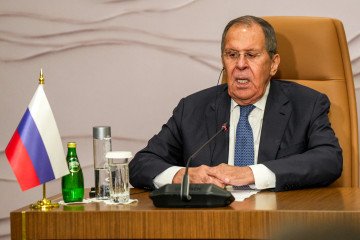
The initiative, according to Rossotrudnichestvo head Yevgeny Primakov, is part of the Kremlin’s strategy to increase its global presence and influence through so-called “humanitarian assistance.”
In an interview with Russian media outlet RBC, Primakov revealed that the Ministry of Foreign Affairs is drafting a federal law on international development assistance that would formalize the new agency’s operations.
“We’re not aiming to compete with USAID—realistically, we’d be happy to match Finland,” he said, referring to Helsinki’s modest development program.
According to Primakov, the legislation would eliminate bureaucratic delays currently required for Moscow to approve any aid initiative abroad. He emphasized that a streamlined process would allow the Russian government to act more rapidly when launching overseas projects designed to enhance its image and geopolitical footprint.
-bd18f94e55d7d6aa28b6bbaa68cf8c4c.png)
At present, Rossotrudnichestvo operates on an annual budget of approximately $62 million. However, only a quarter of that funding is allocated to actual project activities.
The remainder is used to maintain over 80 offices in more than 70 countries—including rent, upkeep, salaries, and other overhead. “We’re trying to turn this old cart into a vehicle,” said Primakov, calling the agency a “rudiment” of a previous era.
Though specific plans for the new aid agency remain unclear, Rossotrudnichestvo’s current activities include distributing Russian-language books, maintaining Soviet-era war memorials, and supporting peacekeeping and volunteer training initiatives.
Primakov acknowledged that until now, the agency’s role was largely symbolic. “We live in an active world, and we must be active,” he said, underlining Russia’s intent to shift toward more assertive soft power tactics.
-399ee3fa85e57b8d66631d90055b1aa7.png)
The timing of the initiative coincides with the dismantling of the US’s own global aid apparatus. Since returning to the White House in January 2025, President Donald Trump has accused USAID of corruption and misuse of funds. In response, the US State Department has frozen or canceled the vast majority of USAID programs and taken direct control over remaining strategic initiatives.
Founded in 1961 under President John F. Kennedy, USAID has long served as the main vehicle for US foreign assistance. Its pre-shutdown 2025 budget was estimated at $42.8 billion.
The withdrawal of US funding has severely impacted civil society organizations and media outlets globally, including in Ukraine, where it supported independent journalism and war crimes investigations.
Russia’s ambition to establish its own version of USAID is not new. A similar proposal was floated in 2011 by then–World Bank representative for Russia Alexei Kudrin. Draft legislation was submitted the following year, but the project stalled.
-a9508788f278eb9b1aa54fba6ad6d5f7.png)
Today’s renewed effort suggests Moscow is serious about expanding its soft power reach—even as its military aggression continues to destabilize neighboring countries, including Ukraine.
By reviving the idea now, the Kremlin appears to be filling the vacuum left by Washington’s retreat—reshaping aid not as a tool of development, but as an instrument of geopolitical leverage.
Earlier, an investigation revealed that Russia has been expanding its influence across Central and West Africa through a coordinated strategy involving Wagner mercenaries, resource extraction, and cultural outreach.
Since 2018, Russian-linked firms have taken control of gold and diamond mines in exchange for military support, while the Kremlin has pushed soft power through the Orthodox Church, propaganda networks, and Russian-language education—prompting analysts to describe the campaign as a modern-day colonial enterprise.
Discuss this article:

-c439b7bd9030ecf9d5a4287dc361ba31.jpg "Photo of Katherina Popilnichenko")