- Category
- Latest news
Russia Quietly Turned Belarus Into a Forward Base Against Ukraine and NATO, US Warns
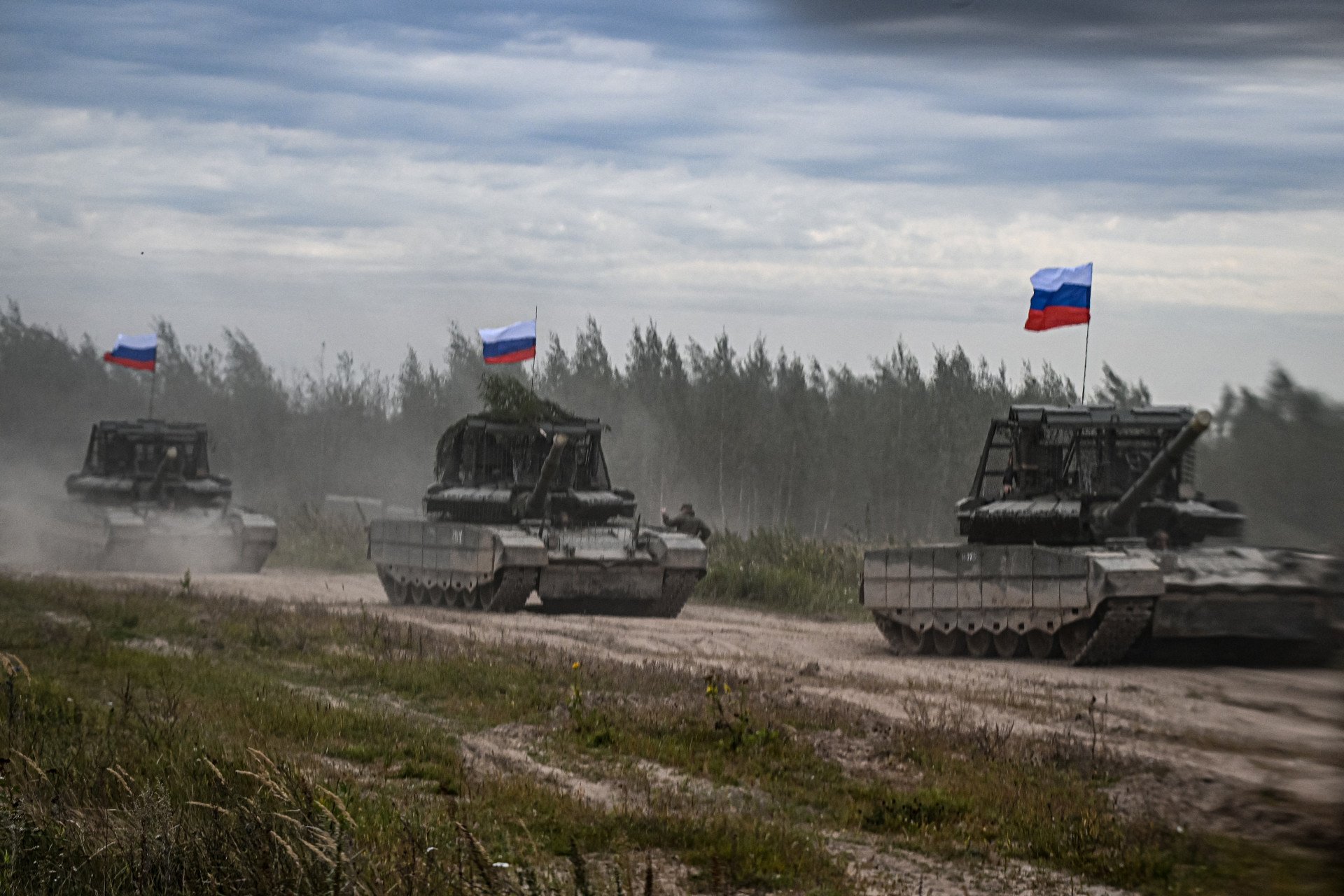
A new briefing prepared for the US Congress concludes that Minsk has effectively been absorbed into Russia’s military posture in Eastern Europe, reshaping the security environment along NATO’s eastern flank and shortening warning times for allied defenses.
 Prefer U24 Media on Google
- Authors




A briefing prepared for the US Congress concludes that Belarus has effectively been absorbed into Russia’s military posture in Eastern Europe, fundamentally altering the security landscape along NATO’s eastern flank and complicating US defense planning, according to Army Recognition on January 30.
The document, published on January 28, states that Belarus should no longer be viewed as a loosely aligned partner but as a functional extension of Russia’s military architecture.
We bring you stories from the ground. Your support keeps our team in the field.
Analysts cited by Army Recognition argue that this shift became irreversible once Minsk allowed Russian forces to launch attacks on Ukraine from Belarusian territory during the opening phase of the 2022 invasion.
Since then, Russia has retained sustained access to Belarusian bases, airspace, and logistical corridors, enabling repeated deployments, strikes, and force rotations.
As Army Recognition notes, this arrangement provides Moscow with strategic depth, allowing units to be reconstituted, repositioned, and prepared for future operations under the cover of joint exercises.
🤬The Ministry of Defense of the Republic of Belarus reports that the Belarusian military was sent to Russia for so-called military exercises - to "take over the experience" of the occupiers in the war against Ukraine.
— Jürgen Nauditt 🇩🇪🇺🇦 (@jurgen_nauditt) January 15, 2024
P.S. Or will Belarus actively intervene in the war? pic.twitter.com/HO9vrExHaw
In a prolonged war, this model reduces warning time, obscures Russian intent, and maintains constant pressure on northern Ukraine. At the same time, it creates a standing military threat to Poland, Lithuania, and Latvia, all of which are critical NATO frontline states, Army Recognition analysts assess.
Nuclear signaling from Belarus
The most consequential development remains the nuclear dimension. US assessments referenced by Army Recognition point to the expansion of Russia’s nuclear posture into Belarus, transforming the country into a forward element of Moscow’s deterrence strategy.
This includes training Belarusian forces to operate the 9M723 missile used by the 9K720 Iskander-M system, a short-range ballistic missile capable of delivering conventional or tactical nuclear payloads.
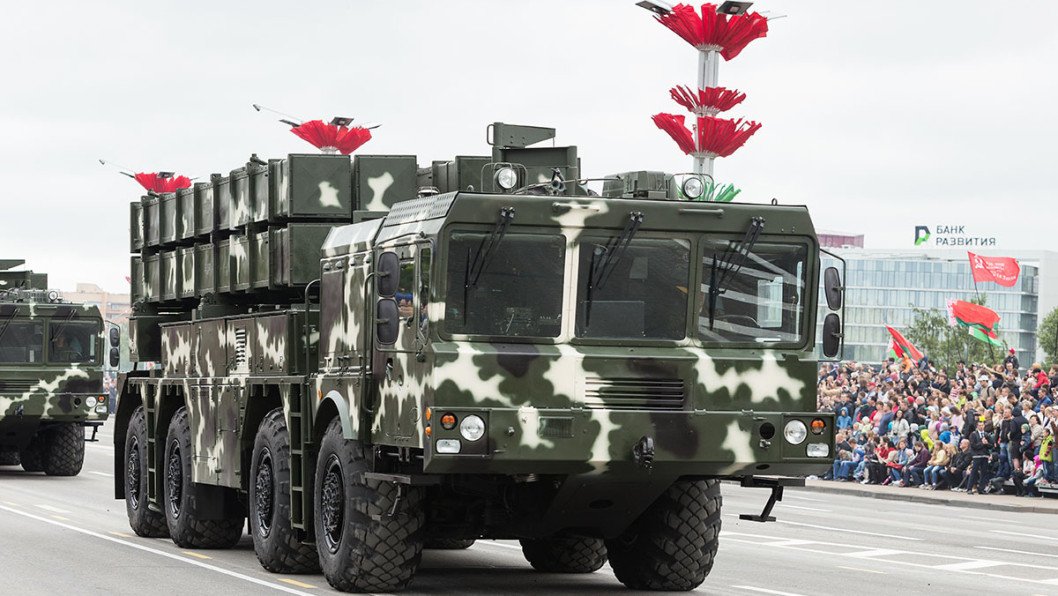
The missile’s quasi-ballistic trajectory and terminal maneuvering make it difficult to intercept, and it is optimized for rapid strikes against high-value targets such as air bases, command centers, logistics hubs, and ammunition depots.
Even if nuclear warheads remain under Russian control, Army Recognition emphasizes that integrating this delivery system into Belarusian territory significantly alters the regional balance by shortening strike distances and complicating NATO response timelines.
Integrated air defense and A2AD
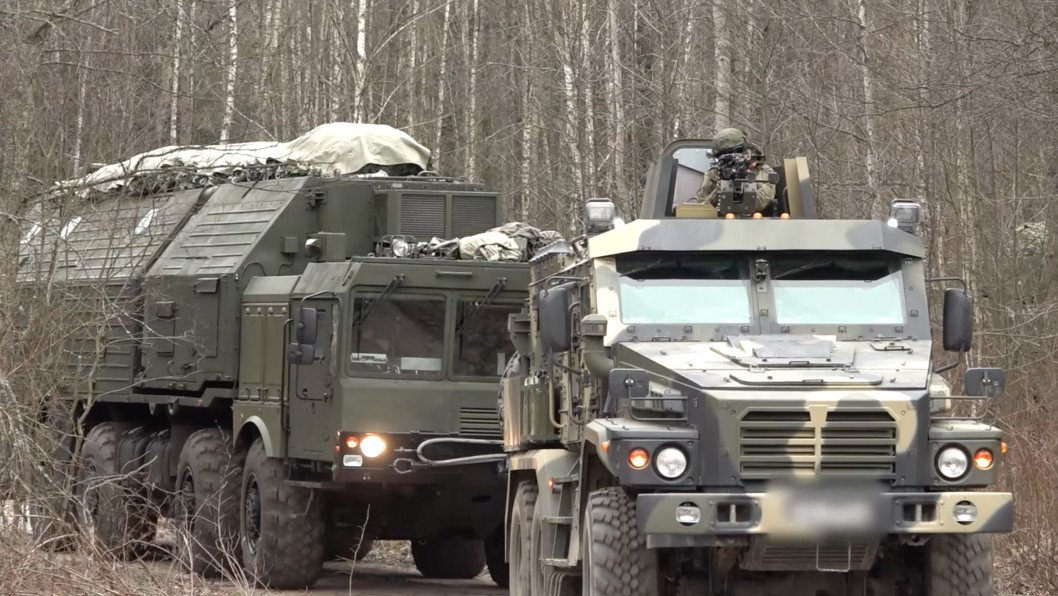
Belarus has also become a critical node in Russia’s expanding anti-access and area-denial architecture. As detailed by Army Recognition, Russian and Belarusian surveillance, radar, and air-defense systems are increasingly integrated into a unified network.
Systems associated with the region include the S-400 and Pantsir-S1, which enhance Russia’s ability to control airspace and protect key military sites. Russian radar and communications facilities on Belarusian territory further strengthen early-warning coverage and sensor fusion across the western strategic direction.
-1d9fa7480e5881fc68e774e53f4fa441.jpg)
This infrastructure allows Russia to use Belarus as a militarized buffer zone, reducing distances to operational objectives and increasing pressure on NATO reinforcement corridors connecting Central and Eastern Europe, Army Recognition reports.
Belarusian forces as a force multiplier
While Belarusian armed forces remain largely conscription-based and territorially oriented, they retain enough capability to serve as a meaningful supporting force.
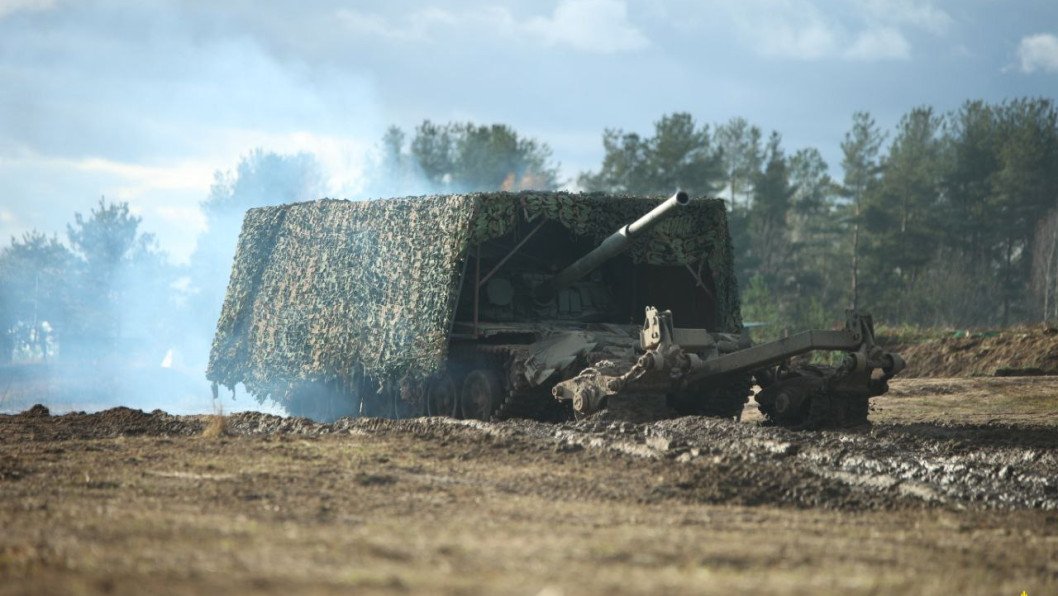
According to Army Recognition, Belarus operates T-72B and T-72B3 main battle tanks, BMP-2 infantry fighting vehicles, and BTR-82A armored personnel carriers.
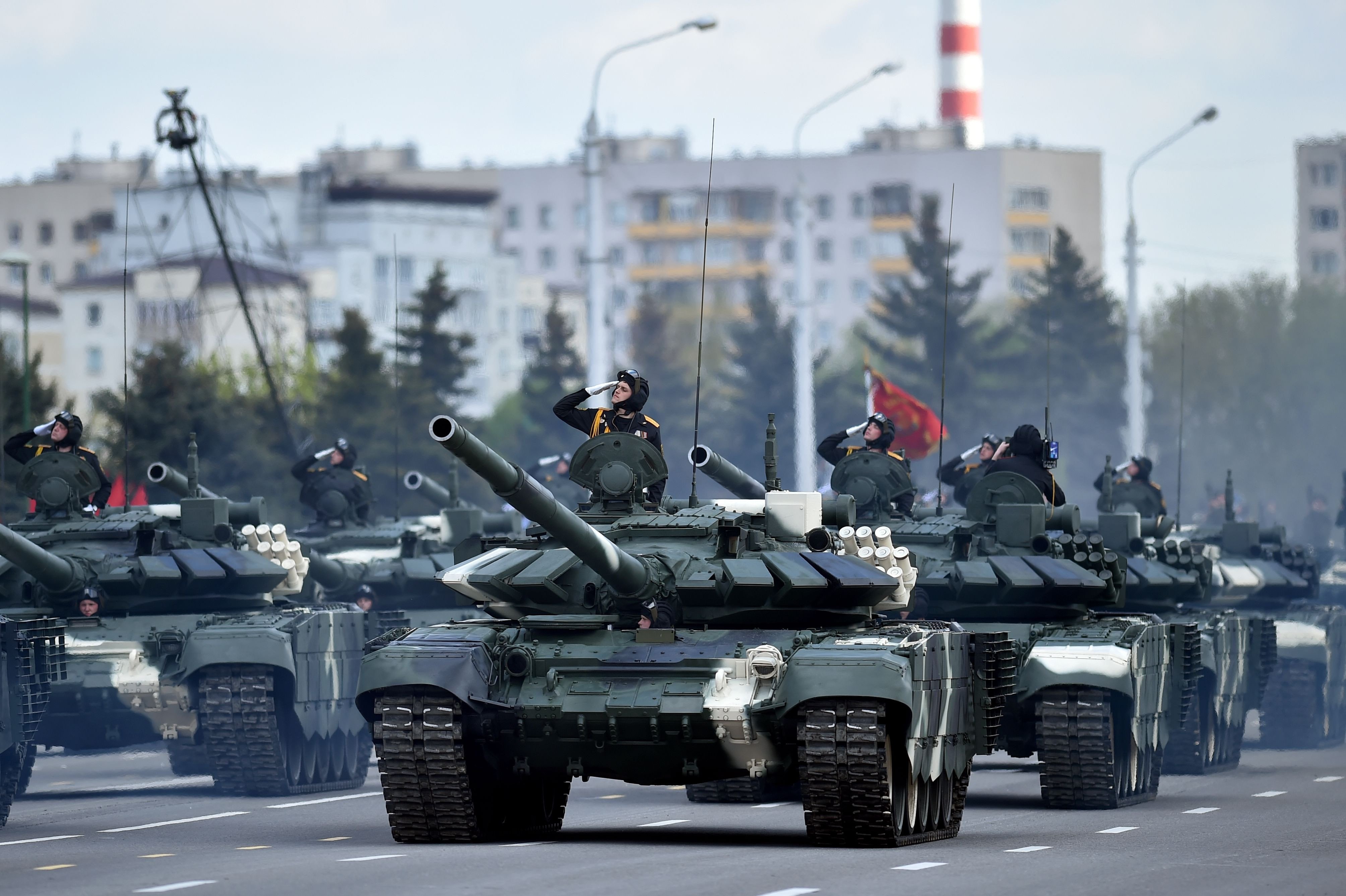
In a crisis, these units could secure rear areas, protect infrastructure, and control key routes, freeing Russian forces for offensive and maneuver operations.
The T-72B3, with upgraded fire-control systems and improved protection, is more capable than earlier variants but remains vulnerable to modern threats such as FPV drones, loitering munitions, and advanced anti-tank weapons without sufficient air-defense and electronic-warfare support, Army Recognition notes.
Strategic implications for the US and NATO
The briefing concludes that Belarus must now be assessed as an operational component of Russia’s military posture in Europe.
As Army Recognition summarizes, it functions simultaneously as a pre-positioning hub, a strike enabler, and a platform for forward nuclear signaling.
Training of Belarus Ground Forces, March 2024 - 2S5 Giatsint-S SPA, 120mm mortar 2S12 "Sani", T-72B MBT, and BMP-2 IFVs can be seen. pic.twitter.com/8DLbgz8DBD
— B-AREV (@trip_to_valkiri) March 17, 2024
Together, these factors enhance Moscow’s ability to sustain multidirectional pressure on Ukraine while introducing a new layer of strategic uncertainty near NATO borders—one that extends far beyond Belarus’s own national capabilities and directly impacts US and allied defense planning.
Earlier, reports emerged that a confidential state-run initiative was being implemented in Belarus to establish a full-scale production line for artillery and rocket ammunition, a project that could directly support the Russian army in its war against Ukraine.
Discuss this article:
-9bd5e1532102621f8fb1c4ba871a3171.png)

-c439b7bd9030ecf9d5a4287dc361ba31.jpg "Photo of Katherina Popilnichenko")


-111f0e5095e02c02446ffed57bfb0ab1.jpeg "Photo of Roman Kohanets")