- Category
- Latest news
Russia To Deploy First Fiber-Optic Naval Drone to Black Sea Fleet
 Prefer U24 Media on Google
- Authors

-72b63a4e0c8c475ad81fe3eed3f63729.jpeg "Photo of Cyril Barabaltchouk")
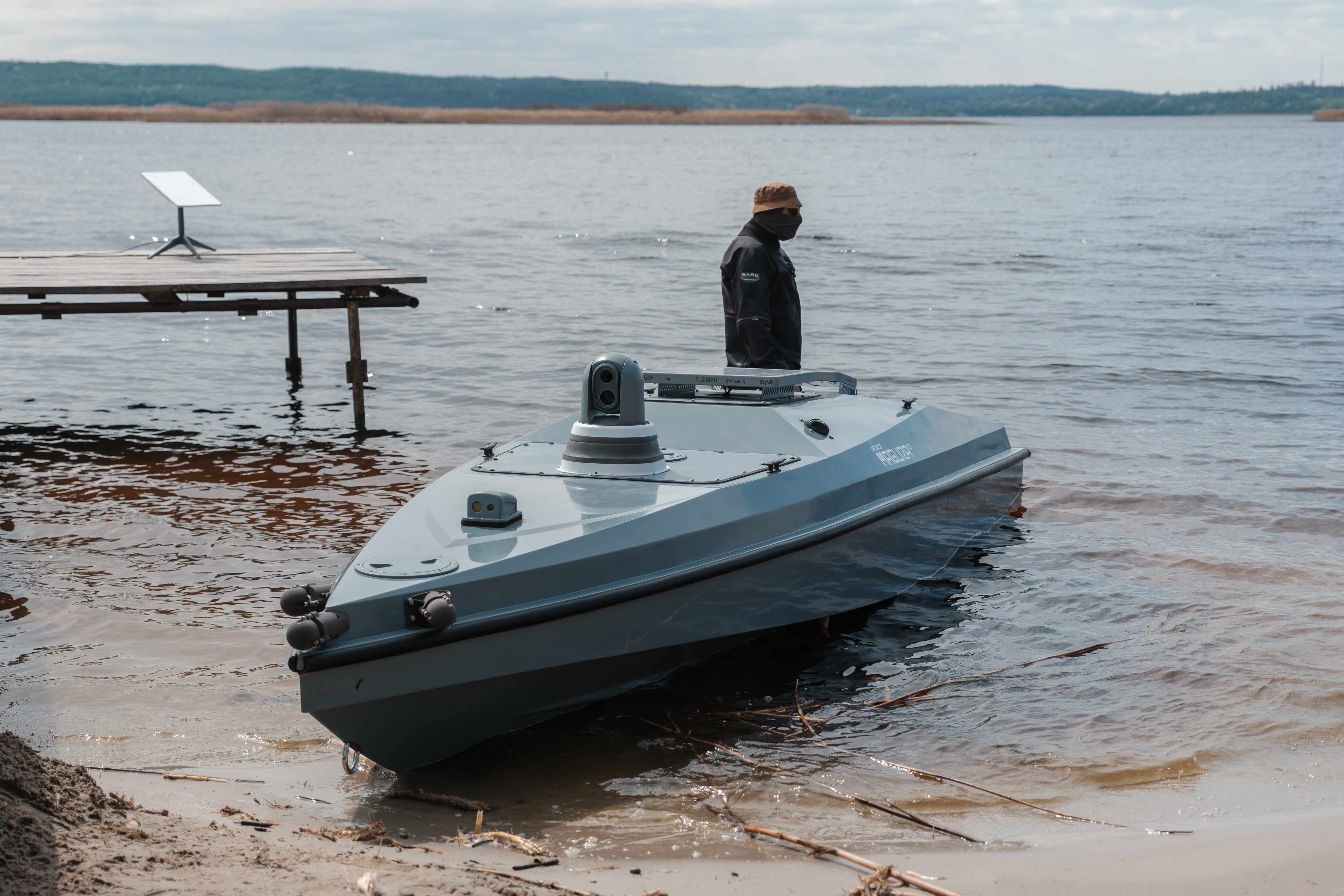
Russian media announced the first deployment of a fiber-optic naval drone to the Black Sea Fleet. Designed to act as a suicide drone, carry FPV drones, and target Ukrainian maritime drones, Defense Express reported on September 8.
The idea of using a fiber-optic cable for control could extend range beyond traditional radio links, but practical challenges quickly appear. The drone carries a heavy, protected spool of cable, which limits both maneuverability and maximum length.
Signal strength along the cable becomes a serious constraint: without repeaters or amplifiers, the connection likely won’t exceed 100 km—just barely enough to reach from the occupied Kinburn Spit to Odesa, Defense Express writes.

The drone itself is small, carrying limited payload. Still, it could deliver a few FPV drones capable of striking Mykolaiv, Odesa, or Kherson from the temporarily occupied coast of Kherson region.
Fiber-optic control is a workaround for Russia’s weak satellite communication capabilities and avoids electronic warfare countermeasures that can jam radio-controlled drones like the “Katran,” Defense Express claims.
Defense Express said that the appearance of these fiber-optic naval drones deserves attention. Despite limitations, Russia could scale the concept and expand its maritime drone threat, particularly along Ukraine’s southern coast.
Previously, Ukrainian marines have developed and deployed a new unmanned surface vessel (USV) named Barracuda, designed for operations in river and littoral environments, according to reports and footage released by the 40th Separate Coastal Defense Brigade.
Discuss this article:



-c439b7bd9030ecf9d5a4287dc361ba31.jpg "Photo of Katherina Popilnichenko")