- Category
- Latest news
Russia Turns Failed Logistics Robot Into Rocket Artillery—Will the “Mini-Solntsepyok” Survive the Battlefield?
 Prefer U24 Media on Google
- Authors




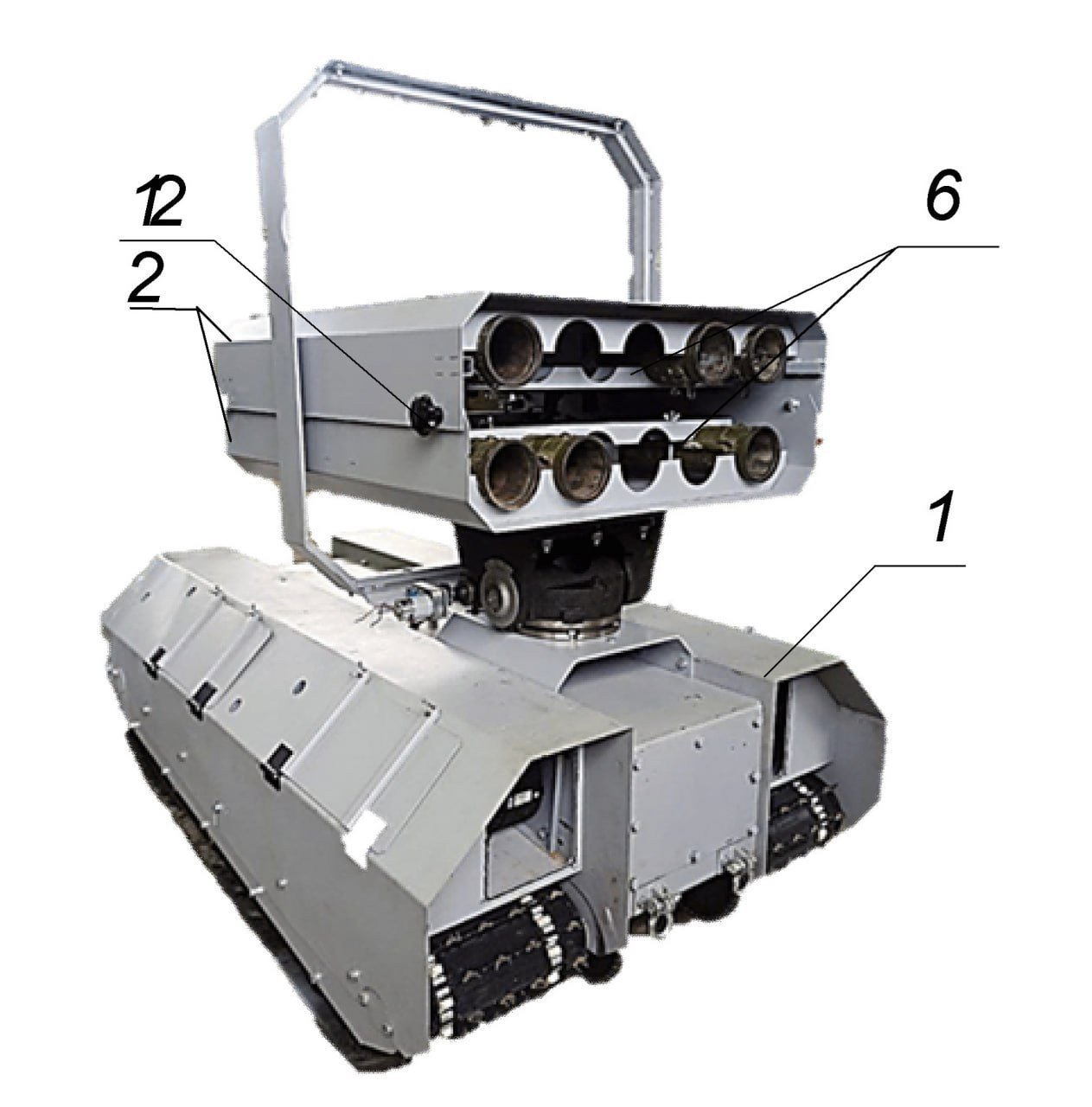
Moscow is rolling out a compact robotic launcher that mounts infantry rocket tubes on an unarmored ground drone — a concept framed as a cheap analogue of the heavy TOS-1A thermobaric system but that, according to Defense Express, looks short on protection, logistics, and proven capability.
Russia starts deploying a new ground robot armed with disposable rocket launchers, dubbed the “mini-Solntsepyok.”
It is a low-cost attempt to weaponize small robotic platforms that raises serious questions about survivability, guidance, and real battlefield value, Ukrainian defense media outlet Defense Express reported on November 12.
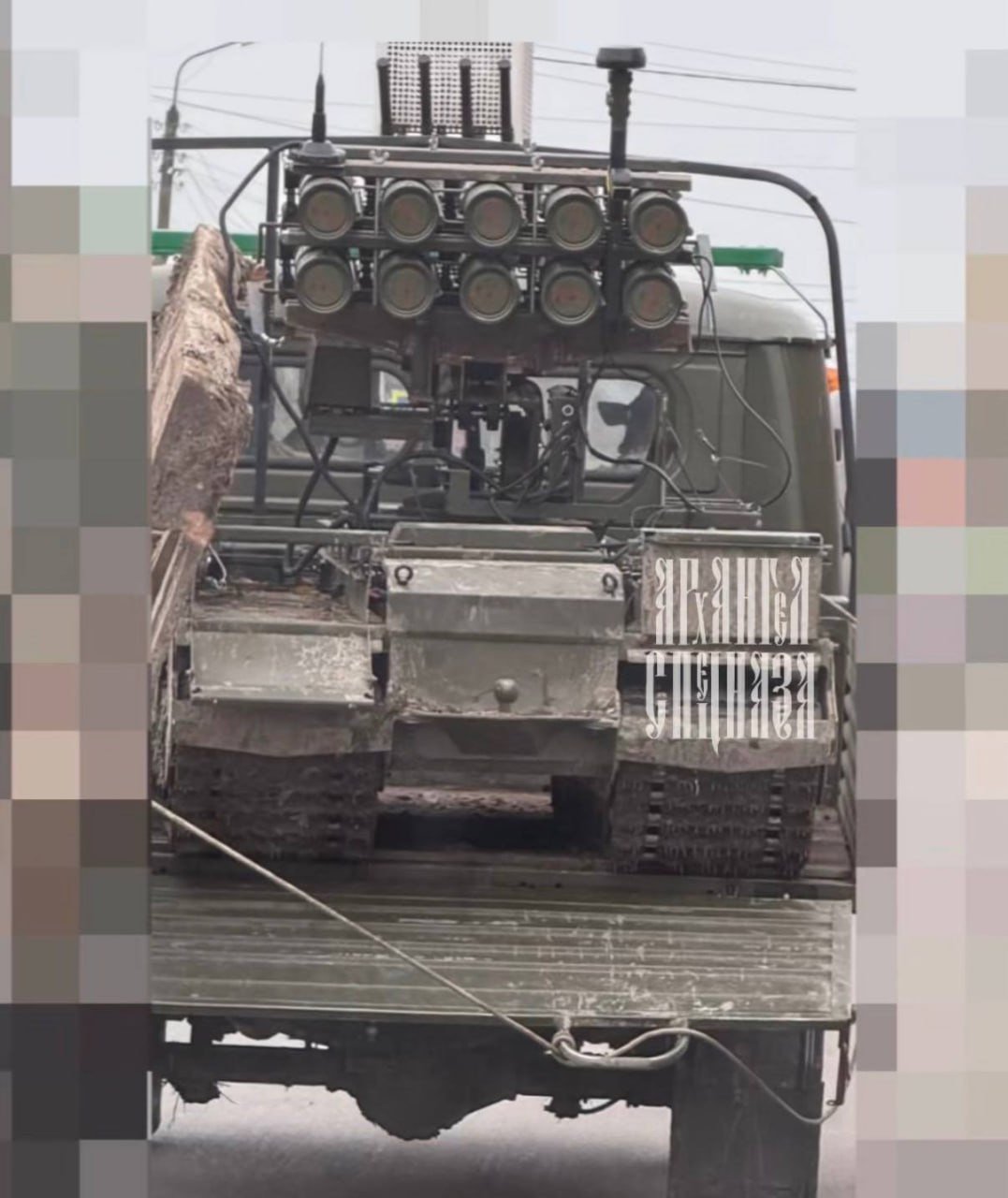
What is the “mini-Solntsepyok”?
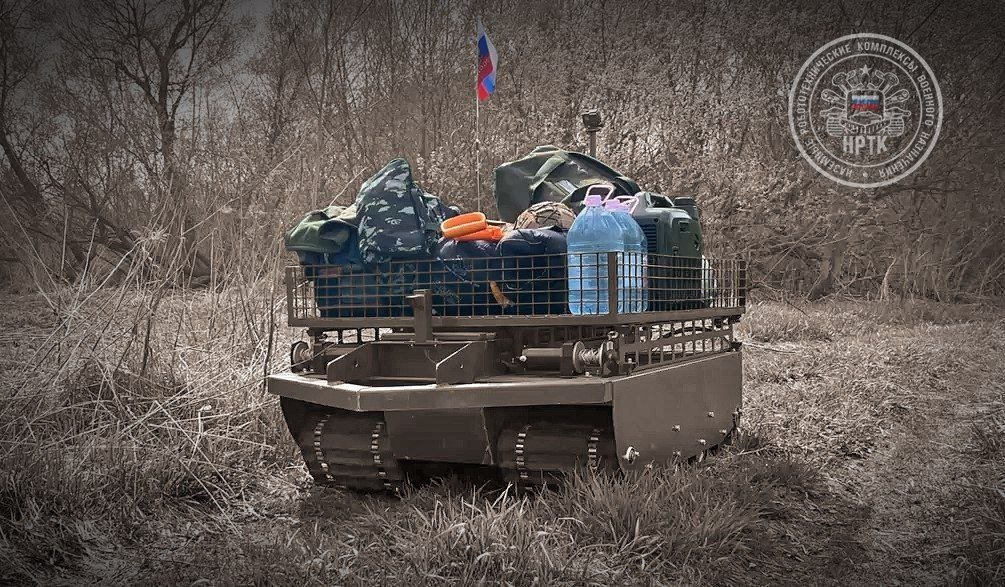
According to Defense Express, the platform was developed by the Moscow-based company Robotic Engineering.
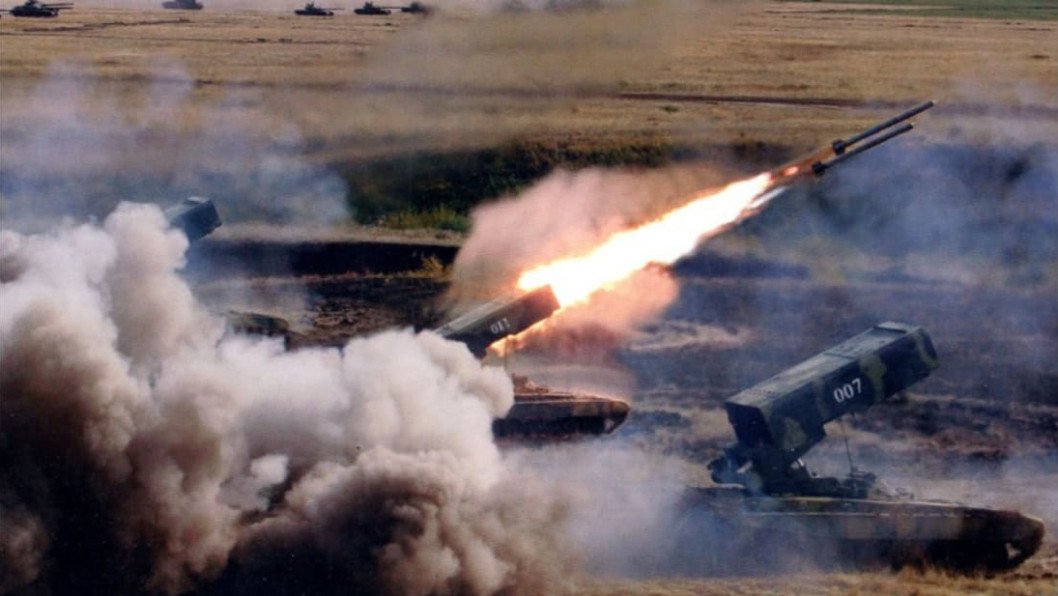
Instead of the large thermobaric rockets used by the TOS-1A “Solntsepyok,” the mini-Solntsepyok carries lightweight frames of disposable infantry rockets—such as the RPO-A “Shmel”—that can be fired either simultaneously or one after another. Developers argue this approach reduces costs by relying on existing munitions and simplifies reloading.
The robot is reportedly capable of limited autonomous operation. If communication is lost, it can continue moving using satellite navigation and onboard sensors. Developers even claim it can automatically detect and engage targets, though such capabilities remain unverified.
How it differs from the TOS-1A
While Russian media portrays the mini-Solntsepyok as a spiritual successor to the TOS-1A, the resemblance is mostly cosmetic.
Iraqi Army soldiers reloading BM-1 with MO.1.01.04 220mm thermobaric rockets from TZM-T, all part of the TOS-1A Solntsepyok system during the Battle of Mosul, Nineveh Governorate, January 13th, 2017. pic.twitter.com/3gM0lAgbcz
— AllShipsFireAtWill (@UNSC_Admiral) September 4, 2025
The new system lacks the size, armor, and destructive power of its thermobaric counterpart. The launcher’s small frame and exposed chassis make it vulnerable to even small-arms fire, and its rear-mounted launcher raises doubts about stability when firing, Defense Express notes.
Credibility and potential use
Public records cited by Defense Express show that Robotic Engineering has reported no revenue since 2018, suffered losses in 2024, and employs no more than a handful of people.
Despite its modest background—and a string of lawsuits—the company’s leadership change last year may signal an attempt to position itself for state contracts with Russia’s defense ministry.
While the mini-Solntsepyok could, in theory, offer a low-cost tool for short-range fire support, its real-world effectiveness is unclear.
Similar Russian robotic platforms have been tested for logistics and evacuation roles, but rarely survive long in direct combat. Defense Express notes that the combat application rate of armed robots remains much lower than that of transport or recovery systems.
Earlier, reports emerged that Russian forces had begun dismantling thermobaric rockets originally designed for the TOS-1 heavy flamethrower system to extract explosive material for use in attack drones.
Discuss this article: