- Category
- Latest news
Russia Upgrades Glide Bombs With Anti-Jam Tech to Hit Targets 95 km Deep Into Ukraine. Here’s What We Know
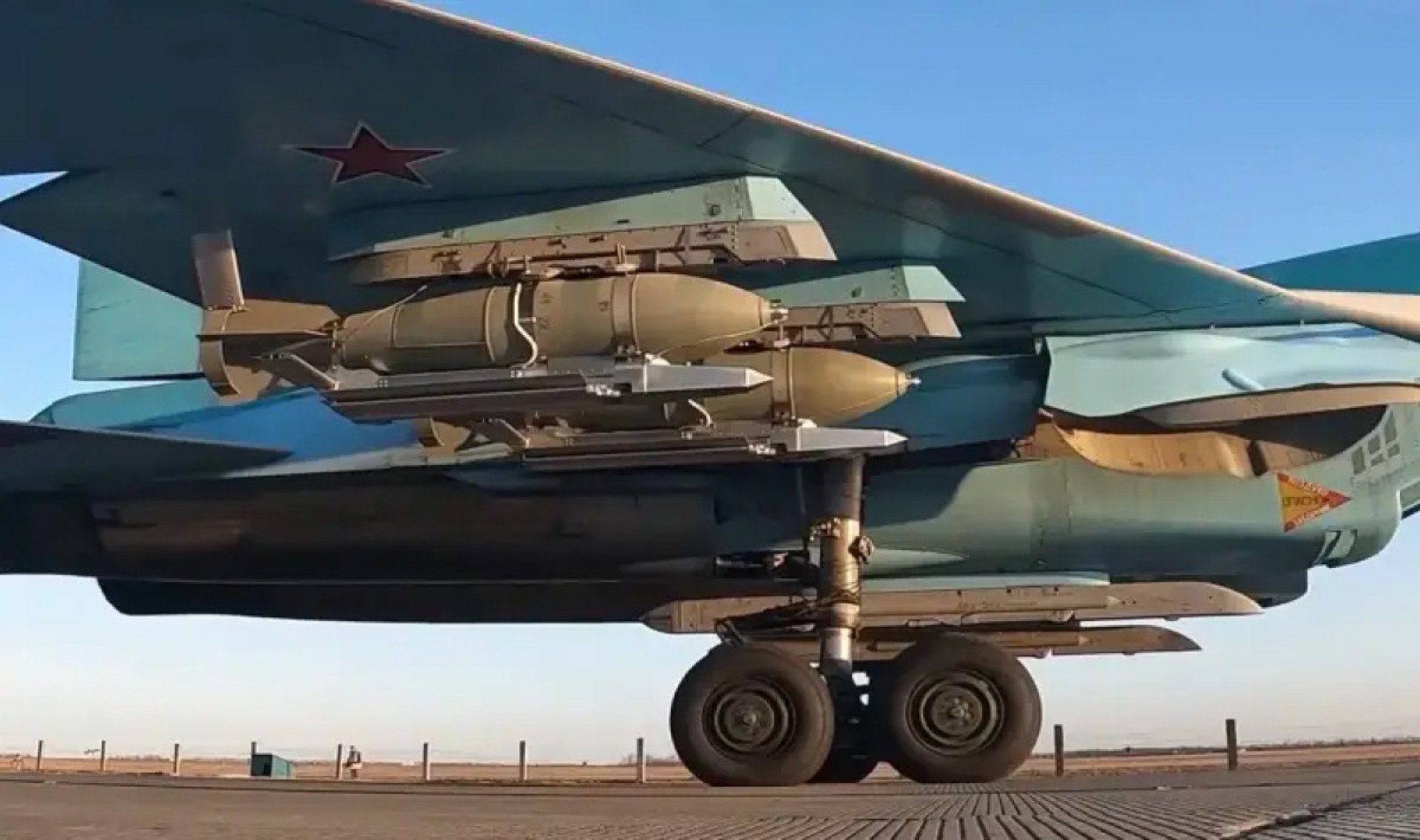
Amid ongoing electronic warfare over Ukraine, Russia is upgrading its Soviet-era bombs with modern guidance systems. The newly revealed Kometa-M24 module is designed to keep glide bombs effective despite Ukrainian jamming—and could mark a shift in Russia’s standoff strike strategy.
 Prefer U24 Media on Google
- Authors


Russia has introduced a new electronic warfare-resistant guidance system, the Kometa-M24, designed to improve the range and accuracy of its UMPK-PD glide bombs.
The upgrade is part of Moscow’s broader effort to maintain the viability of its standoff strike capabilities against increasingly sophisticated Ukrainian defenses.
According to Army Recognition on July 8, the Kometa-M24 integrates a 24-element Controlled Reception Pattern Antenna (CRPA) array, replacing earlier 8- or 12-element designs.
The enhanced system can dynamically adjust its signal reception to better resist jamming and spoofing, significantly increasing the reliability of satellite-guided FAB-250 and FAB-500 bombs equipped with UMPK kits.
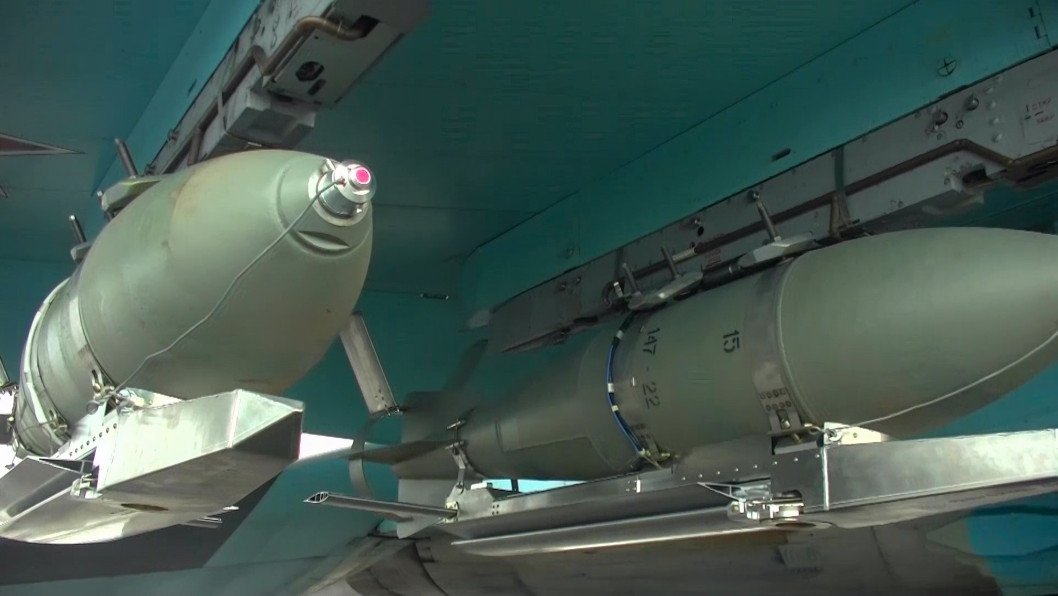
The module is described as modular and adaptable, allowing integration with various Russian strike aircraft, including the Su-34, Su-30SM, and Su-35S.
Russian officials claim the Kometa-M24 uses updated domestic microelectronics and features an inertial backup mode, enabling bombs to stay on course even when satellite signals are disrupted—an increasingly common tactic used by Ukrainian electronic warfare units.
The UMPK-PD is the extended-range variant of Russia’s glide bomb kit, reportedly capable of reaching targets up to 95 kilometers away. First confirmed in late 2024, the weapon has been used in recent strikes on Ukraine’s Kharkiv and Sumy regions.
It enables Russian aircraft to launch attacks from outside the engagement envelope of many Ukrainian air defense systems.
-6e03694a933538fd30274c6783fb63cf.png)
Russian defense publications present the Kometa-M24 as a cost-effective alternative to cruise missiles, enabling continued use of legacy Soviet bombs in modern standoff roles. The system is designed to preserve strike capabilities while minimizing production costs and dependence on foreign components.
The Kometa-M24 is expected to be integrated across a wider range of munitions, with potential future application to heavier bombs such as the FAB-1500.
Strategically, the system is intended to help Russia maintain pressure on Ukrainian infrastructure and rear positions, even as Ukrainian drones target Russia’s long-range aviation bases.

If deployed at scale, the new module could complicate Ukraine’s air defense planning. However, the effectiveness of the Kometa-M24 will depend on the ongoing contest between Russian strike systems and Ukraine’s evolving electronic warfare capabilities.
Control over the electromagnetic spectrum remains a critical factor in shaping the outcome of standoff engagements.
Earlier, Russia upgraded its R-500 Iskander-K cruise missiles with 16-element Kometa-M antennas to enhance resistance to GPS jamming. Previously equipped with 4-element systems, the missiles primarily relied on inertial and TERCOM navigation.
The transition to high-element CRPA arrays—typically reserved for satellite-dependent weapons—signals a broader shift toward integrating satellite guidance across Russia’s long-range strike arsenal, including glide bombs and Shahed-type drones.
Discuss this article:


-c439b7bd9030ecf9d5a4287dc361ba31.jpg "Photo of Katherina Popilnichenko")