- Category
- Latest news
Russia Uses 3D-Printed Mines in Kherson as Substitute for Butterfly Mines, Police Warn
 Prefer U24 Media on Google
- Authors


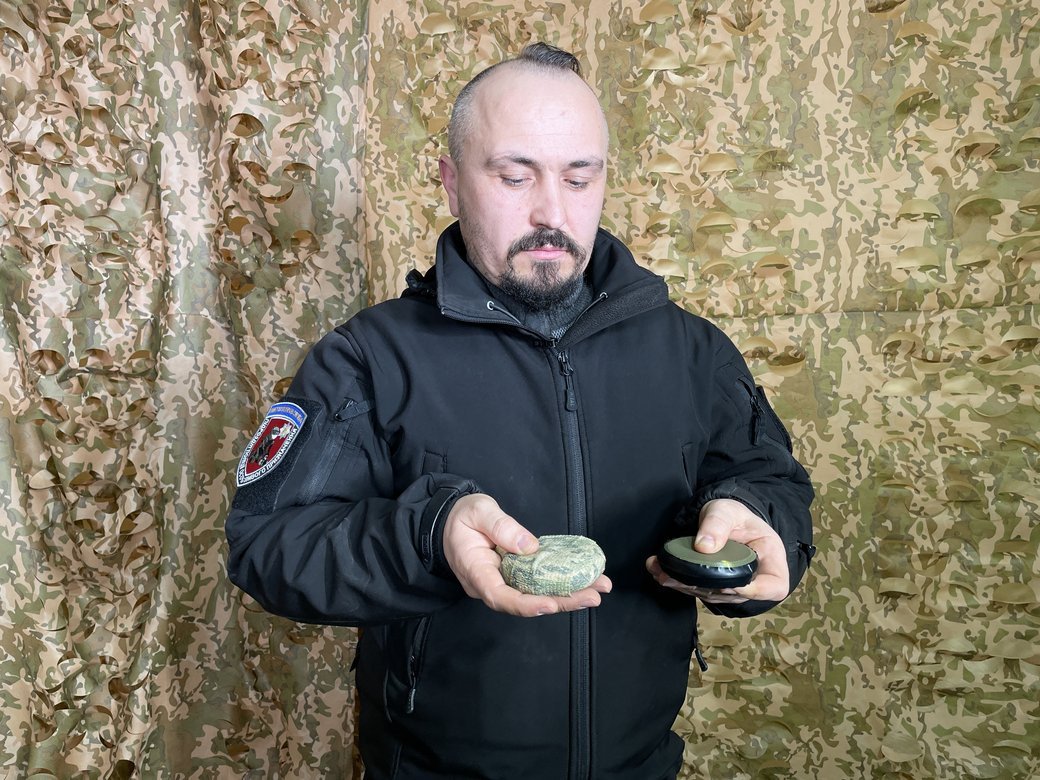
Russian forces are scattering 3D-printed anti-personnel mines wrapped in camouflage fabric across Kherson.
Volodymyr Perepelytsia, head of the explosive ordnance disposal department of the National Police in Kherson region, told Suspilne on February 25 that these munitions are an upgraded version of the “Pryanyk” mines used previously.
We bring you stories from the ground. Your support keeps our team in the field.
Larger and more powerful than their predecessors, they appear to be a response to a shortage of standard PFM-1 “Butterfly” mines.
According to Perepelytsia, the 3D-printed casing houses a sophisticated electrical initiation system that is more sensitive than traditional mechanical fuses.
“Its printed on a 3D printer, inside contains an explosive substance, a detonator and what is needed for it to trigger. It functions the same as a PFM – from pressure being applied to it. If a person steps on it, a vehicle drives over it, the plastic bends, sometimes breaks through, and an explosion occurs,” he explained.
The lethality of the device is significant despite its improvised nature. Experts warn that the pressure required for detonation is low enough to be triggered by any adult, often leading to life-altering injuries.
“We tested this mine. The average activation pressure is seven kilograms. That is enough that any adult person, stepping on it, would risk very serious injuries. There is enough explosive in it to tear off a foot. Because, unfortunately, it contains an explosive substance that shatters everything in its path: skin, tissues, bones, metal. It doesn't care,” Perepelytsia said.
These mines are being scattered remotely via drones, often dropped onto soft surfaces or into thick grass to ensure the plastic casing remains intact upon landing, according to Suspilne. The choice of camouflage fabric further complicates detection by absorbing sunlight rather than reflecting it.
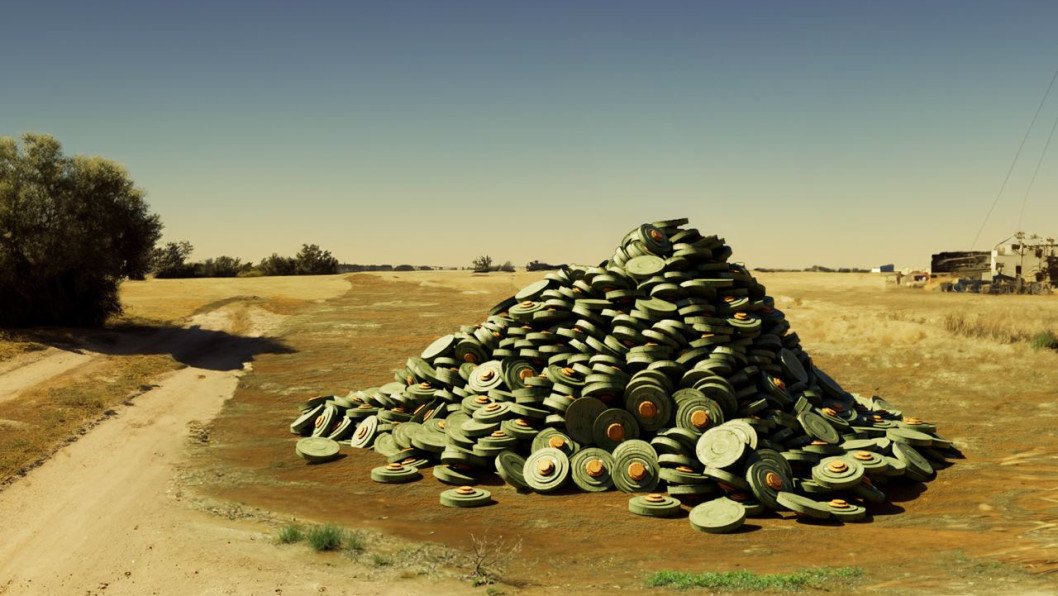
“In the grass this thing is very hard to see, and the fabric does not reflect sunlight directly but absorbs it. This additionally camouflages the object. Recently the enemy has been dropping mines onto soft surfaces so the plastic doesn't break, and they are hardest to see in the grass. We have encountered these munitions in different parts of Kherson,” Perepelytsia noted.
This shift toward 3D-printed explosives comes as Russian forces continue to saturate the city’s streets with conventional PFM-1 “butterfly” mines. In November 2025, the Kherson Regional Administration reported a surge in drone-dropped PFM-1 explosives, noting that their small size and specific shape allow them to vanish easily among fallen leaves and grass.
Authorities pointed out that the compact dimensions and irregular contours of these devices make them remarkably hard to spot, as they seamlessly vanish among vegetation and forest litter. Furthermore, these munitions are highly volatile—they are prone to spontaneous self-detonation or can be triggered by even the most minimal contact.
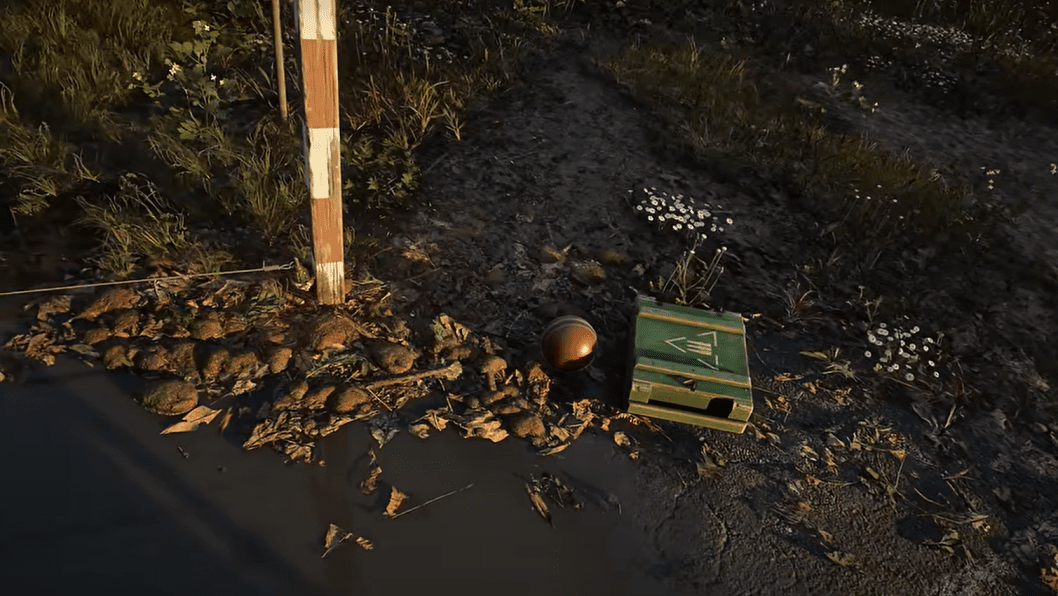
The danger of these “butterfly” mines was made clear when two ambulances were damaged in Kherson’s Dnipro district. One vehicle struck a mine at 03:00 while transporting a patient, and a second was hit at 05:00 while responding to a call. While the blasts destroyed the vehicles’ wheels, fortunately, no injuries were reported.
Earlier, Ukrainian President Volodymyr Zelenskyy has posthumously awarded the title of Hero of Ukraine and the Order of the Golden Star to Oleksandr Hordiienko, a farmer from the Kherson region, for his efforts in clearing mines from his fields and neutralizing Russian drones.
Discuss this article:
-9a7b3a98ed5c506e0b77a6663f5727c5.png)