- Category
- Latest news
Russian Oil Revenues Hit Record High Amid Middle East Crisis and US Waiver
 Prefer U24 Media on Google
- Authors

-72b63a4e0c8c475ad81fe3eed3f63729.jpeg "Photo of Cyril Barabaltchouk")
Moscow is rapidly capitalizing on soaring global oil prices triggered by Iran’s effective closure of the Strait of Hormuz and a recent US tariff waiver, Bloomberg reported on March 17.
The combined surge in crude prices and export volumes just delivered the biggest weekly income jump for the Kremlin’s war chest since the 2022 full-scale invasion of Ukraine.
We bring you stories from the ground. Your support keeps our team in the field.
In the four weeks leading up to March 15, the gross value of Russia’s seaborne exports spiked to an average of $1.38 billion a week. Looking at just the last seven days, total export values hit a staggering $2.07 billion, driven by skyrocketing prices for Russia’s Urals and Pacific ESPO crude blends, Bloomberg wrote.
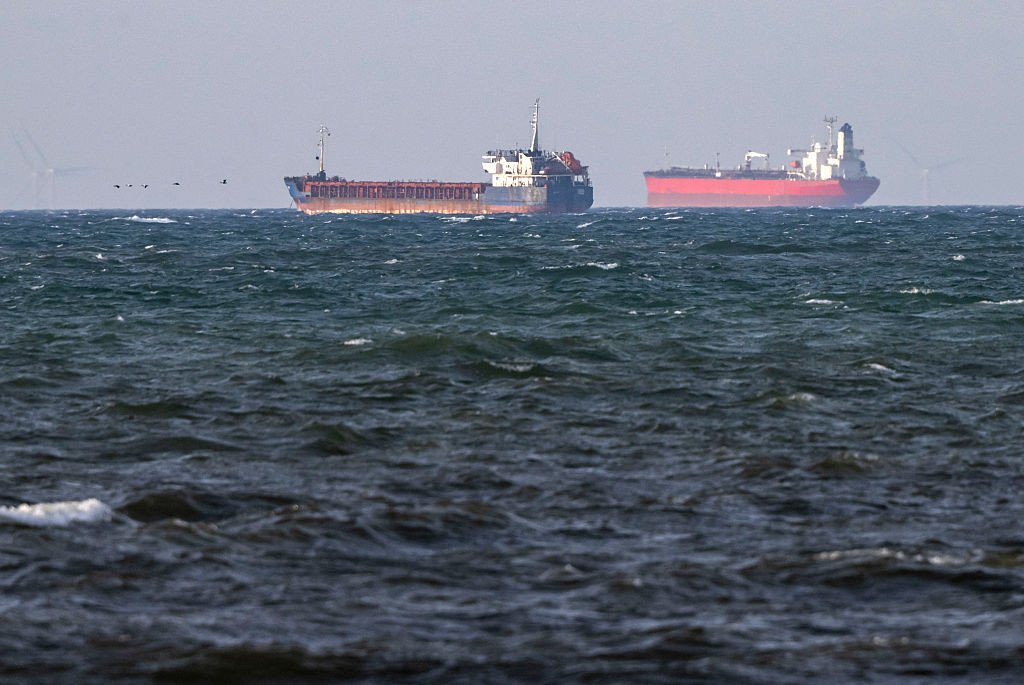
This financial windfall is heavily supported by a US tariff waiver that allows international buyers to purchase Russian crude loaded before March 12 without fear of secondary sanctions. The policy shift immediately helped clear a massive 140-million-barrel backlog of idling shadow fleet tankers.
Dozens of vessels previously stalled or heading toward the Red Sea have executed U-turns, actively rerouting to discharge their cargoes at refineries along India’s west coast.
Overall, vessel-tracking data shows Russia’s seaborne exports averaged 3.44 million barrels a day over the past month. A major driver of this volume was the rapid resumption of shipments from the Sheskharis oil terminal at Novorossiysk on the Black Sea, which had been temporarily knocked offline following a Ukrainian drone attack in early March.
Surges from Murmansk and other Arctic ports further boosted the total daily outflow, according to Bloomberg.
-5fd29ada6cceba1537fd414500eb4165.jpg)
To mask the true scale of these shipments, Russian tankers continue to obscure their final delivery points. Currently, the equivalent of 1.73 million barrels a day is on vessels with false or interim destinations, such as Port Said or the Suez Canal. Meanwhile, tankers hauling crude to Syria routinely vanish from automated tracking systems entirely once they drop south of Crete to avoid detection.
The Kremlin desperately sought new ways to bypass tightening Western sanctions and clear a massive backlog of unsold crude over the past few months. Following successful Ukrainian drone strikes on domestic refineries and key Black Sea export terminals, Russia’s oil revenues plummeted, forcing Moscow to rely heavily on its clandestine shadow fleet.
A recent report detailed that Ukrainian officials warned the sudden US decision to temporarily ease secondary sanctions could hand the Kremlin up to $10 billion in emergency funding. Currently, as global energy markets face severe disruptions from the Middle East conflict, Russia actively exploits the chaos to replenish its depleted war chest, rerouting millions of barrels of previously stranded oil to buyers in Asia.
Discuss this article: