- Category
- Latest news
Russian Zala Lancet Drone Evolved Again With Upgraded Warhead
 Prefer U24 Media on Google
- Authors


Russia has modified its Lancet loitering munition to carry a Soviet-designed anti-tank mine, the Ukrainian defense outlet Militarnyi reported on August 4.
According to video evidence, the upgraded Lancet drone now features the PTM-3, a shaped-charge anti-tank mine originally developed by the Soviet Union to defeat both light and heavy enemy armor.
#UkraineRussiaWar #Pokrovsk #Kupyansk #ChasovYar #Toretsk #Sumy #Belgorod #Vovchansk
— Koba (@Roberto05246129) August 3, 2025
🥴 The "Lancet" was “spotted” with an anti-tank mine PTM-3 as a warhead designed to target armored vehicles pic.twitter.com/FfNoJTrWL5
The PTM-3 weighs 4.9 kilograms—within the Lancet drone’s payload capacity—and replaces the standard KZ-6 warhead typically used on these drones.
The upgrade marks a tactical shift. The PTM-3 contains 1.8 kg of explosive material, more than the 1.5 kg in the KZ-6. Although both warheads differ in total mass (4.9 kg for the PTM-3 versus 3 kg for the KZ-6), the mine’s larger payload allows for potentially more effective strikes on softer targets.
Still, there are trade-offs. While the PTM-3 is capable of penetrating approximately 80 mm of armor, the KZ-6—when filled with TG-40 explosive—can penetrate up to 200 mm under optimal conditions, according to open-source data.
-6403c946457b52fb65db46330ea2b5ec.png)
Lancet drones have become one of the most dangerous threats facing Ukrainian forces, particularly those operating near the front lines, such as air defense and artillery units.
Unlike conventional attack drones, Lancets loiter in the air before diving into their targets, making them particularly effective in disrupting rear-echelon units.
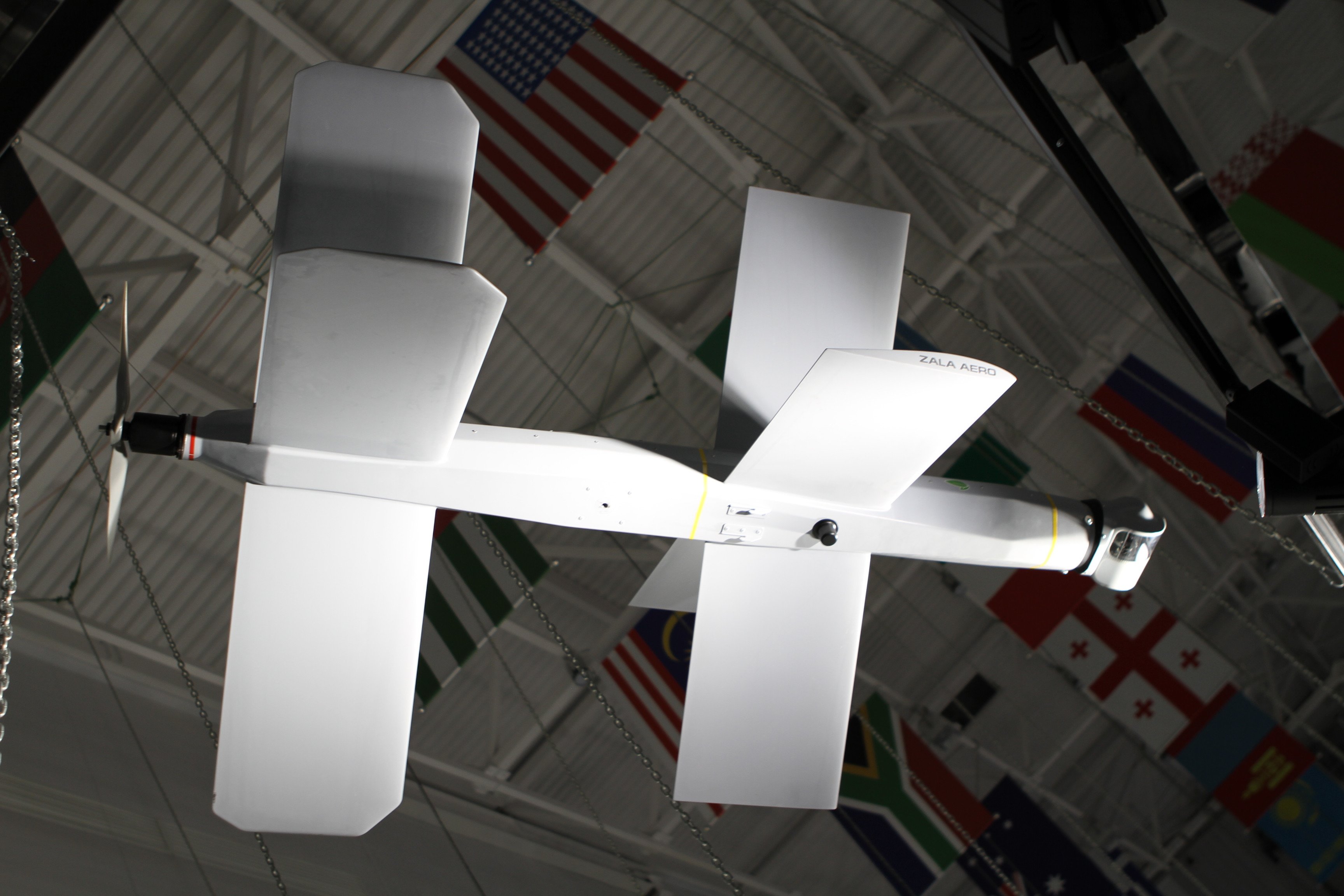
Beneath the Lancet designation lies a growing family of drones produced by Russia’s Zala Aero Group. The version commonly seen on the battlefield is the larger Lancet-3. Its smaller predecessor, Lancet-1, saw limited deployment.
-919b6c9719e6fb60c6da2cbe4010170b.png)
Even the Lancet-3 has gone through numerous upgrades. Russia currently fields two primary variants in Ukraine, known as Izdelie 52 and the more advanced Izdelie 51. Both belong to the second generation of the drone system.
The drone has a distinctive X-wing configuration, with two intersecting sets of wings mounted on its fuselage to provide stability and maneuverability.
At the front, it houses an optical targeting system; in the middle, the warhead, battery, and electric motor; and at the rear, a pusher-style propeller. The airframe is constructed from lightweight composite materials.
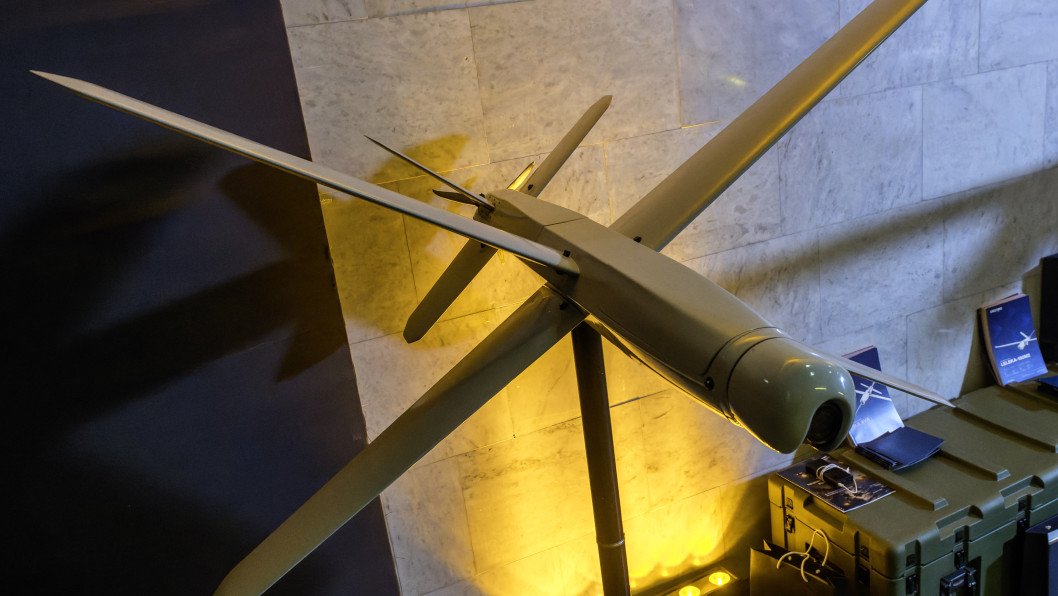
To deploy the Lancet, a ground team sets up a compact control station and launches the drone via a catapult system.
Its operational range exceeds 40 kilometers, with some reports suggesting a maximum reach of around 50 kilometers. This makes the drone particularly useful for counter-battery missions and attacks on air defense installations.
According to the open-source intelligence group Oryx, a single Lancet drone costs roughly $35,000, making it one of the more affordable strike platforms in Russia’s expanding drone arsenal.
Earlier, reports emerged that Russian Lancet drone attacks have dropped sharply in recent months, largely due to Ukraine’s growing use of FPV interceptor drones.
Discuss this article: