- Category
- Latest news
Russia’s Most Expensive Combat Drone Crashes in Kazan—Suspected Friendly Jamming Involved
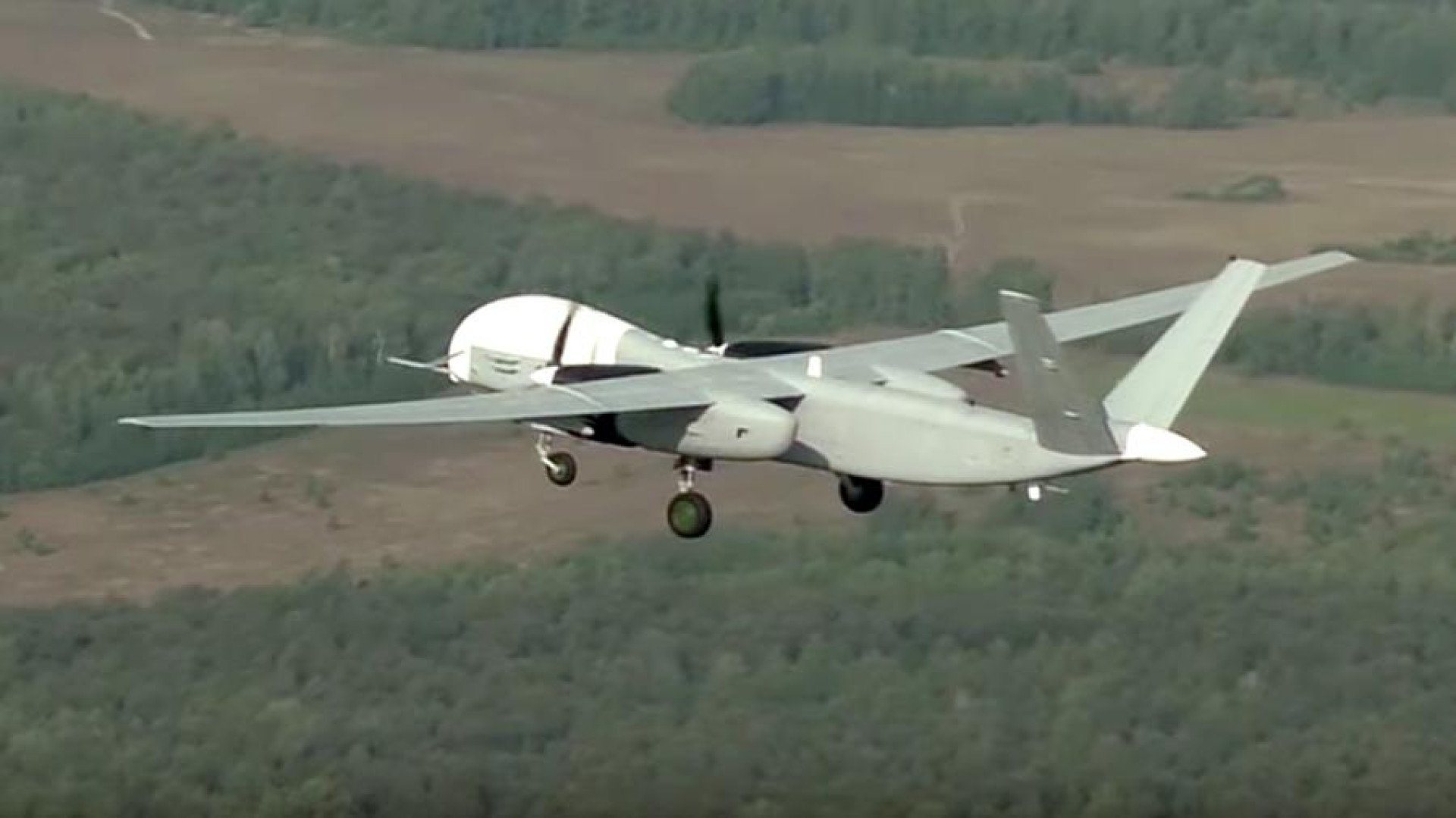
A Russian combat drone—Russia’s answer to the US MQ-9 Reaper—crashed in Kazan on July 8 after reportedly being disabled by electronic warfare.
 Prefer U24 Media on Google
- Authors


The crash was caused by a disruption to its satellite navigation system, according to Russia’s Ural Civil Aviation Plant, which now oversees the drone’s development, Russian media, citing the company, reported on July 9.
“During the flight, the UAV’s satellite navigation was disrupted by unidentified electronic warfare equipment. The drone switched to inertial navigation and attempted a second landing pass. The landing was conducted in inertial mode, and a non-standard situation occurred,” the company’s press office stated.
The UAV in question—known as “Altair” or “Altius-RU”—was touted as one of Russia’s most advanced strike-reconnaissance platforms and a domestic rival to the US MQ-9 Reaper.
❗️Russia’s latest long-range combat drone “Altair” lasted just 5 minutes in the air—before crashing straight into a residential building in Kazan.
— Ivan Khomenko (@KhomenkoIv60065) July 8, 2025
Billed as Moscow’s answer to the MQ-9 Reaper, it can carry up to 1 ton of bombs. pic.twitter.com/0o9ryP412N
Despite being marketed as equipped with a state-of-the-art inertial navigation system—the laser gyroscope-based BINS-SP-2—the drone missed the runway by nearly a kilometer, crashing in a residential area known as Dubki.
While no casualties were reported, the incident sparked a fire and raised fresh questions about the platform’s real-world reliability.
Russia’s “next generation” system misses runway by a kilometer
The Altair was promoted as a symbol of Russia’s defense innovation, boasting a composite airframe, 28-meter wingspan, and a 1,000 kg weapons payload.
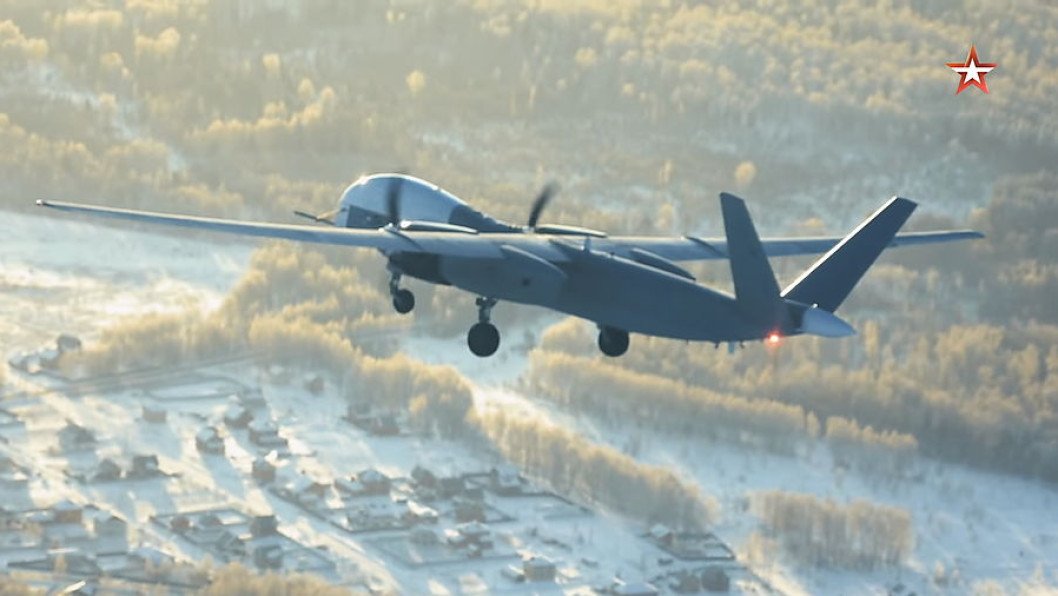
Designed for intelligence gathering and strike missions, it is often described as Russia’s answer to the US MQ-9 Reaper.
The drone features a composite airframe with a V-shaped tail, a wingspan of 28 meters, and an estimated takeoff weight of 6 tons. It is equipped with an optoelectronic targeting system and a side-looking AESA radar.
Altair is designed for extended-range operations, with a stated flight endurance exceeding 24 hours and a range of up to 10,000 kilometers. The platform can carry up to 1,000 kilograms of guided munitions and is controlled via satellite link at distances of up to 800 kilometers.
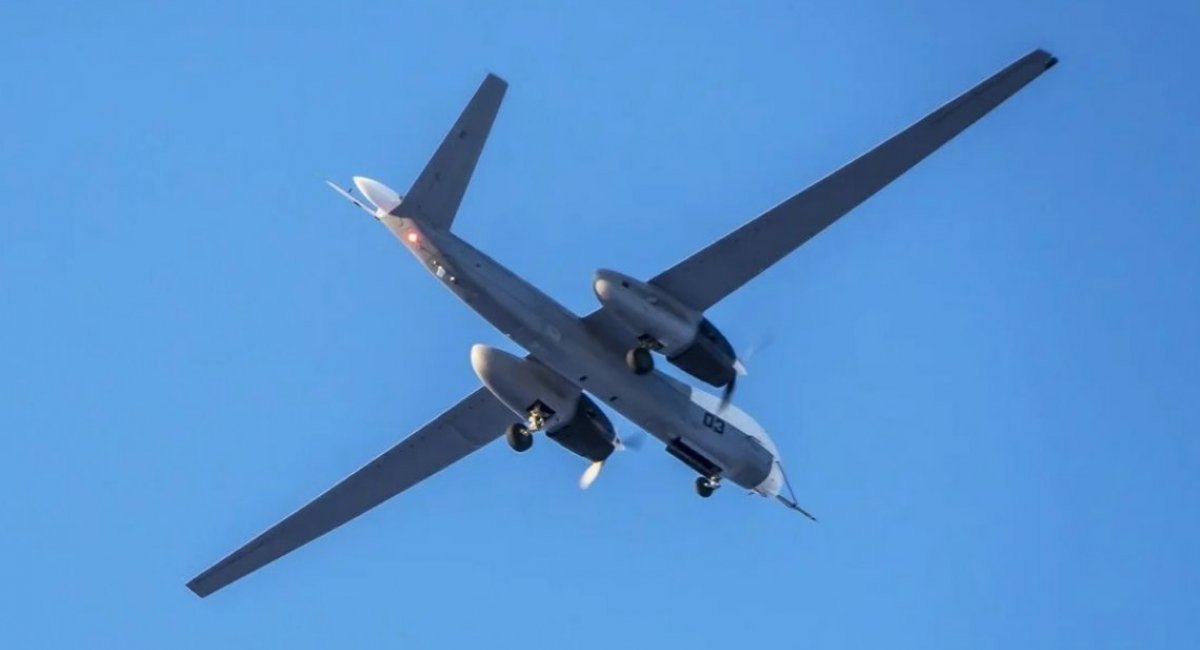
Despite its capabilities, the drone remains in limited production, with an estimated unit cost of $6–10 million, according to defense analysts.

Its BINS-SP-2 inertial system, developed by the Moscow Institute of Electromechanics and Automation, was originally intended for Russia’s fifth-generation Su-57 fighter and also replaces French SIGMA 95 systems on upgraded Su-30 jets.
Yet the navigation system appears to have failed catastrophically. If the BINS-SP-2 was installed, analysts say the one-kilometer miss suggests either a severe malfunction or a poorly calibrated backup system.
Jamming, or friendly fire?
Even more intriguing is the claim that the drone’s satellite systems were disabled by “unidentified external electronic warfare equipment.”
Despite Russia possessing its own anti-jam satellite systems like Kometa-M, the Altius was apparently unprotected, or was jammed by its own military.
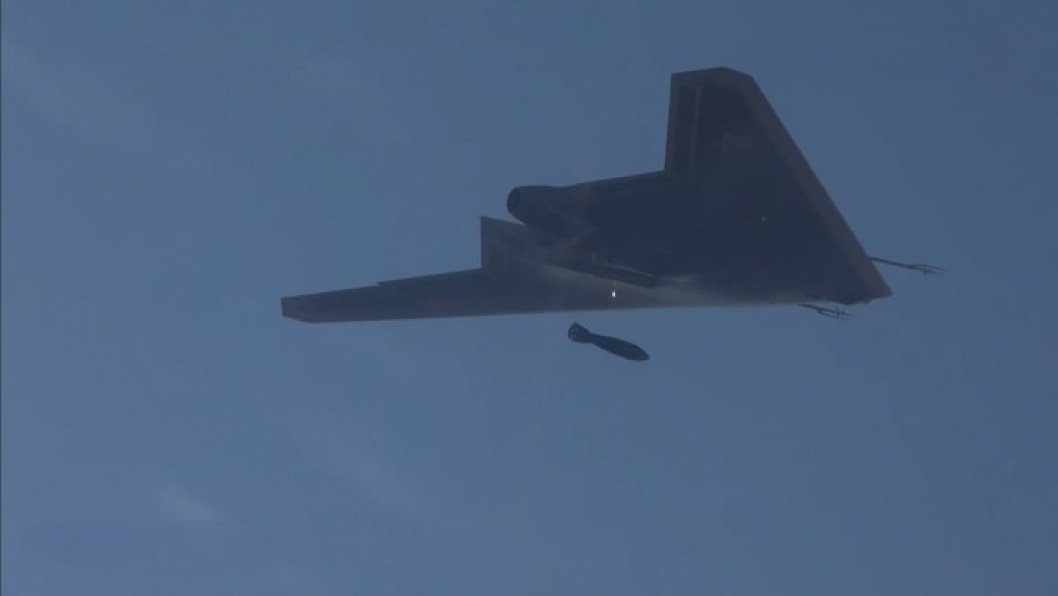
The Altius program has faced numerous delays since its inception in 2011, with formal serial production announced for 2021. The latest crash may prove to be another setback for a system already mired in over a decade of bureaucratic and technological turbulence.
Earlier, reports emerged that the Russian Armed Forces have begun using drones disguised as birds, making them difficult to detect both visually and acoustically.
Several Ukrainian sources have reported the appearance of an unusual unmanned aerial vehicle that resembles a bird in both shape and flight behavior.
Discuss this article:



-c439b7bd9030ecf9d5a4287dc361ba31.jpg "Photo of Katherina Popilnichenko")