- Category
- Latest news
Russia’s New “Shturm” Robot Tank Arrives—AI Hype, 1970s Chassis
 Prefer U24 Media on Google
- Authors


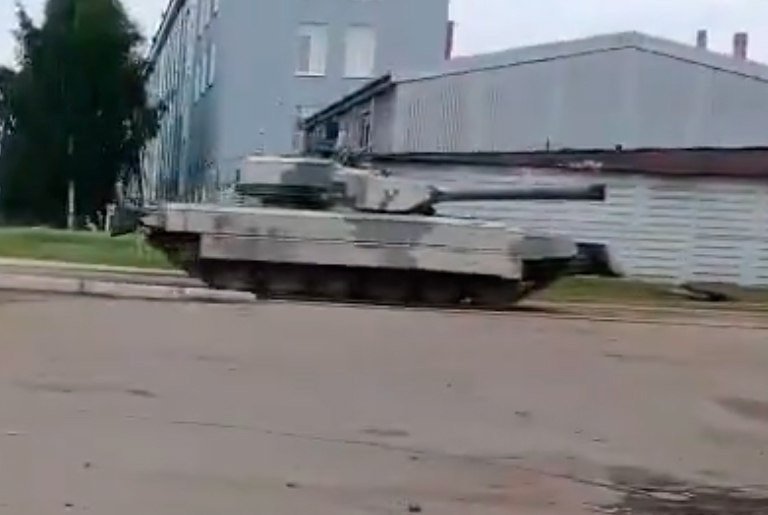
Russia has advanced the development of its robotic ground warfare capabilities with the public appearance of the “Shturm” robotic assault complex during recent field trials.
The system, developed by Uralvagonzavod on order from the Russian Ministry of Defense, was observed in its complete configuration for the first time—featuring a combat vehicle and a mobile command unit, both based on modified T-72 or T-90 tank chassis.
According to open-source video footage published by Russian military observer Andrei_bt, the combat vehicle appears to retain crewed control but is designed for optional remote operation.
The footage shows a shortened 125mm D-414 main gun, adapted for urban operations, as well as a bulldozer blade and a suite of protection systems.
The turret design suggests limited modifications to roof protection, while the use of T-72A hulls likely reflects efforts to utilize existing reserves of older Soviet equipment.
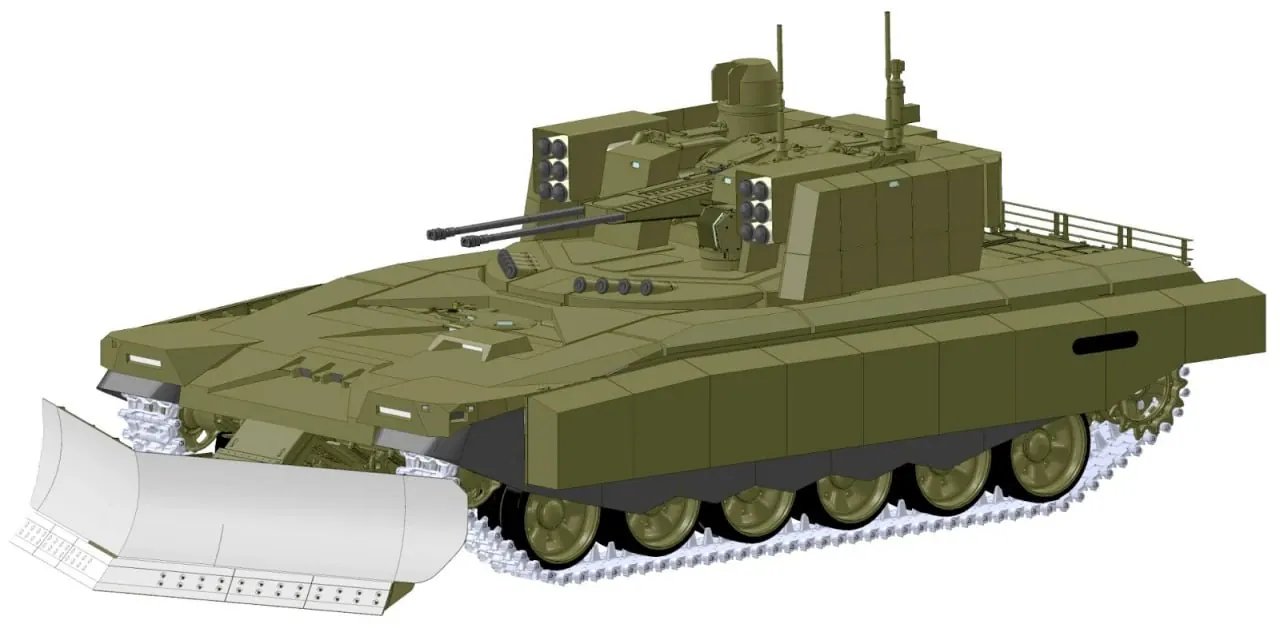
Originally revealed in 2018, the Shturm complex was conceived as a modular platform capable of breaching fortified urban positions and conducting high-risk operations.
The system is intended to be remotely operated from a dedicated command-and-control vehicle also mounted on a tank chassis.
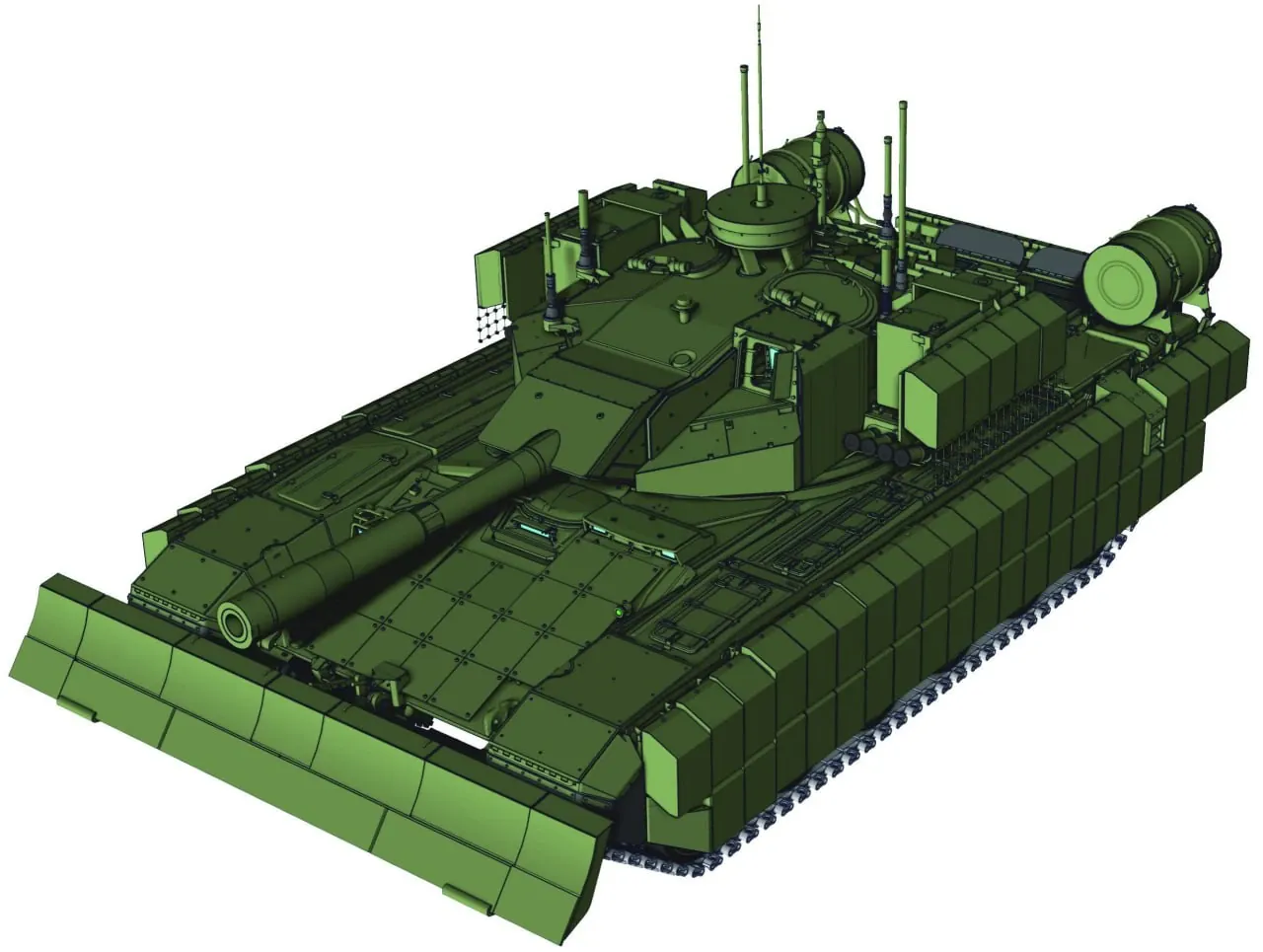
This mobile command post is designed to control up to a platoon of robotic tanks within a 3-kilometer radius and is protected against anti-tank weapons, including RPGs.
The combat variants of the Shturm system include:
A 50-ton main assault vehicle with a 125mm or planned 152mm main gun;
A variant equipped with RPO-2 “Shmel” thermobaric rocket launchers and a PKTM machine gun;
A configuration featuring twin 30mm 2A42 automatic cannons, a PKTM machine gun, and an RPO-2 launcher;
A platform armed with 16 unguided 220mm MO.1.01.04M thermobaric rockets, similar to those used in the TOS-1A system.
Each vehicle is equipped with enhanced frontal and side dynamic armor, a bulldozer blade for obstacle clearance, and design features allowing maneuverability in confined urban spaces, including a shortened gun barrel for 360-degree turret rotation in narrow environments.
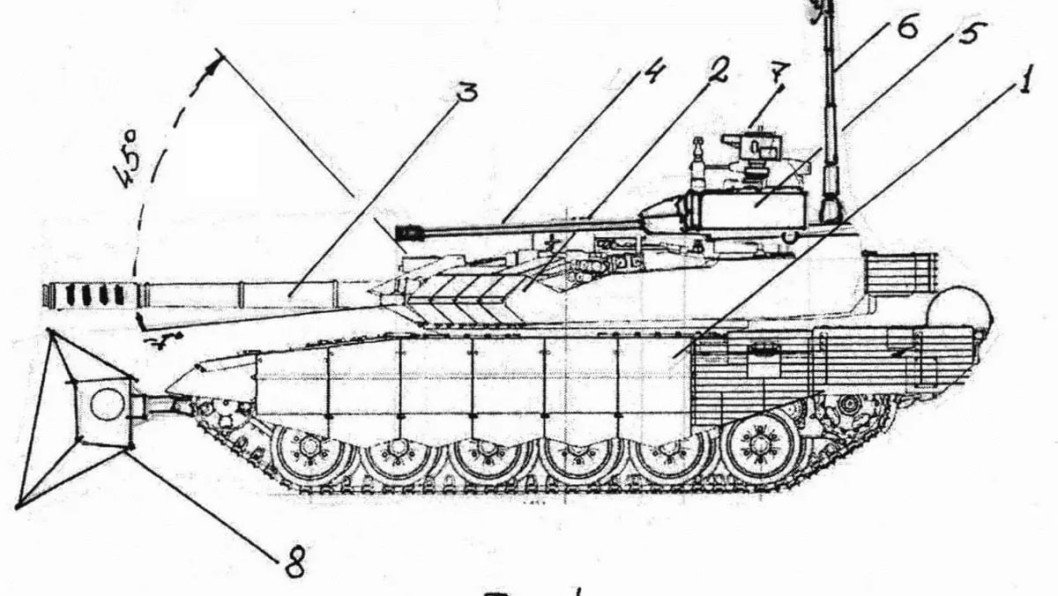
The appearance of both the combat and command vehicles in coordinated testing suggests that the Shturm project has entered an advanced phase of trials after years of limited progress.
Unlike earlier Russian robotic platforms such as the Uran-9—which faced operational limitations during combat deployment in Syria and Ukraine—the Shturm system shows signs of a more integrated design focused on tactical flexibility and battlefield sustainability.
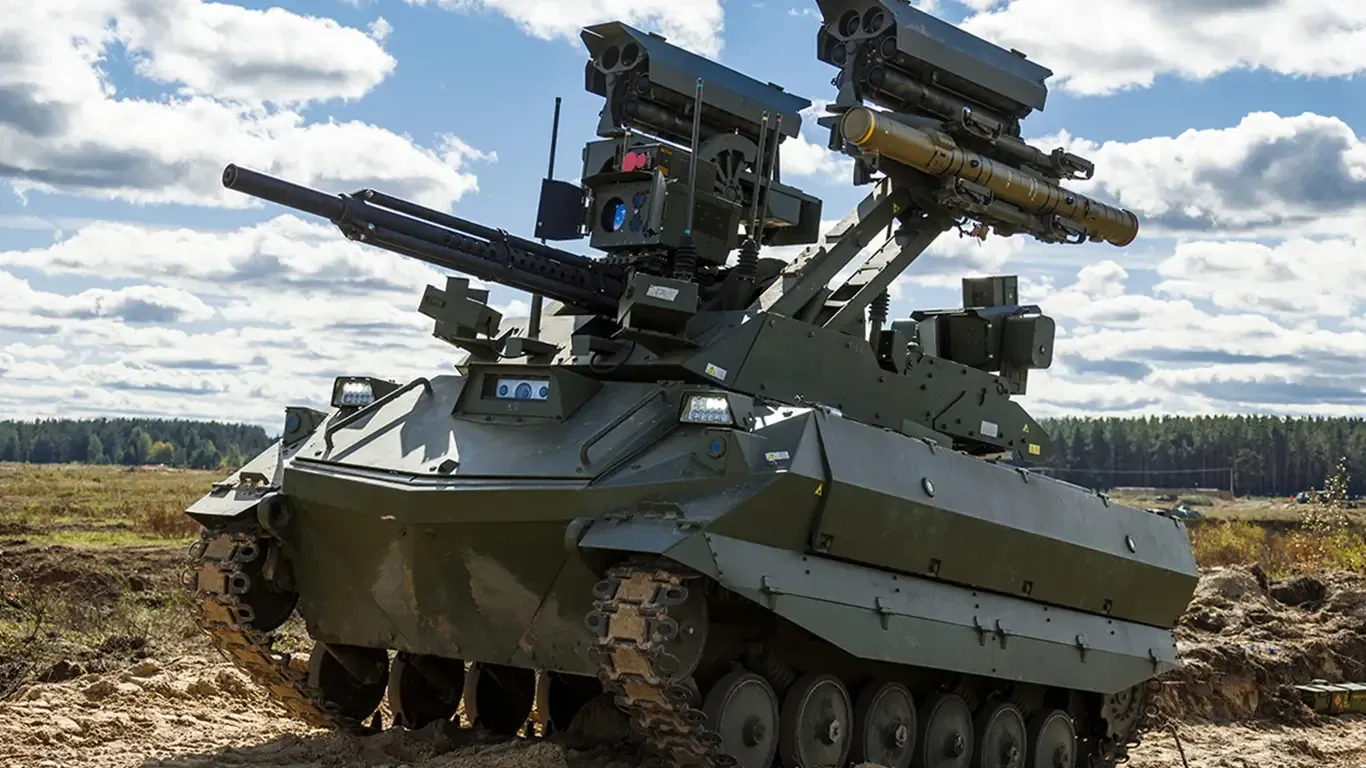
It remains unclear whether the current prototypes are fully operational in remote mode, as at least one vehicle in the footage was seen operating with a crew on board. The effectiveness of the system in actual combat conditions also remains to be demonstrated.
Earlier, Russia’s Karbyshev Military Engineering Academy patented a foldable anti-drone screen for tanks that closely mirrors a Ukrainian battlefield invention known as the “hood.”
Originally developed by Ukrainian forces to protect against drone-dropped munitions, the lightweight mesh structure has been widely used on tanks such as the T-64 and PT-91. Despite copying the concept, Russia claims its version is up to 1.5 times more effective.
Discuss this article:



-c439b7bd9030ecf9d5a4287dc361ba31.jpg "Photo of Katherina Popilnichenko")