- Category
- Latest news
Russia’s Top Oil Producer Net Income Plunges 73% After US Sanctions, Logistics Crisis
 Prefer U24 Media on Google
- Authors

-72b63a4e0c8c475ad81fe3eed3f63729.jpeg "Photo of Cyril Barabaltchouk")
Russia’s largest oil producer, Rosneft, reported a 73% decline in its 2025 net income, revealing the deep economic scars left by Western sanctions and a chaotic global logistics market, Reuters reported on April 1.
The company’s net income fell to 293 billion rubles ($3.60 billion), a collapse attributed to high interest rates, increased profit taxes, and what CEO Igor Sechin described as an “ideal storm” of negative geopolitical factors.
We bring you stories from the ground. Your support keeps our team in the field.
Sechin, a long-standing ally of Russian leader Vladimir Putin, noted that the Russian oil industry faced unprecedented tight domestic macroeconomic conditions throughout 2025. While the ongoing conflict in the Middle East drove Brent futures to a record monthly gain of 64% in March—the biggest jump since the 1980s—these high prices have been largely offset for Russian producers by soaring operational costs.
Both Rosneft and the country’s second-largest producer, Lukoil, were hit with fresh United States sanctions in October, further isolating them from global financial and insurance networks, Reuters wrote.
The primary drain on Rosneft’s margins has been the astronomical rise in freight rates. Sechin revealed that by March 2026, the cost of transporting Russian oil from Baltic Sea ports to India exceeded $20 per barrel. This figure is ten times higher than the shipping rates to Europe in early 2022, prior to Russia’s full-scale invasion of Ukraine.
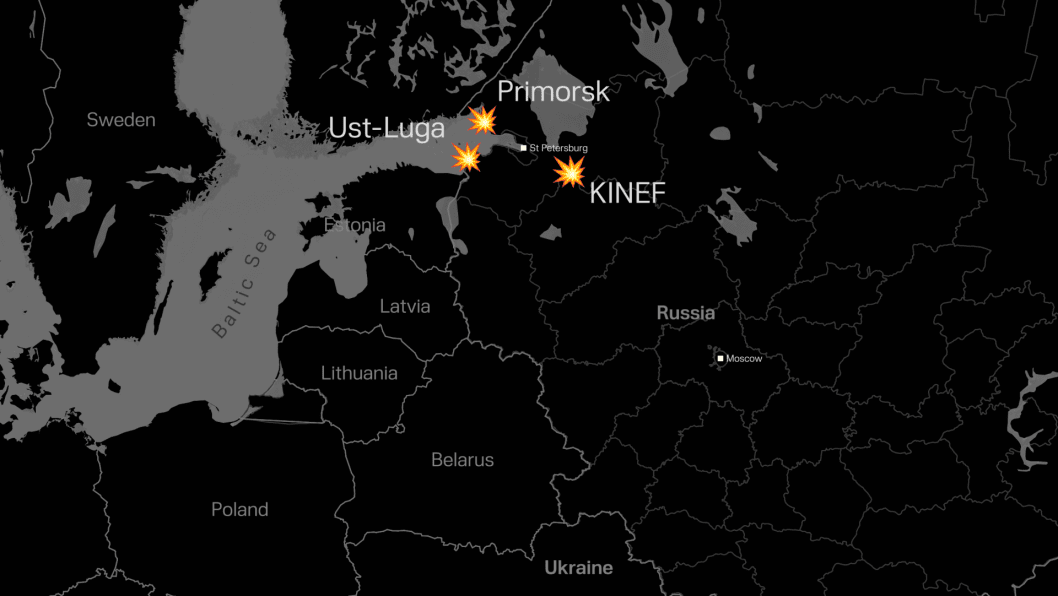
The shift from near-shore European markets to distant Asian buyers has forced Rosneft to navigate a “shadow fleet” of tankers and expensive third-party insurance, significantly eroding the profits typically generated by high global oil prices.
The collapse in Rosneft’s profits coincides with a period where the US-Israel-Iran conflict continues to drive global oil prices to record highs—putting immense pressure on Ukraine’s strategic planning.
Ukraine’s international partners have previously urged Kyiv to scale back drone strikes on Russian oil facilities to avoid further destabilizing the energy market. Despite these requests, Ukrainian officials have maintained that as long as the Kremlin continues to strike the national power grid, Russia’s energy sector remains a legitimate military target.
Discuss this article:




-6ff4efaedd2092e0205aad37f9e7b98a.jpg "Illustrative image. US F-16 and Polish MiG-29 over Poland, 2005.")