- Category
- Latest news
Seven German Students Expose Russian Freighters and Drone Activity Threatening Europe’s Security
 Prefer U24 Media on Google
- Authors


Seven German journalism students from the Axel Springer Academy have unearthed troubling links between Russian-crewed freighters and drone swarms observed over military sites in Germany and the Netherlands.
Their investigation, unveiled by Digital Digging, citing Bild on December 11, reveals suspicious activity and raises new concerns about Russian influence in Europe’s waters.
We bring you stories from the ground. Your support keeps our team in the field.
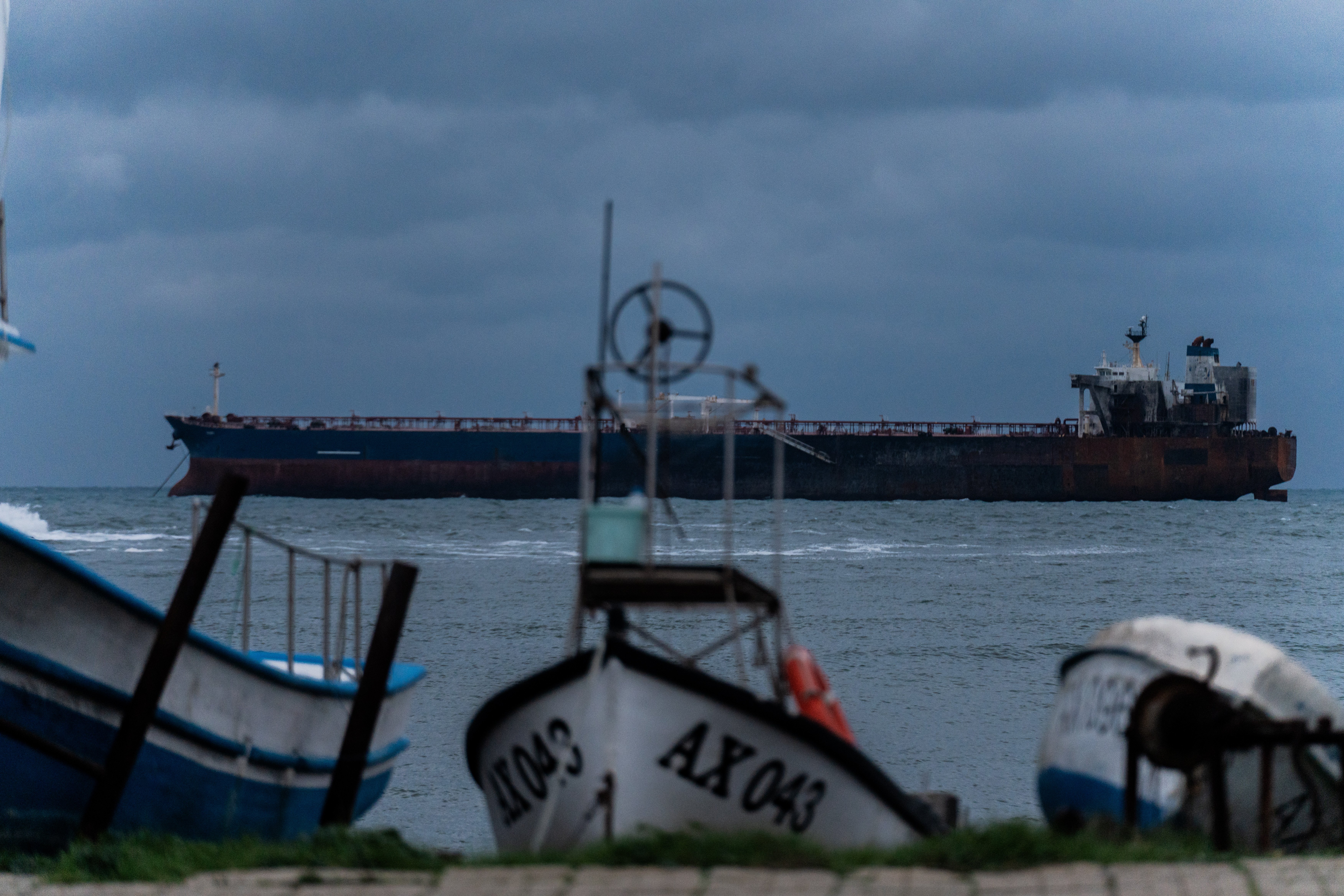
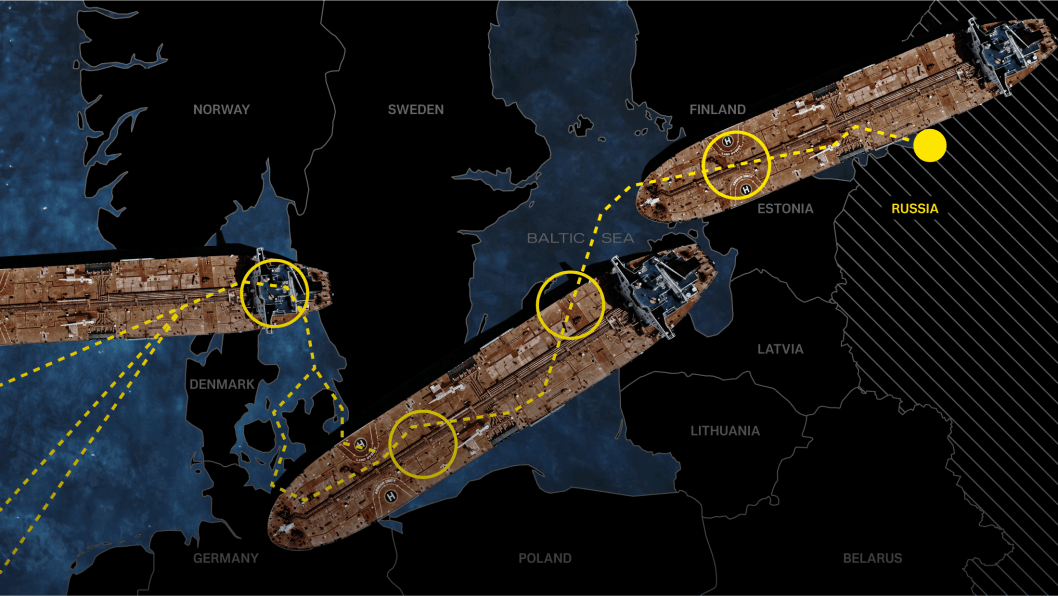
On the night of May 16, 2025, two vessels, the HAV Dolphin and its sister ship, the HAV Snapper, were positioned in unusual locations near strategic sites. The HAV Dolphin, flagged in Antigua and Barbuda, had been loitering in Germany’s Kiel Bay for ten days, disrupting the usual traffic flow of freighters.
While the ship did not make any deliveries, it hovered 25 kilometers from a German defense shipyard that had recently been targeted by drone swarms on three occasions.
Meanwhile, the HAV Snapper sat 115 kilometers away off the Dutch island of Schiermonnikoog, just hours before seven drones appeared over a Russian freighter in the North Sea, escorted by German police. The drones circled the freighter, Lauga, for hours, mirroring the suspicious movements of the two ships. The Lauga had visited Syria’s Tartus port in 2024, Russia's sole naval base in the Mediterranean, where Russian submarines dock, according to investigation
The students—who had started their investigation after noticing this peculiar pattern—tracked the ships’ movements using ship data and classified documents, culminating in a 2,500-kilometer chase across Europe.
The students’ work, which culminated in a public presentation, revealed concerning findings, including over 1,000 drone incidents in 2025 alone. These drones were overwhelmingly spotted near military installations and, in many cases, flew at night. According to Gigital Digging, citing classified reports from Germany’s Federal Criminal Police Office, only a small percentage of drone pilots have been identified, with no state actors found among them.
The drone activity isn’t confined to the waters. In the months leading up to their investigation, there were notable disruptions across Europe. Munich Airport, for example, experienced two major shutdowns due to drone sightings in October 2025, affecting thousands of passengers and causing millions in economic damage.
Additionally, drone sightings were reported over military sites in Germany, including airfields, defense contractors, and even critical infrastructure like LNG terminals and nuclear plants.
The students’ analysis traced the ships back to known Russian military-linked facilities. The HAV Dolphin spent nearly a month in Kaliningrad’s Pregol Shipyard—a site with documented ties to the Russian military and Rosatom, Russia’s nuclear corporation.
Meanwhile, the Lauga was found to have connections to Rosatom’s operations, with its owner having advertised work for the Russian state-run company in 2024. This discovery raised suspicions that the freighters may be involved in espionage or sabotage on behalf of Russian interests.
Despite several inspections by German and Dutch authorities, the ships were allowed to leave port without thorough investigation. According to security sources, the inspections were described as “superficial” and “symbolic,” as reported by Bild, according to Digital Digging.
The students’ investigation found that Russian intelligence services often deploy “pocket money agents” for small-scale operations, including espionage, sabotage, and disruptive actions. These agents, often financially motivated and sometimes ideologically aligned with Russian interests, can be used for covert operations without direct state involvement. While no direct evidence linking the drones to these agents was found, the investigation underscored the possibility of coordinated action in the shadow of bureaucratic stonewalling.
According to Digital Digging, their final findings include 19 temporal and geographic correlations between drone sightings and the ships' positions, further substantiating their theory. Despite not being able to prove direct involvement, the students' research has illuminated significant gaps in official responses and raised urgent questions about Russia's covert operations in Europe’s waters.
Earlier, it was reported that since the start of Russia's full-scale invasion of Ukraine, the country has assembled a covert fleet of more than 1,240 tankers, many of which are old and in poor condition.
Discuss this article:
-4a56a6b482ec132402c16ef6fcabf9a2.png)