- Category
- Latest news
“The Price of Peace Is Rising”: UK Military Chief Says Britain Must Prepare for Russia Threat
 Prefer U24 Media on Google
- Authors




Russia now poses a more dangerous and complex threat to the United Kingdom and NATO than at any point in recent decades, requiring a “whole of society” response that goes far beyond the armed forces alone, Britain’s top military officer said during a major security speech in London.
Speaking at the Royal United Services Institute (RUSI), Air Chief of the Defence Staff Marshal Sir Richard Knighton said the UK is entering the most perilous security environment of his career, driven largely by Russia’s expanding military capabilities and hostile activity short of open war, according to BFBS Forces News on December 15.
We bring you stories from the ground. Your support keeps our team in the field.
“I will argue that the situation is more dangerous than I have known during my career and the price of peace is rising,” Sir Richard said, warning that while NATO deterrence has so far held, “the trend, from Russia in particular, is worsening.”
He pointed to a sustained campaign combining conventional military power with cyberattacks, sabotage, and intelligence operations. “Every day… the UK is subject to an onslaught of cyber-attacks from Russia,” he said, adding that Russian agents have sought to conduct sabotage and have “killed on our shores,” according to the UK Defence Journal.
We.Are.Watching. 👀
— NATO Maritime Command (@NATO_MARCOM) October 21, 2025
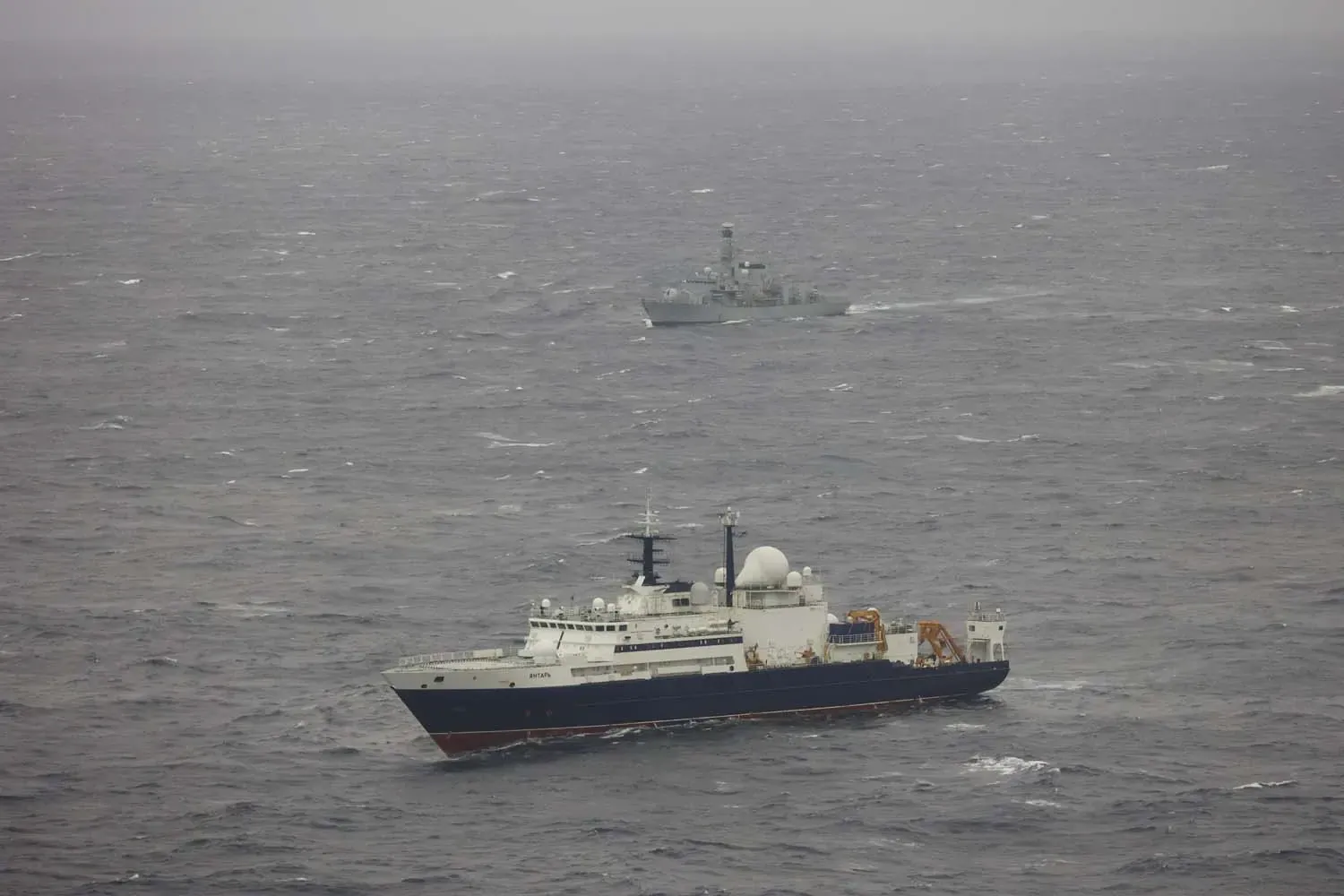
SNMG1 ship 🇬🇧 HMS Duncan shadowed 🇷🇺 destroyer Vice Admiral Kulakov through the English Channel during a 48-hour mission. A Royal Navy Wildcat joined Dutch and French forces to monitor the Russian ship in a strong show of Allied cooperation and readiness in… pic.twitter.com/pn7jNpWwHH
Russia’s military: larger, richer, and battle-tested
Sir Richard said Russia’s armed forces have undergone deep reform and expansion over the past two decades, now numbering more than 1.1 million personnel.
He noted that Moscow is devoting over seven percent of its GDP—and roughly 40 percent of government spending—to defense, producing a force that is increasingly combat-experienced due to the war against Ukraine.
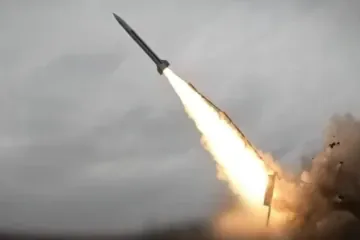
While describing Russia’s campaign in Ukraine as a strategic failure so far, he cautioned against complacency. “We should be under no illusions that Russia has a massive, increasingly technically sophisticated, and now, highly combat-experienced, military,” he said, citing advances in drone warfare and the development of destabilizing weapons such as nuclear-armed torpedoes and nuclear-powered cruise missiles.
On Moscow’s intent, Sir Richard quoted former Russian leader Dmitry Medvedev, who has spoken openly of seeking “the disappearance of Ukraine and the disappearance of NATO – preferably both.”
-95fba37a134e492693263f1aa201dd39.jpg)
A “whole of nation” response
Sir Richard stressed that the answer cannot rest solely on expanding military strength or defense budgets. Instead, he argued for a national shift in mindset.
“Our response needs to go beyond simply strengthening our armed forces,” he said. “It needs a whole of nation response that builds our defence industrial capacity… and ensures and increases the resilience of society and the infrastructure that supports it.”
Deterrence, he argued, now depends as much on societal resilience as on tanks, aircraft, and ships. As a result, defense must become “the central organising principle of government,” and increasingly of society itself.
⚡️The UK Royal Navy intercepted a Russian submarine in the English Channel
— NEXTA (@nexta_tv) May 10, 2025
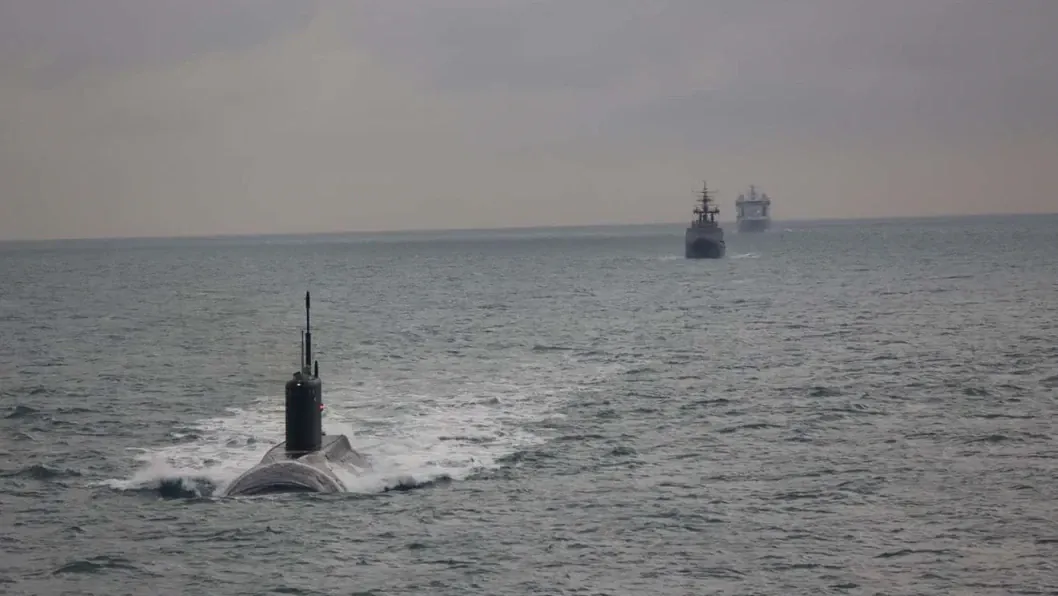
A Russian Navy submarine was crossing the Channel on its way back from the Mediterranean to Russia. A British helicopter monitored the submarine from the air, while the British warship HMS Tyne… pic.twitter.com/xz2zuBmNW2
Technology, skills, and rising defense spending
As part of that broader approach, Sir Richard highlighted the need to rebuild Britain’s technical and engineering base. He pointed to skills gaps and fragile systems across industry and education, announcing £50 million in funding for new Defence Technical Excellence Colleges aimed at rapidly training and upskilling workers for defense-related roles.
He also acknowledged that Britain is likely facing its largest sustained increase in defense spending since the Cold War. “That is because the price of peace is increasing,” he said.
-72e32e2e8a42f8347acfef3f0316f46d.jpg)
Avoiding war—but preparing for it
Concluding his remarks, Sir Richard emphasized that deterrence remains far cheaper than conflict. “While the price of peace may be rising, the cost of strong deterrence is still far, far less than the cost of war,” he said, calling for a broader national conversation on security.
As he put it, “A new era for defence doesn’t just mean our military and government stepping up—it means our whole nation stepping up.”
.@HMSIronDuke monitored Russian frigate 🇷🇺RFS Neustrashimy transiting the English Channel this morning in company with Russian military cargo ship MV Sparta IV, and tanker MV Angi.
— Navy Lookout (@NavyLookout) September 21, 2025
Via: Matt Coker/Dover Strait Shipping https://t.co/ursgxb80u2 pic.twitter.com/XUtjDfCY3o
Earlier, the UK Royal Navy intercepted two Russian naval vessels moving along Britain’s coastline.
The offshore patrol ship HMS Severn shadowed the Russian corvette Stoikiy and the tanker Elnya for nearly two weeks as they transited through the Dover Strait and continued west into the Channel.
Discuss this article:


-c439b7bd9030ecf9d5a4287dc361ba31.jpg "Photo of Katherina Popilnichenko")