- Category
- Latest news
This Drone Shoots Missiles to Down Drones—And Could Change Modern Warfare
 Prefer U24 Media on Google
- Authors



Airbus has successfully tested a jet-powered interceptor drone designed to take down low-cost attack drones, offering what it describes as a more affordable way to counter one-way aerial threats that have reshaped modern warfare.
The system, developed in partnership with defense startup Frankenburg Technologies, was demonstrated on March 30 during a live test at a military training range in northern Germany.
We bring you stories from the ground. Your support keeps our team in the field.
During the trial, the reusable interceptor—called Bird of Prey—autonomously detected, tracked, and engaged a medium-sized attack drone using a lightweight air-to-air missile developed by Frankenburg.
New answer to a growing drone problem
The test comes as militaries around the world face mounting pressure to defend against inexpensive one-way attack drones, which have been widely used in Ukraine and the Middle East.
These systems can cost a fraction of the missiles typically used to intercept them, creating a growing imbalance where defenders are forced to spend far more than attackers.
Successful first demo flight: Airbus’ uncrewed Bird of Prey interceptor autonomously engages kamikaze drone with @FrankenburgTech missile.
— Airbus Defence (@AirbusDefence) March 30, 2026
The Airbus 'Bird of Prey' is designed to seamlessly operate within NATO's integrated air defence architecture via established command and… pic.twitter.com/u3Yd5K9uSY
“Against the current geopolitical and military backdrop, defending against kamikaze drones is a tactical priority that urgently needs to be tackled,” said Mike Schoellhorn, CEO of Airbus Defence and Space. He described the new system as an “effective, cost-efficient interceptor” that addresses a major gap in modern air defense.
How the system works
The Bird of Prey interceptor is based on Airbus’ jet-powered Do-DT25 target drone, which can reach speeds of around 555 km/h.
In its current configuration, the drone carries up to four Mark 1 missiles, with future operational versions expected to carry as many as eight.
During the test, the drone autonomously carried out the full engagement chain—searching for the target, identifying it, and launching a missile without direct human control.
#Airbus just proved you don’t need a $1M missile to kill a $20K drone.
— Boris Alexander Beissner (@boris_beissner) March 31, 2026
Their Bird of Prey..... a modified Do-DT25.... flew its maiden demo yesterday, autonomously hunted a kamikaze target, and fired a Frankenburg Mk1.
Specs: 2.5 m span, 3.1 m long, 160 kg, four (soon eight)… pic.twitter.com/YXplb6krud
Cheap missiles, scalable defense
At the heart of the system is Frankenburg’s Mark 1 missile, a compact, fire-and-forget interceptor designed specifically for countering drones.
With a range of up to 1.5 kilometers and a weight of under 2 kilograms, the missile is built to be lightweight and cost-effective, using a fragmentation warhead to destroy targets.
According to the developers, the system dramatically lowers the cost of interception, with a single reusable drone capable of engaging multiple targets in one mission.
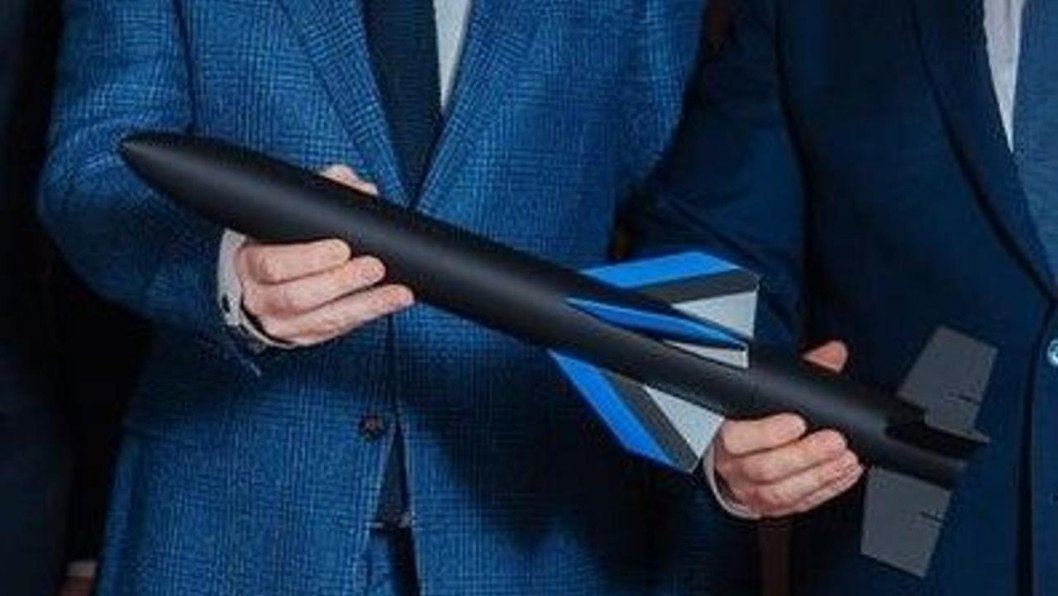
Frankenburg said the platform could deliver an “order-of-magnitude reduction in cost per intercept,” potentially making large-scale drone defense economically viable.
“This is a defining step for modern air defense,” said Frankenburg CEO Kusti Salm. “It marks the first integration of a new class of low-cost, mass-manufacturable interceptor missiles onto a drone.”
From prototype to battlefield integration
The interceptor prototype has a wingspan of 2.5 meters and a maximum takeoff weight of 160 kilograms, making it compact enough for flexible deployment.
Airbus and Frankenburg plan additional tests in 2026, including live-warhead trials, as they work toward operational deployment and demonstration for potential customers.
The system is designed to integrate into NATO’s broader air defense network through Airbus’ battle management systems, allowing it to operate as part of a layered defense architecture.
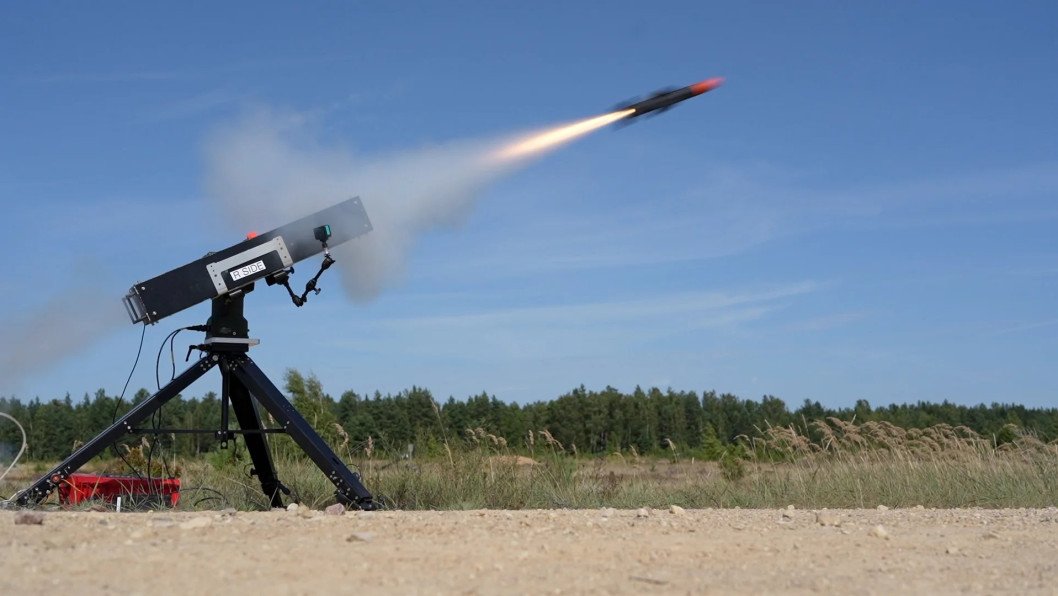
Shift in air defense economics
The concept reflects a broader shift in how militaries are approaching air defense in an era defined by mass drone attacks.
Instead of relying solely on expensive, high-end interceptors, systems like Bird of Prey aim to provide scalable, cost-efficient protection against large numbers of incoming threats.
🇩🇪 Airbus has conducted a test flight of its new Do-DT25 interceptor UAV at a military training area in northern Germany.
— Jeff2146🇧🇪 (@Jeff21461) March 30, 2026
The drone will be armed with four Mark 1 missiles from the Estonian Frankenburg, which have a range of 1,5-2km and are meant to shoot down larger UAVs like… pic.twitter.com/UeiRaN72sz
If successful, the approach could reshape how countries defend against drone swarms—turning what has been a costly problem into a more sustainable fight.
Earlier, reports emerged that Ukraine will begin testing new Estonian-developed Mark 1 surface-to-air missiles designed to counter drones.
Discuss this article:
-9a7b3a98ed5c506e0b77a6663f5727c5.png)



-c439b7bd9030ecf9d5a4287dc361ba31.jpg "Photo of Katherina Popilnichenko")