- Category
- Latest news
True State of Russian Economy Revealed by Collapsing Railway Cargo Data
 Prefer U24 Media on Google
- Authors

-72b63a4e0c8c475ad81fe3eed3f63729.jpeg "Photo of Cyril Barabaltchouk")
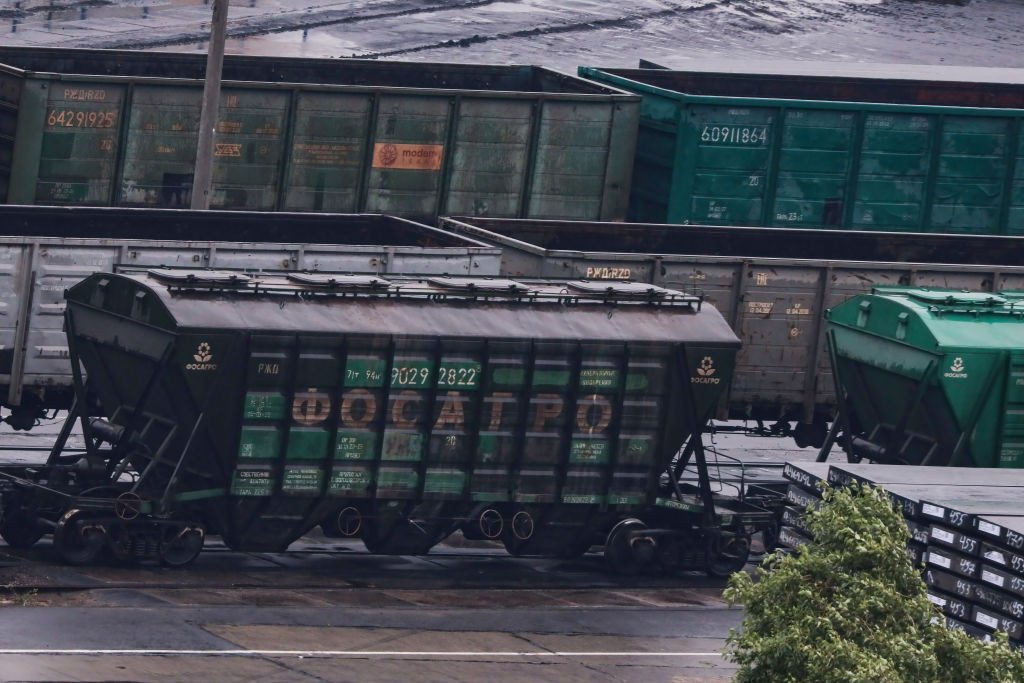
The Russian civilian economy has been eroding for years despite official claims of growth, with railway freight data exposing severe structural weaknesses, Ekonomichna Pravda reported on April 27.
This reality contradicts Russian leader Vladimir Putin’s public assertions in March 2026 that Western sanctions were a source of positive change—a claim he undermined just weeks later by scolding his own officials over a shrinking GDP. While the Russian economy appeared to grow steadily until 2026, puzzling international observers, the most accurate indicator of its actual decay is found on the tracks of the railway system.
Rail transport is the lifeblood of Russia’s industrial economy, carrying the vast majority of its goods and over a third of its export volume. The data published by Russian Railways (RZD) strips away the Kremlin’s official statistics to reveal a system in decline, according to Ekonomichna Pravda.
The reality of negative growth
Following the 2022 full-scale invasion of Ukraine, the EU and G7 nations sanctioned Russian coal imports, imposed embargoes and price caps on maritime oil, and cut Moscow off from critical industrial components and export markets.
While the Russian economy did not immediately collapse, Ekonomichna Pravda notes that RZD freight numbers reveal a persistent, undeniable decline in the country’s material base—the physical goods that need to be extracted, processed, transported, and sold in massive quantities.
The load on the RZD network has decreased for several consecutive years. By the end of 2025, total freight volume was 13% lower than in 2021, hitting its lowest point in 16 years. This contraction only continued through the first quarter of 2026.
A closer look at key commodities, which make up nearly 80% of RZD’s traffic, paints a grim picture:
Coal: As the primary mass cargo for RZD, coal shipments have shrunk continuously since the start of the war, losing a tenth of their pre-war volume by 2025.
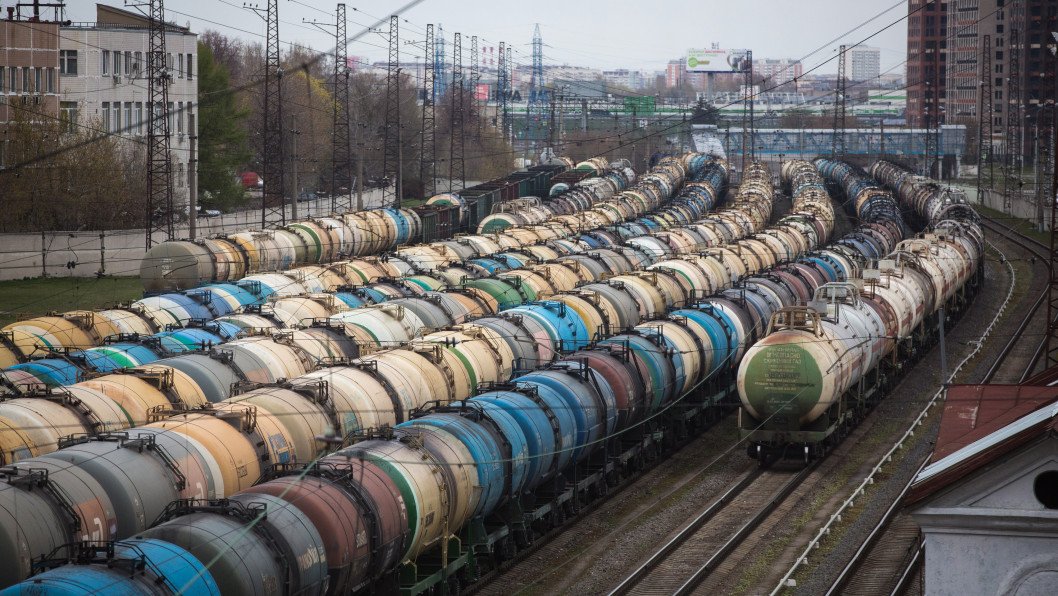
Oil and petroleum: Despite being the backbone of the Russian budget, volumes have steadily declined. While not a sudden crash, the flow remains fundamentally weaker than before the war, even after attempts to reroute logistics.
Metals: Ferrous metal transport plummeted by over 25% between 2021 and 2025, with the decline continuing into 2026.
Construction materials: After holding steady in the first year of the war, construction freight dropped sharply, losing a fifth of its volume by 2025 compared to pre-war levels.
Ekonomichna Pravda reports that the railway monopoly itself is paying a heavy price. RZD’s debt has ballooned past 3.3 trillion rubles ($44 billion), while its net profit completely collapsed over a single year, falling 22 times from 50 billion rubles ($667.7 million) in 2024 to a mere 2.3 billion ($30.7 million) in 2025.
The bottleneck of the eastern pivot
When Western markets closed, Russia attempted a massive “pivot to the East,” relying on China to absorb the shock. Ekonomichna Pravda stated that cooperation with Beijing prevented a catastrophic export collapse, but it failed to fully replace the lost European markets. The main problem was physical infrastructure.
In 2021, RZD sent 236.4 million tons of cargo westward and southward through its ports. In contrast, the entire Eastern Polygon—comprising the Baikal-Amur Mainline (BAM) and the Trans-Siberian Railway—had a maximum capacity of just 144 million tons in 2021, growing to only 180 million tons by 2024.
Four years into the war, Moscow is still struggling to finish the basic infrastructure required to make its Asian pivot functional. China bought Russia time, but the physical limitations of the railways mean the old, highly profitable export model is dead.
-f9dfe5a91bdeceaca1da449afa83ddd6.png)
War boom vs. civilian stagnation
For years, state propaganda leaned heavily on a period of resilience; between late 2021 and the end of 2024, Russia’s official GDP grew by a total of 7%, Ekonomichna Pravda reports.
However, the facade cracked in 2025 when growth slowed to just 1% (down from 4.2% the previous year). By the first two months of 2026, the Russian economy officially entered negative territory, recording a -1.8% drop in GDP.
According to Ekonomichna Pravda, the railway data proves that the civilian economy actually began suffocating back in 2022. The state simply masked this decline with a massive, unsustainable war boom. Massive government spending created a severe labor shortage, spiked inflation, and propped up the defense sector while civilian industries stagnated.
A healthy, broad economy moves massive amounts of basic civilian goods. A fractured economy, propped up entirely by military spending and forced trade pivots, leaves the train cars empty.
The plunging railway freight numbers are just one symptom of a much wider financial rot spreading across Russia. The Russian economy is simultaneously descending into a full-scale non-payment crisis, with overdue business debts to suppliers hitting $109 billion by the end of January. Driven by falling demand, a GDP downturn, and aggressive new 2026 tax hikes, inter-company arrears jumped 21 percent over the past year to equal roughly one-fifth of the entire federal budget.
The manufacturing and trade sectors are bearing the brunt of the damage, particularly petroleum and aluminum producers. Major state-owned corporations are reportedly the biggest culprits, delaying payments for up to a year and forcing smaller businesses to effectively subsidize loss-making government contracts. This massive financial hole proves that beyond the empty train cars, domestic industries are buckling under the weight of the war Russia started against Ukraine.
Discuss this article: