- Category
- Latest news
UK F1 Engineer Turns Pit-Lane Tech Into Suicide Drones for Ukraine—SkyShark to Deploy in Weeks
 Prefer U24 Media on Google
- Authors


A British engineering firm spun out of Formula One technology has announced plans to send low-cost, long-range attack drones to Ukraine, stating that the systems combine high-performance design with an eye on affordability—a bid to give Kyiv precision strike capability without the six-figure price tags of missiles.
MGI Engineering, a company founded by former Formula One engineer Mike Gascoyne, is adapting motorsport know-how to build long-range loitering munitions for Ukraine, BFBS/Forces News reported on September 30.
The firm says it will deploy SkyShark suicide drones to Ukraine within weeks and is developing a heavier strike platform called Tiger Shark for longer-range, higher-payload missions.
“We’re fighting a battle. We’re doing a race where you’ve got to be the quickest and you’ve got to be the best,” Gascoyne told BFBS/Forces News, invoking his motorsport background as a blueprint for rapid, cost-conscious weapons development.
According to Gascoyne and company materials:
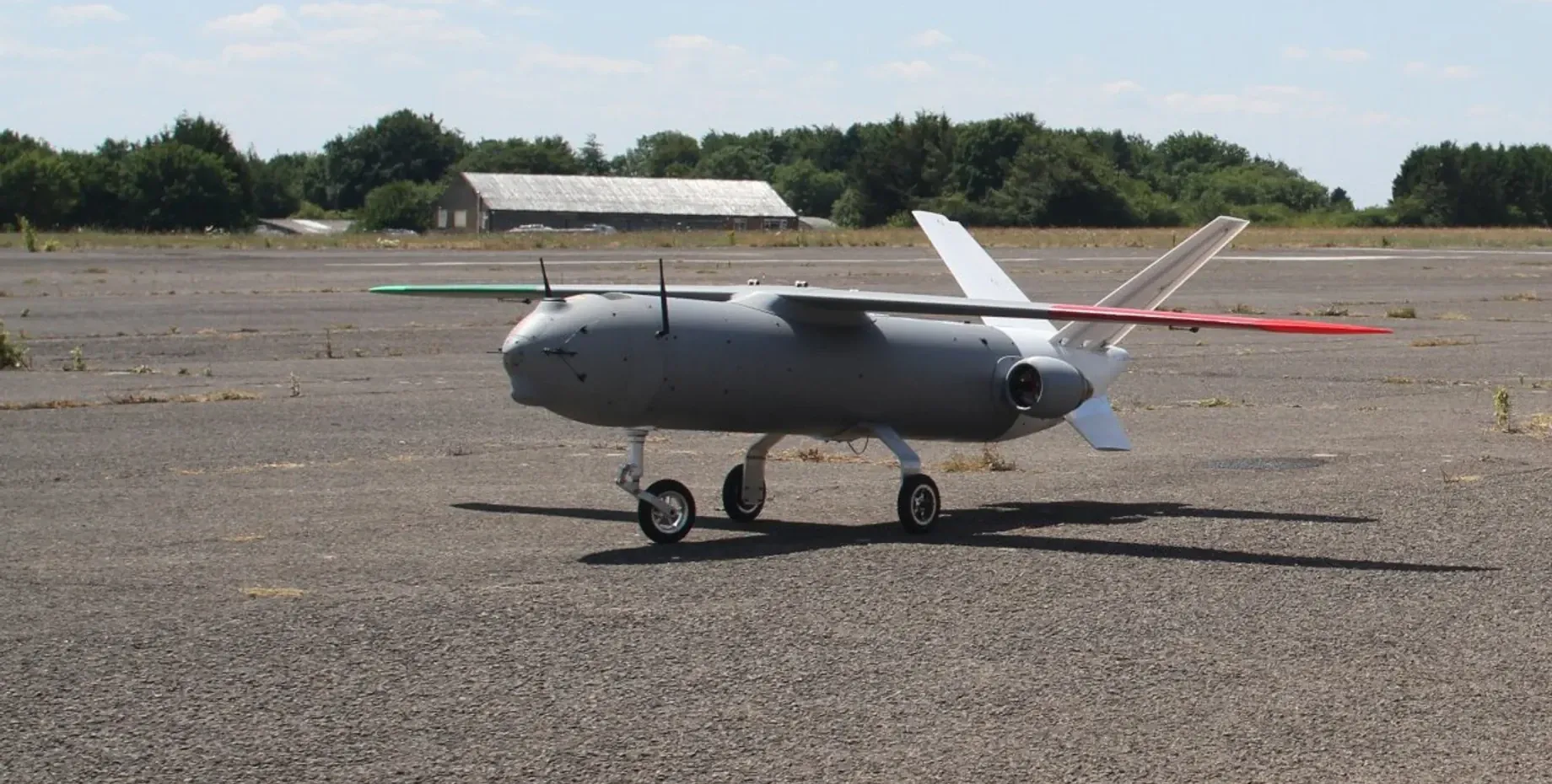
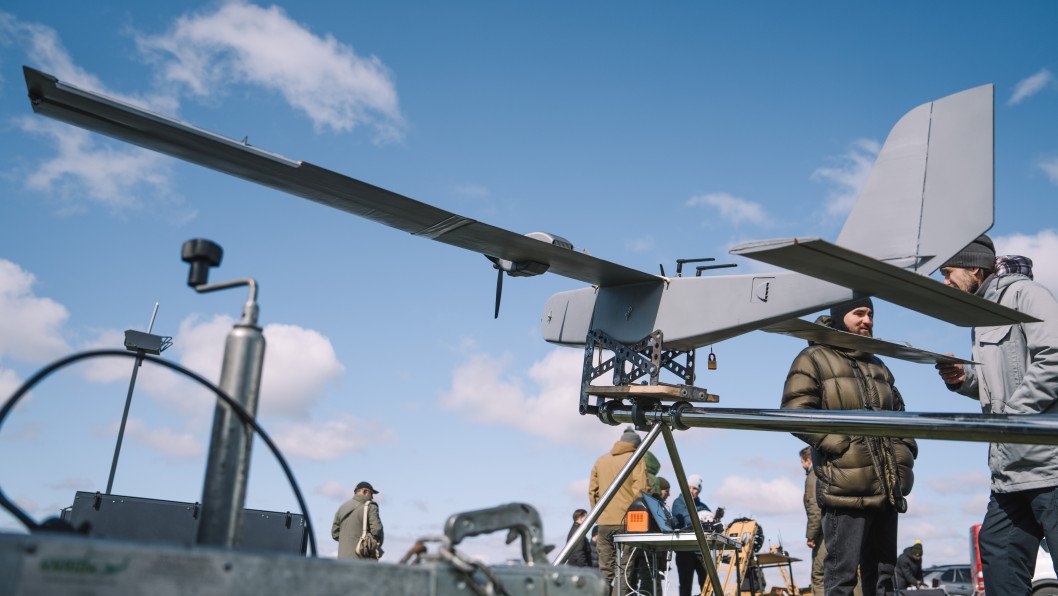
SkyShark is a suicide loitering munition carrying a 10–20 kg warload, with an advertised range of about 250 km and top speeds near 450 km/h. It uses onboard target-acquisition guidance to find and dive onto selected targets. MGI states that SkyShark will be deployed to Ukraine within approximately six weeks and that Ukrainian partners are lining up for production, with an estimated price tag of around $67 thousand.
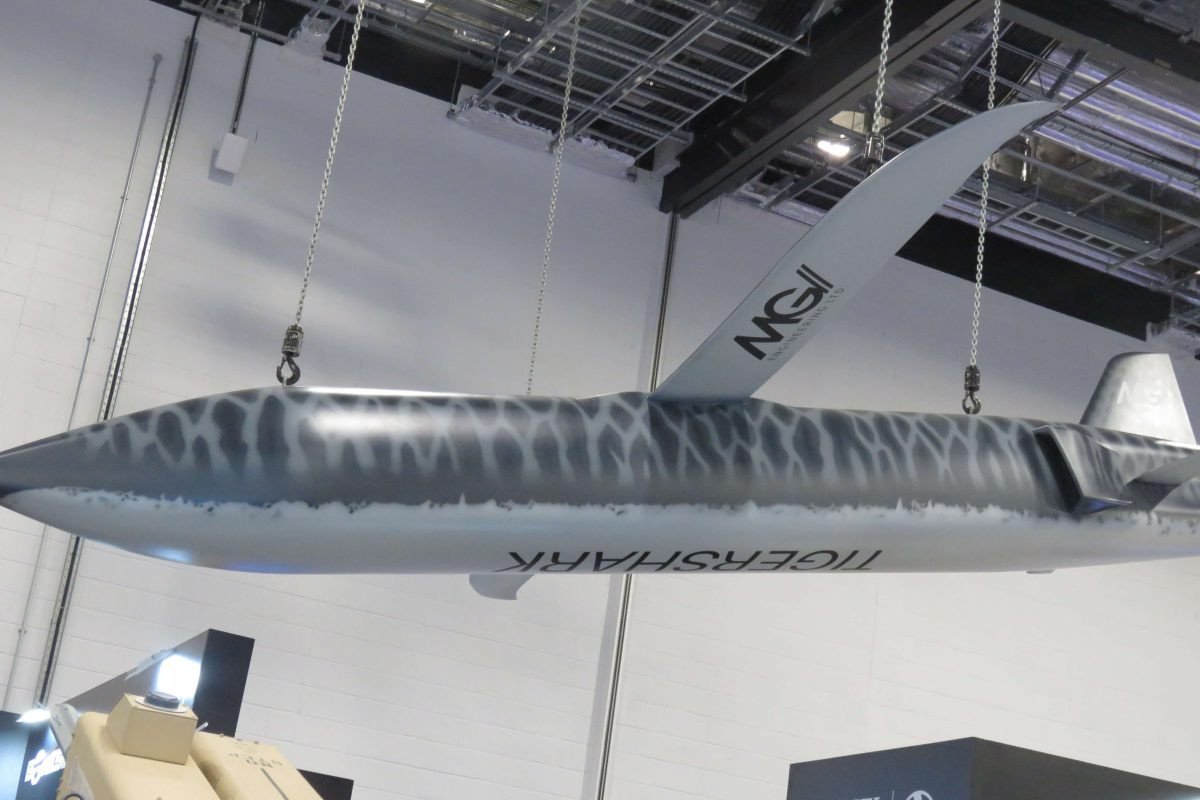
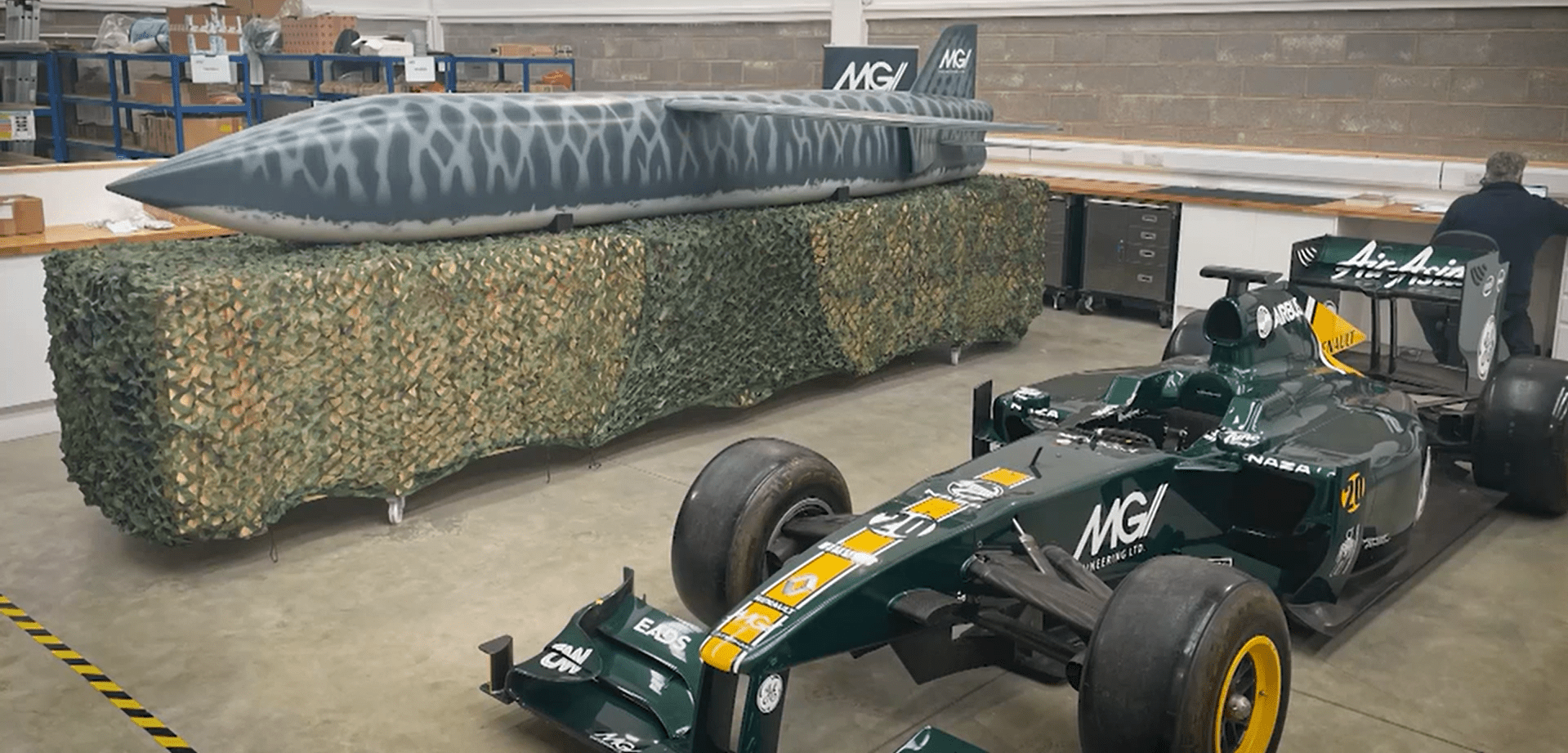
TigerShark is a heavier long-range strike drone developed to fill a gap between small FPV munitions and expensive cruise missiles. Gascoyne says Tiger Shark is roughly two months from test flights and is being pitched as a sub-£400k ($538 thousand) alternative to multi-million-pound missiles.
“SkyShark is a product. … It has target acquisition guidance on it. Find the target, do a dive manoeuvre to impact the target and the payload goes off. So that’s its main role,” Gascoyne said.
Gascoyne—who spent 27 years in Formula One, starting in 1989 as head of aerodynamics at McLaren and later founding Lotus Racing—said his team’s expertise in lightweight composites and high-performance vehicle design transfers directly to drone engineering.
He described the work as an engineering challenge: produce effective payloads, solve navigation in GNSS-denied environments, and deliver systems in meaningful volume and at affordable prices.
“I have no problem using our engineering ability to support Ukraine because it’s the right thing to do,” he said.
“There are different problems to solve, but for me they’re just a set of engineering requirements. Payload capability, navigation, especially in GNSS-denied environments. They want vehicles that do what they’re meant to do, so hit the target, and they want them in volume at cost.”
MGI says Ukrainian partners are already involved in production planning. The company frames its effort as complementary to Ukrainian and NATO needs for European, lower-cost, long-range strike options that can be fielded in numbers—rather than relying solely on expensive imported missiles.
Earlier, the British-Ukrainian developer Trypillian unveiled a new family of tactical unmanned aerial vehicles, outlining a modular suite of platforms intended for strike, reconnaissance, communications relay, and battlefield logistics.
Discuss this article:


-111f0e5095e02c02446ffed57bfb0ab1.jpeg "Photo of Roman Kohanets")