- Category
- Latest news
Ukraine Accelerates Formation of New Energoatom Supervisory Board as Corporate Reform Advances
 Prefer U24 Media on Google
- Authors


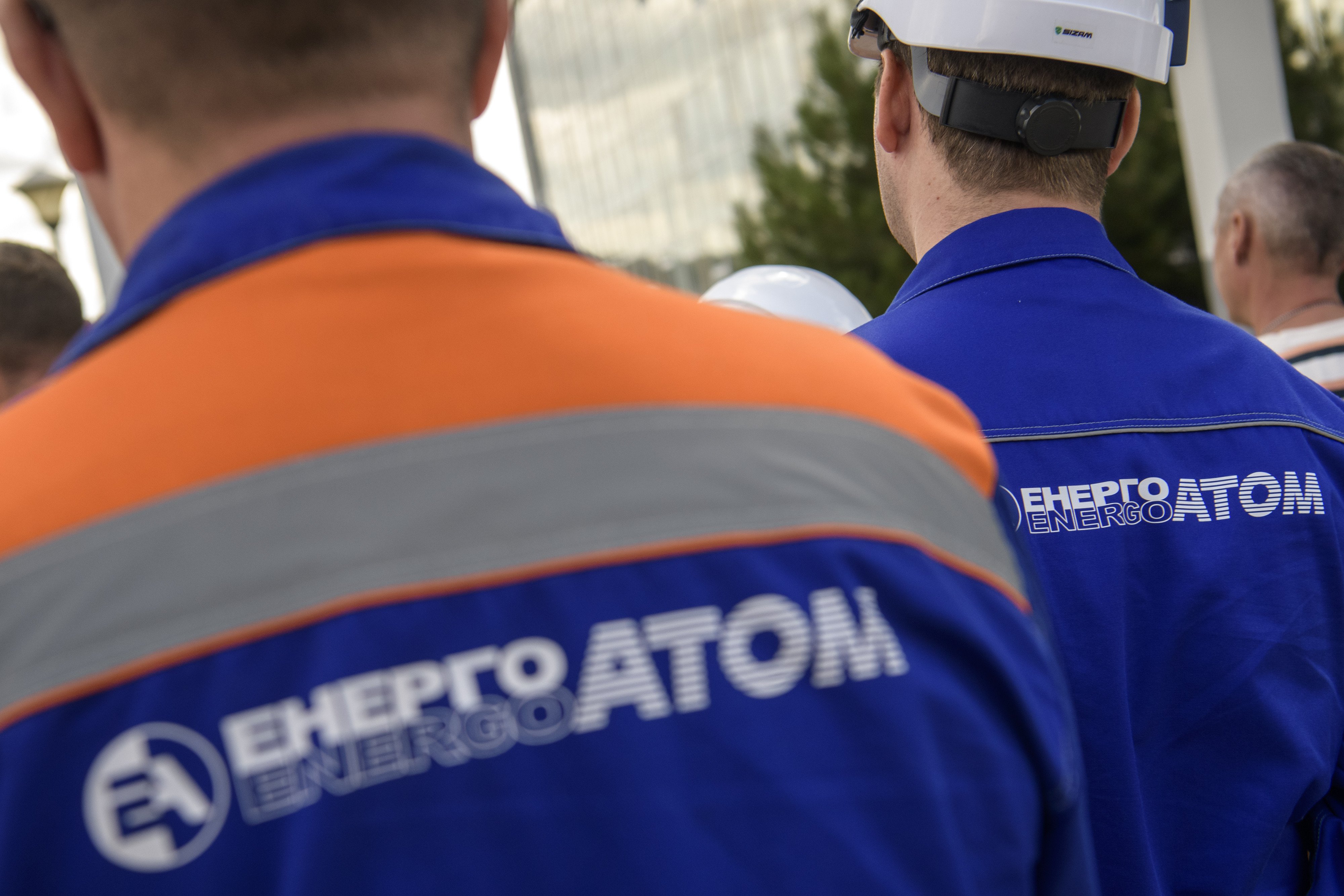
During a conversation with journalists on November 21, Ukraine’s Minister of Economy, Environment and Agriculture, Oleksii Sobolev, outlined the progress in forming the new Supervisory Board of Energoatom and the next steps of the corporate governance reform.
He stated that the government, together with partners from the G7, the EU, the EBRD and the IMF, is working on an updated plan for relaunching the company’s corporate governance system.
We bring you stories from the ground. Your support keeps our team in the field.
According to the minister, the updated statute provides for seven members of the Supervisory Board—four independent and three representing the state.
“The main objective is to conduct the competition according to the defined procedure, but with maximum mobilisation of efforts so that the Supervisory Board is formed by the end of the year,” he noted.
Sobolev explained that the selection procedure is clearly defined by law: a public announcement of requirements, at least ten working days for applications, a short list formed by the recruiter, interviews by the Nomination Committee with international partners participating as observers, and approval of the final list.
He emphasised that the competition for two independent members announced in September has significantly accelerated the process: “All preparatory work on the recruiter’s side has already been done, and therefore we can talk about the possibility of completing the full competition by the end of the year.”
Speaking about changes in the selection procedures for supervisory boards, Sobolev pointed out that the new board will be formed in full and will cover all necessary competence profiles.
“First, there will be more members, and the board will be formed in full from the start. Second, different competency profiles will be covered—for example, the previous board lacked financial expertise,” he said.
He added that new board members will be able to start working immediately: “There is now an opportunity to insure the professional liability of board members right away… New people will be able to start work immediately and begin fulfilling their responsibilities in stabilising the company.”
The minister noted that the Ministry of Economy has prepared draft amendments to Resolutions No. 142 and 143 aimed at improving the selection process, introducing a regulation for the Nomination Committee, strengthening the role of international partners, and raising qualification requirements in line with OECD standards. He added that statutes will also be updated to ensure that key decisions, including the appointment of the CEO, are taken by a simple majority. As for new state representatives, he stressed that the task “is to find professionals whom the market trusts.”
Sobolev underlined the mission of the new board: “We need the new Supervisory Board to be able from day one to fully control major contracts, react quickly to risks and restore trust in the company—both domestically and among international partners.”
Commenting on the broader corporate reform, the minister stated: “The corporate reform is working. There are about 20 state-owned companies with supervisory boards.”
At the same time, he noted that the situation at Energoatom has revealed the weaknesses of the current model: “The mechanism where certain essential functions of the Supervisory Board depend on the management it is supposed to oversee has its drawbacks.” According to him, the government, together with partners, is examining international best practices regarding the centralisation of key functions — such as professional liability insurance, legal advisers and recruiters — within a single body, for example the Ministry of Economy. This, he said, will “allow newly created Supervisory Boards to start work faster and give them more independence and autonomy.”

Sobolev also reported that state-owned companies with supervisory boards are currently undergoing audits. He stressed the government’s openness to proposals for improving legislation and noted that one of the recommendations already received concerns ensuring that the functions of compliance and security are directly subordinated to the Supervisory Board, rather than company management.
In conclusion, the minister stated: “It is important for us that the corporate governance system works in such a way that state-owned companies are efficient and profitable, minimise corruption risks and deliver tangible results for the economy and for people.”
Earlier, Russia started offloading physical gold from its reserves for the first time as a way to meet its growing budget obligations.
Discuss this article:
-9bd5e1532102621f8fb1c4ba871a3171.png)


-c439b7bd9030ecf9d5a4287dc361ba31.jpg "Photo of Katherina Popilnichenko")