- Category
- Latest news
Ukraine Strikes Russian Black Sea “Spy Hub” on Seized Gas Platform
 Prefer U24 Media on Google
- Authors


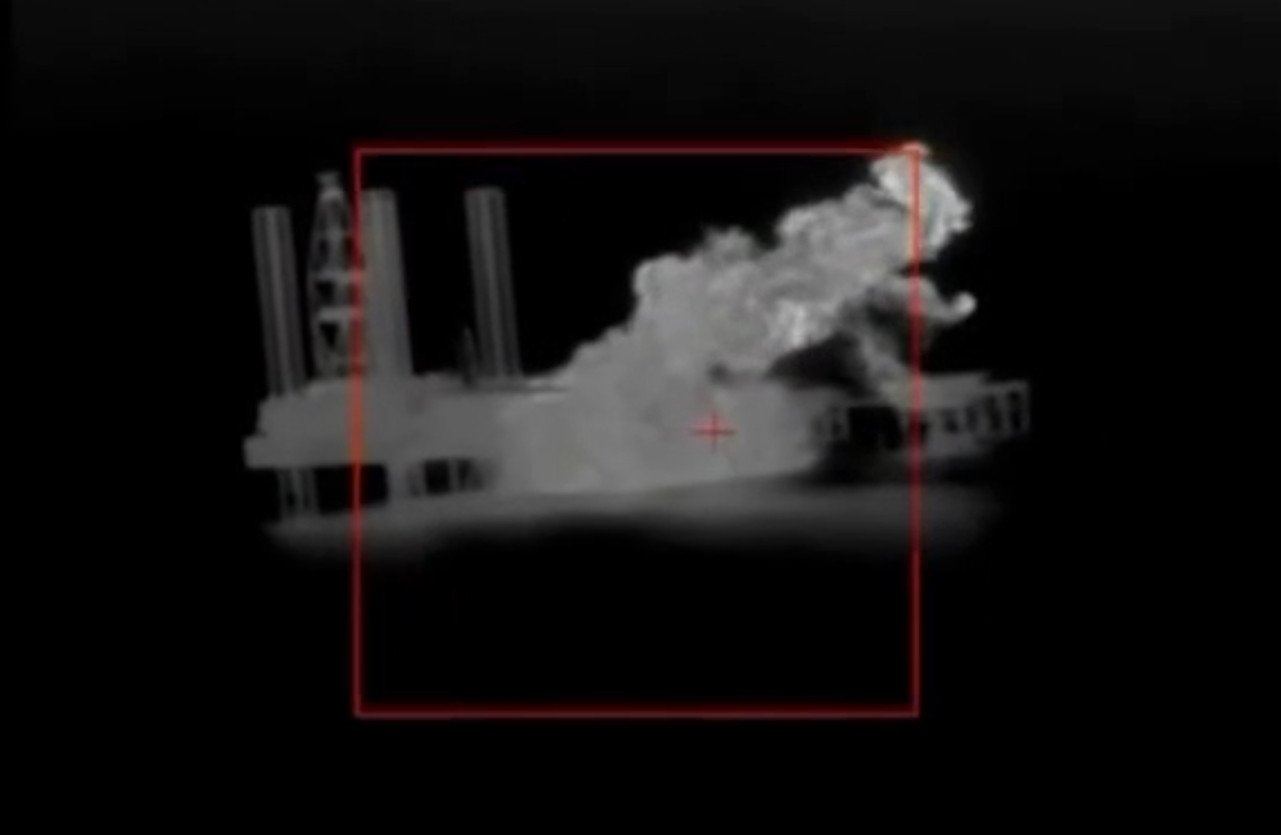
Ukrainian naval forces, in coordination with the Armed Forces’ Unmanned Systems Forces, struck Russian positions at the offshore drilling platform “Syvash” in the Black Sea overnight on April 6, targeting a key surveillance and military outpost used by Russian forces.
We bring you stories from the ground. Your support keeps our team in the field.
According to the Ukrainian Navy, the operation involved both maritime drones and aerial UAVs, which hit Russian units stationed on the platform. The Navy stated that the installation had been repurposed by Russian forces as a forward base for surveillance, communications relay, and the deployment of electronic warfare and short-range air defense systems.
“This allowed them to detect the movement of Ukrainian Defense Forces toward Crimea, creating a ‘buffer zone’ to protect the peninsula and naval vessels,” the Ukrainian Navy said.
Additional details were provided by Robert Brovdi, commander of Ukraine’s Unmanned Systems Forces, who confirmed strikes on the “Syvash” platform and a Russian warship.
Writing on Telegram on April 6, Brovdi said the operation was carried out by drone units and coordinated by Ukraine’s Security Service (SBU), adding that the extent of the damage is still being assessed.
According to Brovdi, the targeted platform hosted Russian special forces units and weapons, including anti-tank missile systems and counter-drone capabilities.
He also confirmed that the same overnight operation included a strike on the Russian frigate Admiral Grigorovich in the port of Novorossiysk. The vessel is a Project 11356R frigate armed with Kalibr cruise missiles and a Shtil-1 air defense system.
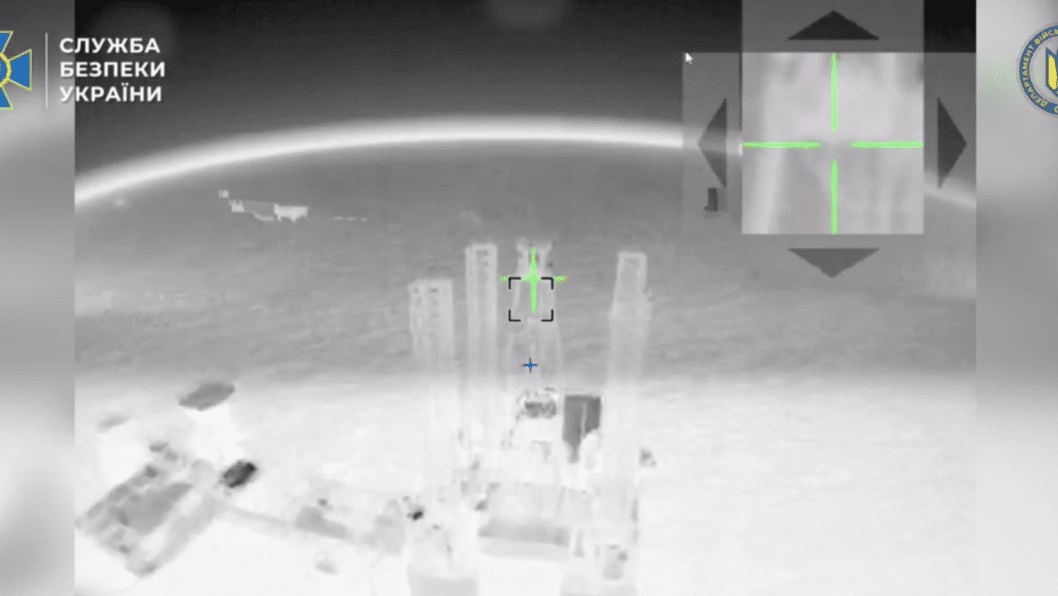
Ukrainian military officials stated that the use of offshore platforms by Russian forces has allowed them to extend detection and control over parts of the Black Sea, particularly along approaches to occupied Crimea.
By deploying radar, communications, and electronic warfare systems on these structures, Russia has attempted to create a layered monitoring zone to track Ukrainian movements at sea and in the air.
The strike on “Syvash,” according to Ukrainian officials, reduces Russia’s ability to use such platforms as forward operating bases and complicates its efforts to maintain situational awareness in the region.
Earlier, Russia’s Security Council Secretary Sergei Shoigu acknowledged that the Ural region—once considered beyond the reach of Ukrainian strikes—is now under direct threat, as Kyiv expands its long-range drone capabilities. He stated that no region of Russia can be considered fully secure, highlighting the Urals’ role as a key hub for defense production, energy infrastructure, and logistics critical to Russia’s war effort.
Discuss this article:
-9a7b3a98ed5c506e0b77a6663f5727c5.png)