- Category
- Latest news
Why Germany’s Lynx IFVs Could Be a Game-Changer for Ukrainian Infantry
 Prefer U24 Media on Google
- Authors


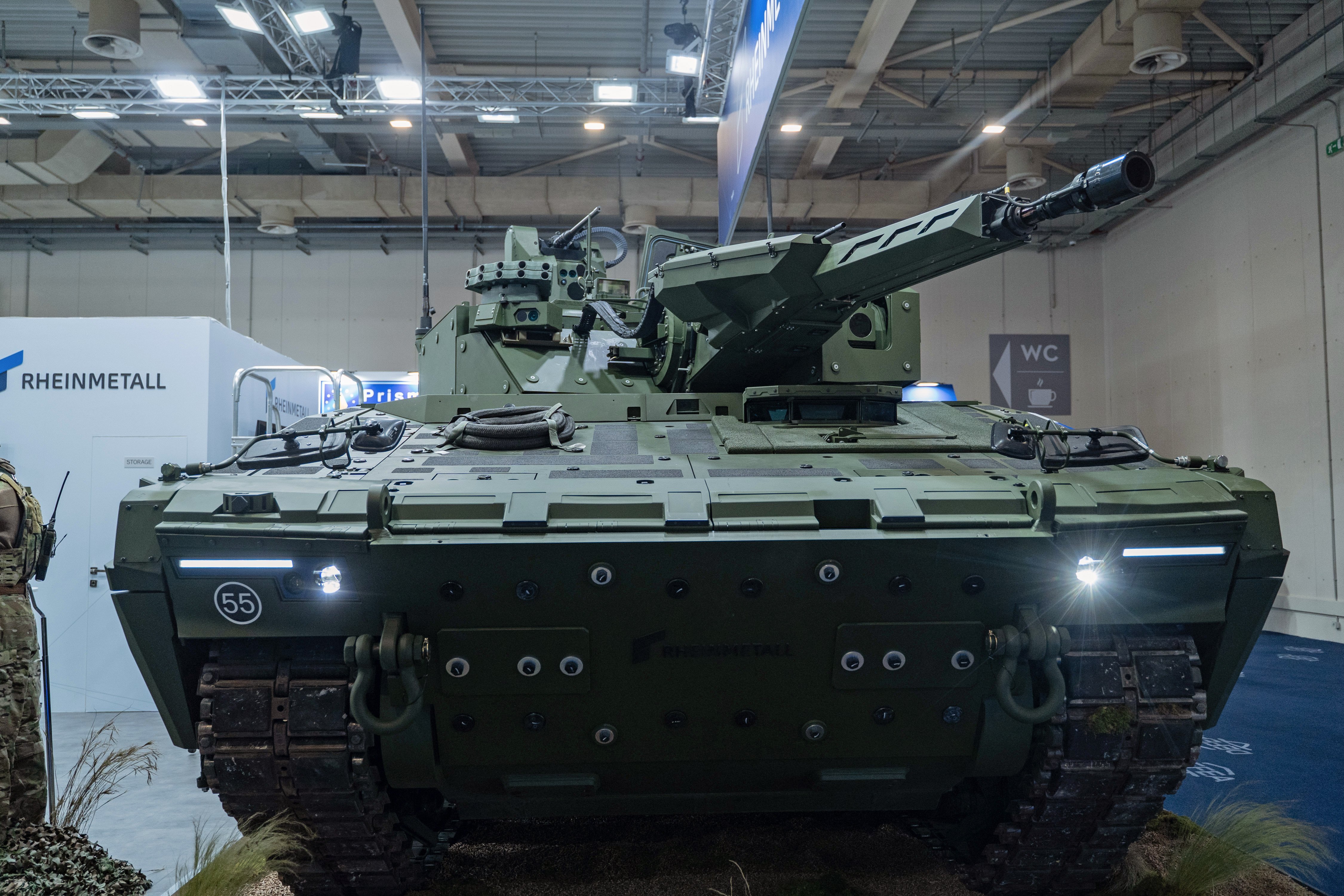
A defense agreement signed between Germany and Ukraine last month is now moving into its execution phase, with the first production batch of Rheinmetall KF41 Lynx infantry fighting vehicles expected to be delivered in the near term, BFBS Forces News reported on January 13.
While the total value of the contract has not been made public, the vehicles are being financed by the German government. Rheinmetall will supply Ukraine with the tracked infantry fighting vehicle configuration of the Lynx, rather than alternative modular variants available on the platform.
We bring you stories from the ground. Your support keeps our team in the field.
The KF41s destined for Ukraine will be equipped with Rheinmetall’s two-person Lance turret and configured specifically to meet Ukrainian operational requirements. According to the company, follow-on orders are already anticipated, including plans to localize production inside Ukraine as part of longer-term industrial cooperation.
“We are grateful for the trust that Ukraine has placed in us,” said Rheinmetall CEO Armin Papperger.
KF41 Lynx of the Hungarian 30th Armored Infantry Brigade "Pál Kinizsi" https://t.co/qN7ijijNBG pic.twitter.com/QIAQPNW6mJ
— ↑↓左右 (@cecilie0019) January 11, 2026
“We would also like to thank the German government for its support. This order is a fundamental success that underscores our continued efforts to support Ukraine.”
According to Forces News, Rheinmetall offers two main Lynx variants: the lighter KF31 and the heavier KF41. Ukrainian forces will receive the KF41, which features greater payload capacity, increased protection, and space for a larger infantry squad—making it better suited for high-intensity combat operations.
Rheinmetall will provide Ukraine with the first five Lynx KF41 IFVs, following a contract signed in December 2025. The first deliveries are planned for early 2026. The initial batch valued in the mid double-digit millions of euros, with funding provided by Germany. pic.twitter.com/XWGmvTDxs8
— Special Kherson Cat 🐈🇺🇦 (@bayraktar_1love) January 12, 2026
The Lance 2 turret typically mounts a 30mm MK30-2/ABM autocannon paired with a launcher for Spike LR2 anti-tank guided missiles, though the platform can also be fitted with alternative weapons such as the 35mm Wotan autocannon.
Rheinmetall has not disclosed which gun configuration Ukraine’s vehicles will carry. If equipped with the 30mm system, the turret provides airburst munitions and an advanced fire-control system optimized for engaging infantry, drones, and lightly armored targets, Forces News wrote.
Ukraine has already received at least one Lynx vehicle for testing and evaluation, and positive feedback from those trials reportedly helped pave the way for the current production order.
In addition, Forces News noted that beyond firepower and protection, the Lynx places heavy emphasis on digital integration. The vehicle is built around what Rheinmetall describes as a “digital backbone,” using open architecture to enable seamless integration into battlefield networks and command-and-control systems—an increasingly critical feature in drone-saturated combat environments.
-fa0902ed3d444607b74b11e901505c12.png)
The KF41 Lynx is already in service or on order with several countries. Hungary is a key early adopter, with deliveries underway and multiple specialized variants planned. In November, Rheinmetall’s joint venture with Leonardo secured a contract to supply 21 Lynx KF41 vehicles to the Italian Army. Romania, Czehia, and the United States have also expressed interest in the platform.
For Ukraine, the arrival of the Lynx marks another step toward rebuilding and modernizing its mechanized forces with Western-designed armored vehicles capable of operating in high-threat, networked battlefields.
Earlier, Rheinmetall reached an agreement with Ukraine to commence the production of Lynx infantry fighting vehicles in Ukraine.
Discuss this article:



-c439b7bd9030ecf9d5a4287dc361ba31.jpg "Photo of Katherina Popilnichenko")