- Category
- Latest news
Zelenskyy After White House Talks—Path to Peace, $90B US Weapons, Territorial Issues
 Prefer U24 Media on Google
- Authors


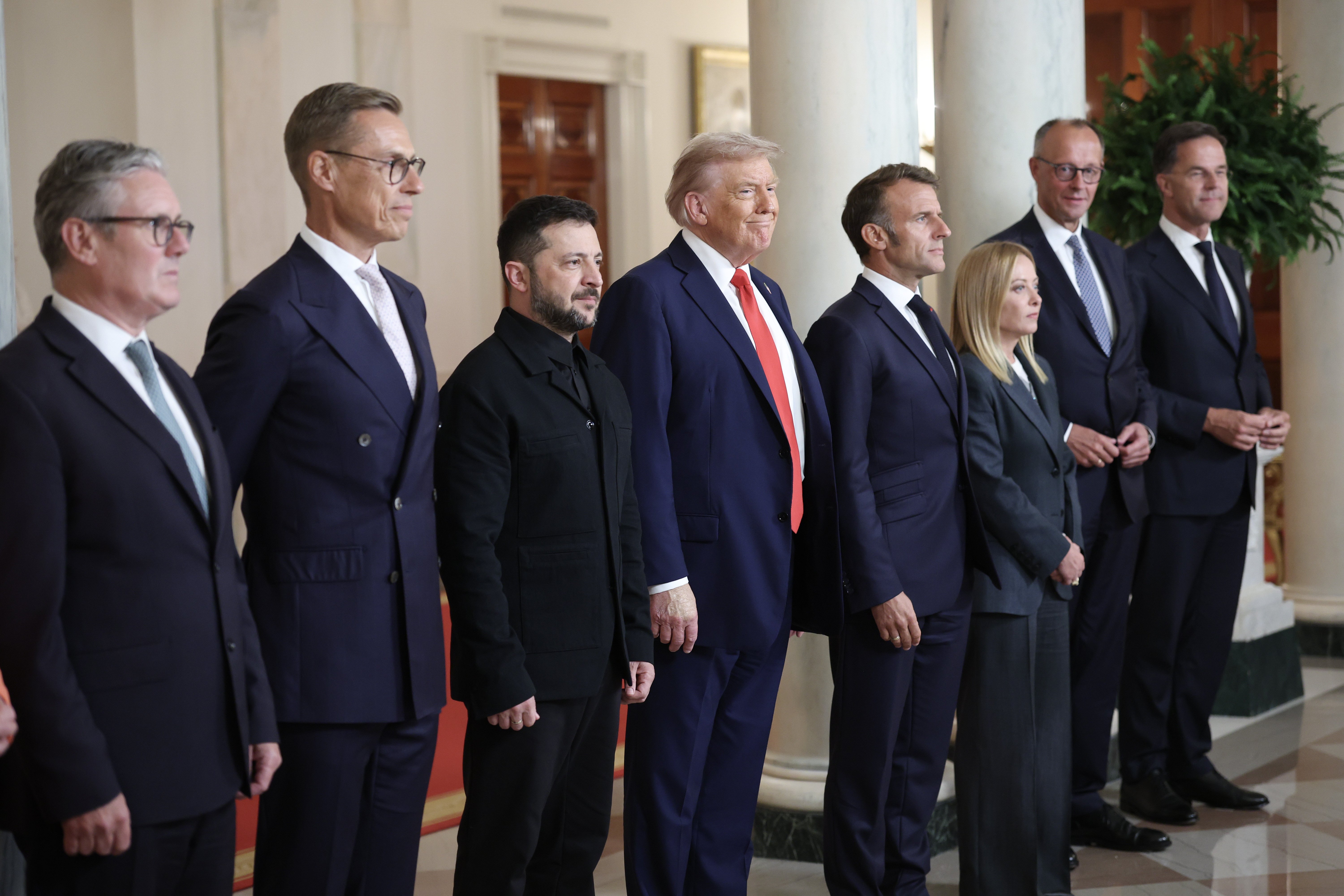
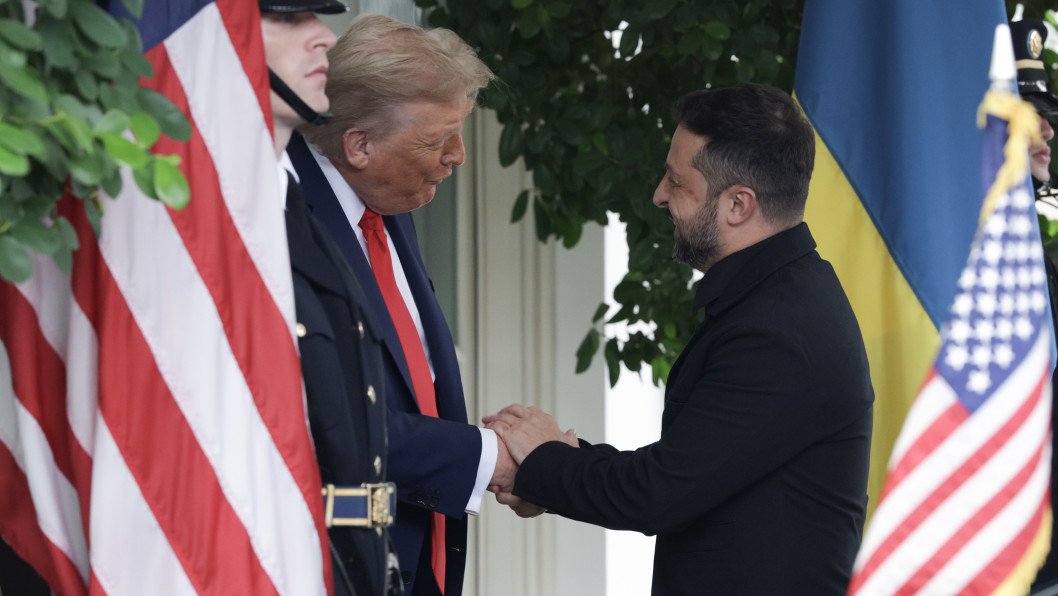
Today, intensive talks took place at the White House between US President Donald Trump, Ukrainian President Volodymyr Zelenskyy, and European leaders, aiming to advance a possible path to peace in Russia’s war against Ukraine.
Ukrainian President Volodymyr Zelenskyy called his White House talks on August 18 “the best of all our conversations,” noting a real, tangible path toward ending Russia’s war.
After intensive meetings with US President Donald Trump and European leaders, he highlighted the depth and seriousness of the discussions.
On the outcomes, Zelenskyy stressed coordination and progress:
“No unaccepted decisions will take place. I think each of us did our work.”
A Breakthrough Conversation
“This meeting was the best of all we’ve had. It was warm, constructive, and truly substantive. We were able to go into details, to clarify realities, and to make sure that our partners understand the truth about the situation on the ground. For the first time, I feel there is a real chance for peace—not just words, not just pauses, but a serious path forward.”
Peace Must Be Real, Not Temporary
“We are confident that the war will end. It is important that this is not just a pause in battles, but real peace that can be protected with security guarantees. I cannot yet detail everything, but it is already important that there is political will and a political decision. At least, this is how it sounded.”
Territorial Questions and Maps
During the White House discussions, detailed examination of territorial maps, including Crimea and the occupied eastern regions, was a central focus. Zelenskyy stressed the importance of understanding the real situation on the ground:
“I even argued a little with the percentage figures on the maps. I know very well the real numbers of temporarily occupied territory. People sometimes think it’s 18 or 20 percent. In truth, for thousands of days, Russia occupied less than 1 percent of our land. The big numbers only came later, and often not because of battles, but because there were no large-scale military actions in some places, like Crimea. That’s why it’s wrong to say Russia simply conquered vast areas with a strong army. The reality is more complex. And it’s very important that the US President sees the truth, not the myths.”
❗️Zelensky and Trump against the background of a map of Ukraine. pic.twitter.com/drB2GVE97R
— 🪖MilitaryNewsUA🇺🇦 (@front_ukrainian) August 18, 2025
Zelenskyy confirmed that US officials came prepared with their own maps and data, which facilitated a detailed, factual conversation about territory:
“The Americans had prepared their own detailed maps, including Crimea and the eastern regions. We had the same. We compared them carefully. I am very grateful for that, because it shows seriousness and respect. We had a long conversation about territories—not emotional, but factual. And this honesty is what can make peace talks real.”
Territorial Questions Reserved for Direct Talks
Regarding Ukrainian territory, Zelenskyy stressed that these discussions are strictly bilateral:
“The issue of our territories is only for me and Putin to discuss. Not for anyone else.”
Trump-Putin Call Coordination
President Trump personally coordinated with Russian leader Putin to facilitate the Ukraine-Russia talks:
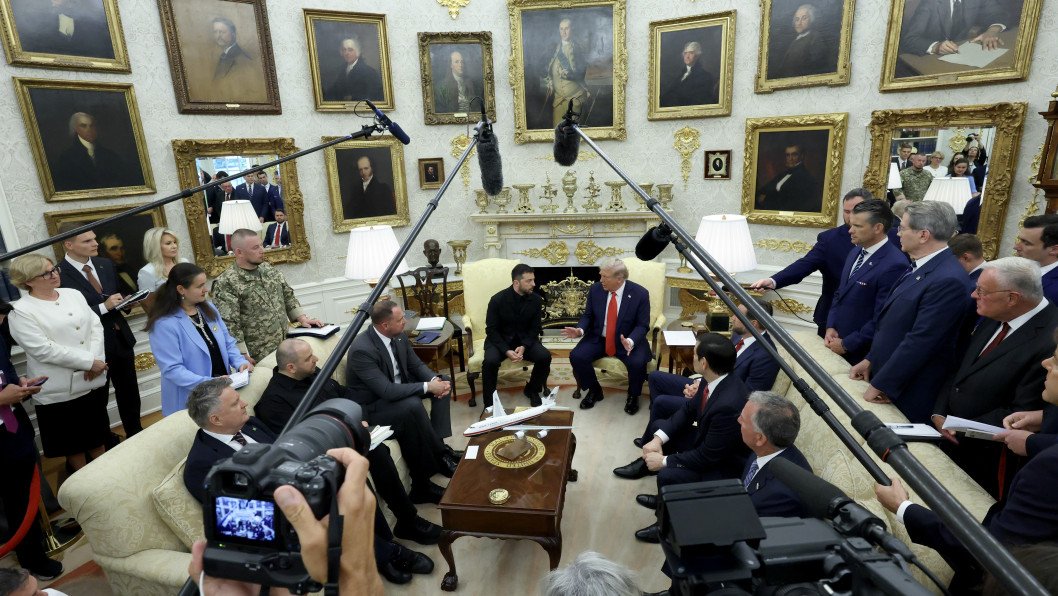
“During the break between the main meeting and the informal session, President Trump called Putin to discuss technical aspects, security guarantees, and possible meetings. After this, he returned to the Oval Office with me. The proposal is a bilateral format first, then trilateral.”
Zelenskyy confirmed Russia’s approach for the talks:
“Russia suggested first a bilateral meeting, Ukraine and Russia, and then a trilateral one. As I said, we are ready for any leader-level format, because only at that level can we resolve all the complex issues with Putin, and then move to a trilateral meeting. The question now is how the bilateral meeting will go. In principle, that is the result. I consider the result good and normal.”
⚡️ Zelenskyy: Ukraine will never stop on the way to peace. pic.twitter.com/pKu0wlAlf9
— UNITED24 Media (@United24media) August 19, 2025
He emphasized that Ukraine is ready to meet without preconditions:
“If we start putting conditions before meeting—about ceasefires, about percentages, about who controls what—Russia will immediately put forward 100 conditions of its own. We will get stuck. That’s why I believe we must meet without any conditions and discuss the path to ending the war. Only then can we see if there is a real possibility to stop the violence.”
Return of Children and Prisoners
The return of Ukrainian children was highlighted as a top priority, with US involvement actively coordinated:
“The First Lady of the United States, and the US team understand that they will be involved in such a very important, painful, and very difficult issue—returning Ukrainian children. Different situations, different cases, therefore different approaches. We discussed with the US President that it is not a simple system, but he will help with the exchange of all-for-all, not only military prisoners, primarily our armed forces, and others. Work is ongoing on this.”
On prisoner exchanges specifically, Zelenskyy emphasized US support:
“The US supports the all-for-all exchange system, and we will continue working on this. It is a complex process, but progress is being made, and we are determined to secure the return of our people.”
Security Guarantees and US Support
“The package of American weapons, which we do not have, primarily includes aircraft, air defense systems, and more. There is a package with our proposals for $90 billion. For us, this is important — it will finance our domestic drone production. Our companies will have money for production and to increase output, including co-production with partners.”
He stressed that security guarantees will be coordinated with US and other partners:
“No unaccepted decisions will take place. I think each of us did our work. Coordination of security guarantees with the US will be detailed, it will be clear. But it is important that we will work together on security guarantees. For us, US security guarantees are very important.”
Zelenskyy also discussed the possibility of a coalition of willing nations to provide additional support:
“We are talking about a coalition of volunteers—about 30 countries. We will understand who among them can actually offer what. Someone may be ready to provide presence, someone will speak about intelligence, someone about the sea, someone about air security, different formats. Some cannot constitutionally participate but can fund Ukrainian production.”
A Turning Point
Zelenskyy concluded that the meetings leave Ukraine with reason for cautious optimism:
“We came out of the White House with not just general statements, but with real substance—about security guarantees, about children, about prisoners, about territory, about future negotiations. This was not a polite conversation; it was a strategic one. And that gives me hope. For the first time, I feel we are on the path not to a ceasefire that breaks tomorrow, but to a real, lasting peace.”
Earlier, President Trump, during talks with Zelenskyy, addressed the question of a ceasefire in Ukraine, noting that discussions should move toward a broader peace deal.
Discuss this article:


-c439b7bd9030ecf9d5a4287dc361ba31.jpg "Photo of Katherina Popilnichenko")