- Category
- Life in Ukraine
How a Cartoon Dog Meme Went From Shitposting to Delivering Military Aid to Ukraine
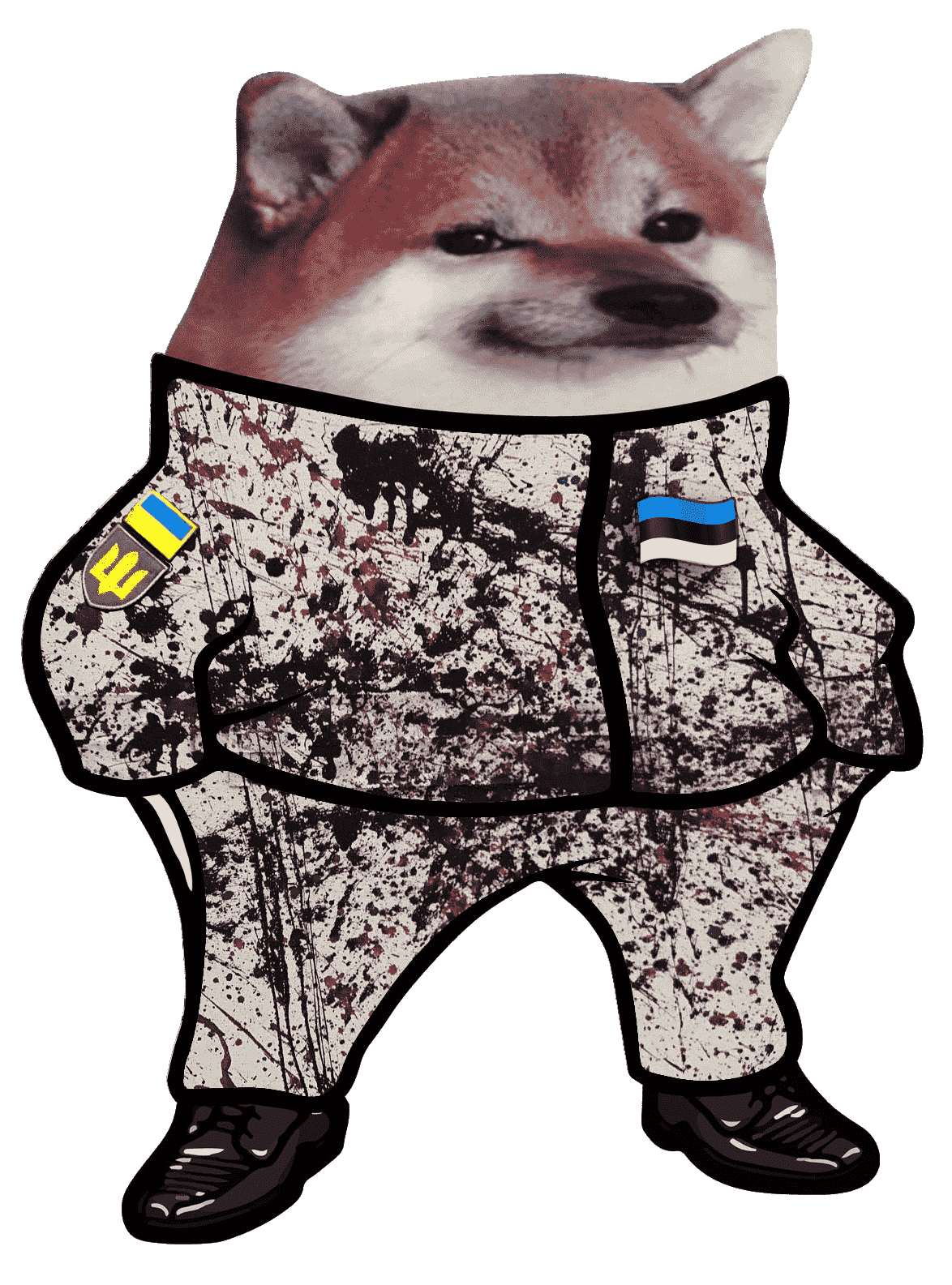
First, there was a picture of a Shiba Inu in a helmet dunking on Russian propaganda. Then came the convoys full of drones, generators, medical gear, and scopes, rolling across Europe into a warzone. This is the story of NAFO, the meme that became a movement.
 Prefer U24 Media on Google
- Authors


In the early days of Russia’s full-scale invasion of Ukraine, people across the world looked for ways to help.
One of the more unexpected responses came in the form of a cartoonish Shiba Inu—popularized by the Doge meme, a viral internet joke featuring the dog with goofy captions like “such wow.”
In early 2022, that dog reappeared—this time wearing a helmet and replying “ratio” under Russian propaganda tweets (“Ratio” is Twitter slang: if a reply gets more likes than the original post, it’s considered a win.)
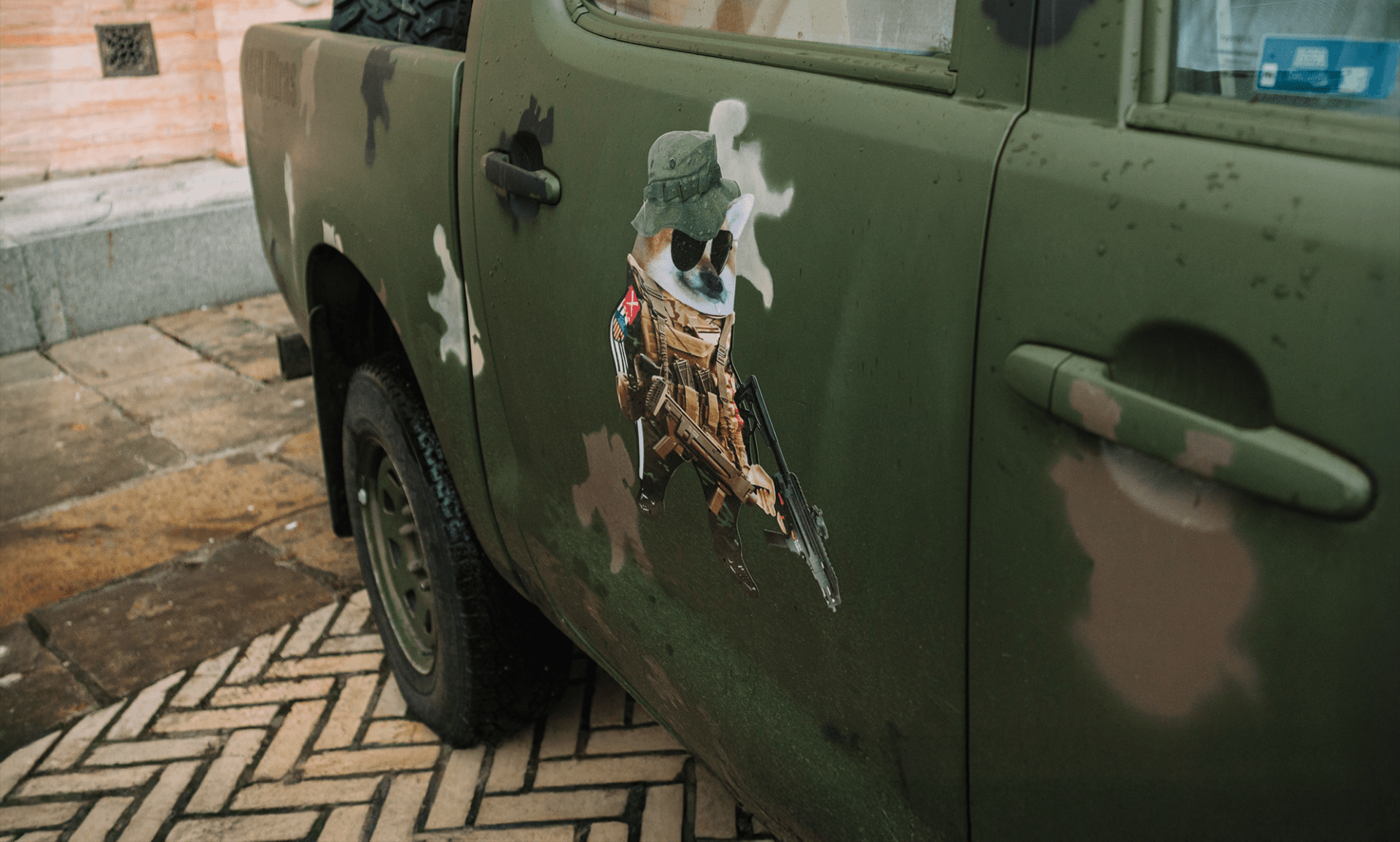
Another response was more hands-on: a truck packed with supplies, rolling across Europe toward Ukraine.
At first, these things had nothing in common. The meme came from Twitter. The convoy came from a network of foreign volunteers.
Over time, these worlds collided. People with pickups met people with memes. A movement took shape.
How NAFO was born
Meet NAFO—the North Atlantic Fella Organization.
Not to be confused with NATO, though the name is no accident and is part of the joke.
At first glance, it looks like chaos: memes, jokes, and cartoon dogs all over social media. But behind it is one of the most effective grassroots movements of the Ukrainian fight against Russia’s war.
NAFO is an online community of mostly foreign supporters of Ukraine built on memes, trust, and collective action. Its goal is to help Ukraine fight Russia, mainly by countering Russian propaganda online and raising funds for the Ukrainian military and volunteers.
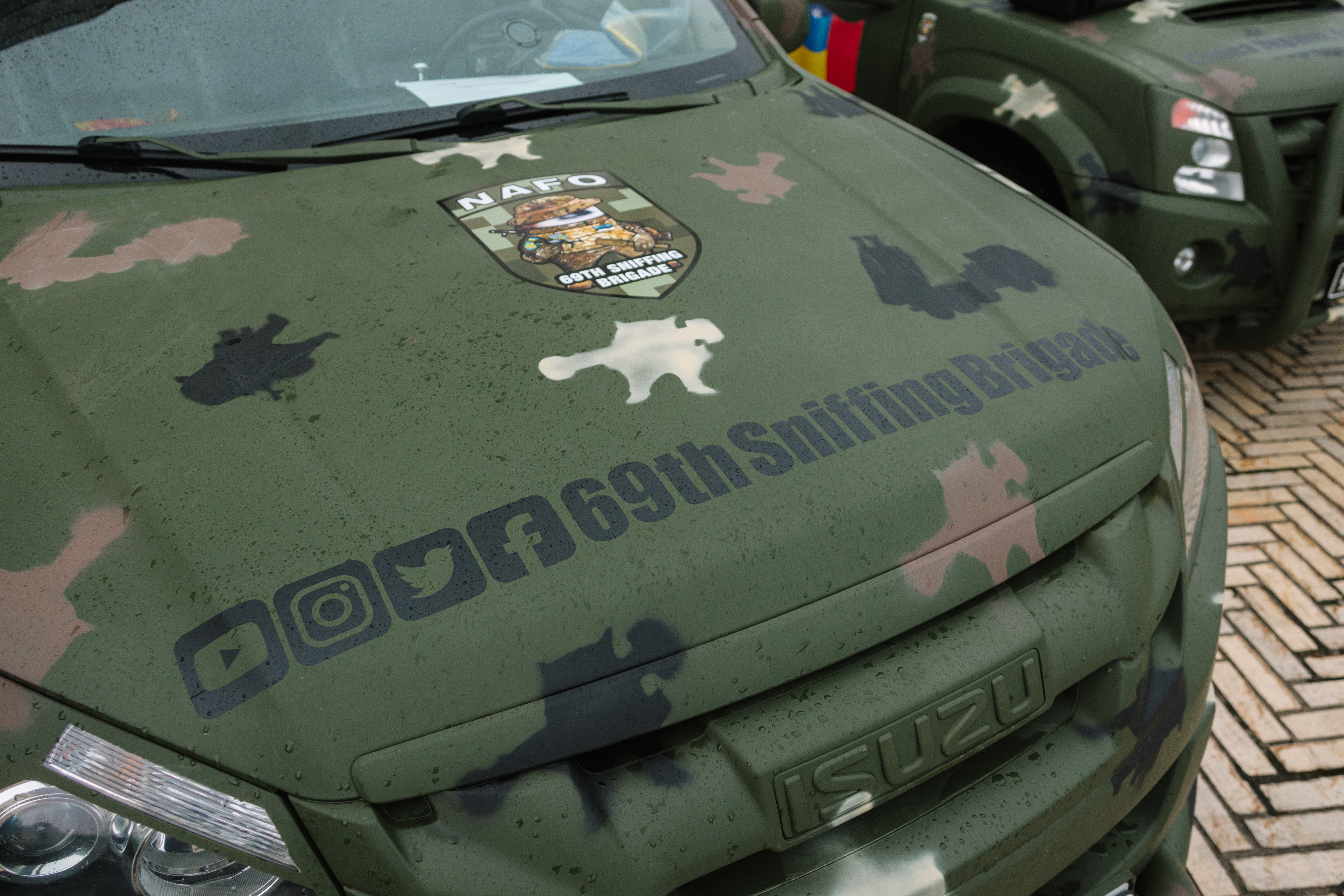
Alongside the broader NAFO community are volunteer groups operating independently, but under the movement’s shared identity. Some join subcommunities, others create their own initiatives or even NGOs under the NAFO banner—like the 69th Sniffing Brigade.
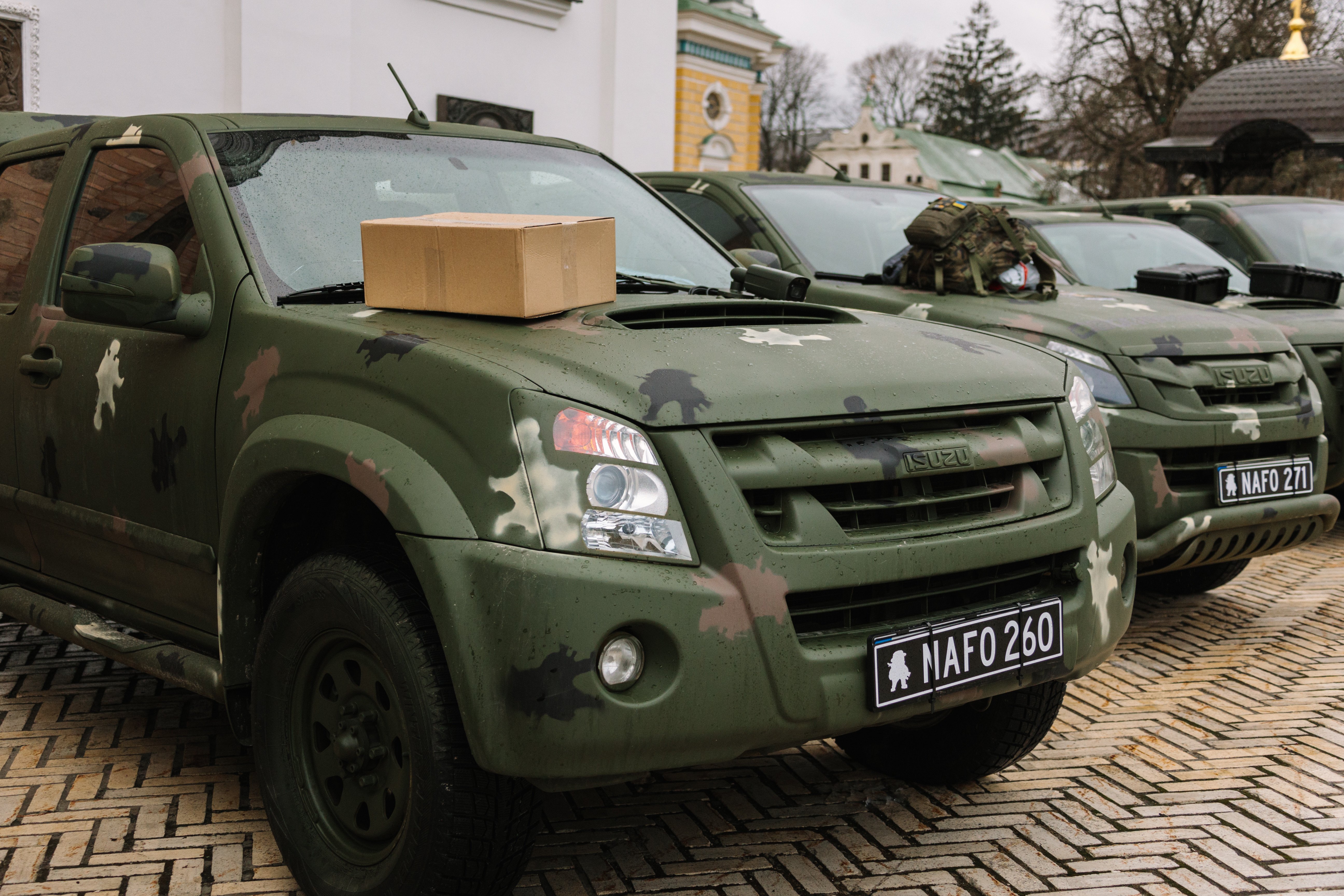
“NAFO isn’t a centralized organization,” says Dimitri Nasennik, an Estonian with Ukrainian roots and a member of the 69th core team. “Anyone can join, create their own division, and that’s exactly what we did.”
A serious NGO based in Estonia—despite not being a real army unit—ended up calling itself the “69th Sniffing Brigade” and using a sticker pack of cartoon dogs to label the weapons and supplies they sent to the front.
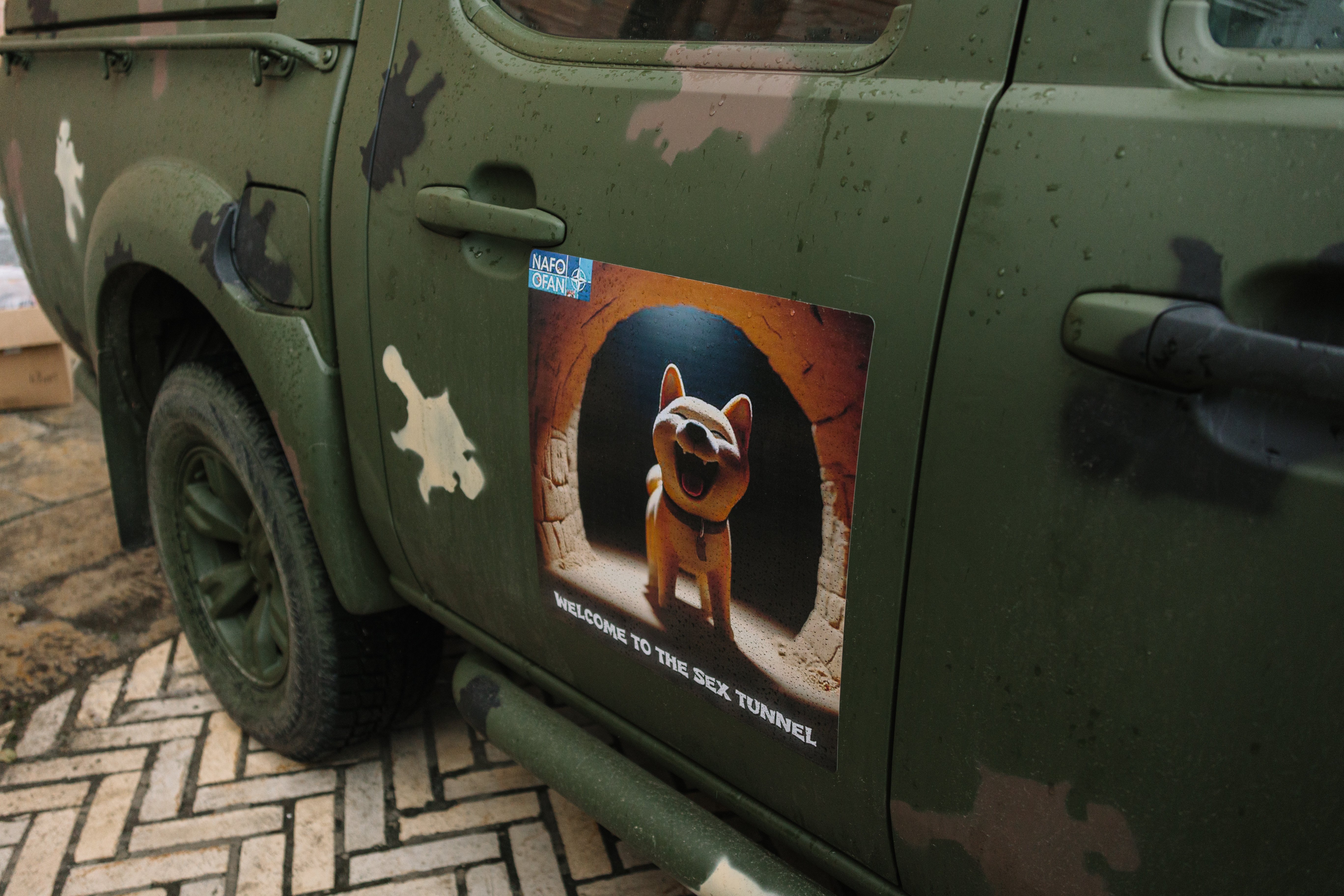
That’s how real help on the ground and internet culture ended up working side by side.
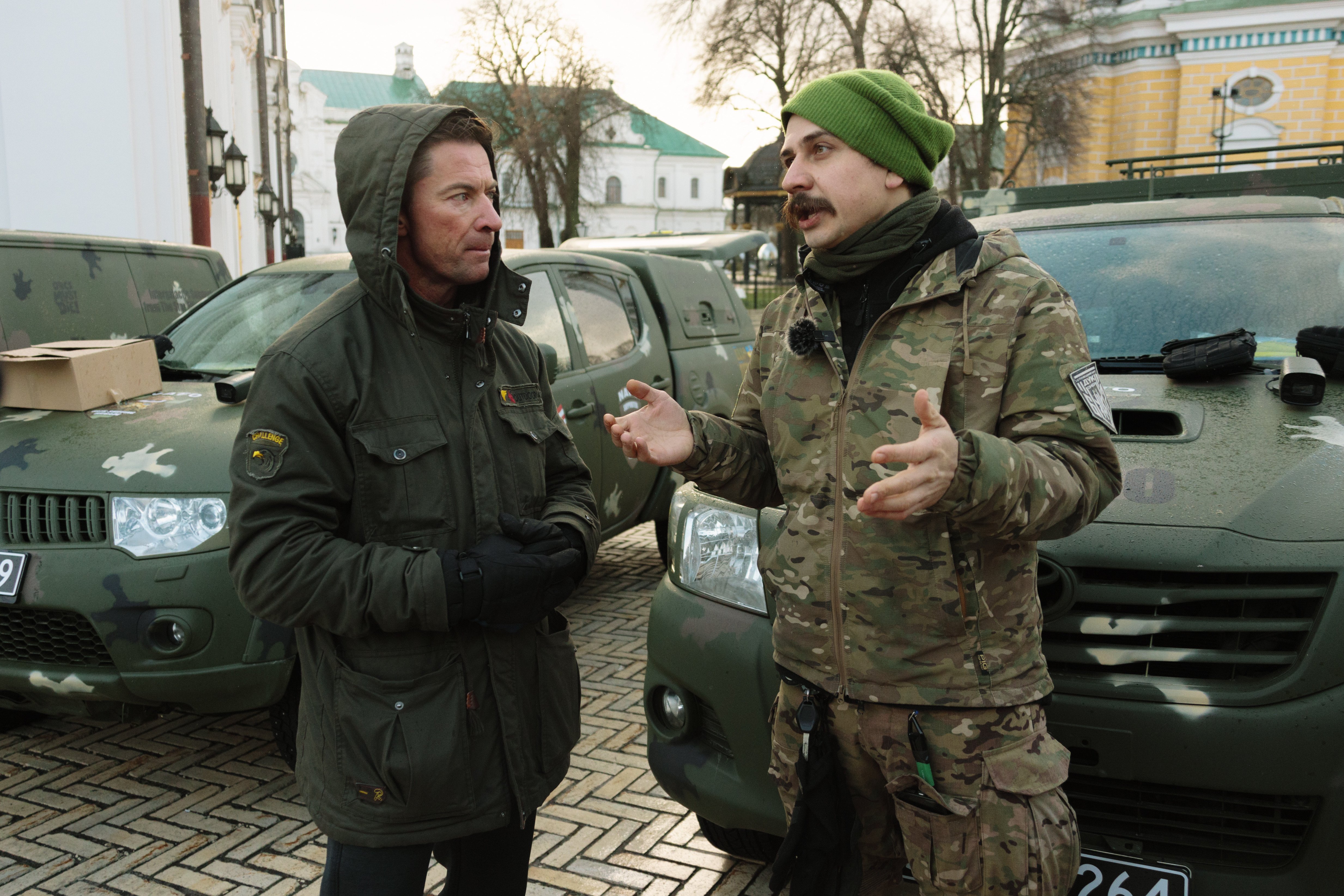
“You can see that if something big is happening, like the Spider Web operation, our meme is on the truck,” says Nasennik. “Later, when people send pictures from the front line, you can recognize our vehicles by those memes. I like this side of it.”

The meme machine
The first “Fella” was developed in May 2022 by Kamil Dyszewski, a Pole known online as @Kama_Kamilia. He began photoshopping Shiba Inu dogs into images from Ukraine. Soon, others wanted in. Kamil started creating custom “Fellas” for people who donated to the Georgian Legion, a unit fighting under the Ukrainian flag. A meme economy was born.
Then came NAFO’s first viral moment. On June 19th, 2022, Russian ambassador Mikhail Ulyanov engaged in a doomed Twitter argument with dozens of Fellaz. “You pronounced this nonsense, not me,” he tweeted, unknowingly coining NAFO’s first catchphrase.
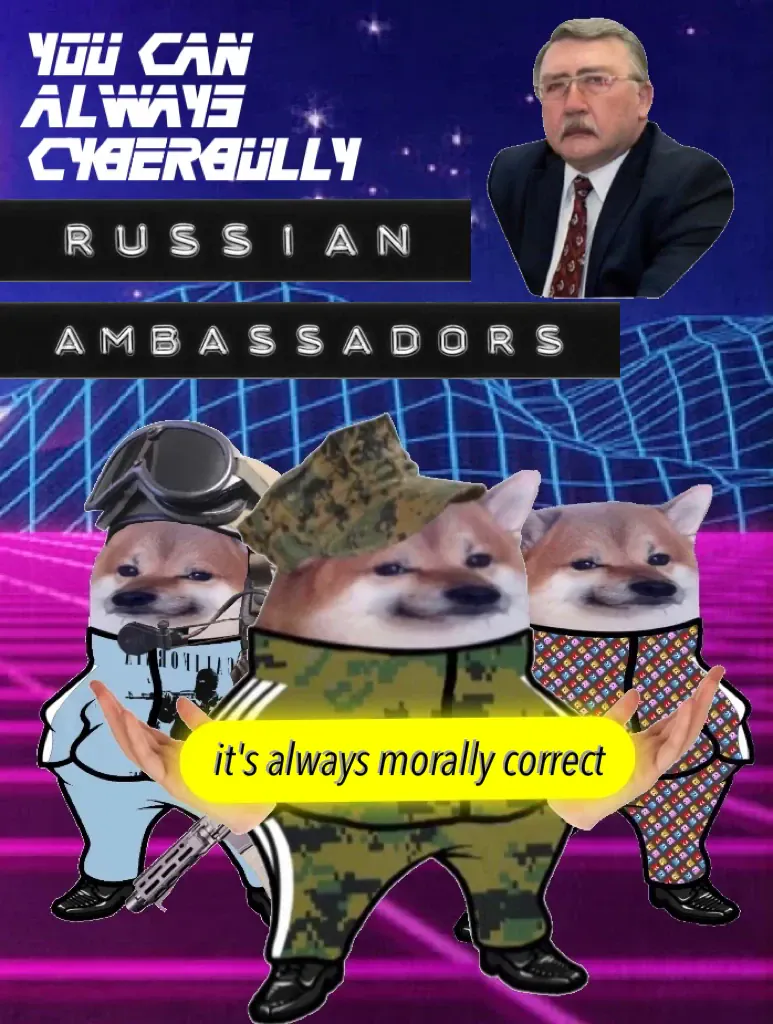
That summer, the meme exploded. Dozens turned into hundreds. Avatars multiplied. A Twitter joke became a global movement.
The official NAFO account was created to help guide donations to trusted charities, aid groups, and volunteer efforts in Ukraine. A meme had found its way to the front lines.
By the end of 2022, a collaboration with Ukraine’s official government‑run UNITED24 fundraising platform raised over $250,000 for a naval drone named Raccoon’s Revenge.
#DarkNight update:
— UNITED24 (@U24_gov_ua) July 14, 2025
🦇$252,003 raised
🦇$47,997 to go
Over $250k in a month. This is an absolute record for a #NAFO fundraiser. Fellas, you rock🫡
Less than $50k left to raise the second NAFO air defense unit that will be saving civilians in Ukraine❤️https://t.co/ktkUzxUB8F pic.twitter.com/4FzMpEkXNK
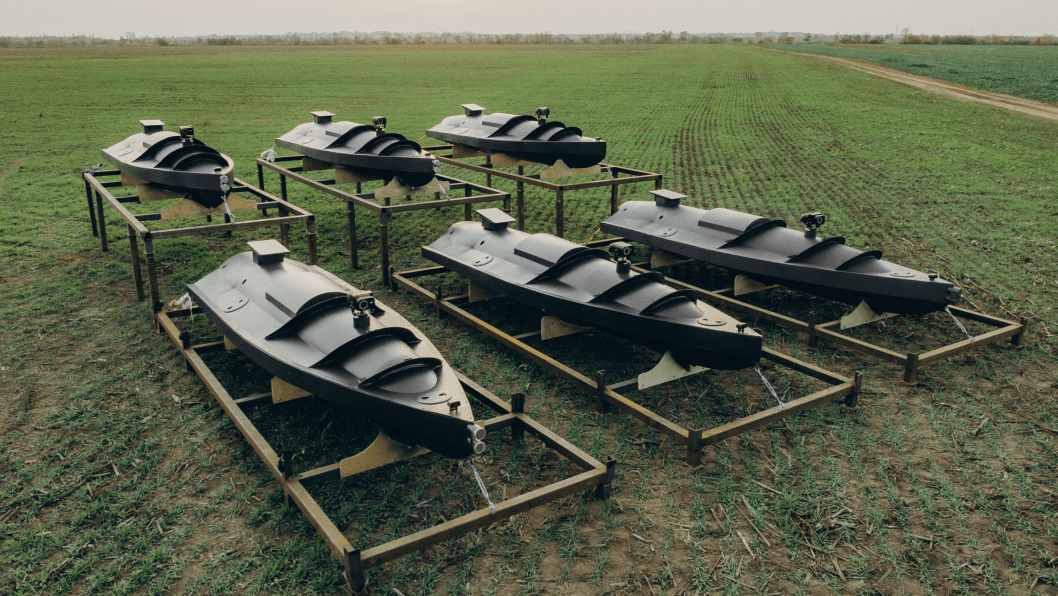
Then came NAFOleon Blownapart—a meme-named naval drone (a pun on Napoleon Bonaparte)—along with hundreds of FPV drones, and 14 robot vehicles named Fella’s Fury. In total, NAFO and UNITED24 campaigns have raised nearly $1 million.
Meanwhile, the OFAN Shop—NAFO’s unofficial online merch store, run “by fellas, for fellas”—passed $100,000 in direct donations. A tongue-in-cheek play on OnlyFans, the shop sells stickers, shirts, and patches featuring custom Fellas, with all proceeds going to aid for Ukraine.
And the momentum kept growing. In early 2025, NAFO received the Poland Passport Award for digital culture, one of the country's most prestigious non-governmental honors.
“I can’t say what the future is for NAFO,” says Nasennik. “It’s independent, it’s evolving, and that’s what’s best about it. Nobody can fully predict it. But one thing is sure: it was built to support Ukraine.”
The truck people
While NAFO’s memes took over the internet, the 69th Sniffing Brigade took to the road. Founded in Estonia after Russia’s full-scale invasion, the group ran its first aid convoy in March 2022, even before NAFO existed.
“We were already doing trucks,” explains Nasennik. “NAFO helped us build communication and presence online.”
Today, the 69th delivers 29 trucks a month, packed with drones, jammers, thermal scopes, generators, medical gear, and more to the Ukrainian Armed Forces.
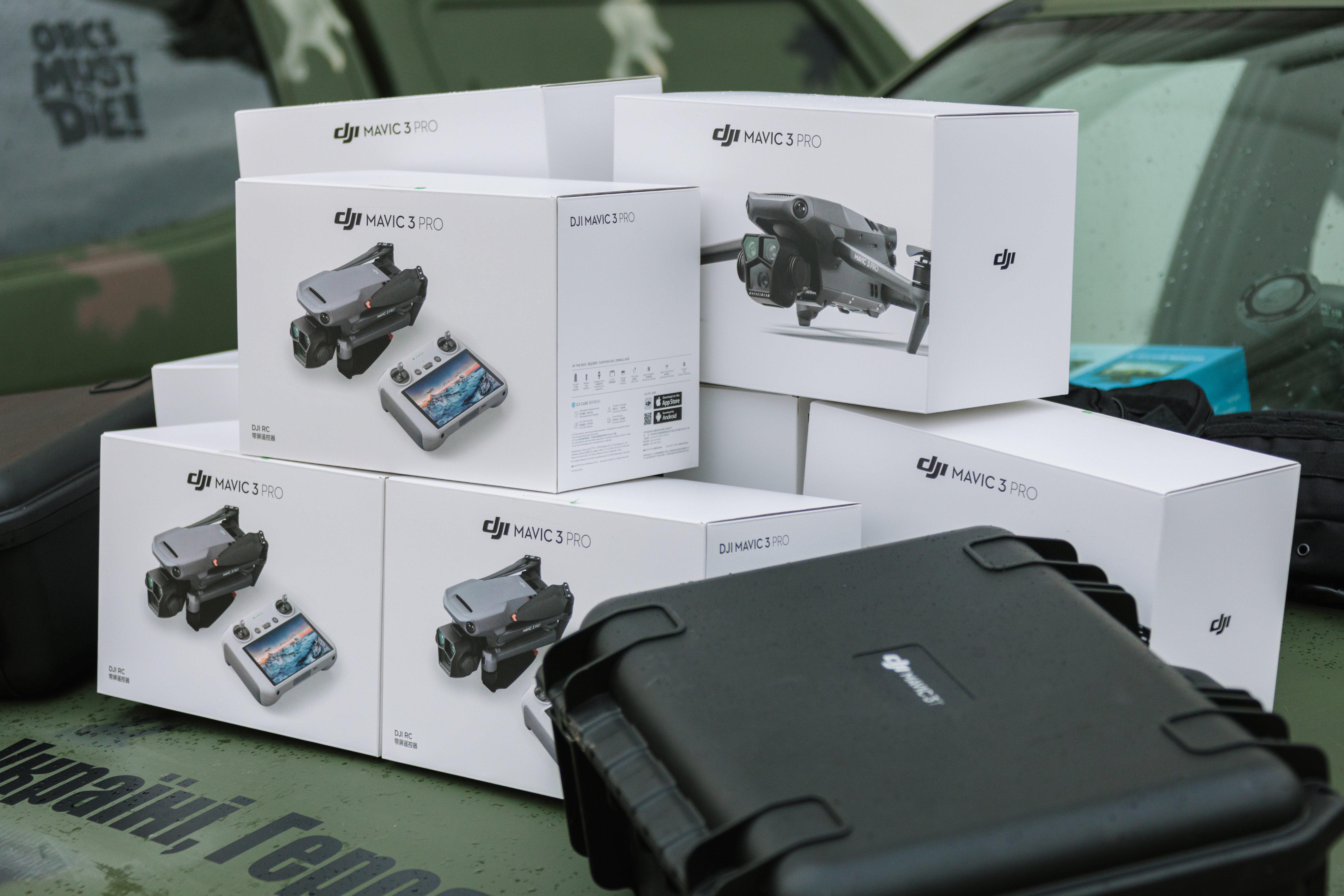
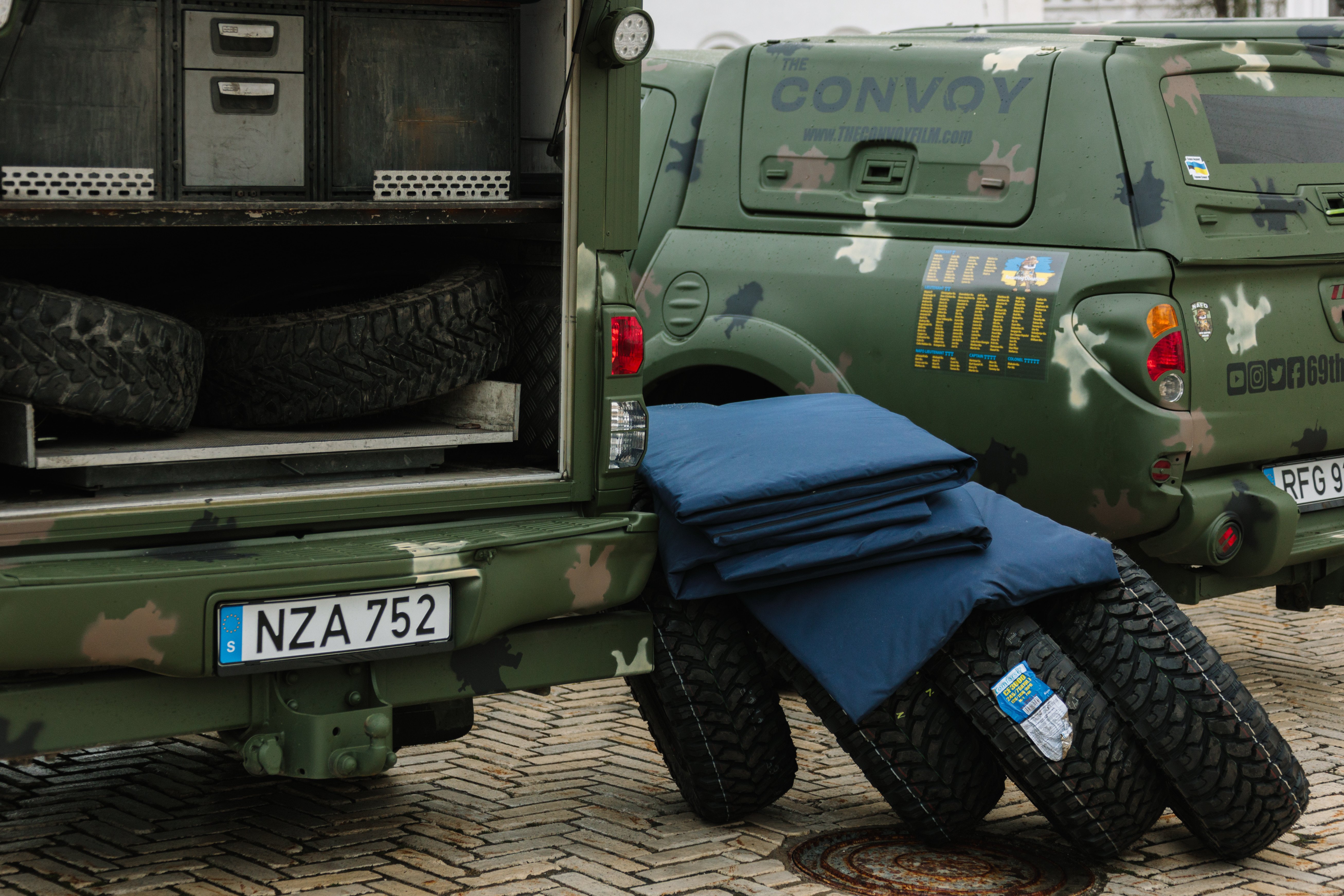
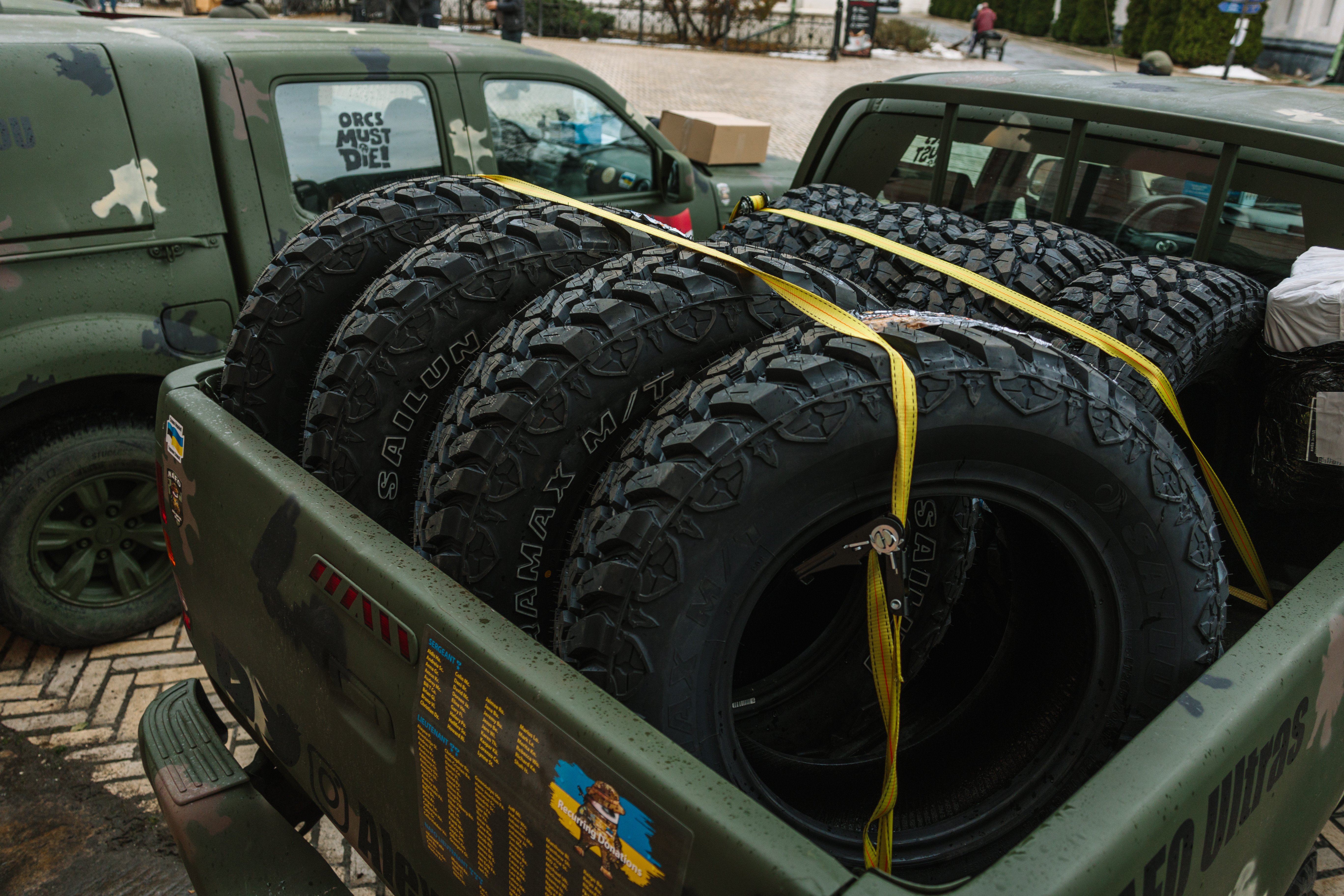
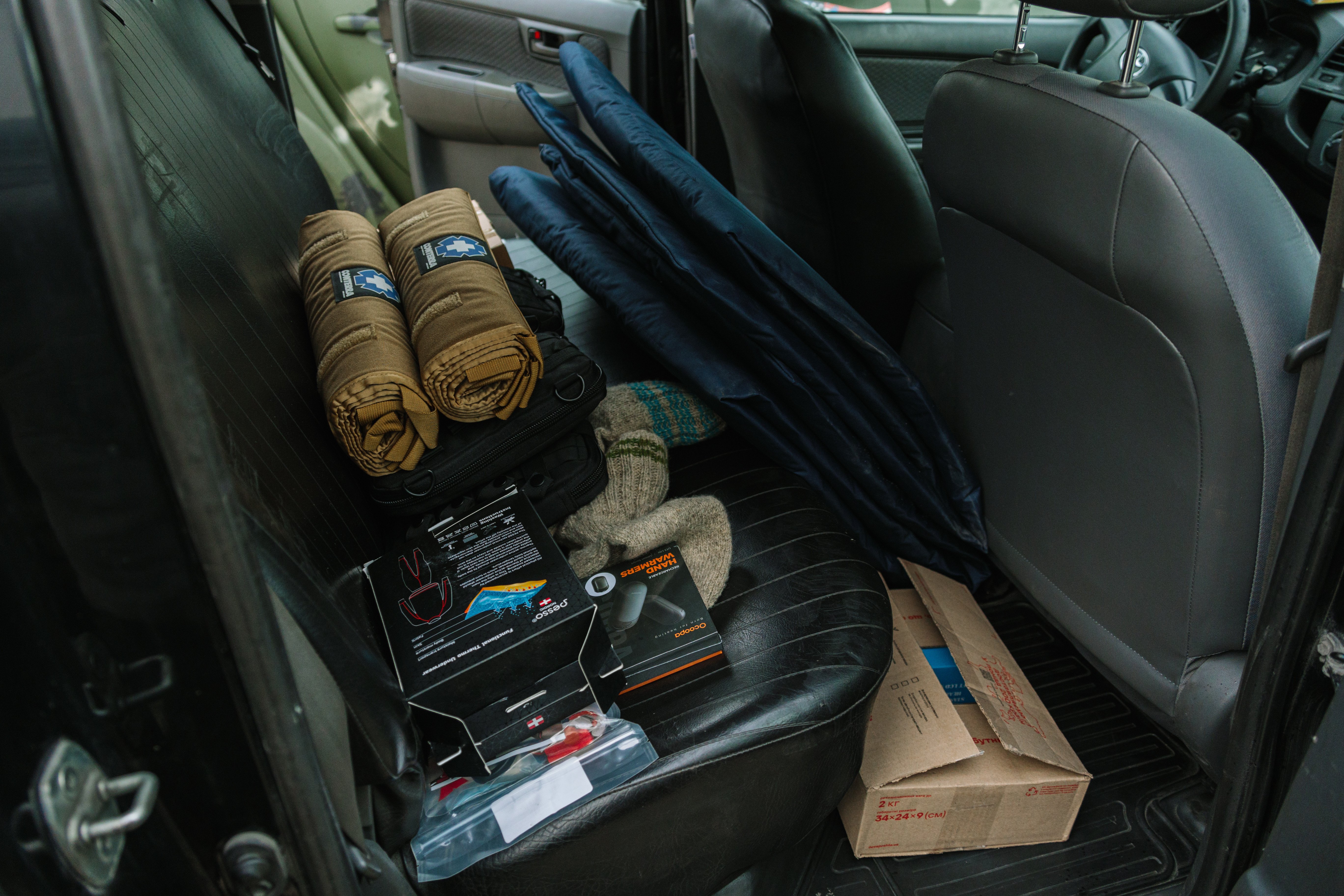
Their fundraising is clear: “We don’t just say, ‘Let’s raise $300k.’ We say: ‘We need $18k for one truck. Here’s the list: jammers, mud tires, FPVs.’ It’s specific and understandable,” Dimitri explains.
By 2025, the 69th Sniffing Brigade had delivered over $10 million in aid to Ukraine, and plans to double that by the end of the year.
That same clarity and structure shaped their next idea: showing how it all works. So they made a road movie.
No sleep till Kyiv
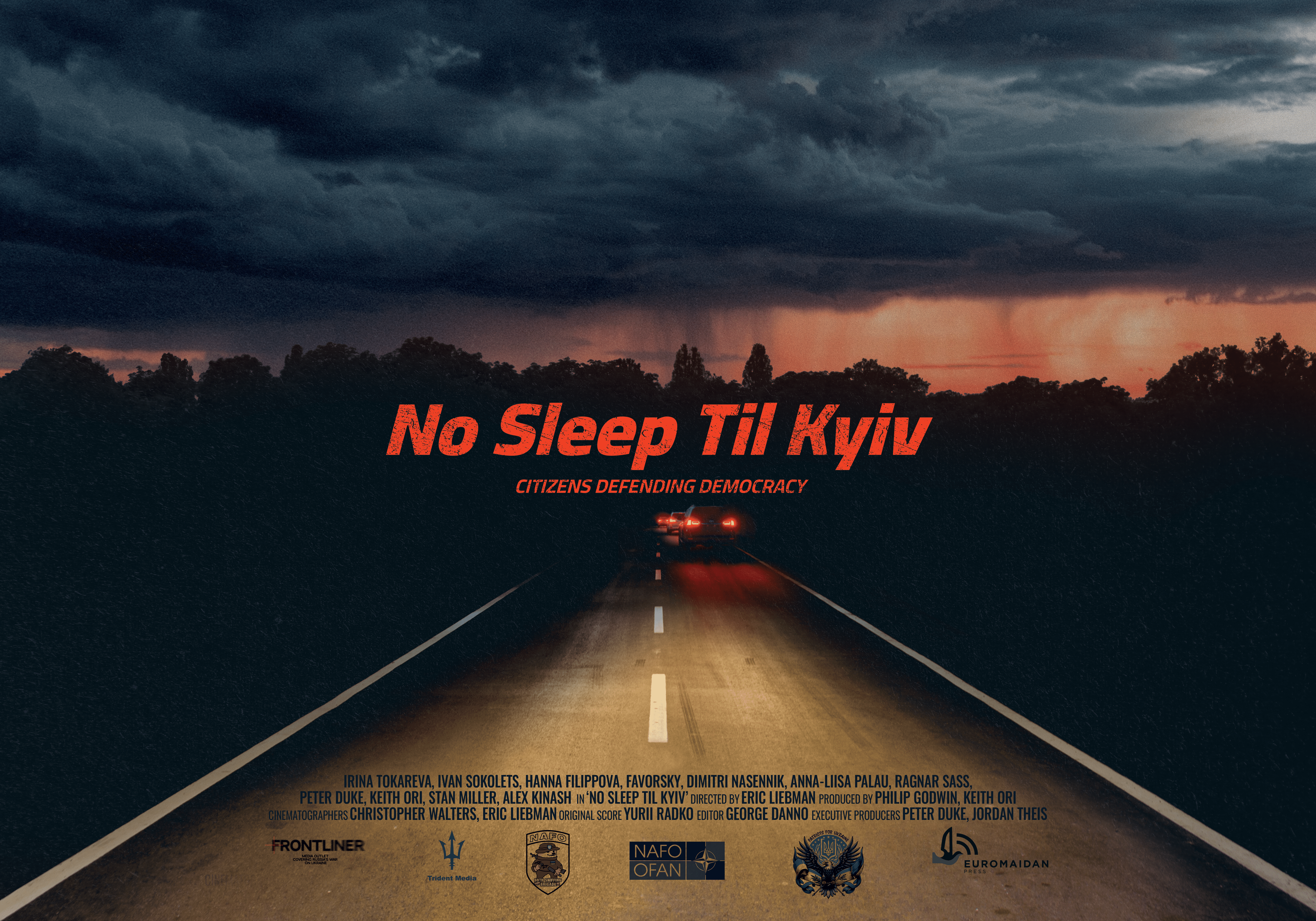
The 69th Sniffing Brigade, along with NAFO, announced in January 2025 a half-hour documentary called “No Sleep Till Kyiv.” It’s a fast-paced road movie that follows a truck convoy from Tallinn to Ukraine.
The film’s hero is Peter Duke, an American entrepreneur who joined the 69th as a volunteer driver and found himself at the center of something much bigger.
“A buddy told me he was going to drive a truck to Ukraine,” Duke says. “I said, ‘I’m doing that too.’ It took me two seconds.”
Duke, once a reality TV personality in Zombie House Flipping, became a regular convoy driver and eventually the creative force behind the film.
“There’s a story here,” he says. “Both from the heroes we're supporting and the regular folks who suddenly felt this was their fight too, and decided to do something.”
The documentary captures long hours on the road, showing what it means to pack a truck full of drones and drive 33 hours to a warzone.
“That’s what our movie is about—people from Florida suddenly fundraising, collecting, and flying to Estonia. Estonians, who were startup founders, drove the whole day to Ukraine. It’s about that shift,” says Nasennik, who is also a creative producer of the film. “We wanted to show people what their donations actually do, and that behind all this is a real community and real results.”
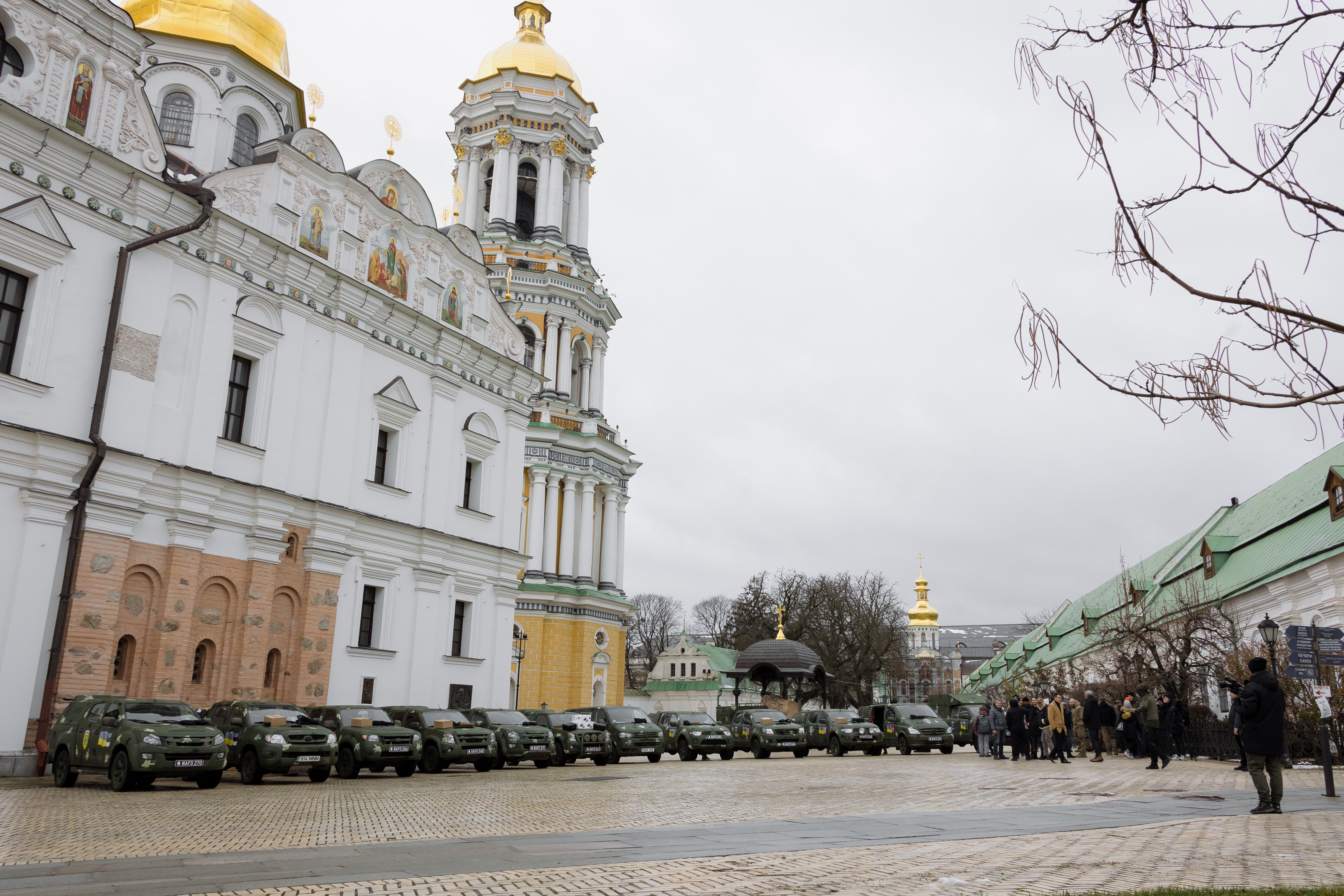
For Duke, the film was made with an American audience in mind, but the message goes far beyond that.
“This is a very American story—a country fighting for its survival against a colonial occupier,” he says. “But this story resonates globally, too. It’s about the right to self-determination against a bigger, more powerful force. That’s something we all recognize, no matter where we’re from.”
The film was released online in mid-July 2025, with international screenings planned to raise further funds for the 69th’s monthly convoys.
Why NAFO works
One reason NAFO connects with people is how close the war feels, says Nasennik.
“People see it in real time,” he explains. “They see trenches, but also Kyiv, a normal city, full of people living through a war. And it hits them: this could be us. It feels real, and they want to do something. NAFO gives them a way to act.”
That action can take many forms: sharing a meme, donating $5 to buy a drone, or even driving a truck full of supplies. Moreover, anyone can create their own sub-community.
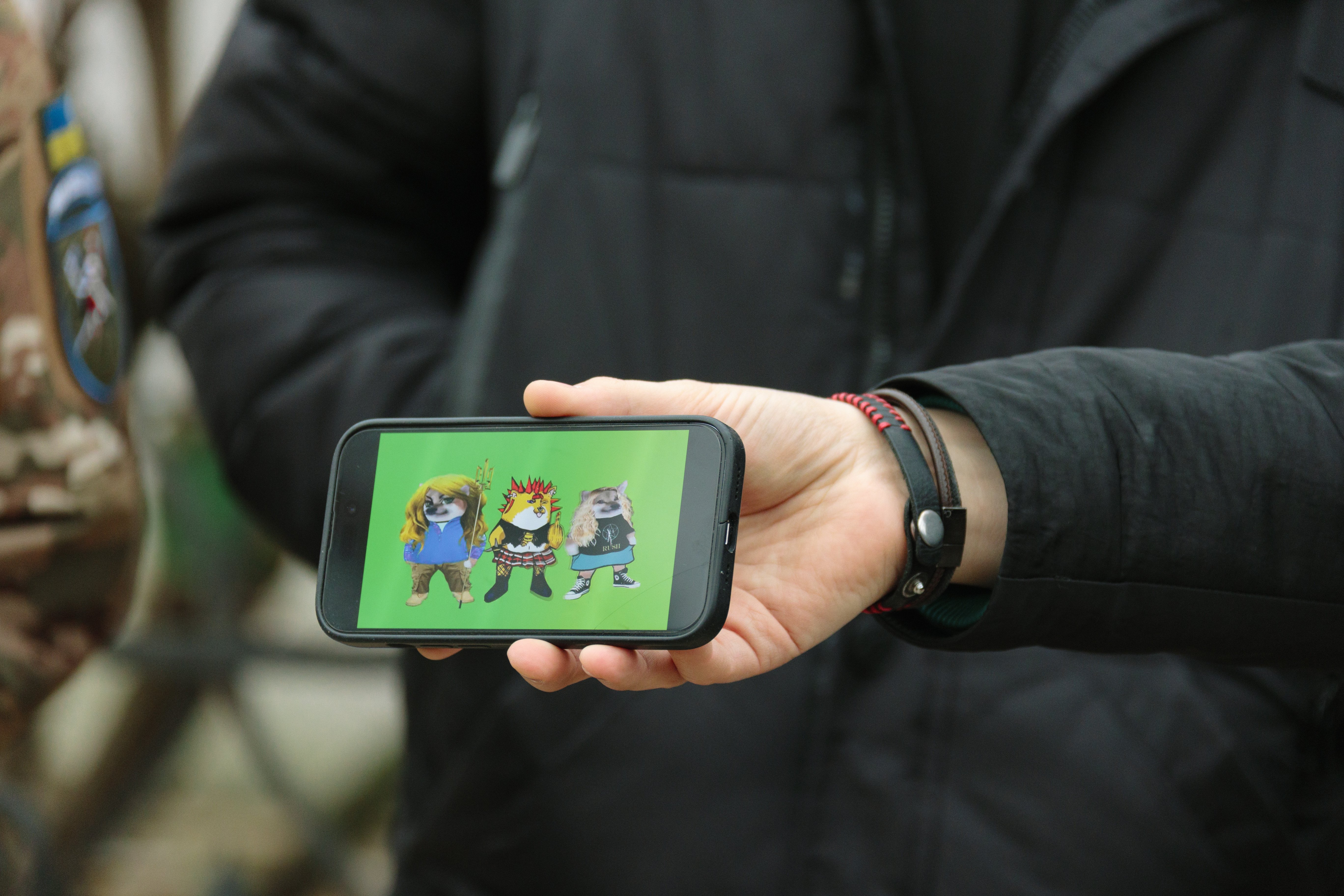
“If you’re transparent and show your work, people will support you,” Nassenik says. “That’s how it works. NAFO belongs to no one, and to everyone who cares.”
That structure is its strength, Dimitri adds. There’s nothing to hack, just people acting where they are, how they can.
“Most of the Fellas I’ve met are just decent people,” says Duke. “They believe in the cause and in being on the right side of history.”
What stands out most to him about NAFO hasn’t happened yet: “One day, when the war is over and history is written, this movement will be remembered as something legendary, a moment when ordinary people stood up and said: ‘We were there. We helped. And we were right.’”
Discuss this article:

-111f0e5095e02c02446ffed57bfb0ab1.jpeg "Photo of Roman Kohanets")

-07c046f037cabcd54fb44b5253b3733d.jpg "“Bathing” (2021), an 80 × 60 cm artwork by Ukrainian artist Mariia Drozdova. (Source: Art From Ukraine/Instagram)")
