- Category
- Life in Ukraine
How a World U20 Athletics Champion Came to Command Foreign Fighters on Ukraine’s Frontline
 Prefer U24 Media on Google
- Authors


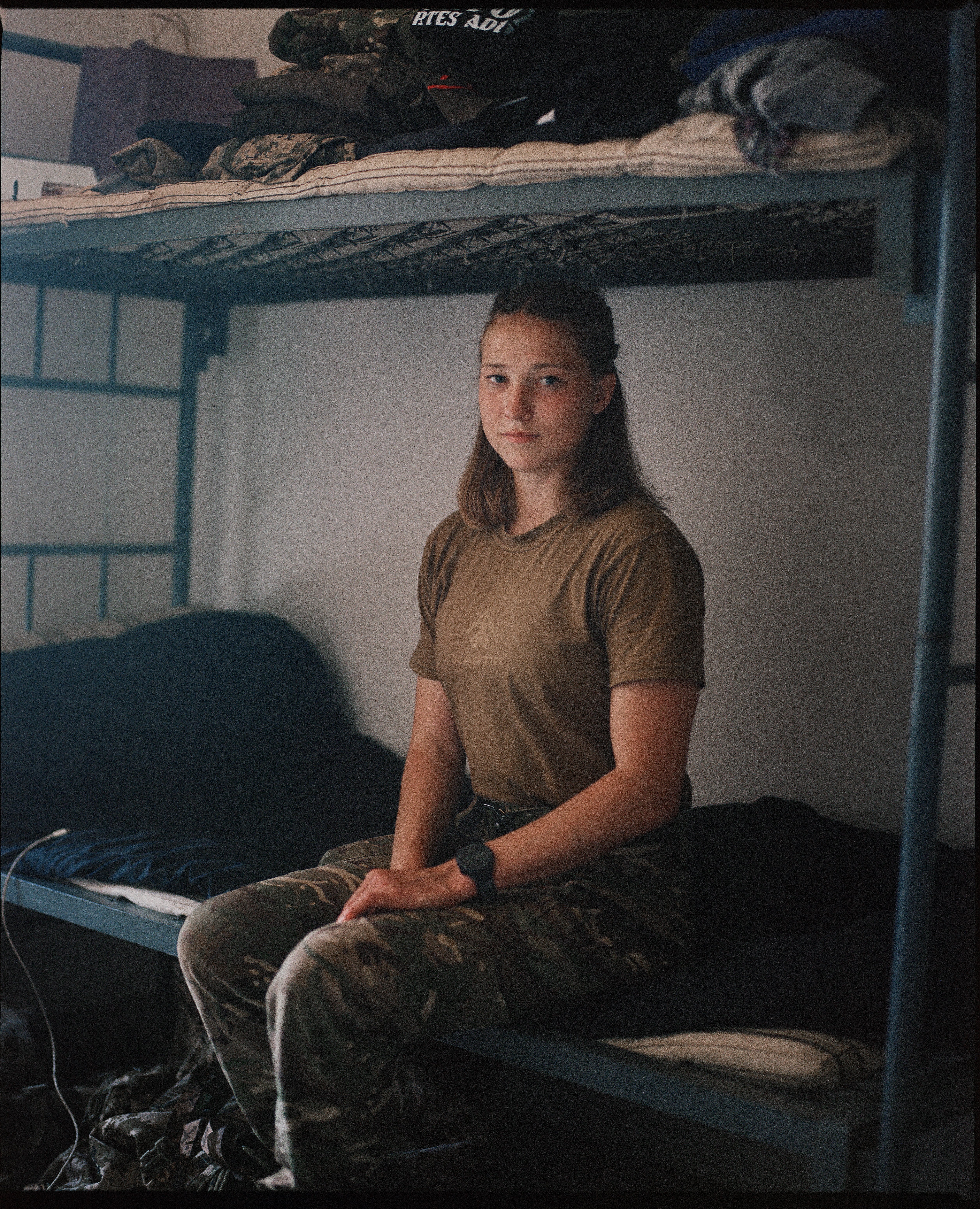
Alina Shukh was a World U20 heptathlon champion with Olympic ambitions. Far from the track, and deep in the fight against Russia’s invasion, today she leads foreign fighters on Ukraine’s frontline.
Ukraine’s military is made up of people from all walks of life: farmers, coders, teachers, and even world-class athletes. Shukh, once a rising star in track and field, is now part of that force, coordinating international volunteers in one of the country’s most motivated brigades.
“In sports, you’re constantly swinging between the joy of victory and the sorrow of defeat,” says Alina. “In everyday life, you rarely feel that—and it’s tough. You miss pushing yourself and others, the incredible intensity, the whirlwind of emotions when it’s over. But the army—it’s the same, just multiplied by the cost of human life.”
And she truly knows what that means.
Shukh’s track and field journey
Now 26, Alina has been involved in sports since she was five. Both her parents are coaches, so physical activity has always been part of her life. Her specialty is track and field.
“People often asked me what it was like having your parents as your coaches. It wasn’t a problem at all: at home, they were my mom and dad; at training, they were my mentors.”
“Movies always portray harsh, cruel coaches, but we just had discipline,” says Alina. “It wasn’t all like: ‘Oh, sweetie, just run a little more.’ Mom had to push me when I was already feeling terrible. But it was worth it. We were working toward a common goal, so we understood what it was all for.”
And they did achieve those goals. Alina is a multiple-time Ukrainian champion in various track and field disciplines. She won the 2018 World U20 Championship in javelin throw and the European U20 Championship in heptathlon. What she loved most, she says, was the complexity of combined events, where the outcome is always uncertain.
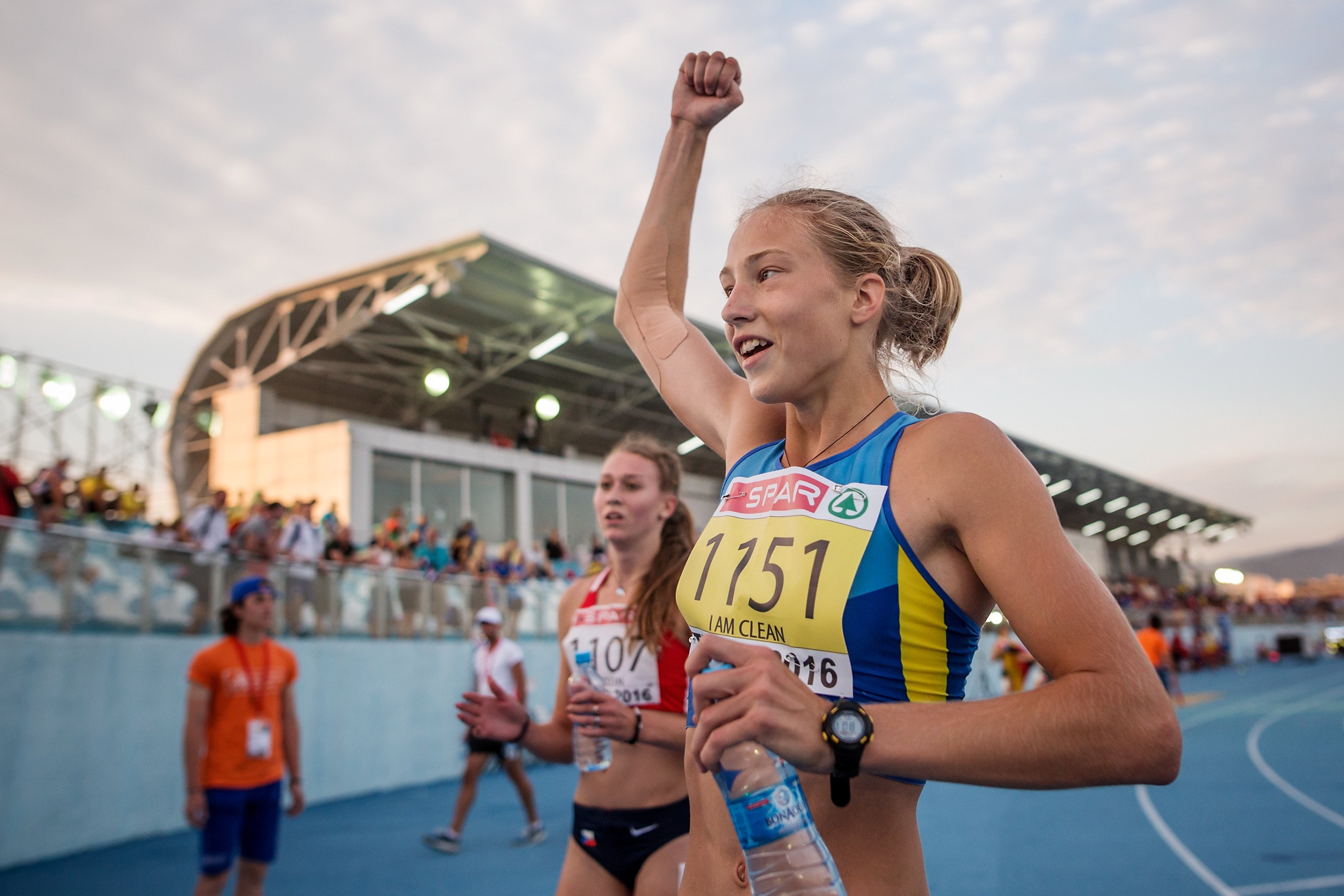
“I’ve had wins that I clawed back tooth and nail—at the European Championship, the World Championship,” she says. “But what I remember most are some regular competitions in Kyiv. My toe hurt like crazy back then. I tried to ignore it and performed well, even reaching the Master of Sport standard at just 14—a big deal. Afterward, I went to the doctor, who said it was just a cramp. My parents would massage my foot every night while I cried. A week later, another exam showed it was actually a displaced fracture. I earned that Master title with it.”
There is a Wikipedia page about Alina in eight languages, but she doesn’t consider herself a star.
“After a big win or record, there’s always that high,” she says. “But it only lasts until the end of the day. Then you wake up—and it’s time to work again.”
Shukh was preparing for the Olympics after her world championships and record-breaking performances, but first came the pandemic, then injuries. After Achilles tendon surgery, her Olympic dream faded. Still, her journey of self-growth continued.
“I know I’ll never be lost in life,” says Alina. “I have four degrees, one from the US. I speak English and Spanish. I’ve worked in many fields. I’ve volunteered. Now I’m in the army. I know how to find myself. And how to survive.”
Between sports and the military
When Russia launched its full-scale invasion of Ukraine, Alina was working in finance. Faced with her country’s need, she decided to enlist. But at the draft office, she was told she was number 1,564 in line. So she found another way.
“I had a training session scheduled for February 24,” she says. “I hate changing plans. But then I read the news and realized—this was serious. When I couldn’t join the Territorial Defense Forces , my relatives and I went to a volunteer center. We ended up staying. Suddenly, I had 1,500 new contacts—people who helped us source, transport, and deliver what was needed. That was a unique period. And yes, I still trained—on my living room mat.”
From there, she began working in corporate social responsibility, heading that division in her company and focusing on financial literacy for service members. She led hundreds of lectures, mentorship sessions, and consultations to help soldiers feel secure during and after deployment. But once again, Alina made a radical life change.
“At one point, we completed a massive project that later spread to dozens of organizations,” she says. “I thought: What could I do now that’s even more important? I felt like that was the peak. Plus, I’m an athlete from an individual sport—I’m not used to sitting in the rear. So I made a very mature decision.”
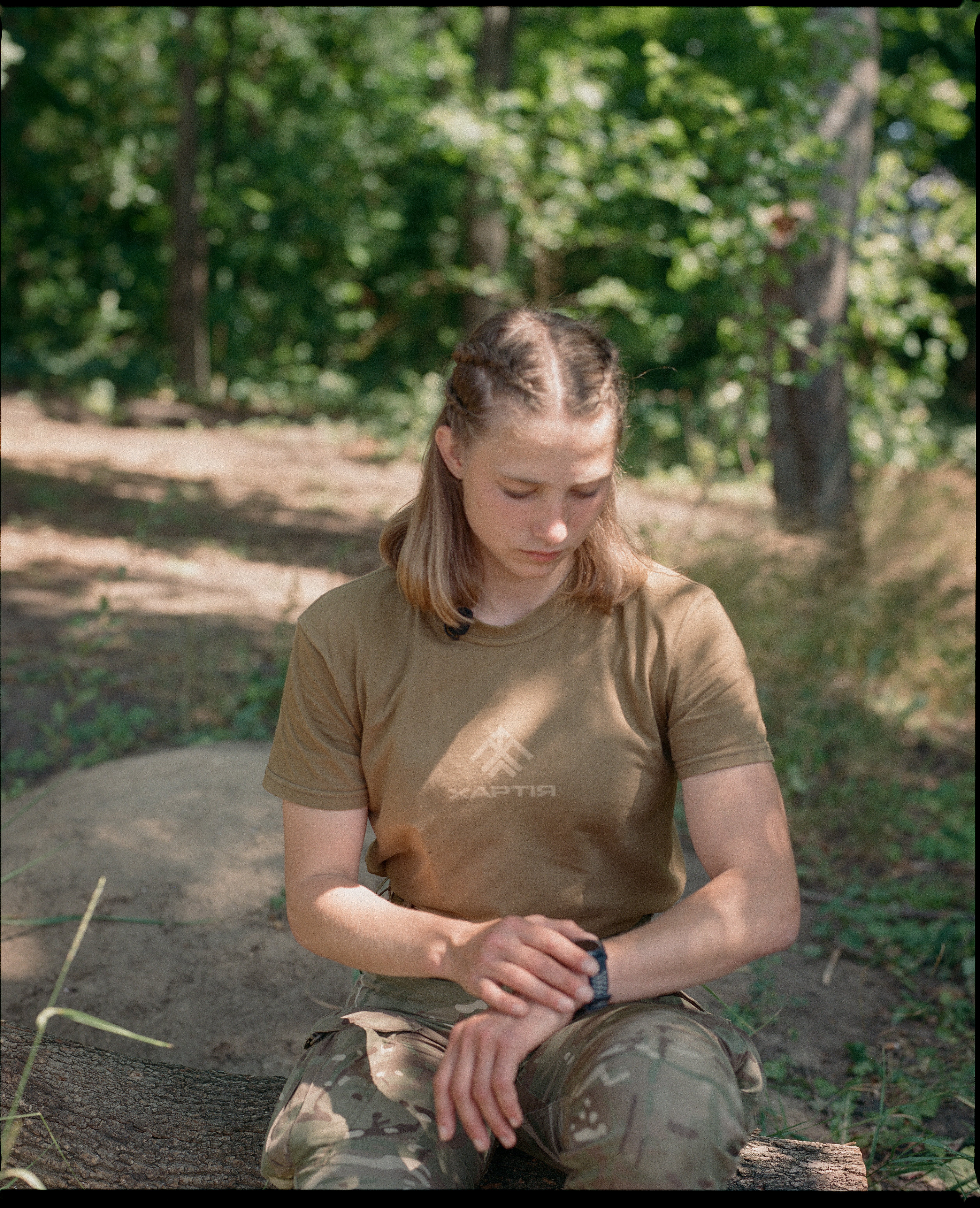
In the spring of 2025, Alina completed her basic training and joined Ukraine’s 13th “Khartiia” Brigade. She says she chose it because it was full of highly motivated people, and that mattered deeply to her:
“Drones, reconnaissance, FPV, tactical medicine, field navigation. Boot camp. The waiting. The uncertainty. The relocations. And then… a completely new life. A life full of meaning, sincerity, emotions—and most importantly, people. Real people. The best. Heroes,” she wrote on Instagram.
Today, Alina goes by the call sign “Somatra.”
“It’s just a word I came up with when I was about four,” she says. “I had to sign something, and I wrote: Somatra. Since then, I’ve used it for online usernames and such. But any call sign is something you earn. So I expect it might change eventually.”
Physical training is a key part of basic military prep—but for a world champion, it wasn’t exactly a challenge.
“To be honest, those exercises were just like a warm-up for an athlete,” she says.
Still, the army brought plenty of new trials.
Breaking new ground
At Khartiia, Alina works with international fighters from over 15 countries who’ve come to fight for Ukraine. She supports them at every stage—from recruitment and training to daily needs and frontline deployments.
“It’s uncharted territory,” she says. “Imagine: at one position, we might have English-speakers, Spanish-speakers, Ukrainian-speakers—and somehow, they all have to be coordinated!”
Yet Alina says she’s thrilled to face these new challenges.
“I’ve never felt so wholly where I’m meant to be. Never laughed so genuinely. Never witnessed so many people working with such tireless drive, such focus, such purpose.”
“Every single day here feels worth a hundred peaceful ones,” she says. “In this moment, there is no past, no future—only a clear and urgent now. We will defeat evil—of that I’m sure. When? No one can say. But to be part of bringing that victory closer, side by side with this new family—that’s the most powerful, the most profound thing I’ve ever lived through… or ever will.”
Soon after, Alina learned about the opportunity to become a squad leader for international fighters — and eventually a sergeant. She immediately asked to be enrolled in the training.
“Turned out, it was in the UK,” she says. “Three of us went through the Interflex course together. It was mostly about leadership—how to command amid chaos and stress. It just so happened that we were there during the program’s anniversary, so we met the UK Prime Minister and President Zelenskyy.”
At the course’s conclusion, certificates were awarded, and one participant was recognized as the best: Alina.
“Probably just because I asked the most questions,” she laughs.
Now, Alina is the platoon’s senior sergeant in her company. She says some foreign volunteers came to fight simply because they love Ukraine and don’t want to see it fall to Russia. Others came to be on the right side of history. Some are escaping personal struggles or looking to earn money.
“One way or another, they’re all highly motivated,” she says. “They’re all amazed by what Ukraine is really like. And the food! Every single one says it — our food is genuinely better. I studied in the US, so I can confirm. Of course, foreigners have their quirks—our Colombians, for instance, only eat chicken and rice. Sometimes, because of how things work here, you can even get McDonald’s delivered to the front line. That blows their minds. But it’s true.”
What surprised Alina most about the military?
“The sheer level of work ethic. I love working. But at Khartiia, the norm is doing something all the time. Checking things, delivering supplies, coordinating, planning missions, tracking movements at 2 a.m. Then by 5 a.m., it’s time for the next round of meetings and logistics. Not even in sports have I seen that kind of stamina.”
Asked how fellow soldiers react when they learn about her athletic past, Alina replies:
“We don’t talk about it much. Turns out, in the army, people rarely talk about the past or the future. It’s always about the here and now. Because today is when the most important things are happening.”
Discuss this article:
-111f0e5095e02c02446ffed57bfb0ab1.jpeg "Photo of Roman Kohanets")
-07c046f037cabcd54fb44b5253b3733d.jpg "“Bathing” (2021), an 80 × 60 cm artwork by Ukrainian artist Mariia Drozdova. (Source: Art From Ukraine/Instagram)")

-c439b7bd9030ecf9d5a4287dc361ba31.jpg "Photo of Katherina Popilnichenko")