- Category
- Life in Ukraine
Ukraine's Military Chaplains Help Soldiers Through Russia's War. But Who Takes Care of Them?
A group of men is sitting in a circle, discussing anger and ways to overcome it. Joining them is a psychologist who, from time to time, asks the participants follow-up questions. What is unusual about this conversation is how often the men turn to the Bible to support their points. Yet, this is not surprising, given that they are participating in a recovery program for military chaplains.
 Prefer U24 Media on Google
- Authors


-73e9c0fd8873a094288a7552f3ac2ab4.jpg "Photo of Olena Blizniakova")
-42696701342093d1cdbc4069f0f07d6c.jpeg "Photo of Mykyta Shandyba")
Organized by the NGO UA.ANTS in Ukraine Zakarpattia region—a mountainous region far from the front lines—the program gives chaplains and their families five days to step away from the pressures of military service, reconnect with one another, and let someone else take care of them for a change.
It all starts with prayer
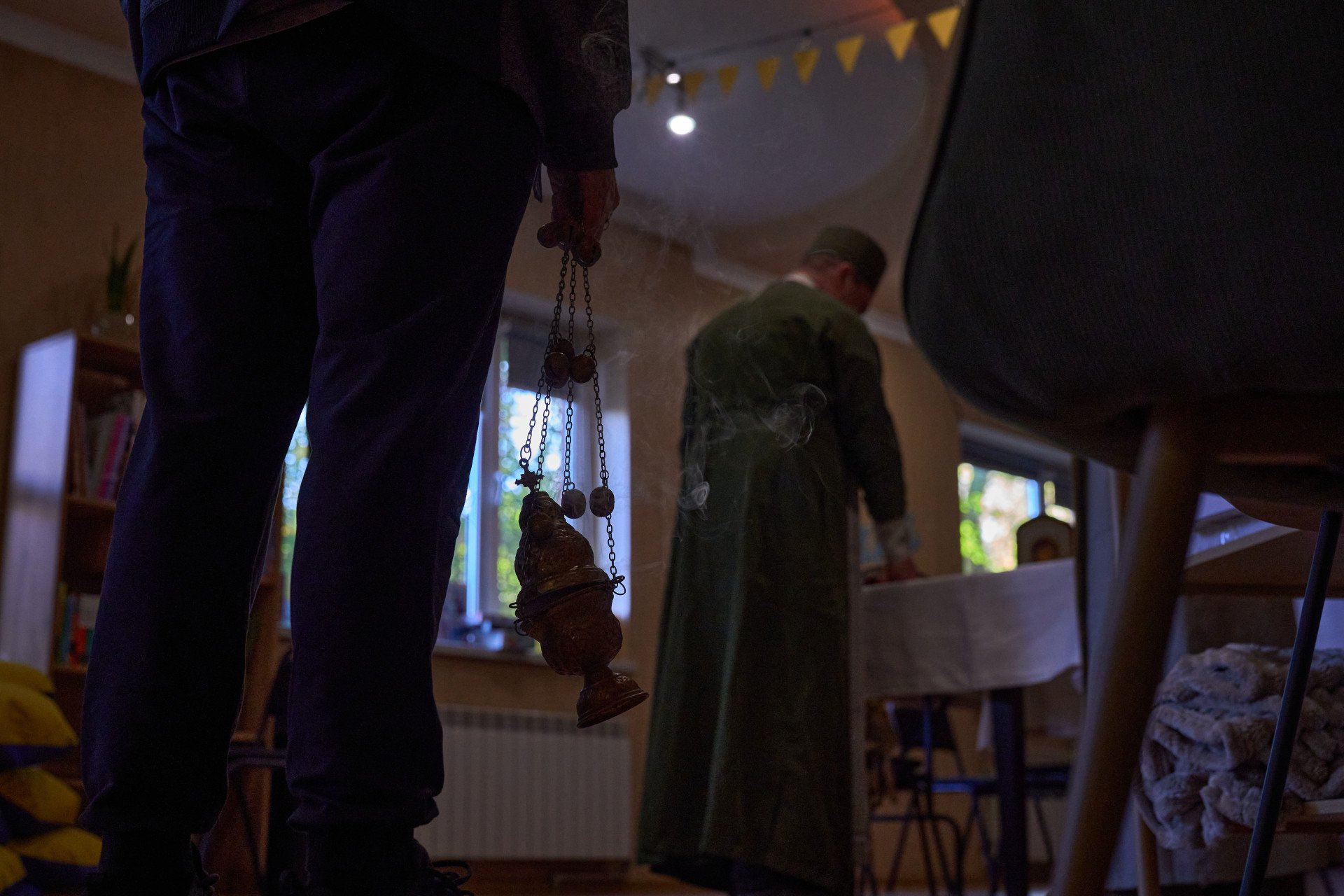
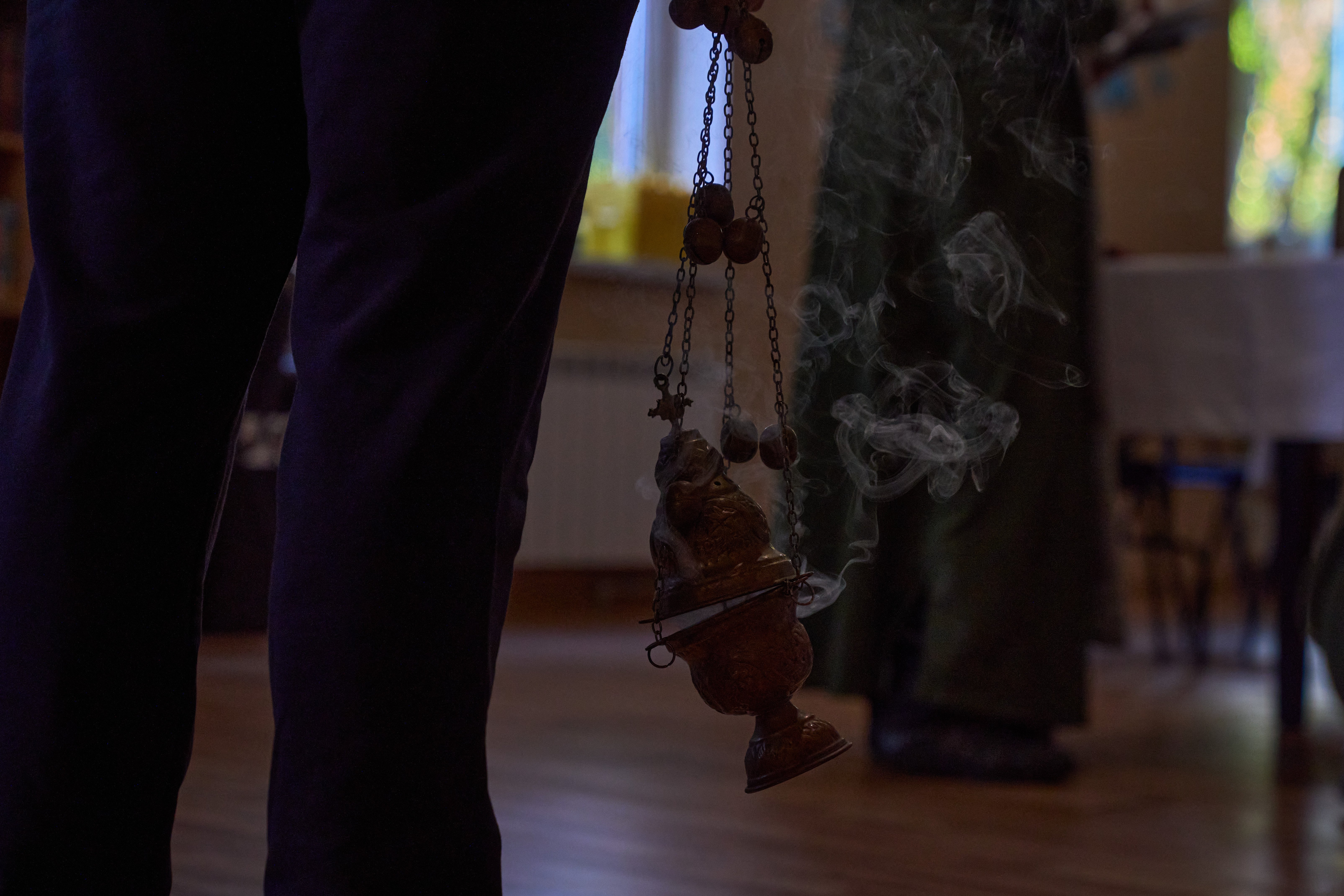
For a single morning, the playroom of a resort complex in the Zakarpattia region is transformed into a makeshift chapel. Chairs are moved aside, children’s toys are put away—everything is arranged for a liturgy honoring the Nativity of the Blessed Virgin Mary.
The service is led by Father Mykola, and this is certainly not the most unlikely place he has ever held a service.
“Practically all of my ministry as a priest has been spent working alongside the men and women in pixel camouflage,” he says.
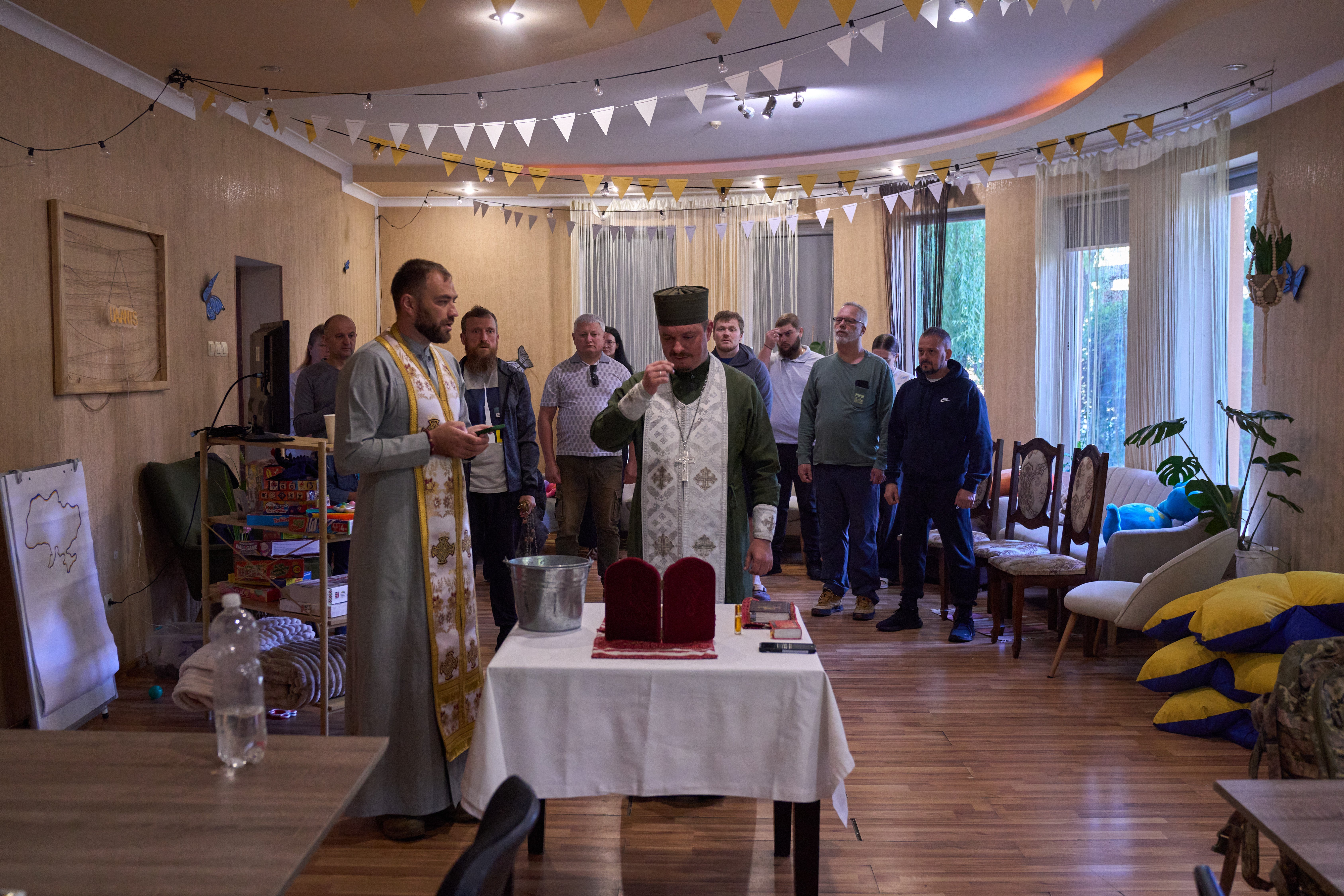
Mykola Lobur joined the military as a deacon and was ordained a priest of the Orthodox Church of Ukraine while already serving in the armed forces. He is now a chaplain with the 422nd Separate Regiment of Unmanned Systems, which is currently carrying out missions in southern Ukraine.
“I’m very happy whenever I have the opportunity to serve in churches, but for about two years, the small spiritual centers we set up were all on the front line.”
Joining him are fellow chaplains from other brigades, accompanied by their wives and children. They are all part of the "Point of Support" recovery program organized by the NGO UA. ANTS for military chaplains and their families. Here, service members can take a break from supporting others and receive care themselves from the project's volunteers and psychologists.
“I am constantly with my personnel,” says Father Mykola. “Even tough, strong men need support—they need someone to talk to. They need attention, prayer, and a kind word. You never know when someone will knock on your door.”
Serving as a military chaplain deployed with a unit is a 24/7 calling.
Mykola Lobur
Chaplain, the 422nd Separate Regiment of Unmanned Systems
Although he cannot completely turn off notifications for all his work chats, he has muted air raid alerts.
"The hardest parts are fatigue, stress, and not having family around. When you're apart for quite a long time, it throws you off balance," Mykola says. Right now, his wife and two daughters are by his side, with five days together ahead of them.
Sometimes, you need a psychologist yourself
Most mornings at the retreat begin the same way—with exercise. Despite the chilly weather, the men head outside, some even taking off their shoes to train barefoot. Meanwhile, inside, their wives are practicing Pilates. After that comes the main gathering, an essential part of the day—a shared prayer and a minute of silence to honor the memory of all the fallen.
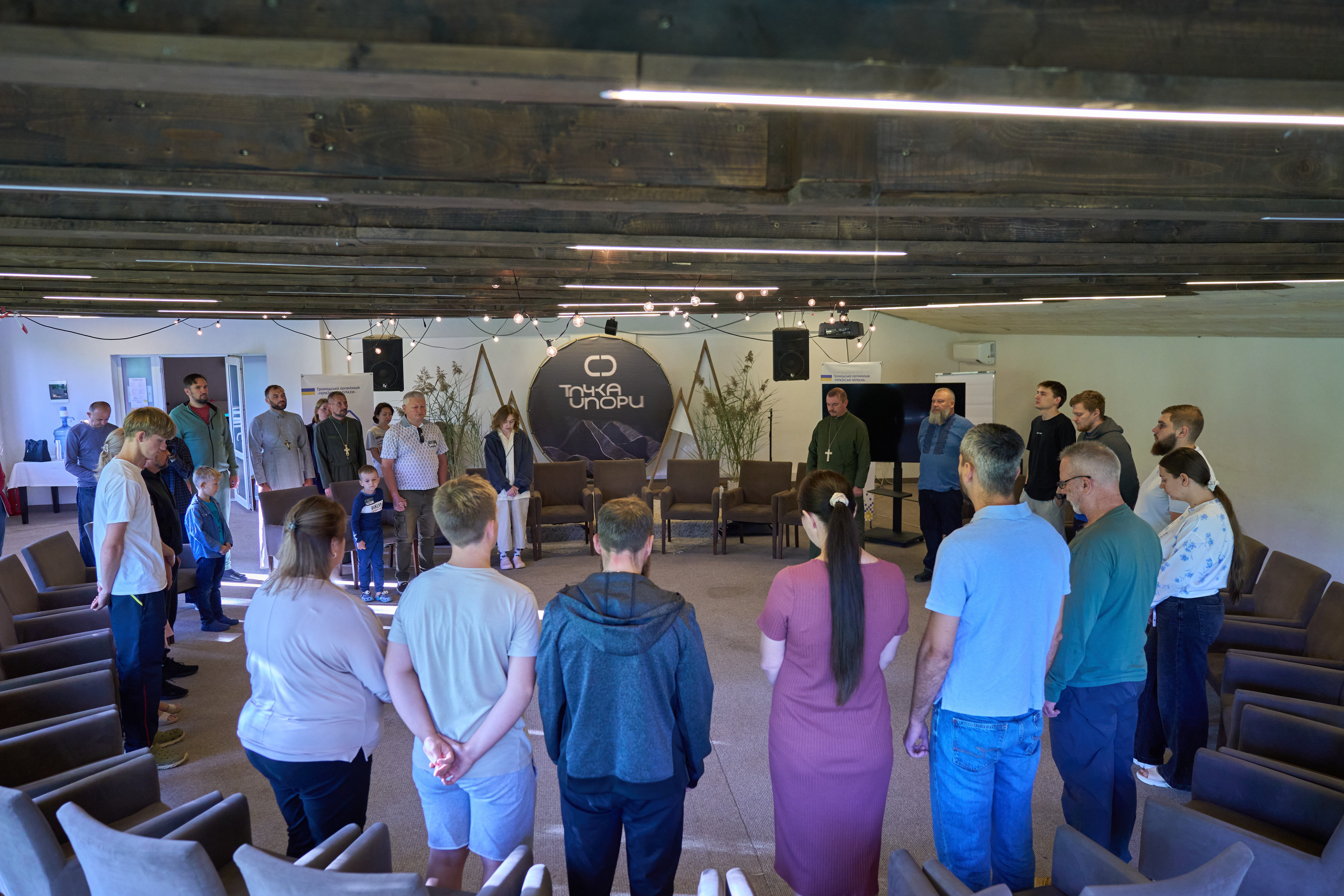
“Our independence is fought for with blood and sweat. Unfortunately, with the bitter tears of those who will never see their children, husbands, and wives again,” says another participant, Bohdan Viznyi. Originally from the Lviv region, he recalls that even as a child, he loved God and told everyone he would become a priest. However, his first trade was as a locksmith. Only later did he enter the seminary.
Today, he serves as a chaplain with the 475th Separate Assault Regiment "CODE 9.2," though his path to chaplaincy wasn’t direct either—he began his military service as a mechanized squad commander.
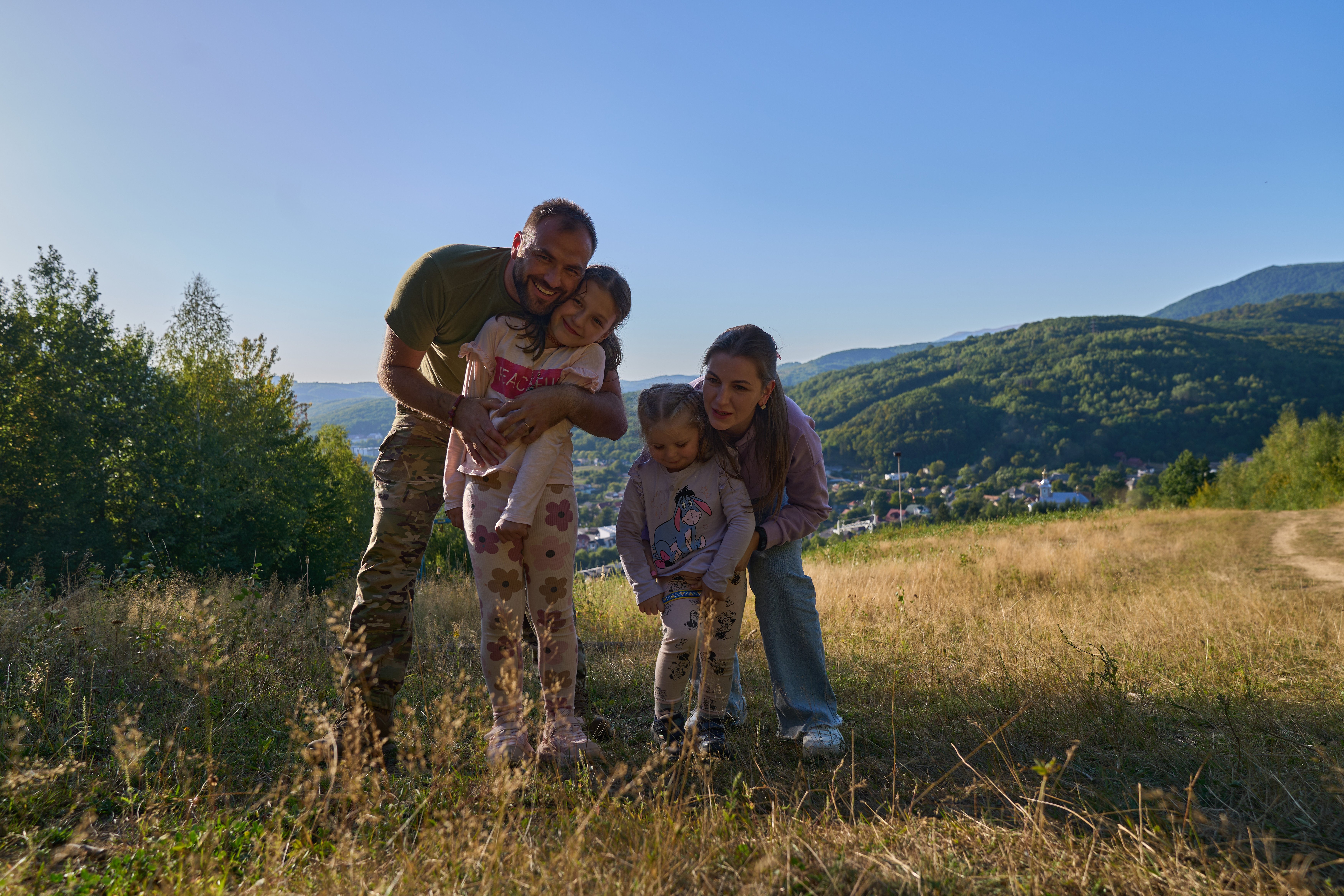
“For me, the hardest part of a chaplain's work is seeing your brother-in-arms off on his final journey,” he says. “I’ve buried so many over these two years. You were talking to someone yesterday, and tomorrow they’re gone.”
That is the hardest and most painful thing—letting a person go.
Bohdan Viznyi
Chaplain, the 475th Separate Assault Regiment "CODE 9.2"
Father Bohdan spends a lot of time with the servicemen of his assault unit—talking, supporting, motivating them—and praying they return from their missions unharmed.
“I work not only with service members, but also with families who have lost their loved ones, who are waiting for them to return from captivity, or who are living in constant uncertainty. When someone goes missing in action, we just don't know what the future holds. As military chaplains, we often act as family counselors. People come to us to share, to cry. We have to process all of that within ourselves.”
With Bohdan at the retreat are his wife and two daughters. He stresses that chaplains are only human and need support just like anybody else.
“I've seen many men cry during confession, and through those tears, they are able to open up. You absorb all of that. Sometimes you need a psychologist, too, just to find some solace in this life.”
I’m trying to forget this
After breakfast, the chaplains gather for a workshop led by psychotherapist Andrii Anpleev. He notes that the topics were tailored around requests submitted by participants before the project began, focusing on self-regulation, anger management, and family relationships. The exercises include meditation, grounding, and finding inner support.
“I could give a lot of theory, but I try to provide just enough for them to understand why we are doing this and why it matters. I work through practical skills with them—things they can actually do,” says Anpleev. “They need to try different techniques and choose what works best and what they feel comfortable with."
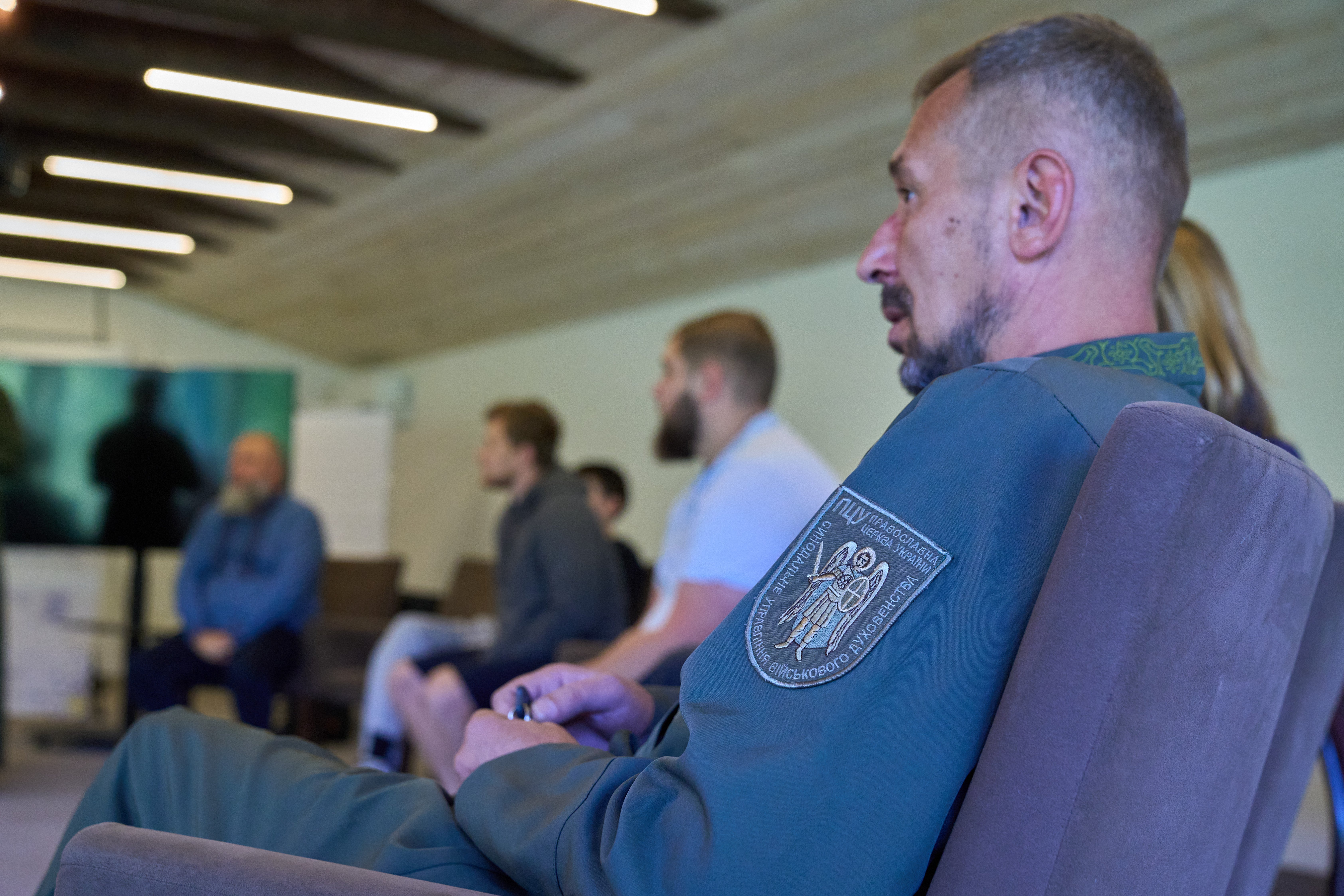
Another exercise is taught by John Sennett—an American veteran and volunteer who currently lives in Kyiv and contributes to UA.ANTS programs. He leads a lecture for the chaplains on therapeutic writing, asking each participant to write about a difficult experience from their time in service.
“We teach them to write one event at a time,” he says. “Once they learn how to write about one event, inevitably they start to write about other events that happened within the war. It gives them a self-healing way of dealing with difficult circumstances.”
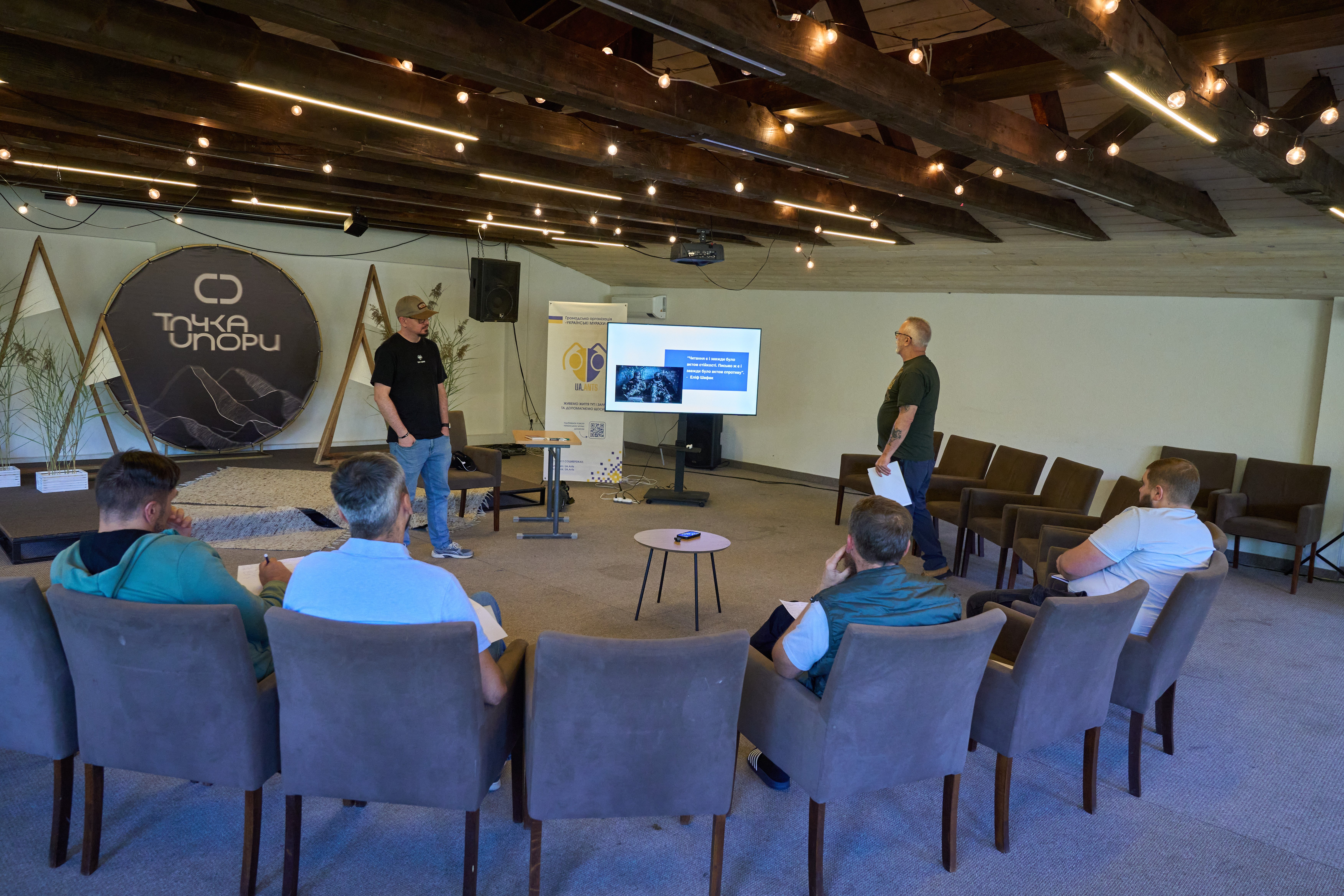
Attending the workshops and lectures is voluntary, as is completing the exercises. Participants can decline if they don't feel like doing something or lack the emotional strength to engage with a proposed task. During one session, a chaplain asked Sennett why he should recall a traumatic experience.
“I'm trying to forget it, and you want me to bring it up again,” he says. In response, the volunteer shared the story of his own brother, a fellow veteran who was only able to write down his traumatic memories twenty years later. “For some it helps.” Sennett adds.
It gives them a way to process their experiences within the war.
John Sennett
Volunteer, “UA.ANTS”
Viacheslav Yurchenko, head of the military chaplaincy service of the 12th Army Corps, says his main goal on this project is to gain knowledge and skills. He manages more than three dozen chaplains and assistants, noting that "we need to provide recovery for our own team as well."
These psychological workshops are not just for the chaplains, however—their wives participate as well. It gives the women a chance to spend time among those who understand them, and work with a psychologist on ways to care for both themselves and their husbands.
The Military Chaplaincy Service of the Armed Forces was officially established in 2022, but many chaplains had been visiting the front lines since 2014. Among them is Ihor Ubyi-Vovk, call sign “Padre,” a volunteer with UA.ANTS. He explains that at first, he went to the front only with essential gear for the soldiers, but later realized they also needed spiritual support. In his view, simply being there is the most vital part of a chaplain's work.
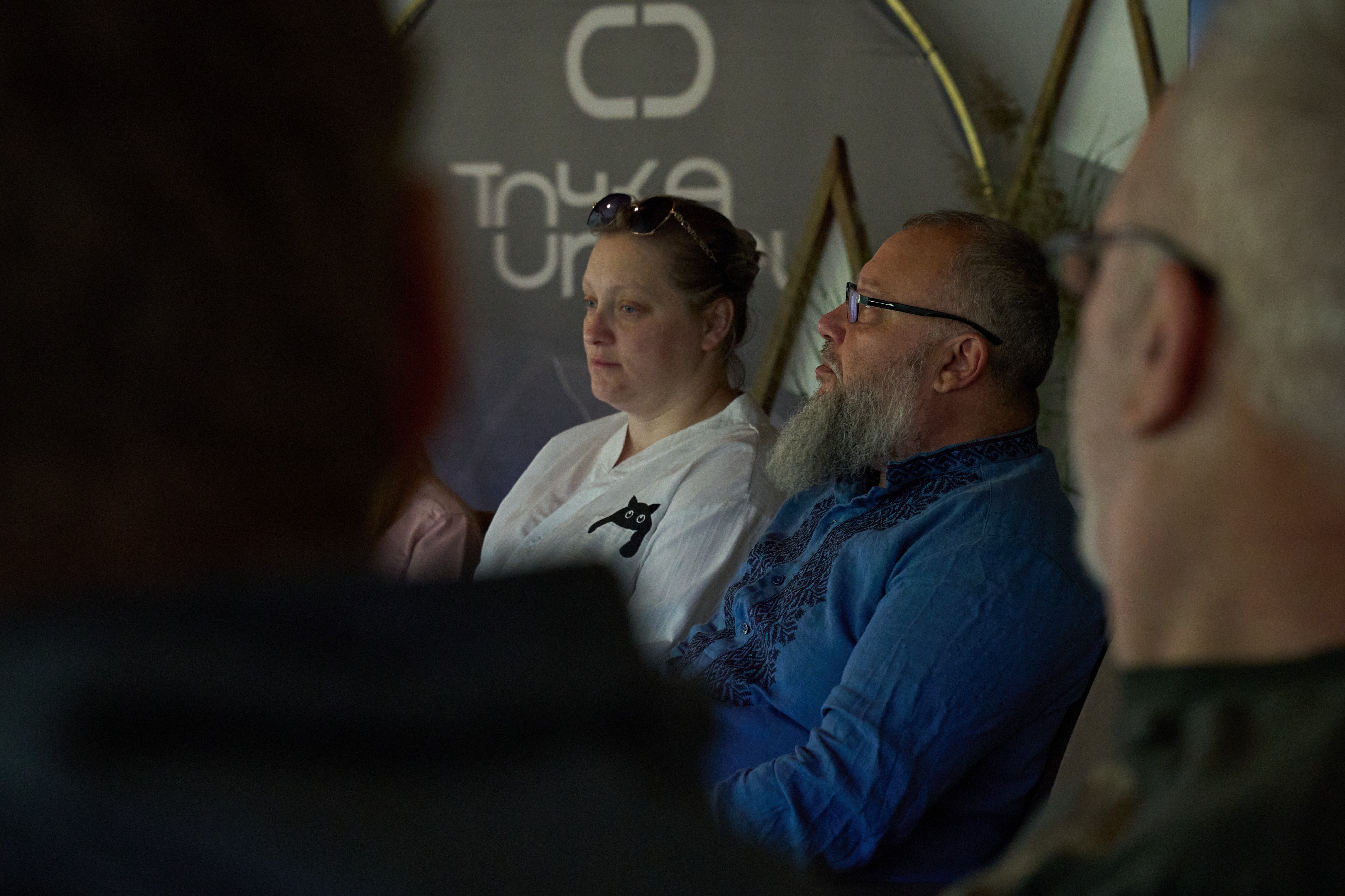
“To bring a ray of light and help the guys stay human. Just stay human, so they don't lose their way,” says “Padre.” “Chaplains are human too, and they burn out just the same. Maybe even faster, because they're constantly surrounded by grief. Nobody calls on them when everything is fine,” he continues.
Supporting the families
As the participants reach the top of the hill, the volunteers are just getting a bonfire going. The hike is one of the several activities planned for the chaplains and their families during the project. Other highlights include relaxing at thermal springs, a photoshoot, gathering around the bonfire, and a Country & Western-themed party.
“Our goal is to support families,” says Liza Kalinchenko, who introduces herself as one of the UA.ANTS. “We understand that war damages family bonds, and we really want to give them this time together.”
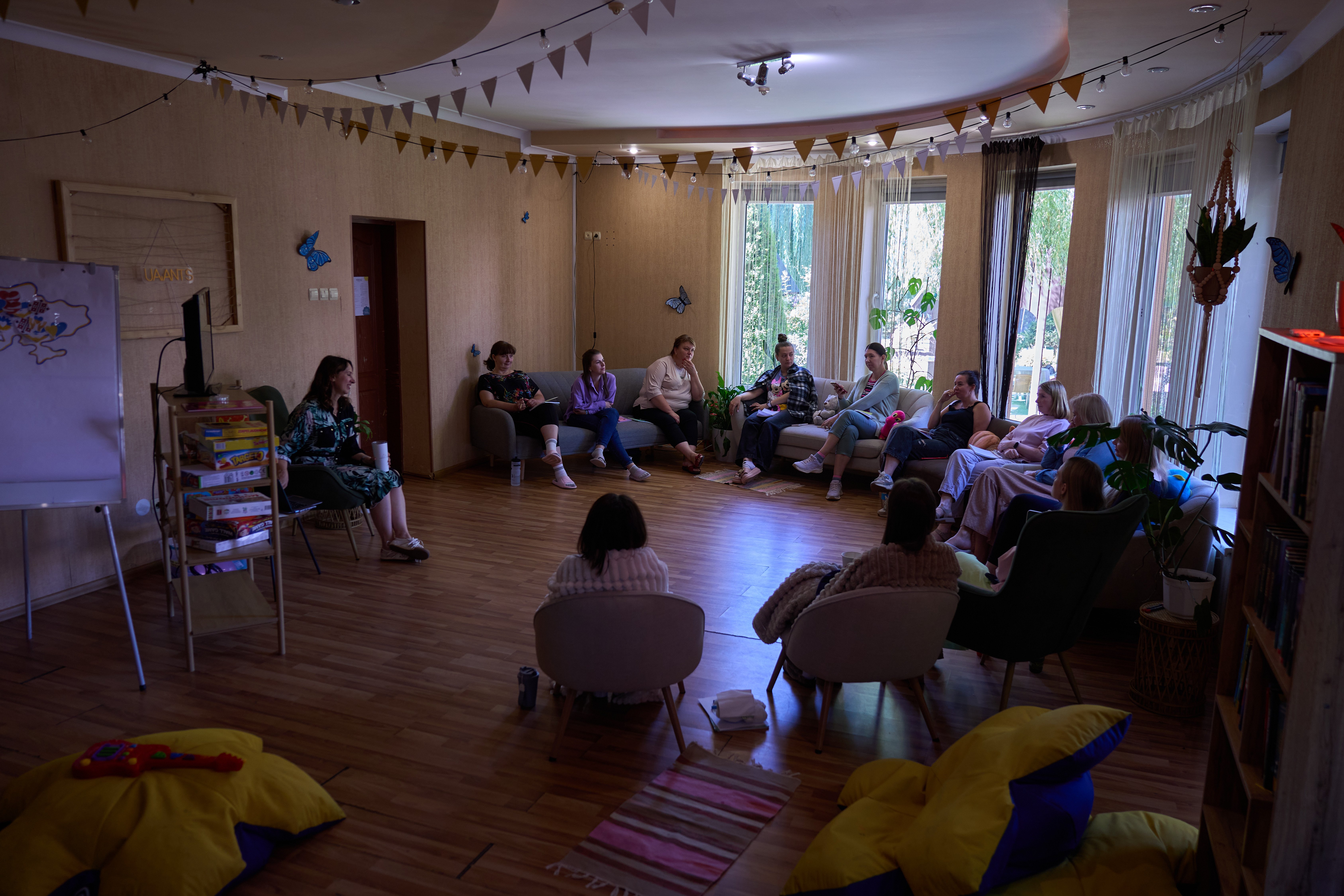
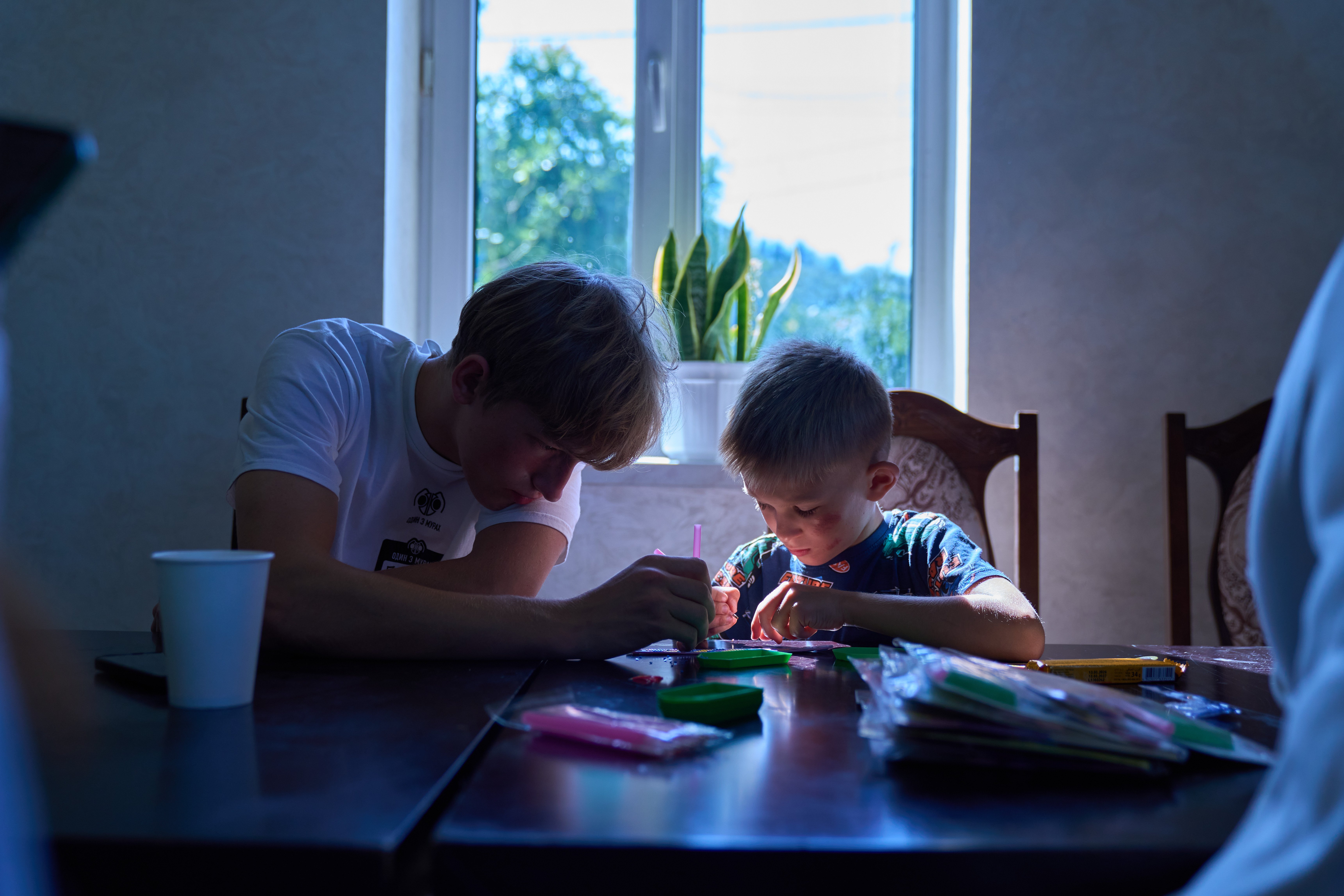
The entire five-day program is designed so that everyone finds an activity to their liking. While the parents attend psychological lectures, their children are offered arts-and-crafts workshops, sports relay races, and various board games.
We have a motto for this project: support those who support others. And it is crucial for us that every chaplain feels this support.
Liza Kalinchenko
Volunteer, “UA.ANTS”
"My favorite part is on the first day, when you notice a family thinking all your warmth and smiles are just for show,” she says. “And then, later, hearing them say in their feedback that they finally felt genuinely valued."
At UA.ANTS, they say the idea of creating a project like this for chaplains was simply in the air.
“These are people in military service who handle a huge range of social issues and help our troops recover mentally,” explains the organization's founder, Oleksandr Kalinchenko. However, “Point of Support” is not the organization's only initiative. Founded immediately after the start of the full-scale Russian invasion, this NGO operates across two main areas: civilian and military support.
The civilian focus includes the recovery project for chaplains, with similar programs also held for military personnel and their families, veterans, and the families of fallen soldiers. In addition, the organization created shelters for people forced to flee their homes.
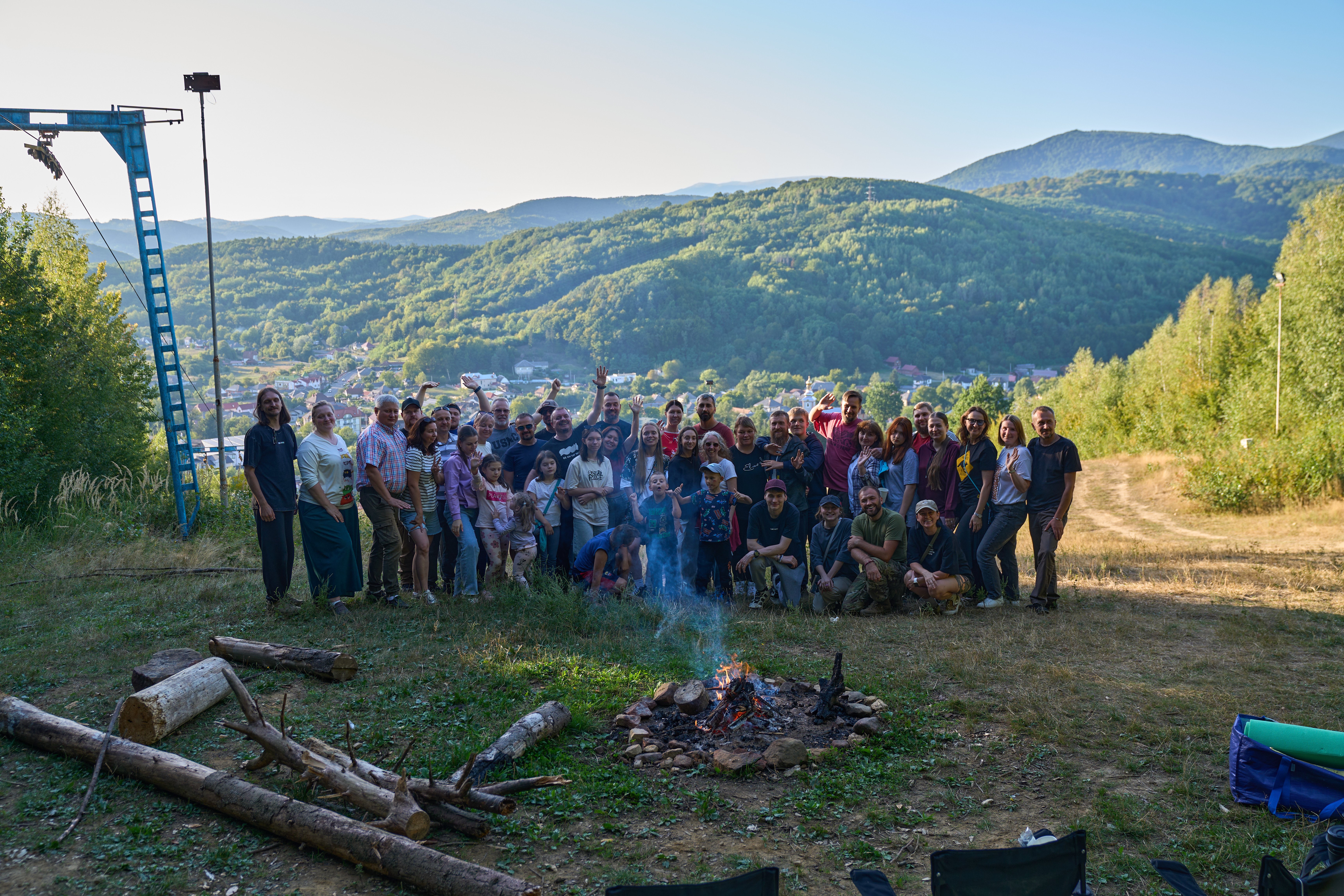
“Mostly, these are women and children who receive free housing in a quiet, safe location in the Zakarpattia region—where there are virtually no air raid sirens or explosions—and try to rediscover themselves and integrate into a new life,” says Oleksandr.
The military side, on the other hand, involves direct support to army units. In particular, this includes vehicles—since its founding, the UA.ANTS has delivered more than 300 to the troops.
This is not a job or a business for us, because aside from our community work, we all have our own regular jobs.
Oleksandr Kalinchenko
Founder, “UA.ANTS”
Oleksandr emphasized that for all the organization's volunteers, seeing the impact of their work is what matters most. “It could be a quick result or a long-term one—like when people come to a recovery program and later go on to start their own businesses or form joint non-profits. For us, changing our country right now and for years to come is wonderful and important.”
Right now the UA.ANTS is offering chaplains a chance to rest.
“War fatigue is real, but everyone in the military realizes that you can't just abandon this mission—it won't finish itself,” says Father Mykola. “Everything is in our hands. With God's help, we hold our front line, protect our Ukrainian land, and defend those standing behind us.”
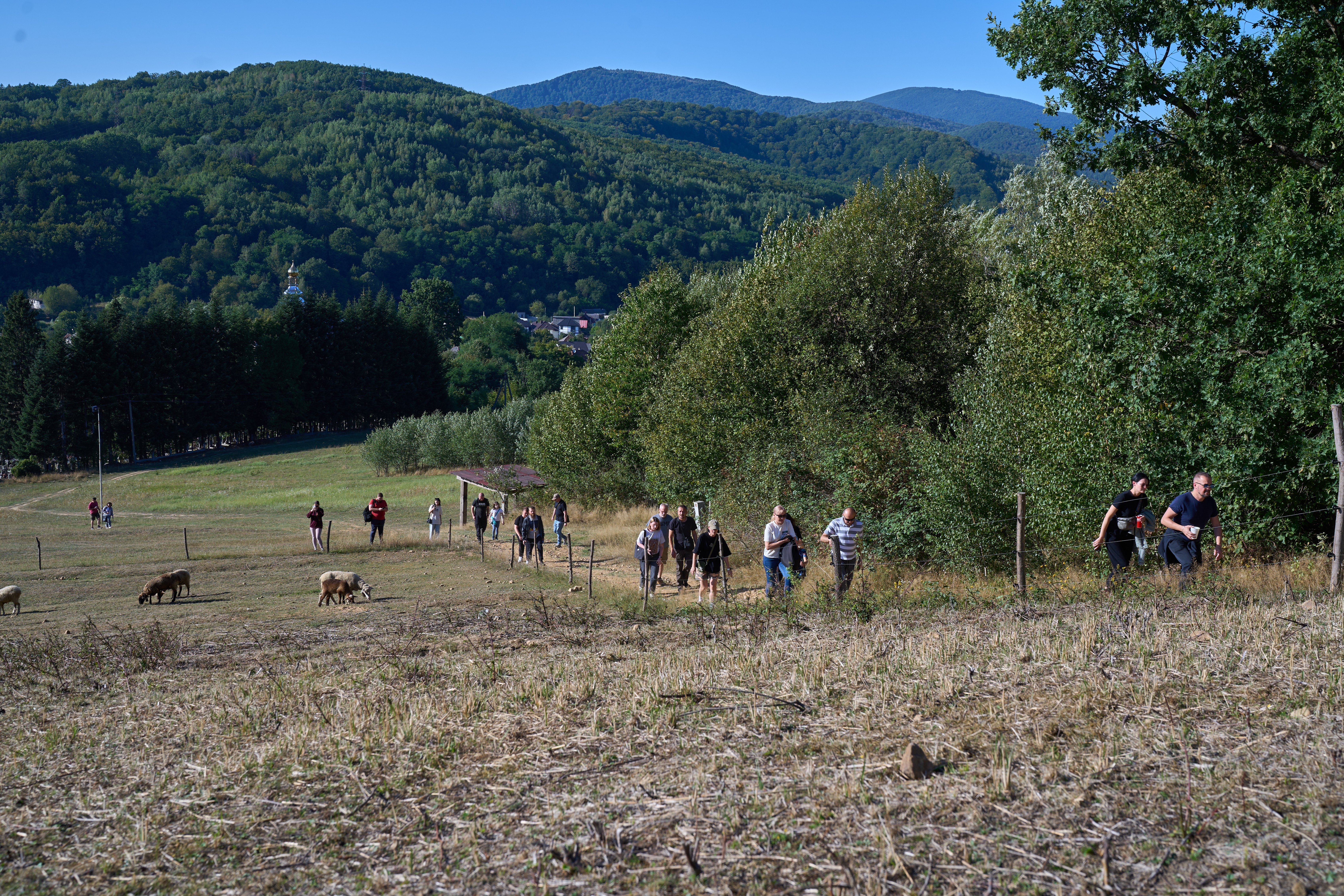
In total, the organization has already hosted three “Point of Support” projects—and they have no plans to stop there. That translates to more than three dozen families who were offered the chance to forget the air raid sirens for five days and simply be together again.
“Here, I feel alive and valued,” says volunteer “Padre.” “I'm almost 60 years old, so physically I can't do as much anymore. But I'm useful here, and that feels good.”
Discuss this article:
-9a7b3a98ed5c506e0b77a6663f5727c5.png)

-c439b7bd9030ecf9d5a4287dc361ba31.jpg "Photo of Katherina Popilnichenko")
-24deccd511006ba79cfc4d798c6c2ef5.jpeg "Photo of Louis Beaudemont")