- Category
- War in Ukraine
We Spent 10 Days in Sweden With Ukrainian Combat Medics Trying to Heal. It Became a Documentary
We reach the 37th Marine Brigade's stabilization point in the Dnipropetrovsk region. The approach road is battered, winding beneath a canopy of anti-drone nets. When we return a few weeks later, even more layers have been added.
 Prefer U24 Media on Google
- Authors

-73e9c0fd8873a094288a7552f3ac2ab4.jpg "Photo of Olena Blizniakova")
Only days after our meeting, three combat medics from this brigade began their journey to Sweden to take part in a psychological recovery program. We traveled with them to see if ten days in another country could truly make a difference—and whether it is possible to leave the war behind, even briefly, while away from the front.
Before Sweden, there was the garage
"We already went through Repower ourselves," say “Skipper” and “Barbarossa,” a pair of medics identified by their callsigns. They greet us the moment we arrive at the stabilization point, just as we’re about to meet the members of the program’s 18th mission, Repower 18.
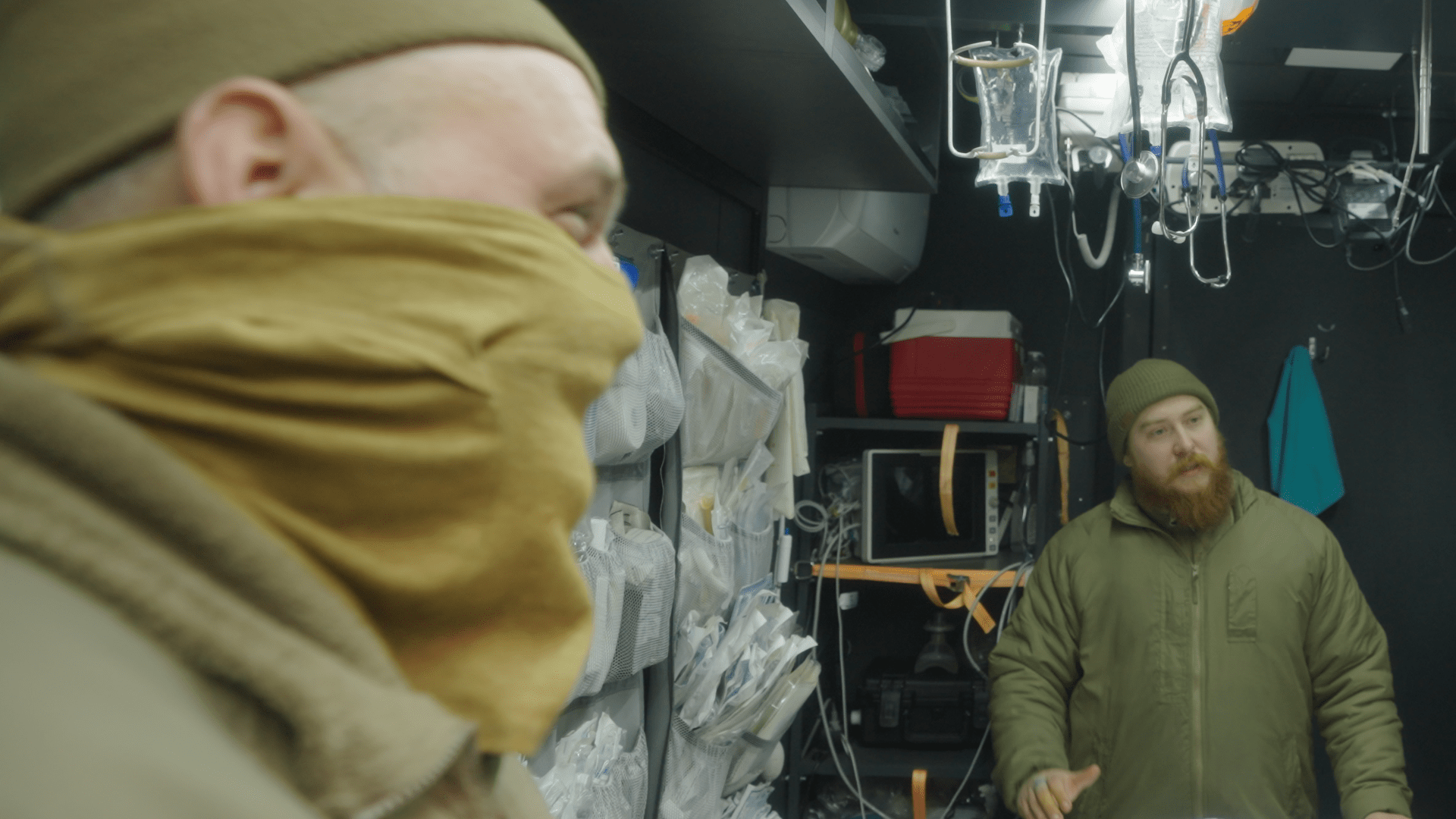
Skipper is a doctor from Odesa; shortly before our arrival, he was appointed to head this stabilization point. He asks not to show his face. Barbarossa is an anesthesiologist. While we wait for their colleagues, they give us a tour of their operating rooms and proudly show us how they have been set up. While the StabNet is straightforward—a mobile medical container that takes just 20 minutes to set up—other facilities require much more effort. That is where they take us first.
“This is our first ‘shock room.’ A garage," Barbarossa announces. Calling it a garage is not a joke—perhaps there really used to be a car parked there at some point. Now, however, it is a place for saving the wounded.
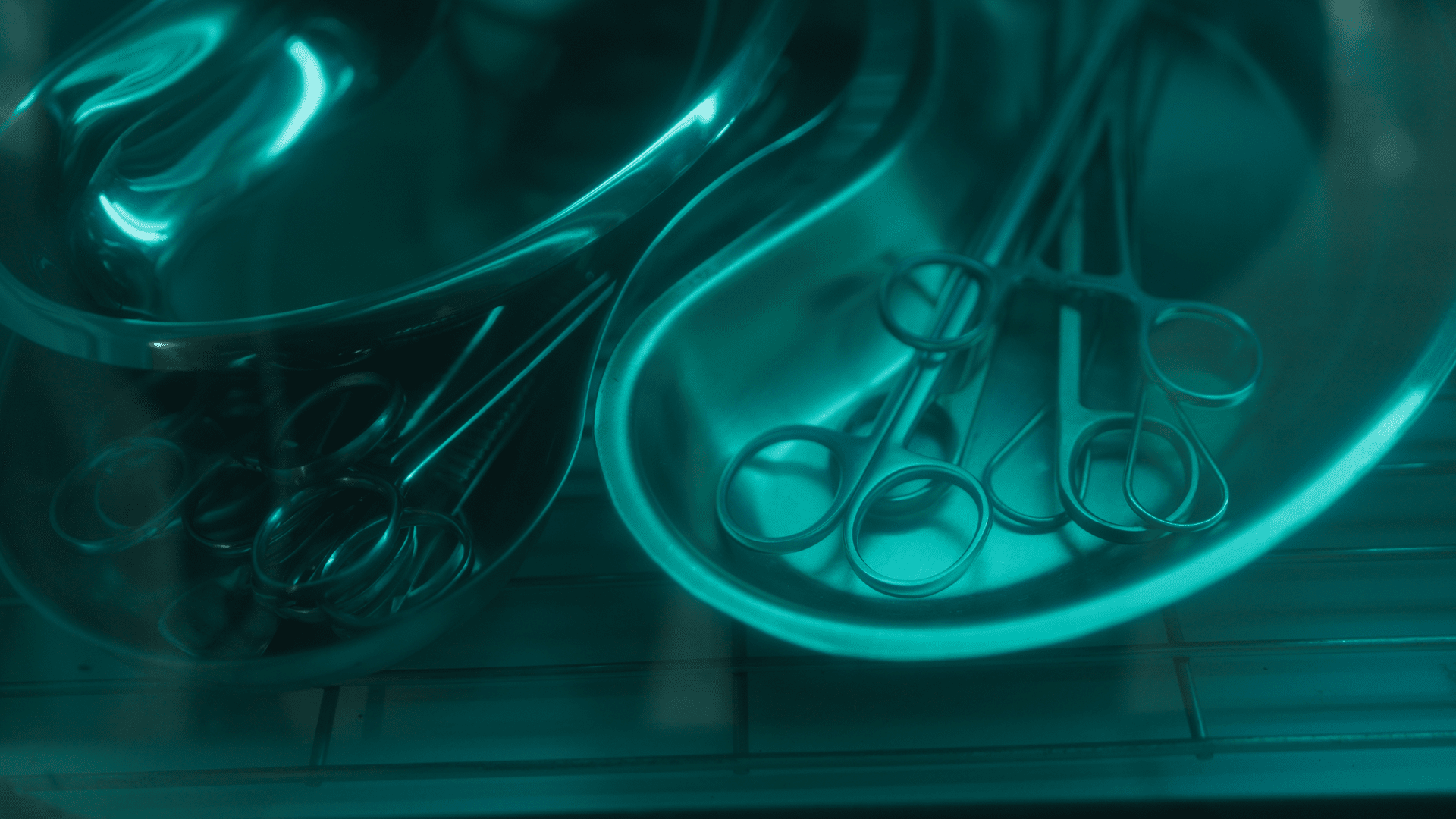
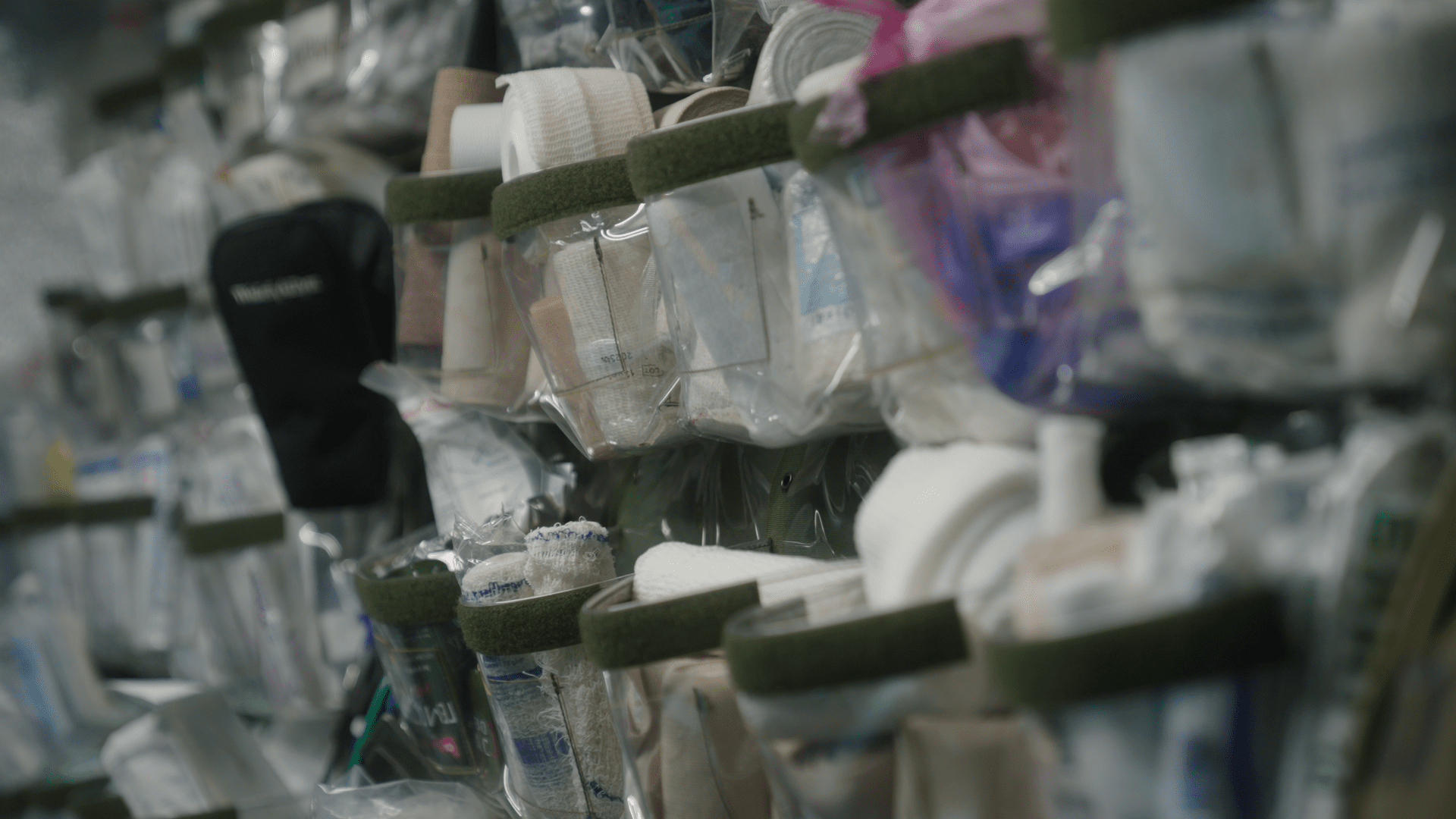
Everything is organized so that essential instruments and supplies are always within easy reach. Each team member has their own place in the operating room. “When it’s a critical case, all hands are on deck,” Barbarossa explains. “If it’s extremely severe and we’re still shorthanded, even the drivers join in. They also have tactical medicine skills—they know what to pass to the doctor, where a bandage is needed, and how to apply it.”
This happened when a soldier arrived after a Russian guided aerial bomb strike—a case both Skipper and Barbarossa recall as their most severe. “He had suffered above-knee amputations of both legs and damage to his abdominal organs. What we saw firsthand was that his intestines and urinary tract had been ruptured. His kidneys, too.”
Occasionally, while describing their work at the front, they recall their time in Sweden and their meetings with local medics.
“What advice did you give them?” we ask.
“Dig,” Skipper replies instantly.
He means it literally—at the front, survival for a medic means being buried under layers of earth. “Medics are the number two target in this war,” he says. “The first is drone operators.” He recalls explaining to his Swedish colleagues that once runways and air defense systems are neutralized, Russia begins targeting hospitals.
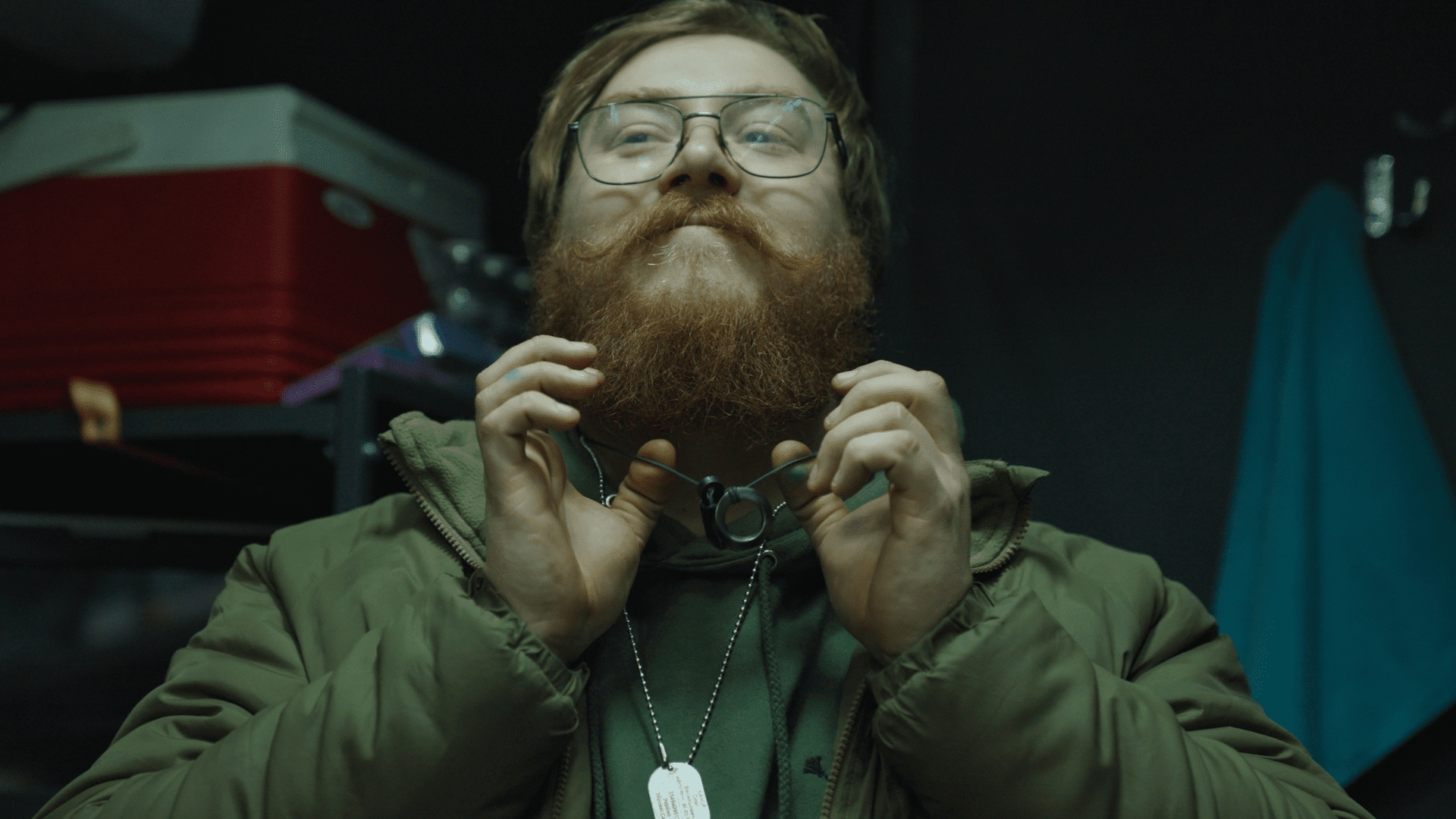
“Forget the Geneva Convention—it doesn’t work with orcs ,” says Skipper. This is something the medics understand firsthand, not from hearsay. Later, over coffee, they tell us how their positions were struck by guided aerial bombs, and other heavy weaponry.
“It’s very scary,” says Yurii, one of the medical orderlies. After a Russian attack on their stabilization point, he ended up under the rubble and had to dig himself out just to be able to breathe. “Now, whenever I hear a guided aerial bomb, my heart immediately starts racing.” Unfortunately, this is not the only time he and other team members have found themselves under Russian strikes.
There’s nothing to complain about
Yurii Kuriachyi is the first to greet us. He joined the service in 2023, when the brigade was operating in the Kherson region. Back then, he balanced multiple roles, serving as an attending physician of the medical company, the head of the evacuation department, and the head of the treatment department, leading one of the two stabilization points.
Recently, he became the head of the brigade’s medical service, and our conversation is interrupted nearly a dozen times by incoming calls. He explains that this is the nature of his new role—staying constantly reachable to resolve a wide range of issues.
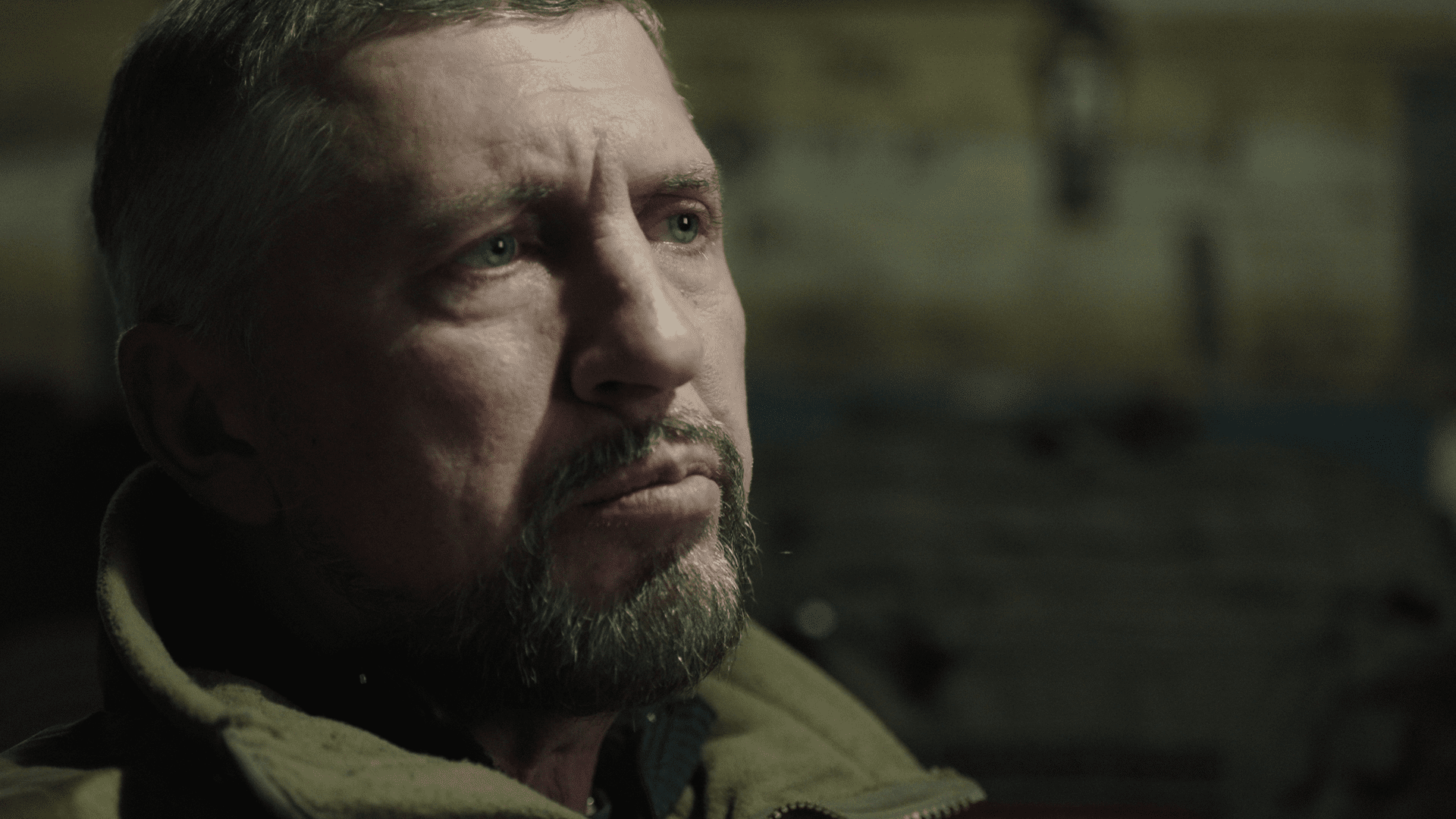
“In general, our profession means that once you become a doctor or a medical worker, you no longer fully belong to yourself,” he says.
You dedicate yourself, or you are supposed to dedicate yourself. If not, then you shouldn’t even try.
Yurii Kuriachyi
Head of the medical service, 37th Separate Marine Brigade
A Candidate of Medical Sciences, he has devoted more than 30 years to medicine and is now responsible for ensuring that the medical service operates without interruption. Kuriachyi is candid about the fact that he will not be able to fully detach from service during the project. At the same time, he acknowledges that both in civilian medical practice and—especially—at the front, there is professional burnout, and there are many factors around that can trigger psychological issues: Russian drones attempting to strike evacuation vehicles, severe polytrauma cases, and so on.
“Some people may be affected by the sight of blood, the sight of severe injuries, amputated limbs,” he explains. He himself says he has worked enough as a surgeon to become accustomed to the sight of blood and operations. However, work at a stabilization point is not only about saving the wounded.
“Unfortunately, we are also responsible for receiving the deceased. They are evacuated to us in very different conditions. Sometimes it can be from small fragments to large remains. And you have to process them until they are transported further from us.”
He concludes that at certain points in time, everyone needs both psychological and physical rehabilitation. That is precisely what the Repower project is designed for, in which he and two of his subordinates will take part.
“I hope that I will be able to do something useful in terms of making new acquaintances, building connections, and promoting our Armed Forces, the Navy, and our brigade directly,” he says, although he does not rule out trying to distract himself a little from work.
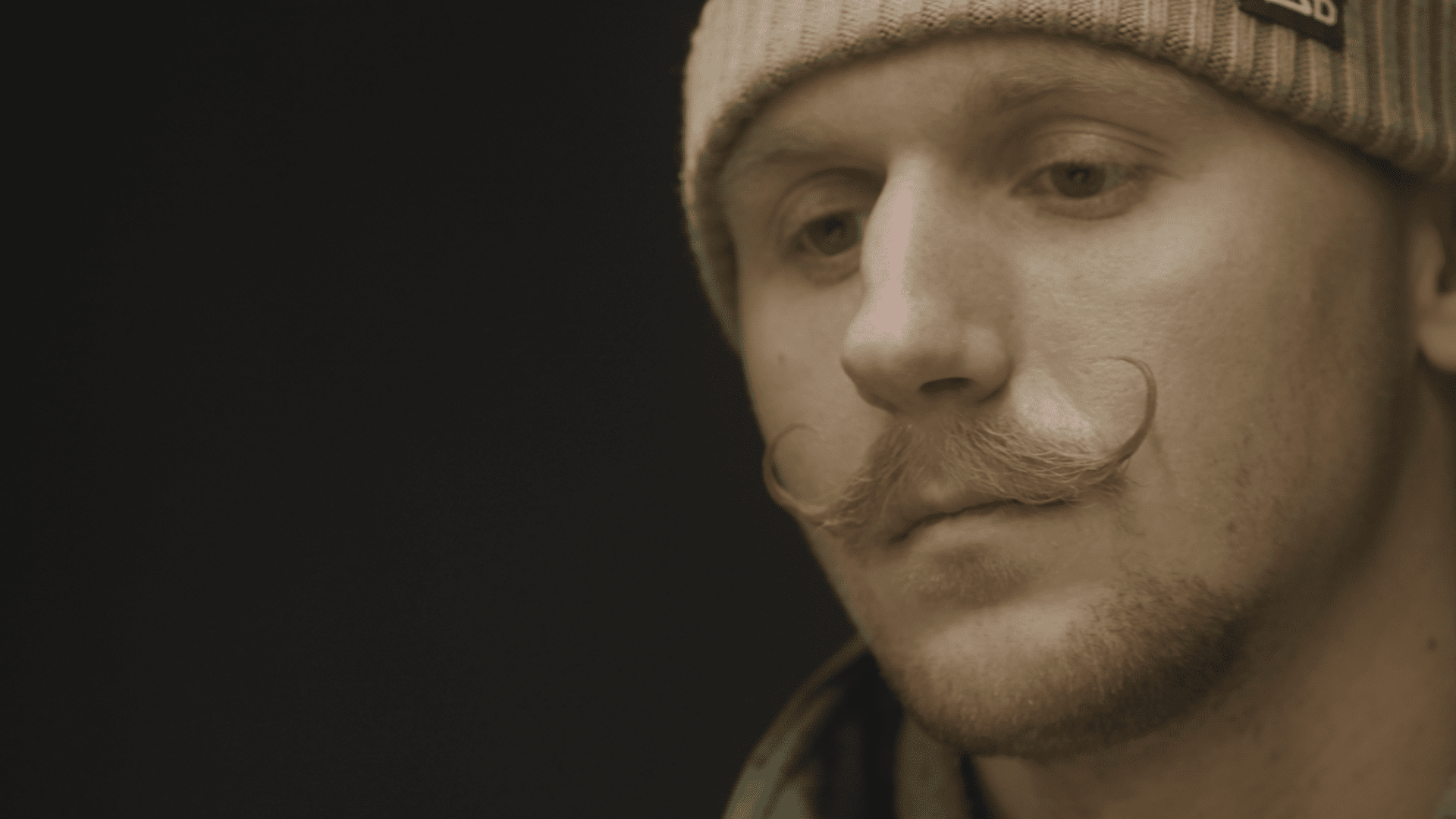
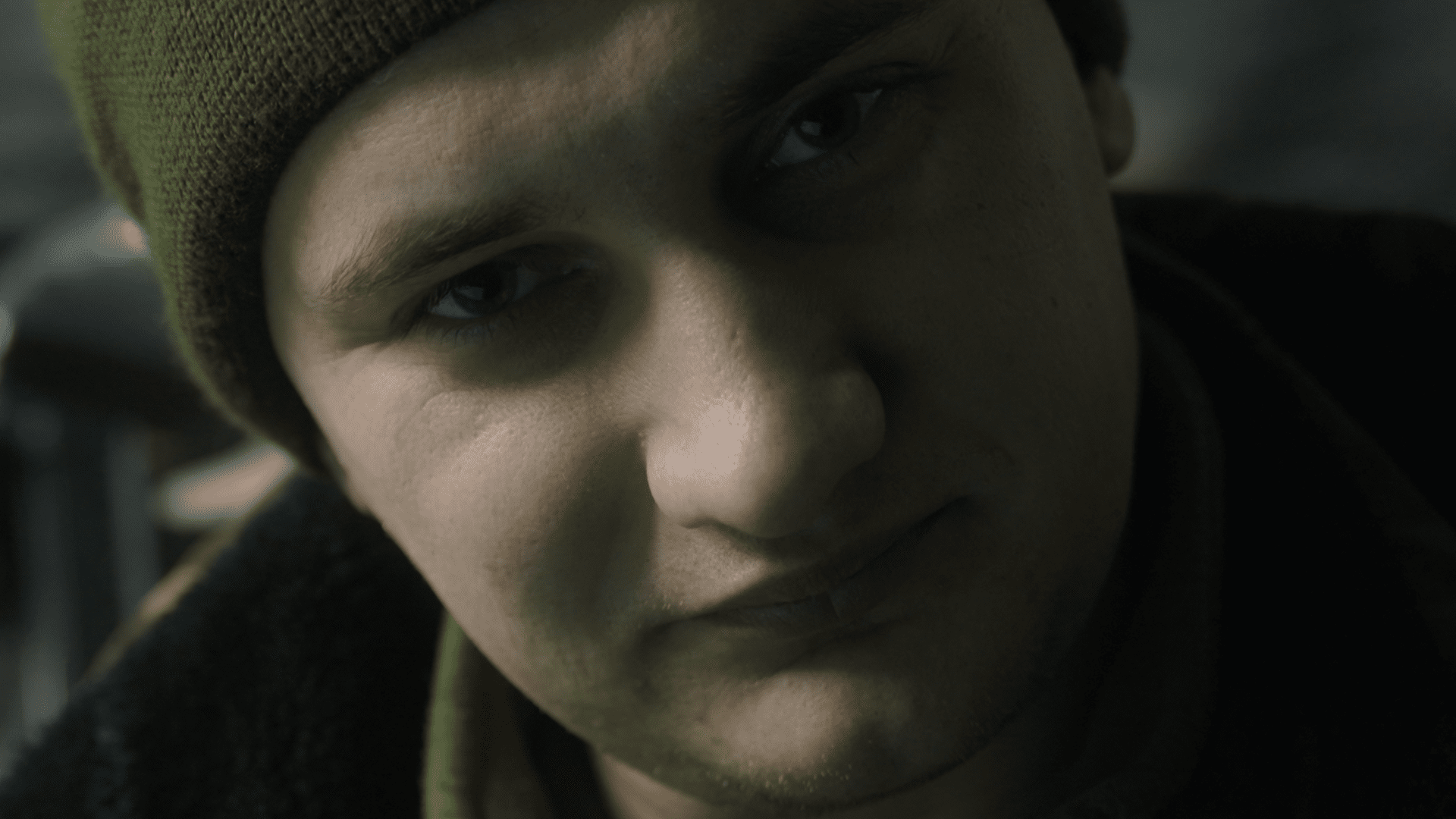
We also meet two combat medics—Vadym and Nazar. If you ask them what exactly they do in the war, they give the same answer: “We help people not to die.” Both are paramedics. Vadym’s call sign is “Zoomer”; he is the youngest at this stabilization point.
“Everything’s fine,” he says when asked about his morale. “Could be worse; there’s nothing to complain about.” In Vadym’s understanding, “worse” means being under fire. “Not fun when someone is trying to kill you.”
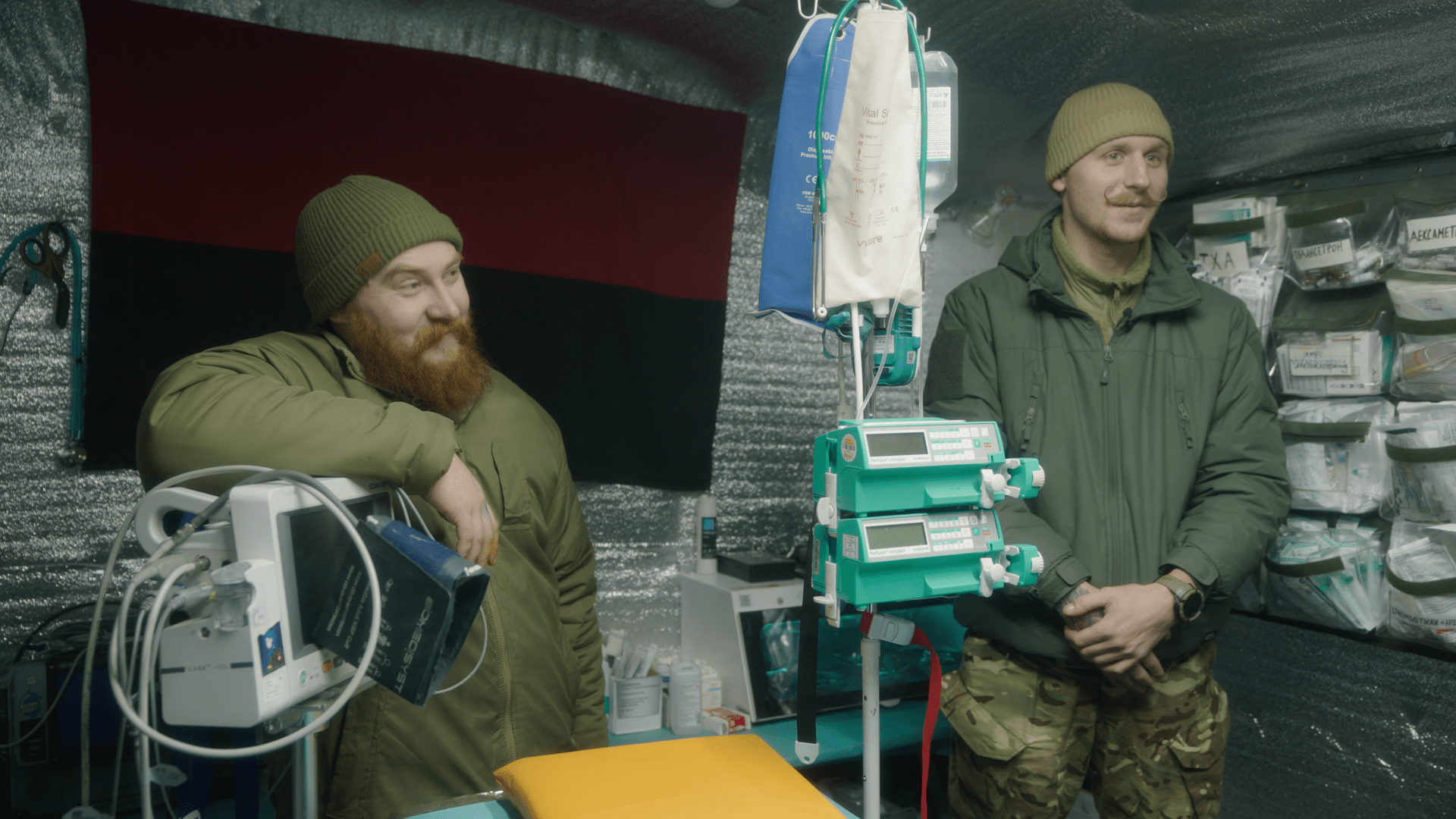
Barbarossa, as someone who has already been on a psychological recovery program in Sweden, gives the guys final instructions before the trip:
You need to clear your head. When I arrived in Sweden, I forgot about the service, forgot that I had ever been somewhere in Ukraine. I am Swedish—nothing concerns me.
Barbarossa
Anesthesiologist, 37th Separate Marine Brigade
For Vadym, this will be his first trip abroad. For Nazar—his second; he previously attended medical training in France.
“I looked on the map and saw it’s far away, somewhere near Norway,” he replies when asked what he knows about Sweden. “The main thing for me is having a shower to wash myself and a warm place to stay. I also heard they feed you there, so that’s great. What else should I expect?”
We’re going to Sweden, not to Izium railway station
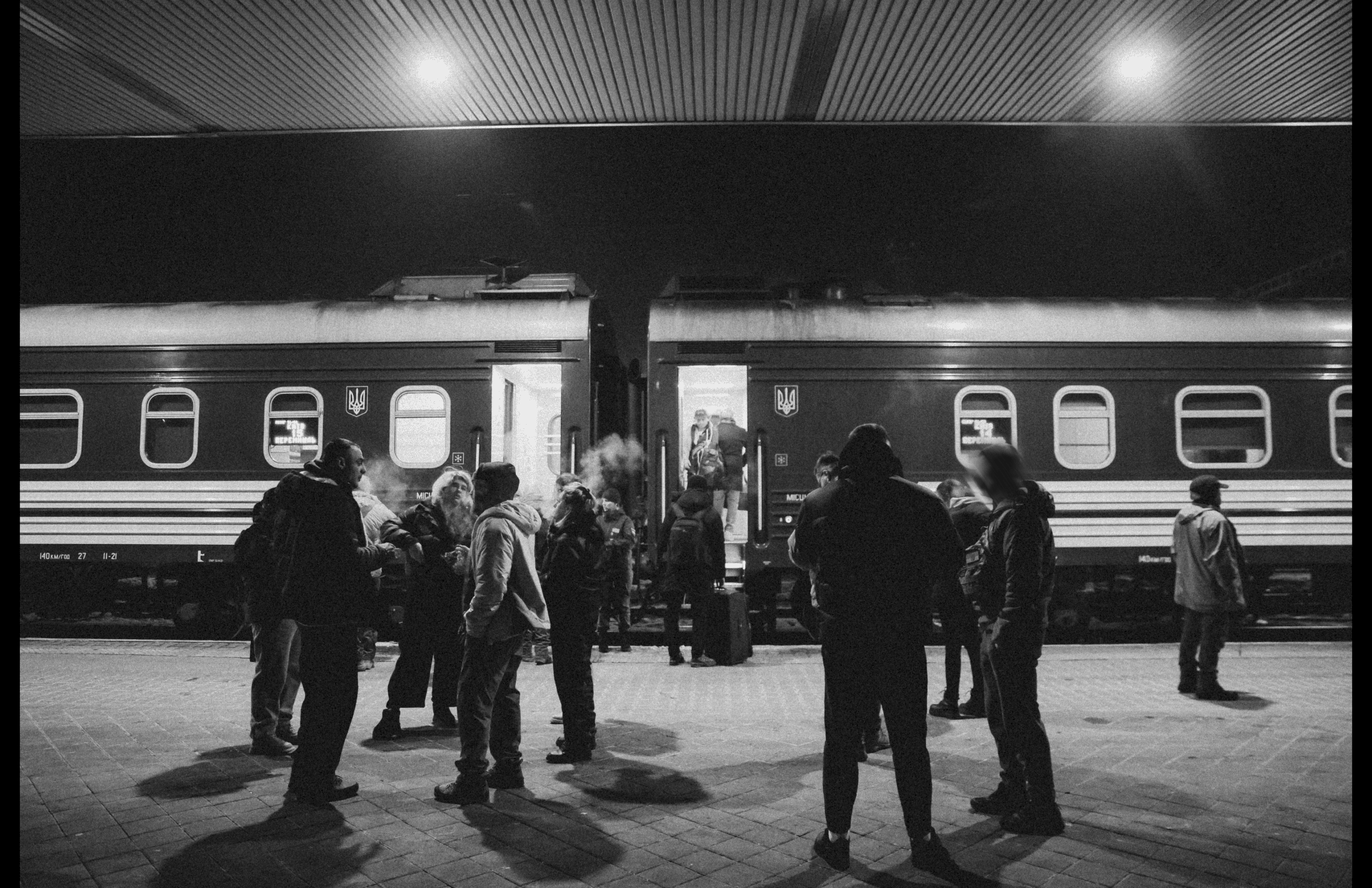
More and more people gather in the waiting hall of the capital’s railway station—and although, formally, the journey for the Repower recovery program begins here for a hundred military doctors and medics, many have already been on the road since yesterday. It also takes time to get to Kyiv from the front line.
What about three marines—the journey took them first to Dnipro, a southeastern Ukrainian city, where they had some time before boarding a train to the capital. “It was scary when we went down into the metro and a tram passed above us,” Vadym says.
Why? Nazar explains: “It felt a bit like a bomb just falling on your head.”
For now, all the service members stay close to their comrades and stand in separate groups. In a few days, it will look completely different. Maryna Sadykova, co-founder and head of the Repower Foundation, steps out to a large banner. Conversations quiet down as participants move closer.
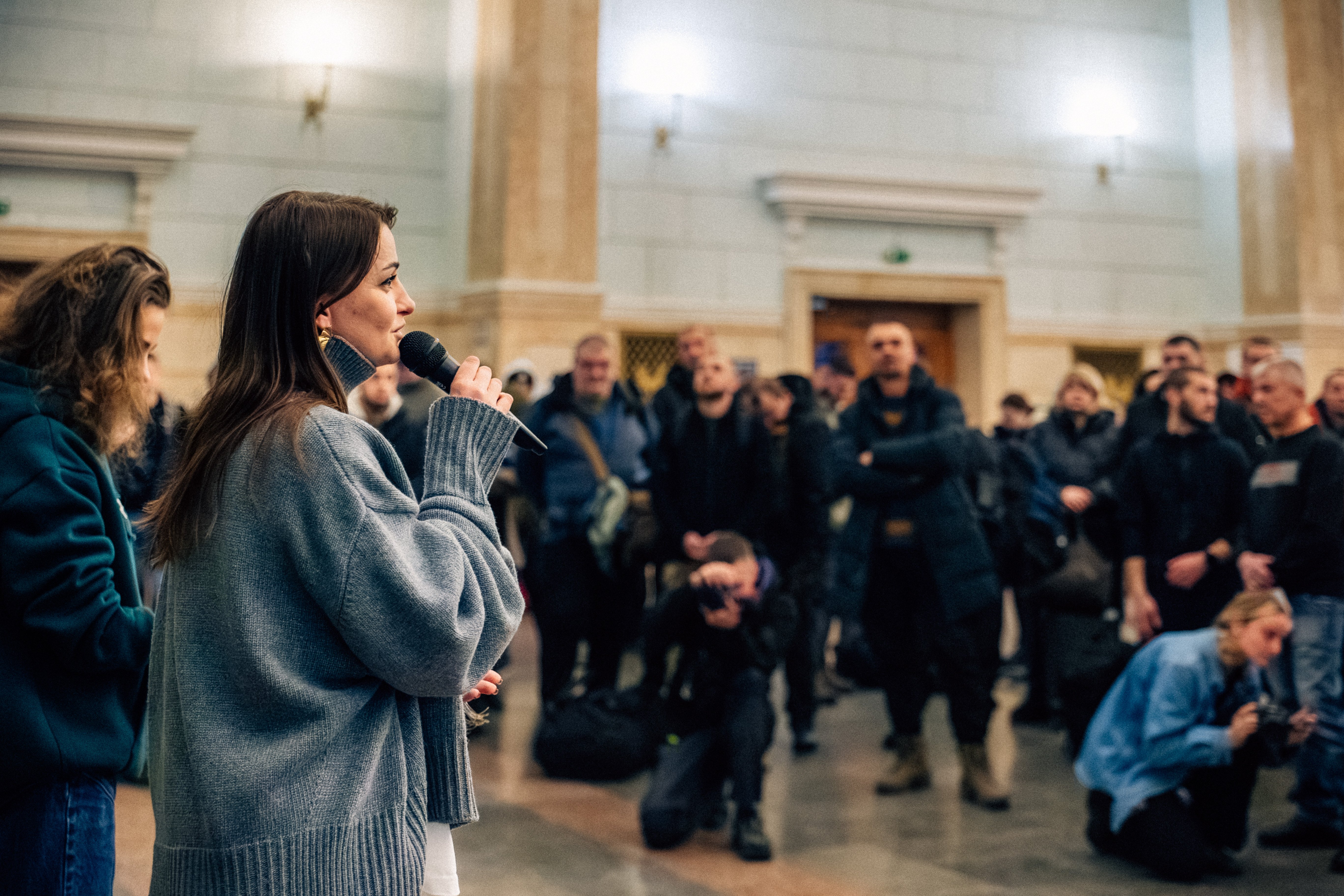
“This recovery project for military medics is extremely important for us,” she begins her speech. It is already the 18th such program, but for Maryna, it will be the first one she is not personally joining.
Later, she explains that this is because the organization is entering a new stage of development. “We are moving toward a very good level of systematization. I am here because we need to grow, find more partners, and implement new changes.” What exactly these changes are will become clear later.
The Ambassador of Sweden to Ukraine, Martin Åberg, also came to see the military medics and doctors off for their journey. “Where are you from?” he asks two young men with large khaki backpacks. They are from Rivne, in the north-west of Ukraine, but serve in Pokrovske, in the Dnipropetrovsk region.
“To be honest, I just want to see something different, not what I see every day. At least to change the environment,” one of them tells the ambassador.
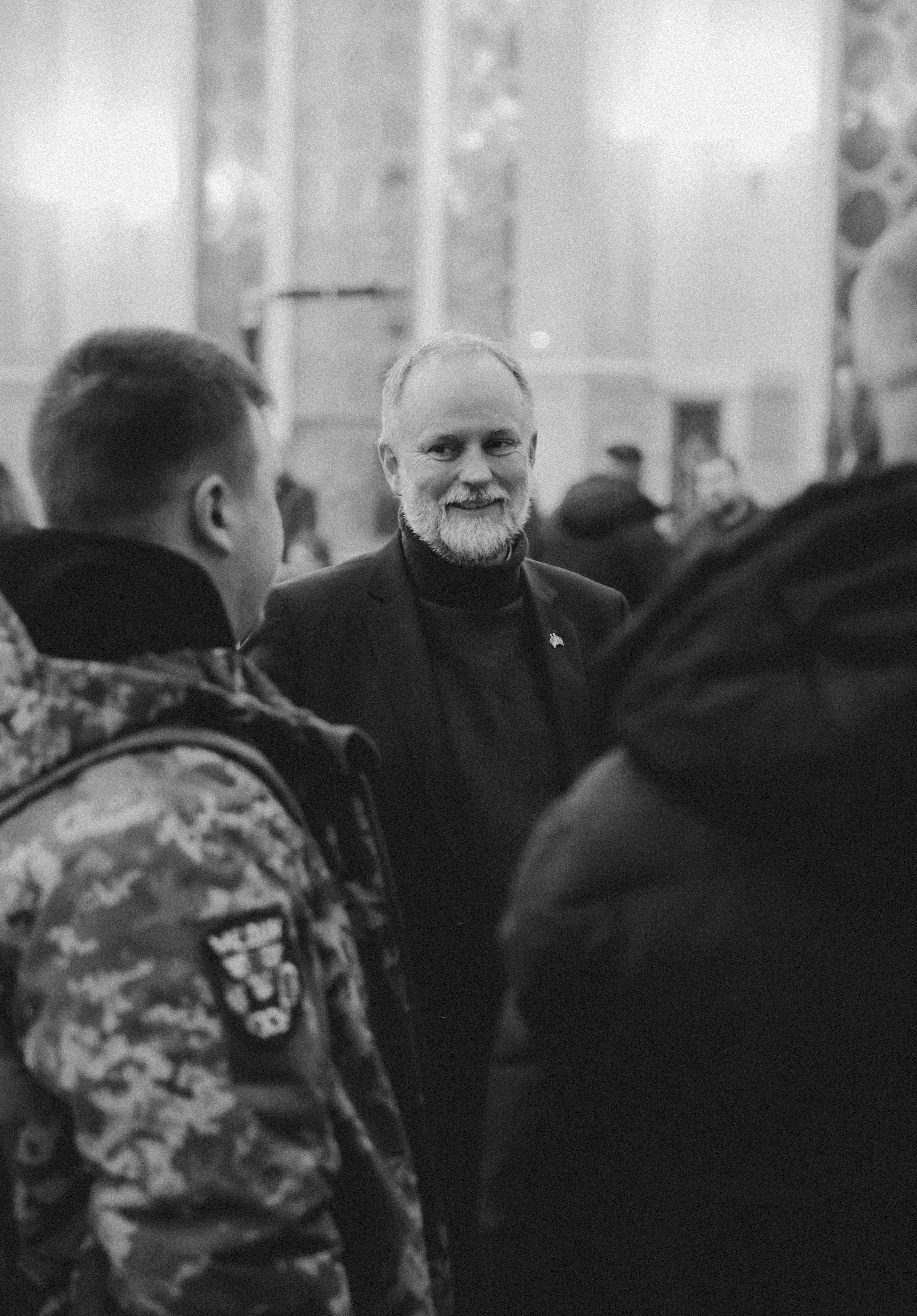
“To me, the most distinctive feature of this project is that it's volunteer-driven by both Ukrainians and Swedes. It was dreamed up, imagined, and also organized by volunteers,” Åberg says.
Meanwhile, participants take turns approaching the organizers to sign the rules, including a complete ban on alcohol. Over the loudspeaker, an announcement is made about the departure of the Kyiv–Przemyśl train. The entire group of a hundred people begins moving toward the platform.
In the past, when airports were still operating in Ukraine, it would have taken only a few hours to reach Sweden by plane. Now, the journey ahead takes more than a day: train, bus, flight, bus.
“Damn, we’re going to Sweden, I’m in total shock,” says one of the medics.“Yeah, and not to Sumy Station,” his compartment mate immediately replies.“Or Izium—which is even more likely…” Both burst out laughing.
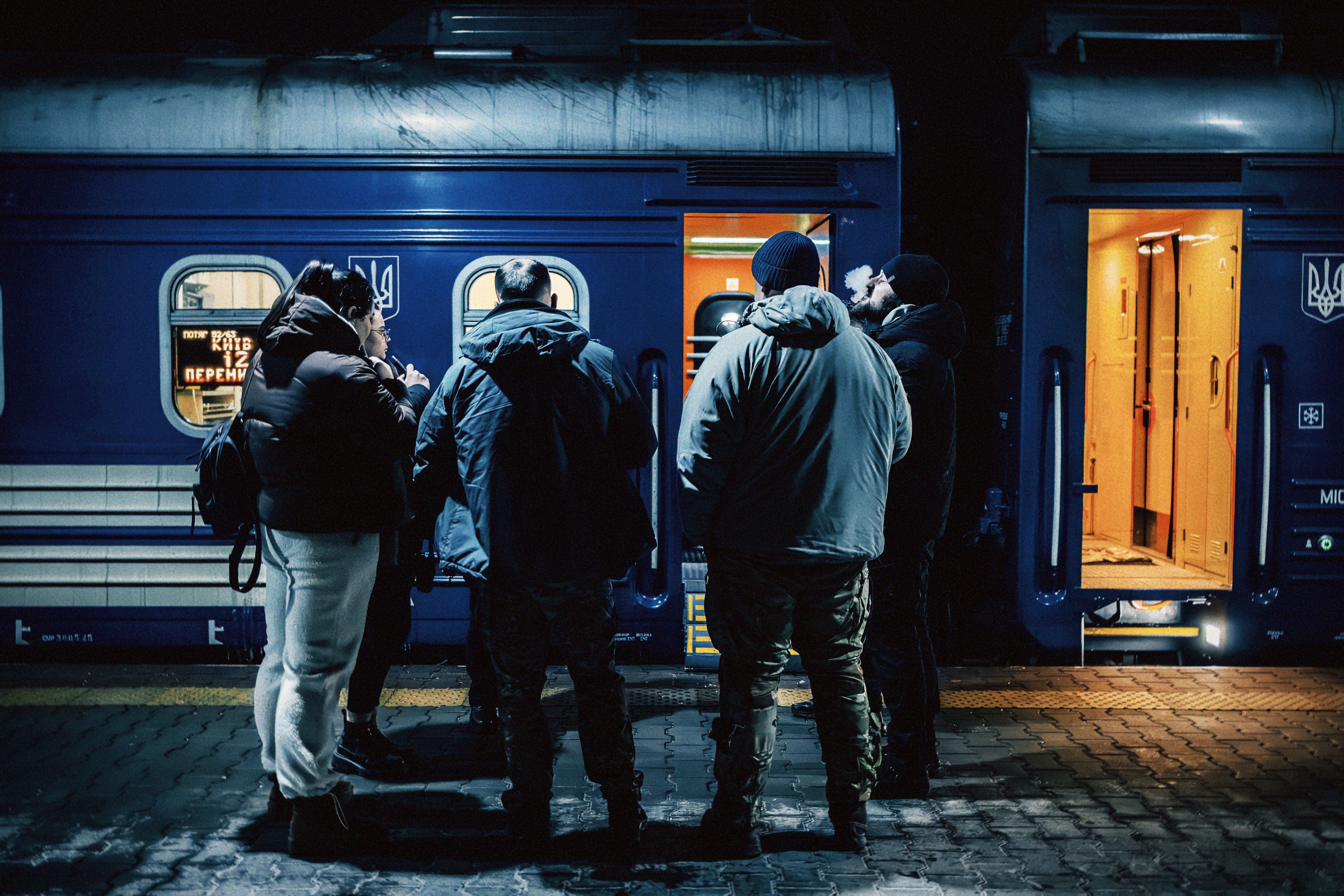
We leave the train in Poland. On the way into Kraków, a guide joins the bus, but due to the train delay, there is no time to look around the city. Eventually, we are at the airport.
“We are used to being in one location with a certain number of people and constantly seeing each other,” Nazar says as the plane takes off. “Here, there are a lot of people, and you also have to get used to that.”
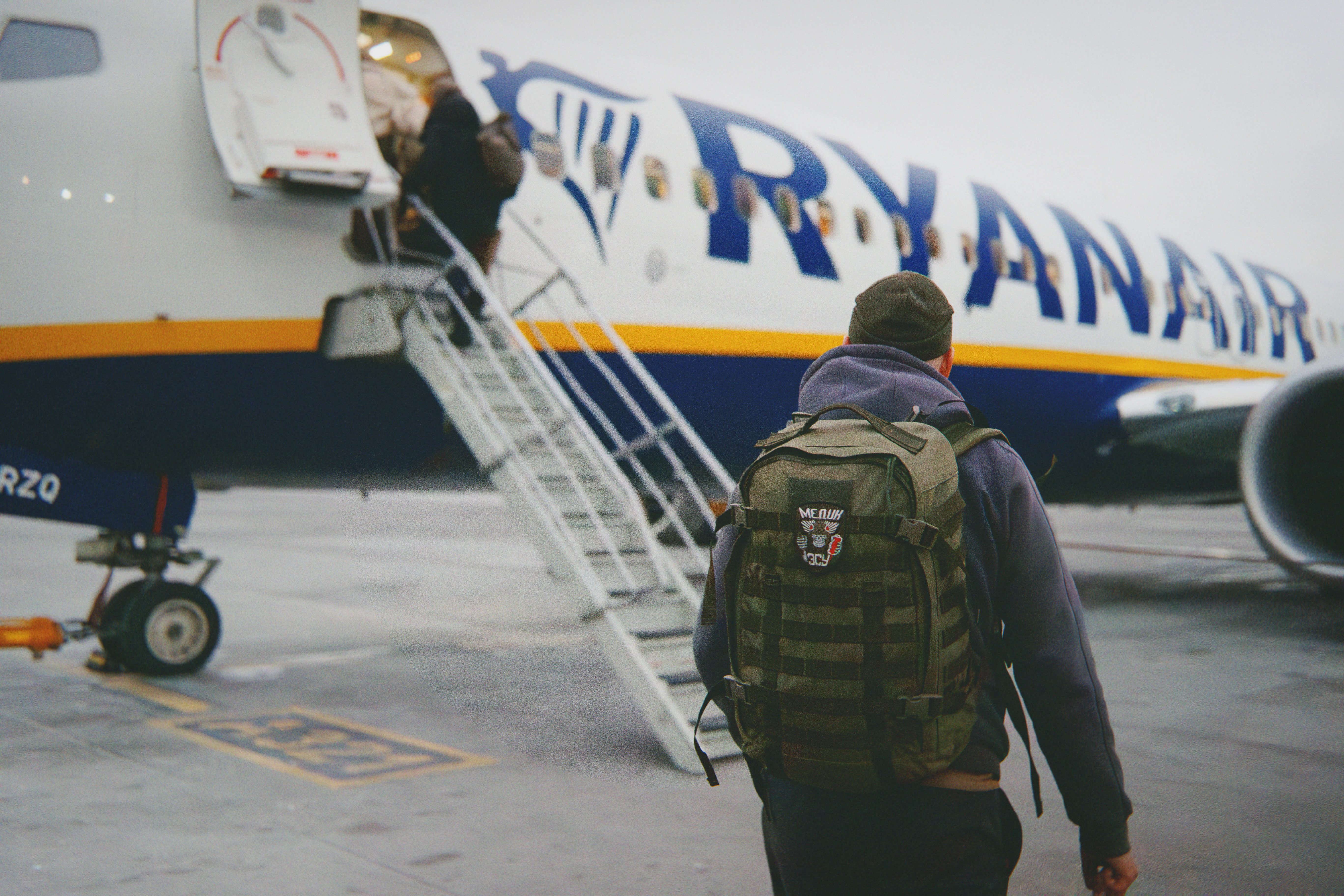
It is probably worth noting an important fact about Nazar—he is afraid of heights. “The worst part is those five minutes during takeoff. It kind of pushes you into the seat,” he explains, immediately finding a comparison. “But we travel in evacuation vehicles, so we’re used to it. Sometimes our drivers drive so fast that you get thrown from side to side, and when they brake suddenly, you can fly into the wall if you’re not holding on.”
Next to him sits Vadym. He jokes that it’s actually his first time on a plane, but the one who needs calming down is not him, but Nazar.
“God, is this Times Square?” Vadym exclaims as soon as he steps out of the airport in Stockholm. This phrase, which has become an internet meme, only confirms that he earned his call sign “Zoomer” for a reason.
The final stretch is a bus ride to a hotel an hour’s drive from Stockholm. For the next ten days, this will be home for these people.
Place of strength
“If anyone needs maps, take them from Arne,” Olena, a Repower staff member, tells the participants. In the morning, everyone gathers near the main hotel building, with an island exploration and a story about the place's history ahead. One detail immediately stands out—a Ukrainian flag flying over the buildings. It was raised in the first week of Russia’s full-scale invasion.
“This is the sixth or seventh time that we have come back to this hotel because this management and the staff here truly believe in and support Ukraine’s total victory,” says Sebastian Lindström. Another co-founder of Repower and the head of its international cooperation, at the very beginning he was the only Swede on the team and, to a large extent, it was he who made it possible for everything to take place in his home country.
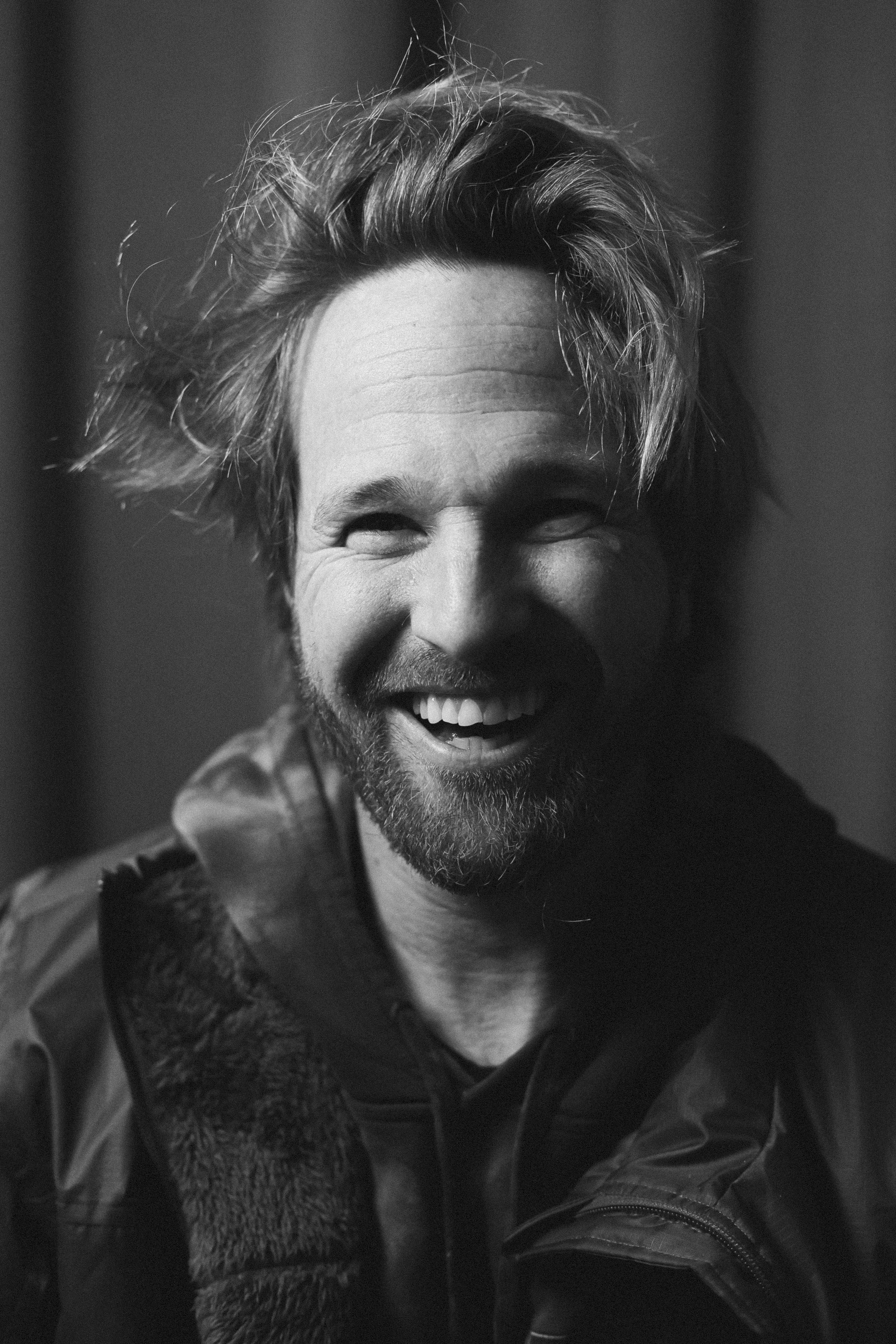
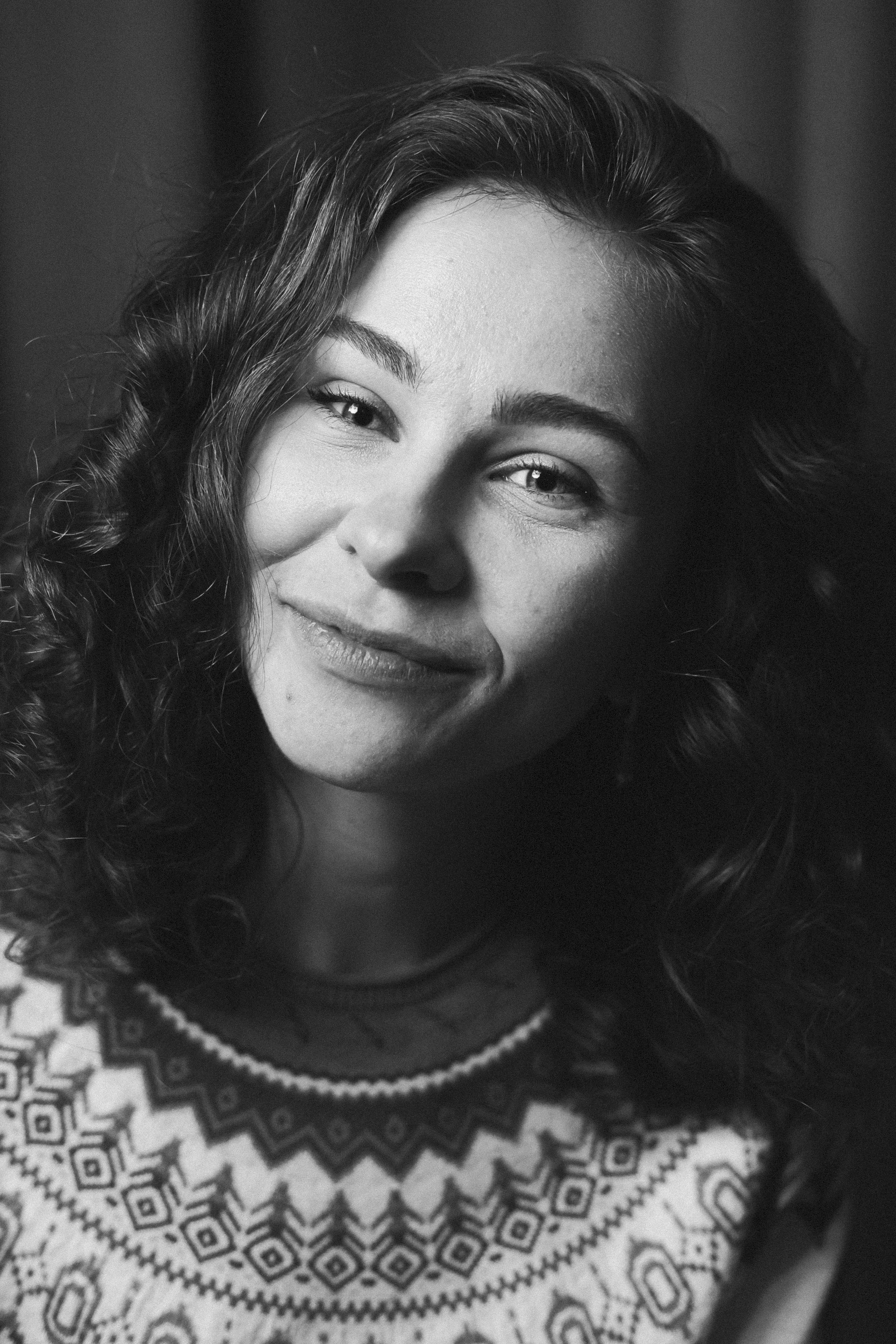
“The first couple of days are completely for stabilizing, grounding, really trying to comprehend the experience of leaving the front line and getting here,” explains another co-founder and COO of the Foundation, Kateryna Serdiuk.
After lunch, everyone gathers in a large hall. In front of the medics is a big map of Ukraine. One by one, they come up to it, say their name, and then describe where their “place of strength” is, placing a pin on the map. With each minute, more and more markers appear—many people name not just one, but two or three places.
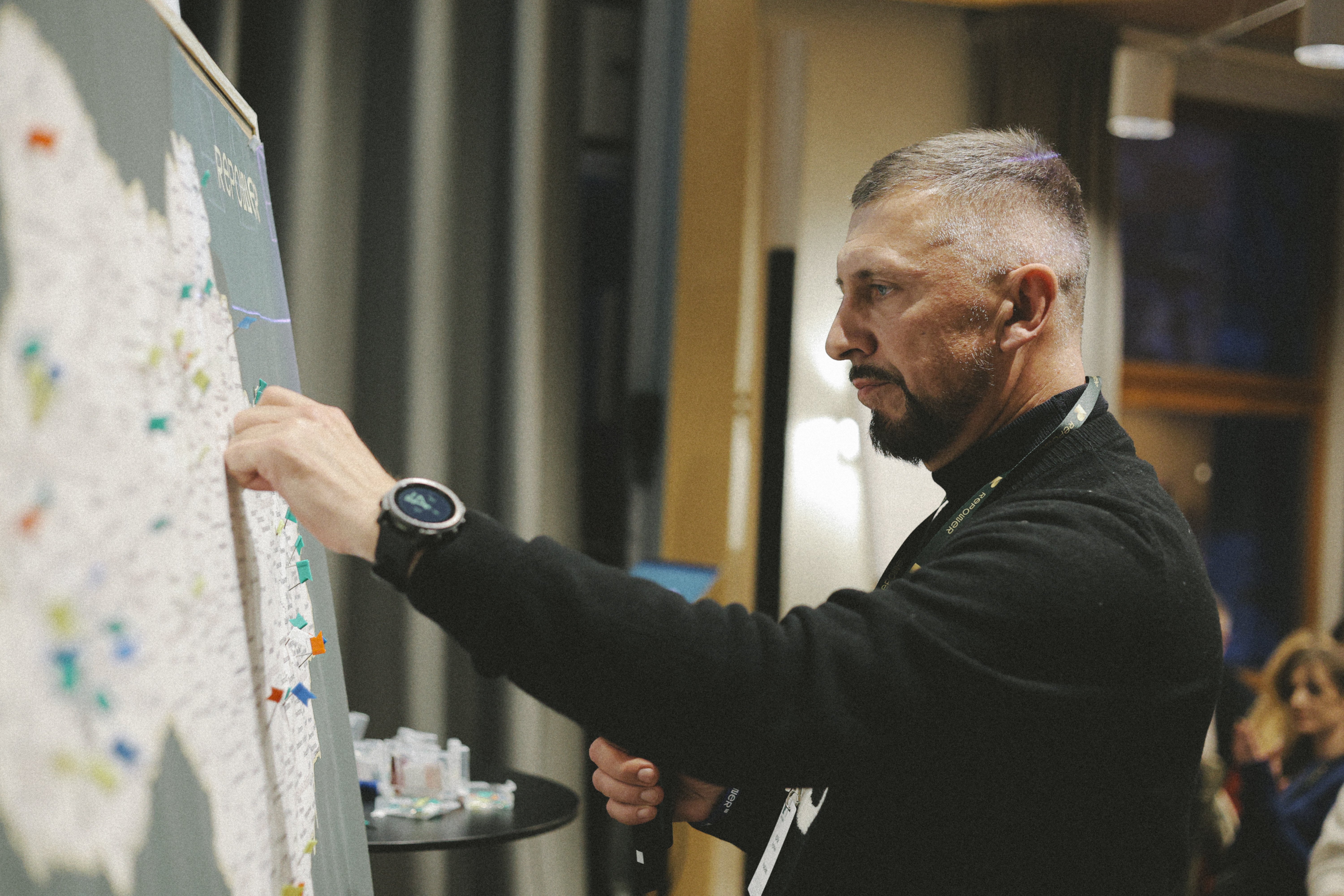
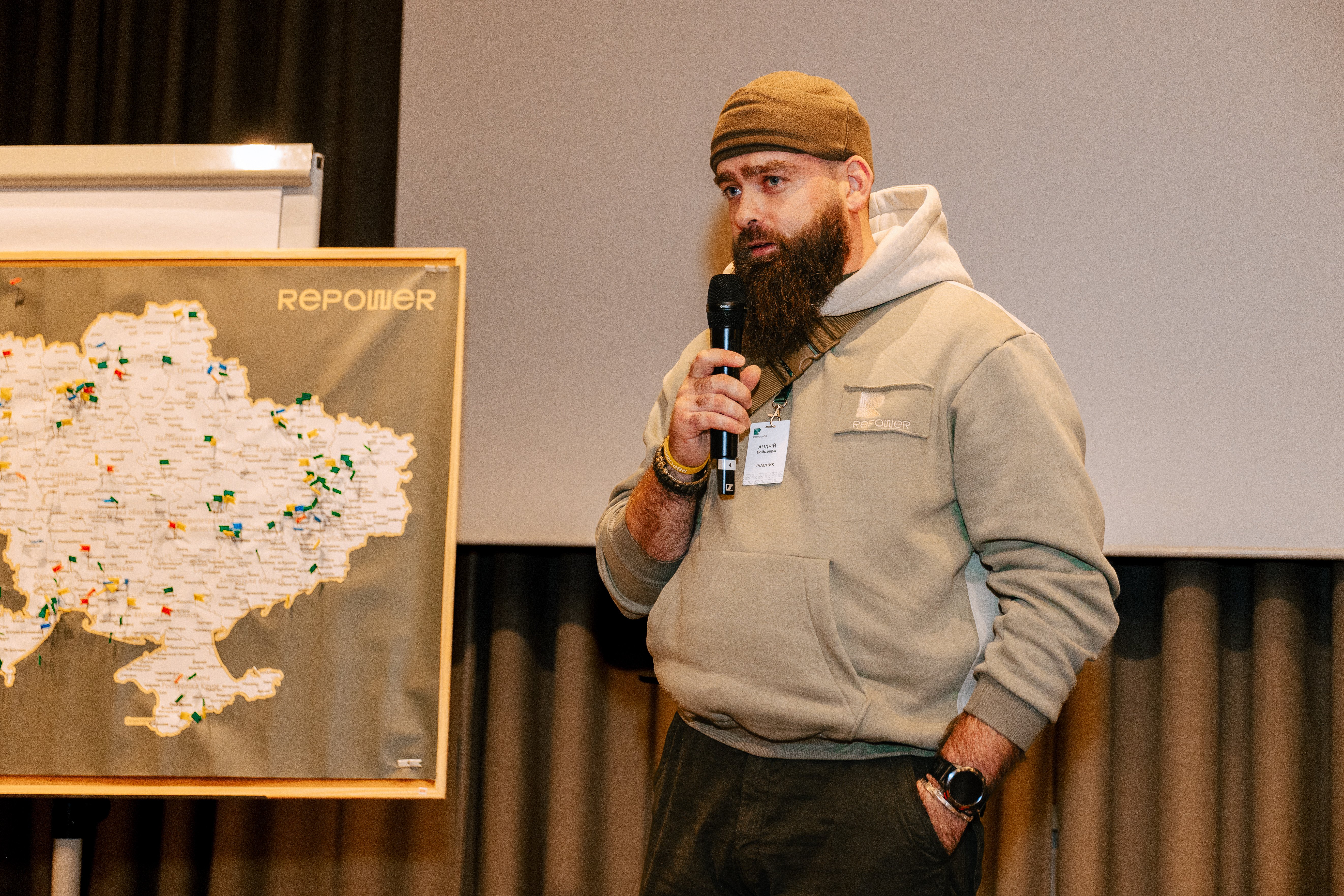
“My name is Khrystyna, I’m from the Lviv region,” says one of them, though she does not place a marker in western Ukraine. Instead, she puts a pin in a completely different part of the country, explaining: “Right now my home is in Kramatorsk—it’s become a bit like an arthouse because of the strikes.” Then she takes another pin.
My second place of strength is a basement in Druzhkivka, where this world became completely clear to me.
Khrystyna
Combat medic
Sumy region, Poltava region, Cherkasy region…
“I am where my guys are. I’ve seen the city from the moment it was happy to when it was reduced to nothing, because there is hardly anything left—that is the Dnipropetrovsk region, Pokrovske.”
Odesa, Kharkiv, Rivne…
“I am from Luhansk, born in Krasnodon (now, Sorokyne—e.d.), and my place of strength is the road home—the Bakhmut route.”
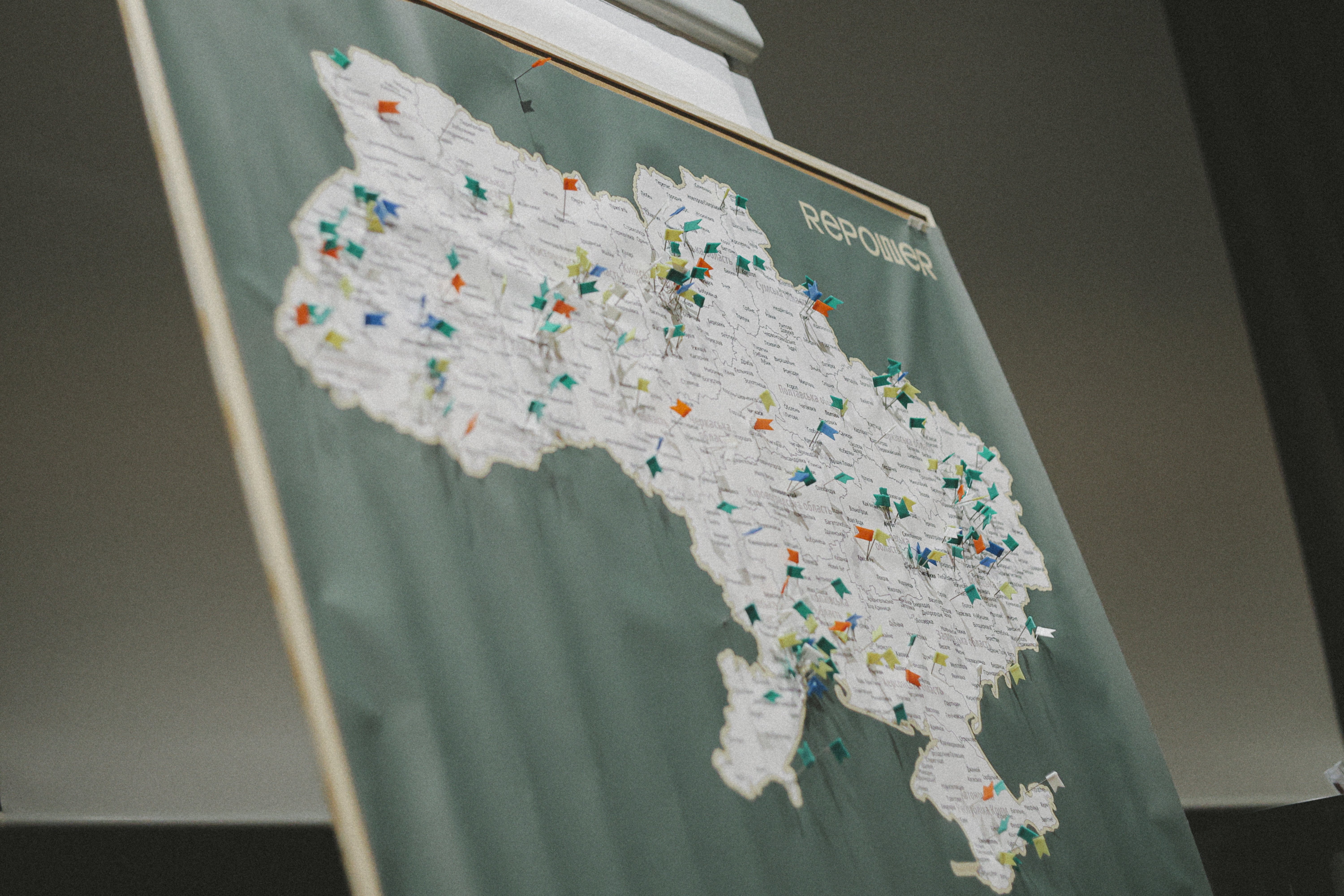
Most of the pins are in the east.
“People come here—many feeling guilty for leaving their positions, saving lives on the front line,” says Lindström. “But what happens here is this realization that by meeting other people who have a similar experience, they can open up this wound and go through this healing journey that gives them the opportunity to feel alive again.”
Helping those who also need help
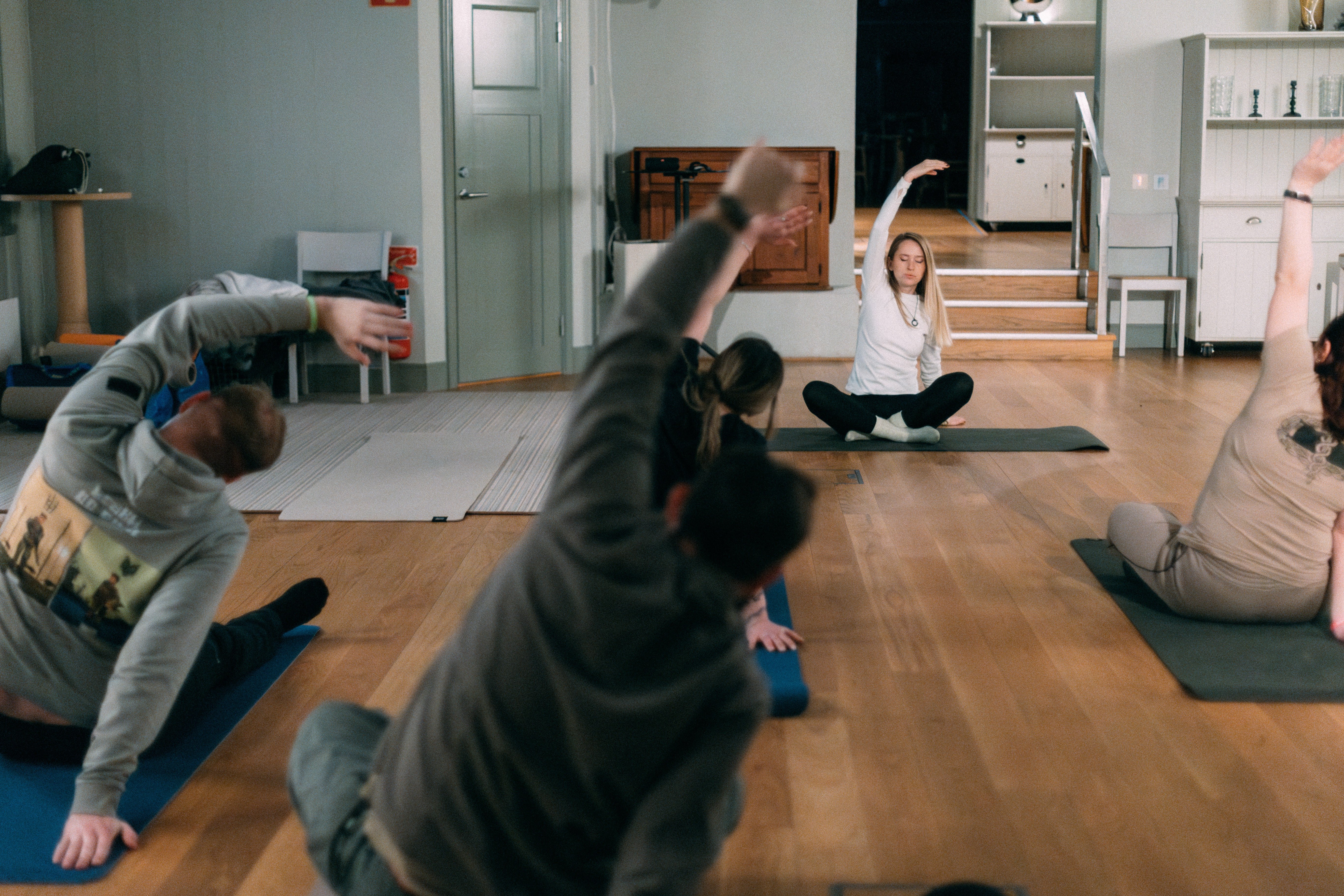
Right after breakfast, participants meet in the hotel lobby. Ahead of them are morning practices—one of the mandatory parts of their 10-day schedule in Sweden. There are three options to choose from: body-based practices, neurogymnastics, and mindfulness. Each participant decides which session to attend that day.
“It’s usually some routines that either calm down and slow the mind and help them become more mindful, or the opposite—trying to connect the left and right sides of brain activity and do some effortful, really funny exercises,” says Serdiuk. “But also body-oriented practices where, through connection and releasing tension in their muscles, they can get closer to what they actually feel.”
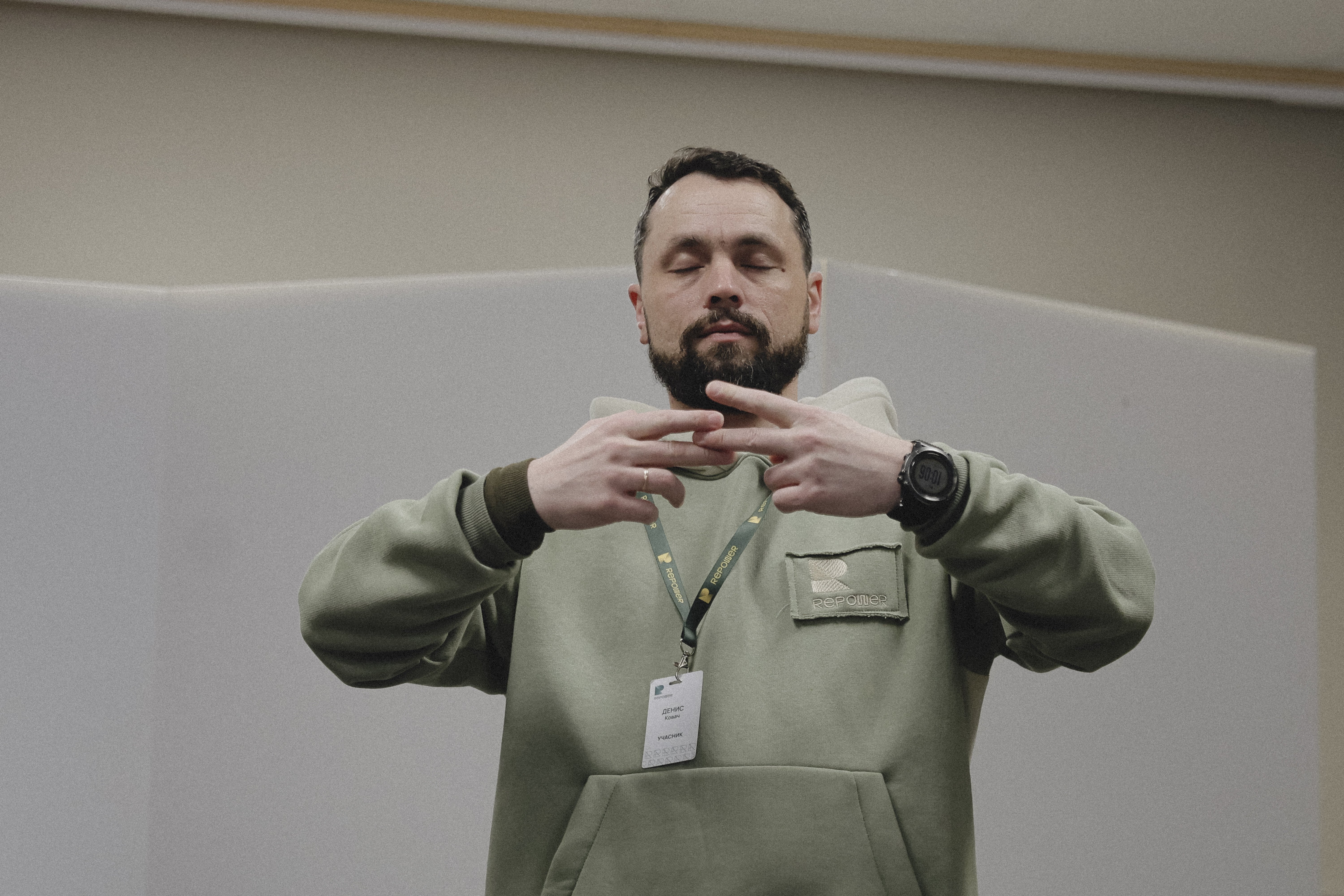
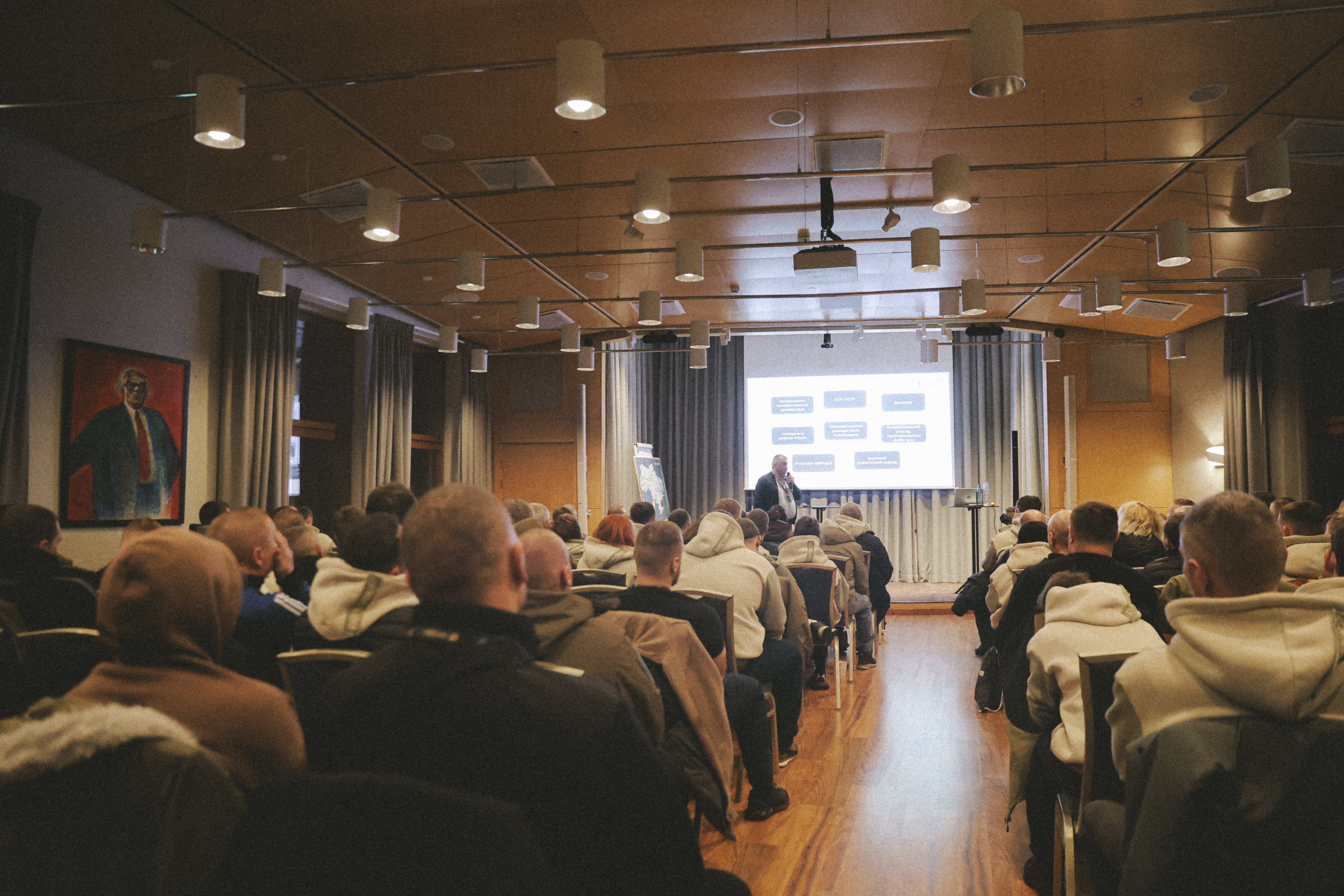
Psychological lectures are also an essential part of the daily routine. Every day has a new topic: combat stress and resilience, sleep disorders and techniques for recovery, psychological first aid in extreme conditions. This knowledge will help both them and their comrades.
“What do soldiers do when they are on rotation?” a psychologist asks during a lecture, and immediately answers himself: “They monitor safety.” His next question is: What are we doing here?
“We also monitor safety,” several people responded at once. And it is not a joke. On the first day, during a guided tour of the area, a helicopter flew overhead. No one missed it.
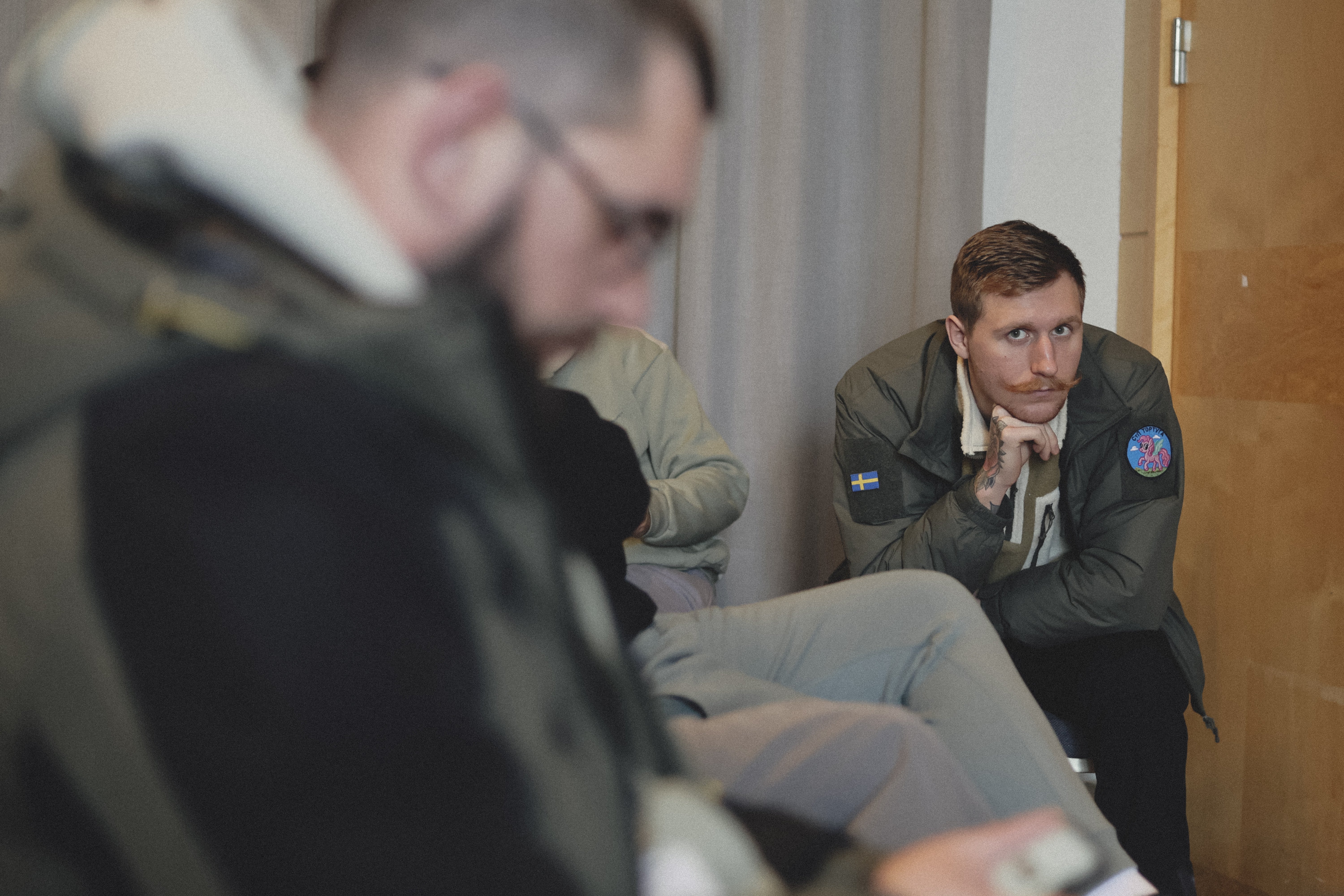
“When you’re here and hear some electric motor or machinery, you usually tense up,” Nazar says. “Here helicopters fly often, so they also kind of keep you in a certain state of alert.” By the end of the 10 days, he will say he stopped paying attention to these sounds.
Alongside the hundred participants, ten psychologists, psychotherapists, and psychiatrists also come to Sweden. Those who find the willingness can work with them individually. According to the organizers, usually at least half of the medics try such sessions at least once.
Nazar is among those half. “Honestly, I used to think, what’s the point of it? At first, it was just interesting. We sat down and started talking.”
It doesn’t solve your life problems, but it helps you sort them out in your head and understand what to do with them.
Nazar
Combat medic
In addition, every evening they gather in groups of ten for reflection sessions with one psychologist. It is a chance to discuss the day, share impressions, and process new experiences. These meetings are held behind closed doors; everything discussed remains between the medics and the psychologist.
Unlike Nazar, Vadym did not go for individual sessions. “I’d rather go for a walk around the area with headphones, listen to music, and talk to people via video calls. I think that would be more pleasant for me.” Still, he liked the group sessions.
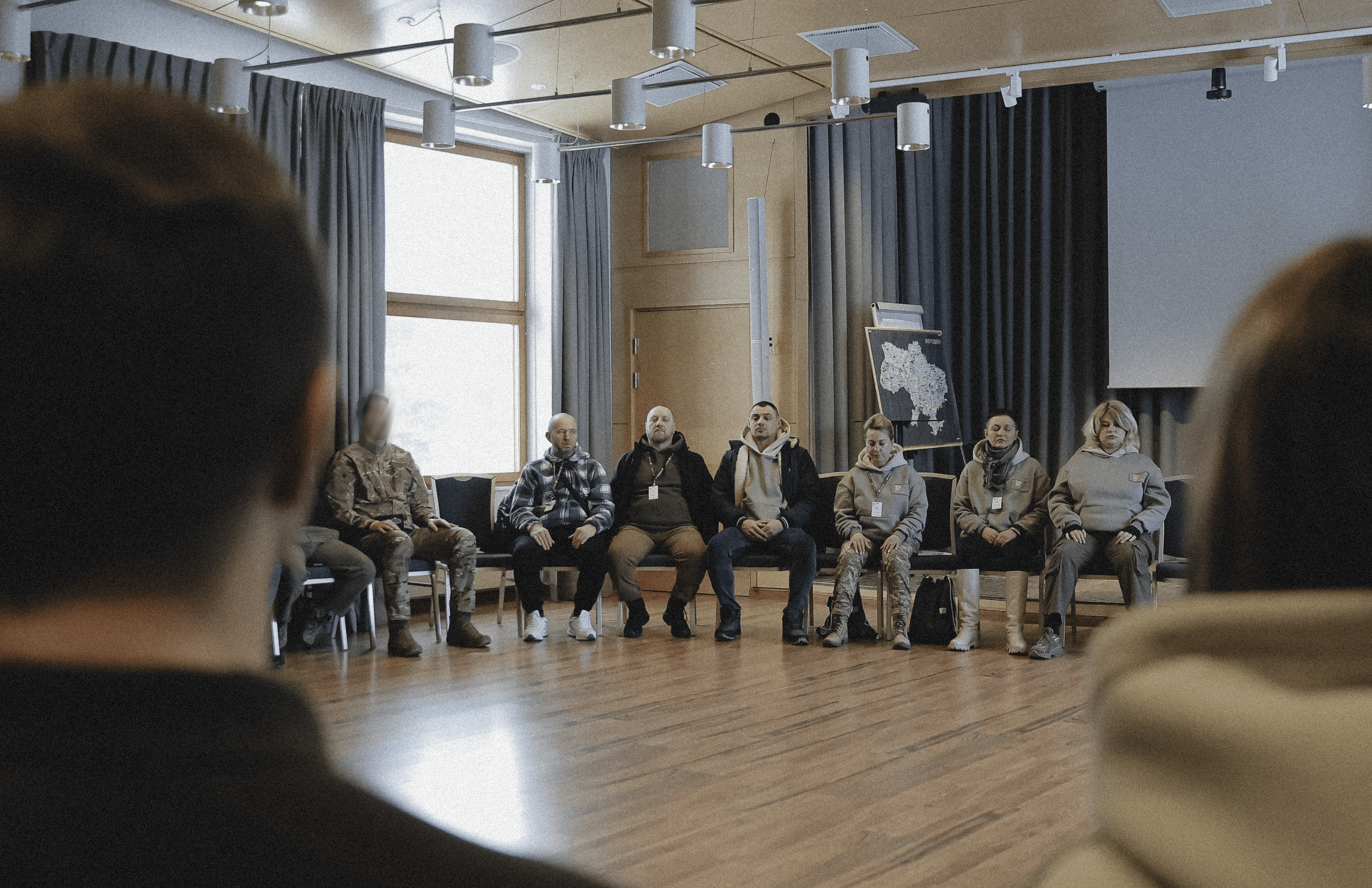
“It still has a slightly different atmosphere. We discuss how we spent the day, what we liked, and what we didn’t. Ten of us sit there, you talk and talk, someone cracks a joke from the side, and everyone laughs. The atmosphere becomes lighter.”
According to the team, body-oriented therapy, neurogymnastics, time spent in nature, and group activities help reduce the frequency of intrusive anxious thoughts and bring a person back into contact with the present moment. That is why psychological recovery programs are seen not as additional support, but as a key element of long-term resilience for military personnel.
Have you all submitted your DNA?
“I was already thinking of getting tattoos on my arms and legs—if they’re going to collect bodies for identification, at least let it be mine, not someone else’s.”
“100%. There were cases where a guy’s arm or leg was recovered, and the person was missing a leg, for example, and in captivity. That happened. The leg went for DNA testing, and the rest of the body was in captivity.”
The least you expect to hear while standing in a forest on one of Sweden’s islands is a conversation about DNA collection. But is it surprising? No.
One of the first activities offered to participants is archery. Some of the men and women take turns trying to hit targets, even competing with each other. Those who have already finished sit nearby with tea or coffee. That is where we overhear this conversation.
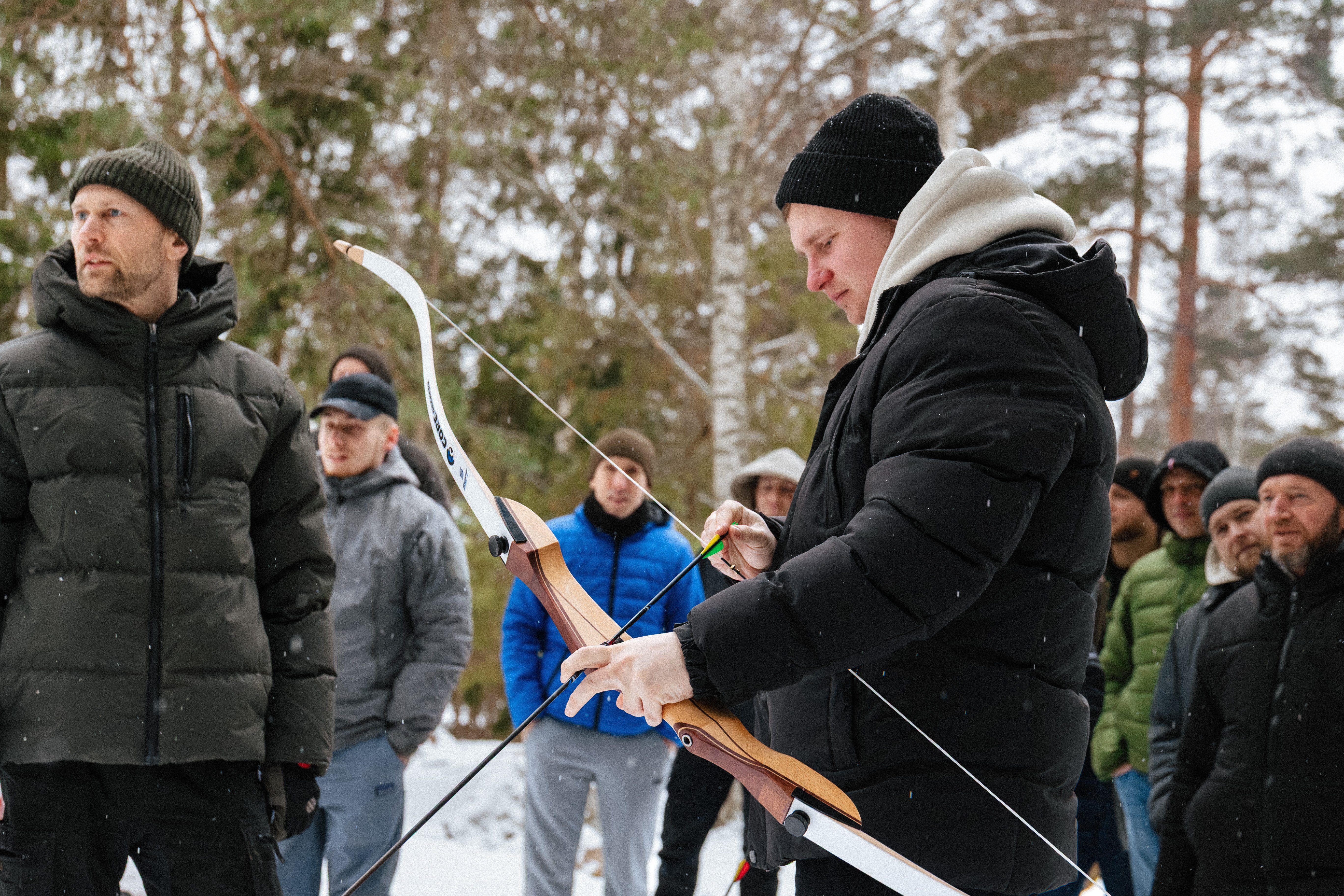
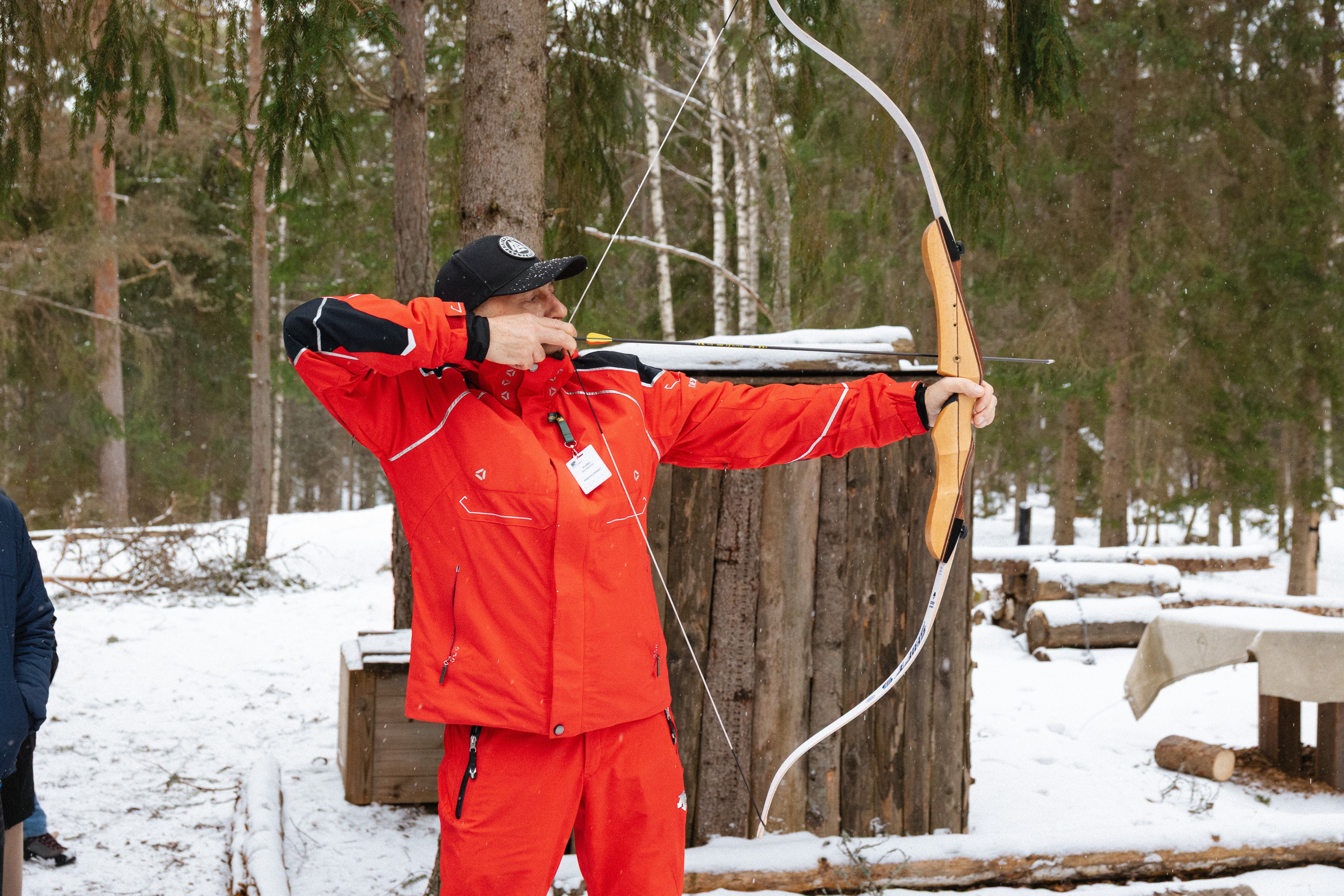
“Have you all submitted your DNA? Or are people still doing it?”
On another part of the island, you can see the horses. A bucket of carrots, left by the owners for feeding the animals, empties within minutes. “Do you like carrots?” one man asks a horse. “Here you go, my dear, eat.”
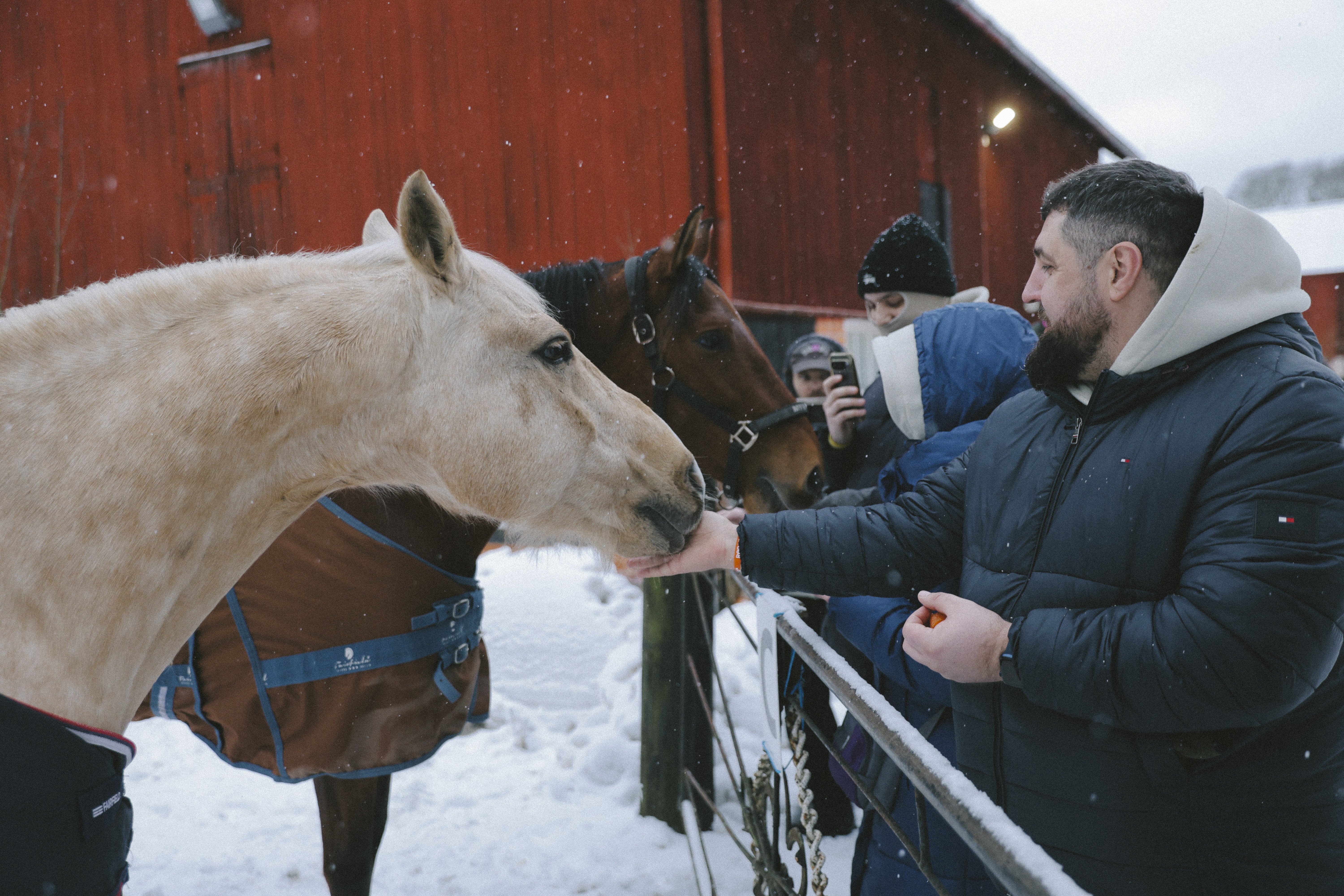
Vadym leads a horse around the paddock. “When you’re holding it on a thin rope, and such a massive animal is walking next to you, and it still listens to you—it feels really good. You get distracted, you forget at least a little about all these problems.”
The day before, when talking about his place of strength, Vadym mentioned Uman—his hometown. Now he finds similarities here, in Sweden. “We have the Sofiivka Park there, and it’s something similar: nature, especially if you know where to go to find fewer people, silence, calm. The only difference is there are no horses there, but you still kind of switch off from everything.”
Each of these 10 days has a plan: ahead there will be go-karting, ice skating, rides on CB90 boats, Viking games, and museum visits. And of course, there is free time when these combat doctors and medics can do whatever they want—walk around, call home, sleep, or go to the sauna.
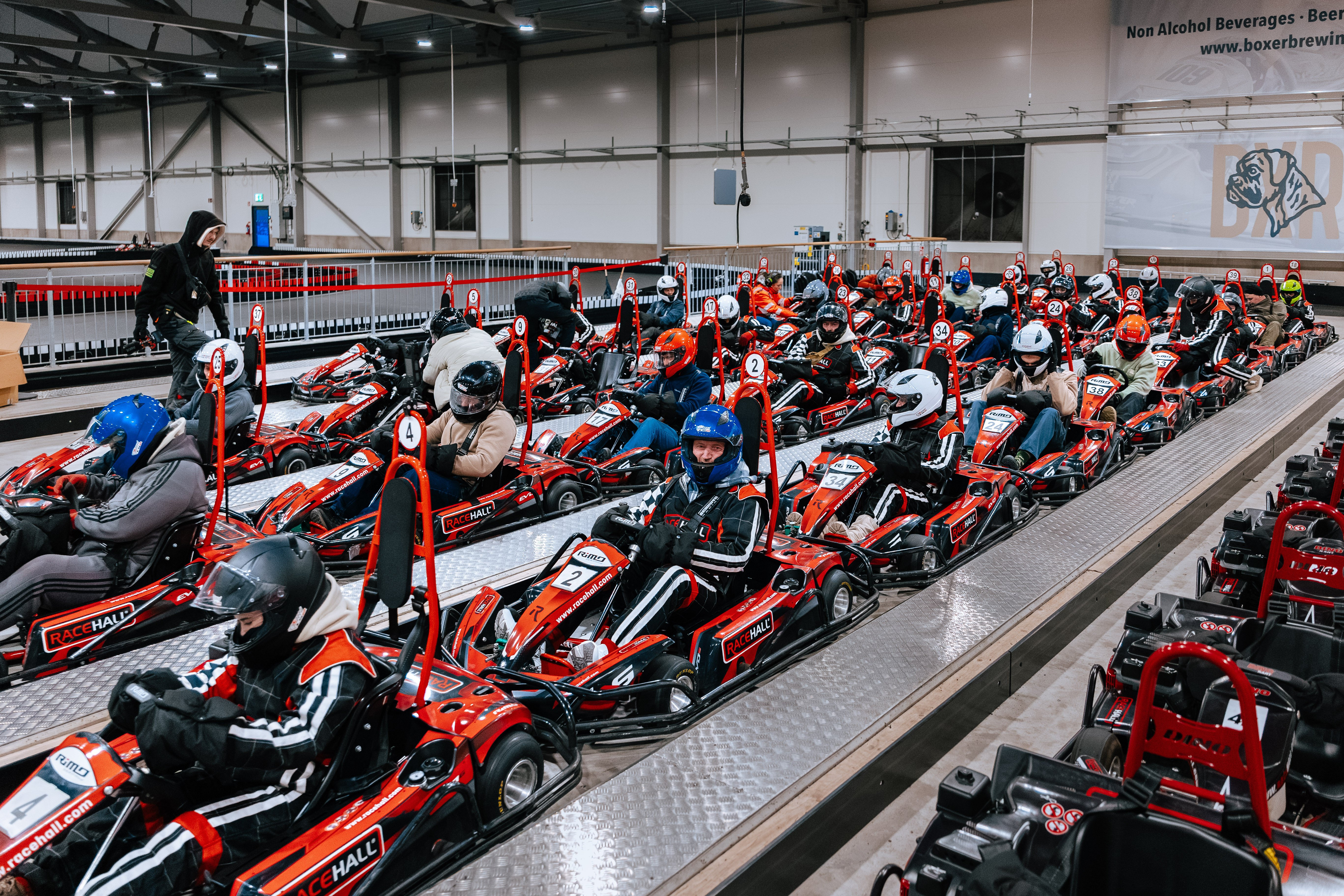
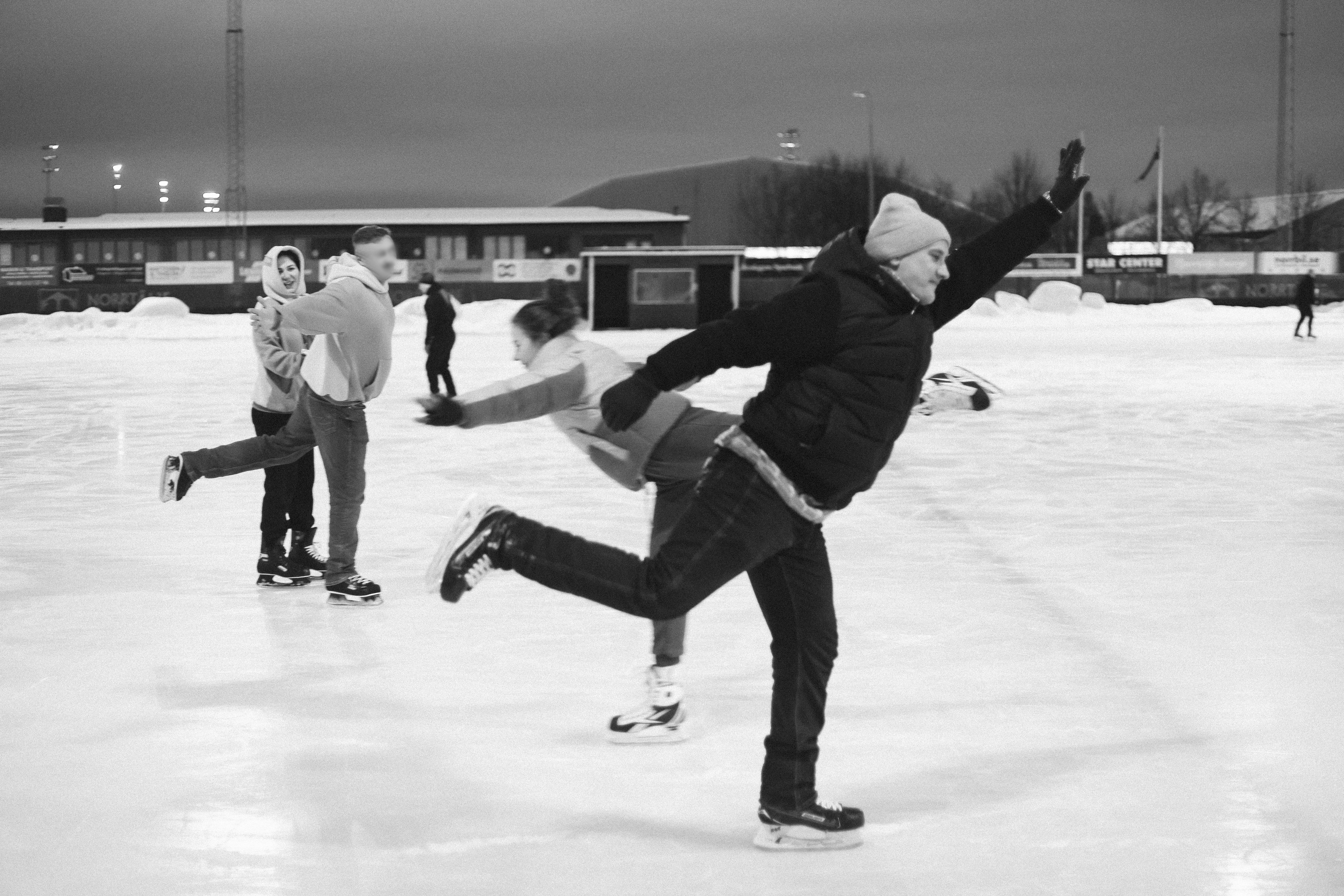
“We really ended up in paradise,” says the participant who had been talking earlier about possibly needing tattoos for identification. “It’s just a pity it’s for such a short time.”
Stockholm—a great city
On the fourth day, we went for our first walk in Stockholm. “The other day I was thinking—if I suddenly got here straight from work, like someone picked me up by plane and brought me to Stockholm, I’d probably step out and have a panic attack,” Nazar jokes.
Ahead of them is a guided city tour, lunch at a restaurant on the central square, and then free time to explore the streets of the Swedish capital on their own.
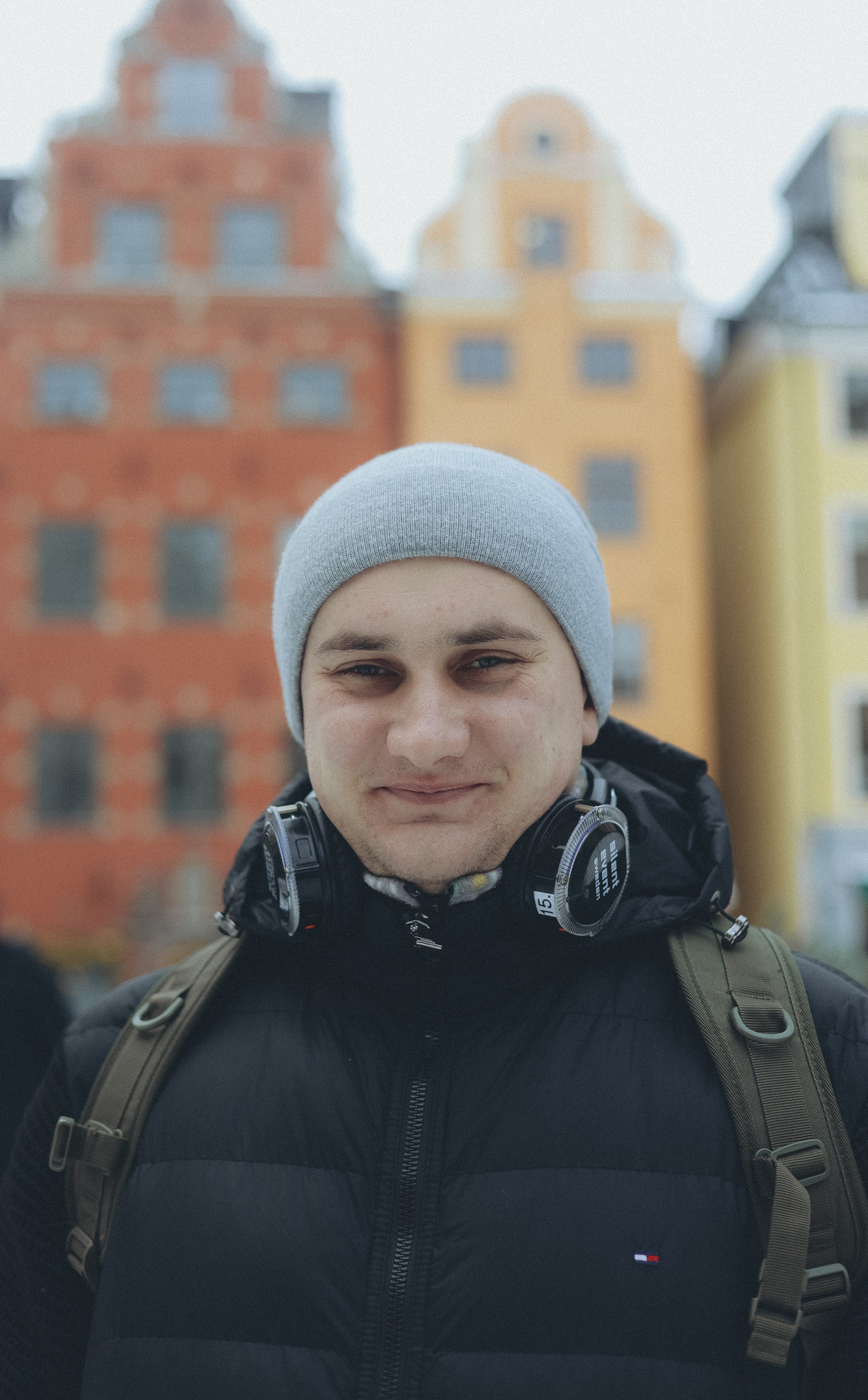
“I think that the fourth day is the most significant,” says Serdiuk. “When you have covered basic needs like sleep, food, and the absence of constant air attacks… We really need these days to recuperate, reset, and start becoming curious about the world around us.”
Walking through the city, members of this group don’t hide their phones—they constantly take photos. Near the Royal Palace, they pause to watch the changing of the guard and then take photos with Swedish soldiers. “Thank you for your service,” one of them says, exchanging patches with a Ukrainian military medic.
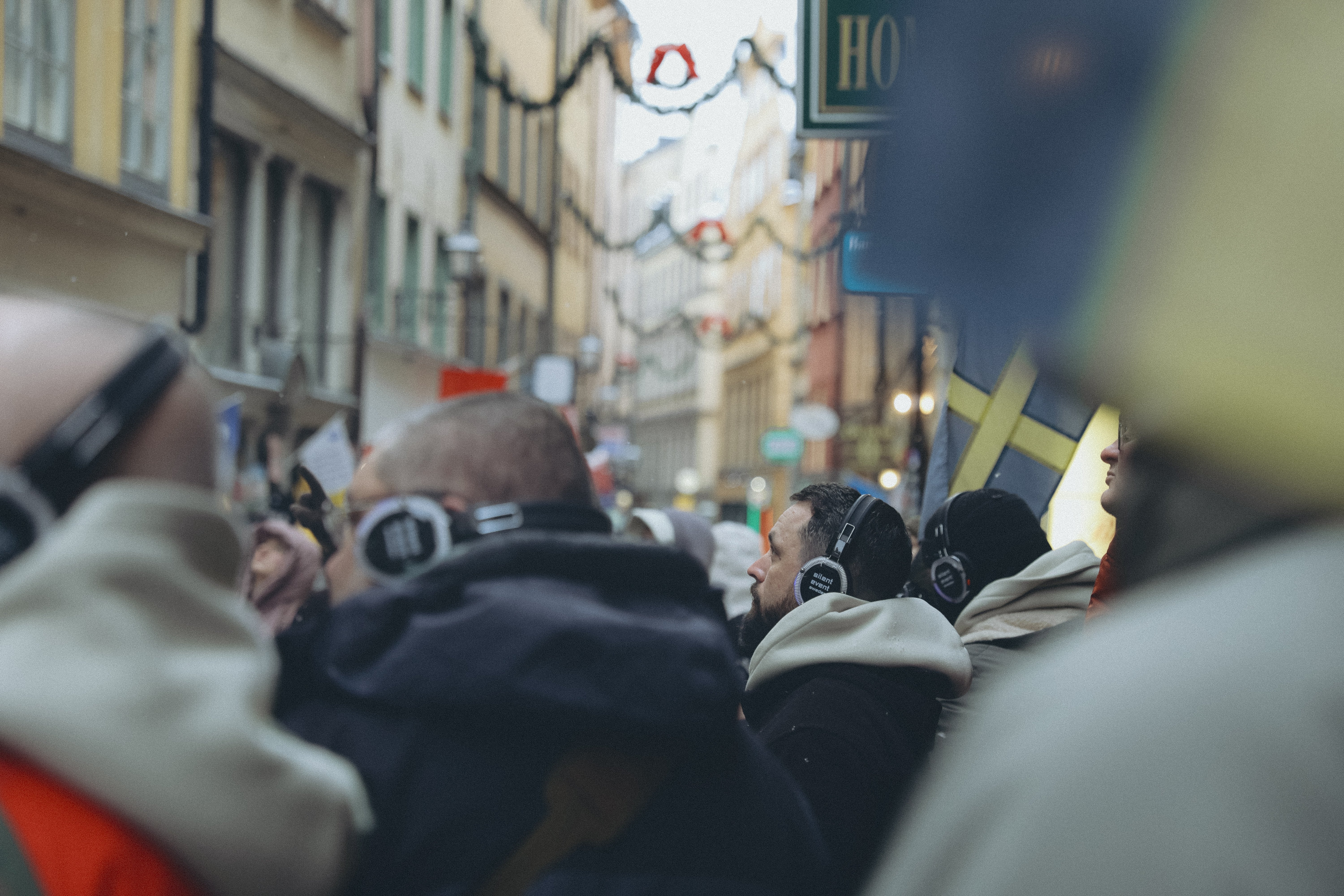
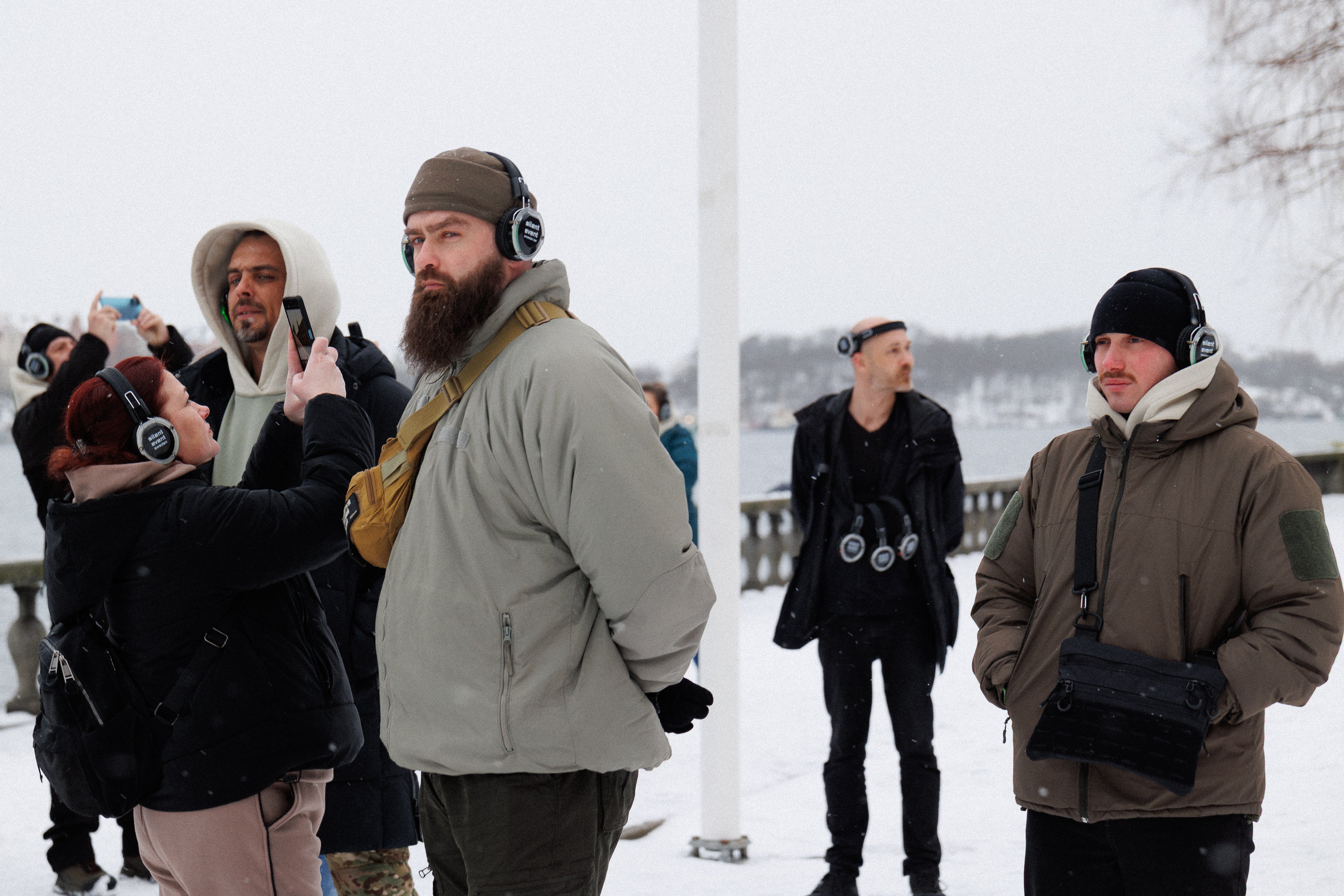
“I still can’t understand how I ended up here and why it’s so beautiful. Donbas is beautiful too, in its own way, but here I somehow like it more,” says Vadym, who rarely puts down his GoPro camera. He had used it before at the stabilization point. “Houses are intact, there are no air raid alarms.”
People look happy. At least on their faces.
Vadym
Here in Stockholm, a history lecture also takes place—inside the Nordic Museum. The lecturer, Marina Trattner, is a researcher who works with Swedish archives and discovers unique documents related to Ukrainian history.
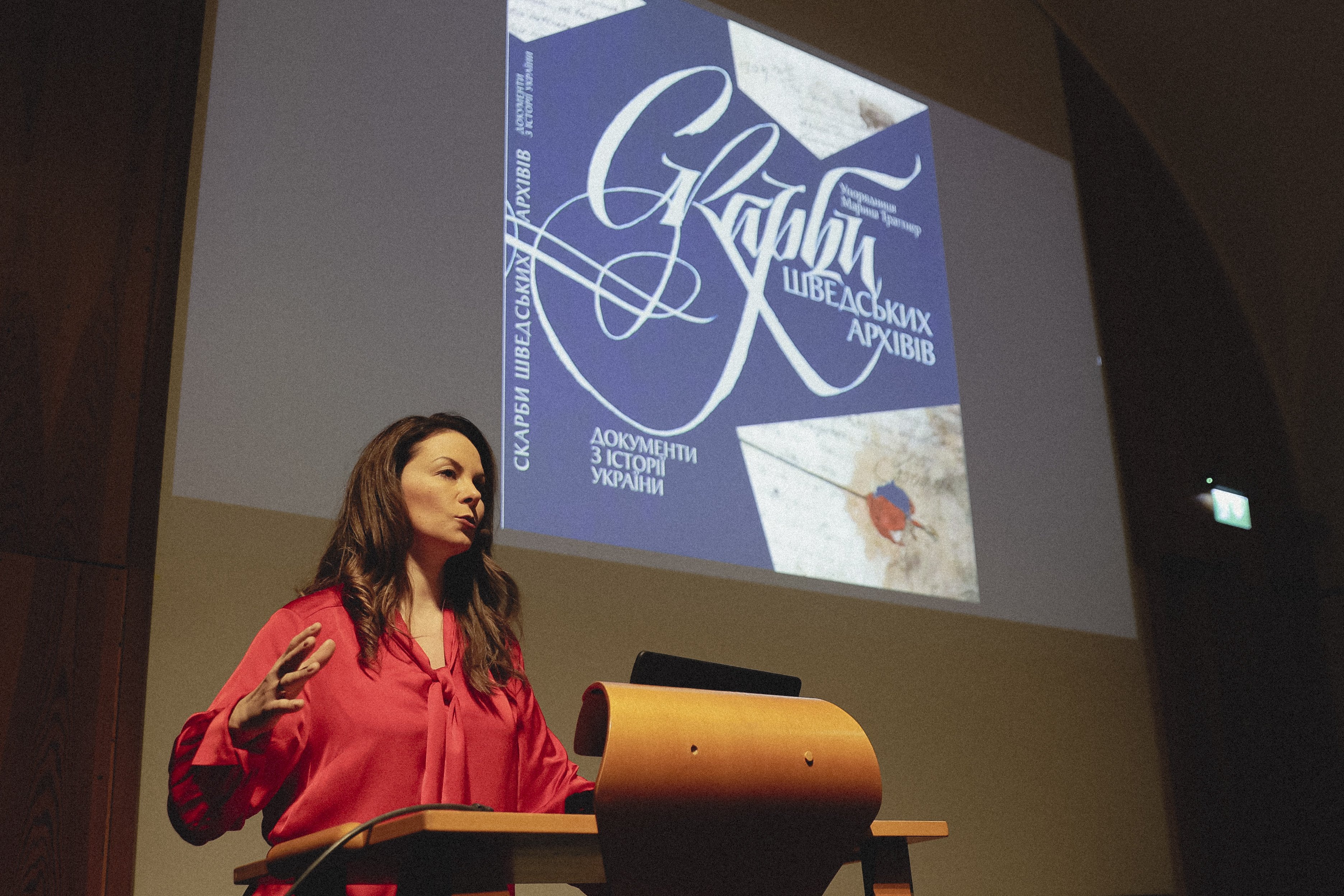
“I find documents in Swedish archives, translate them, send them to historians at the front, who, in between battles, read them and then send me voice messages with their comments,” she says. “I translate those comments into text, and we publish them in Ukraine.”
For the lecture, she brought two books with her: Pufendorf’s Swedish history from 1688 and a “Military Bible” from the time of Charles XII, published in 1709. The first book is filled with bookmarks marking pages that mention facts about the history of Rus’.
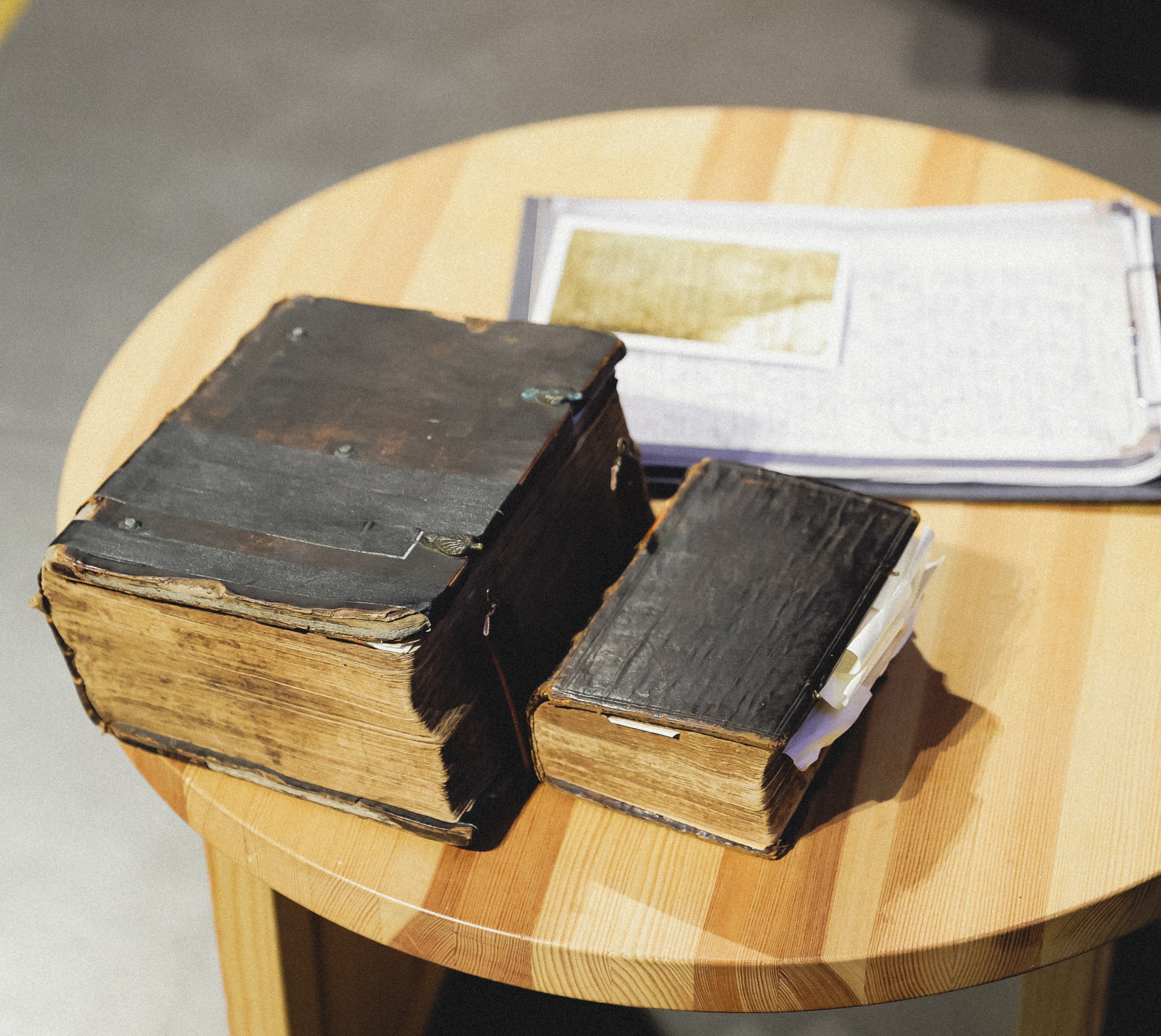
“Please, don’t worry that you’re not allowed to touch them or that gloves are needed,” she tells the audience, encouraging them to come closer and flip through the centuries-old pages. “These are my personal books. I want you to touch your real history, because it belongs to you, and you have the right to it.”
History is important in every Repower event, Serdiuk explains. “We believe that this war is actually an existential war, and we need to strengthen this historical component, which can sometimes feel uncertain because of all the propaganda.”
One of the reasons why we are running the project in Sweden is exactly because Sweden holds key parts of our history. All the truths we did not know are hidden in Swedish archives.
Kateryna Serdiuk
Co-founder and COO, Repower Foundation
“I only learned last year why the UIA flag is red and black,” one medic said the other day while standing outside the hotel building as organizers raised a large Ukrainian flag. “Because when blood falls on the yellow-and-blue flag, it turns that color.”
Telling a story of their own
“During our pilot project in December 2022, Sweden’s foreign minister at the time, Tobias Billström, found out about the arrival of 100 Ukrainian military medics and doctors,” Lindström recalls. “He came to pay his respects and to have a dialogue with our group, to see how he could support us, how Sweden could support. So that was the beginning…”
Since then, participants have had the opportunity to meet Swedish officials at every program. This time is no exception.
We wake up earlier than usual and, together with a group, head to Stockholm for a meeting with Sweden’s Minister for Foreign Affairs, Maria Malmer Stenergard. She asks everyone to tell something about themselves and finds words of gratitude for each person.
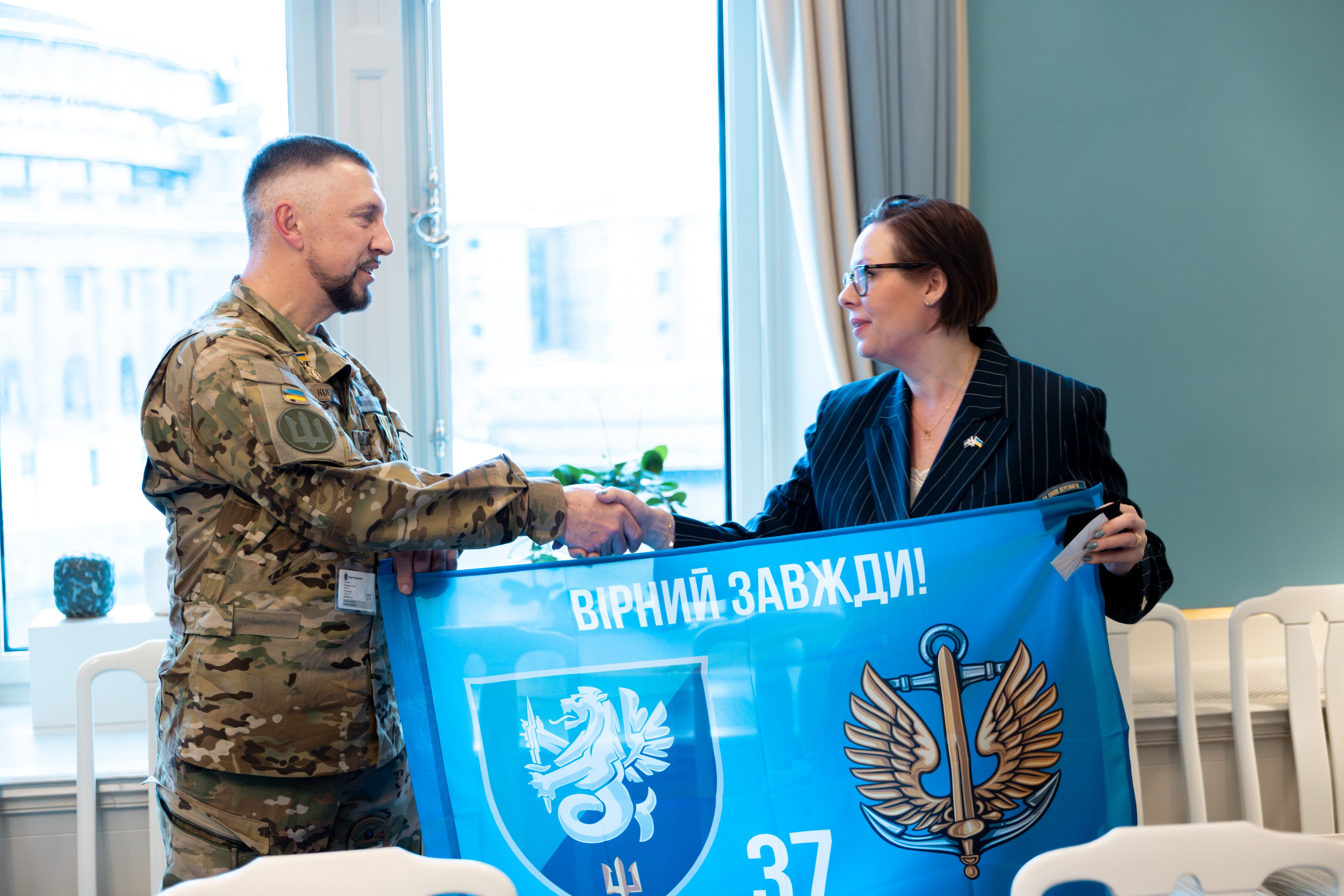
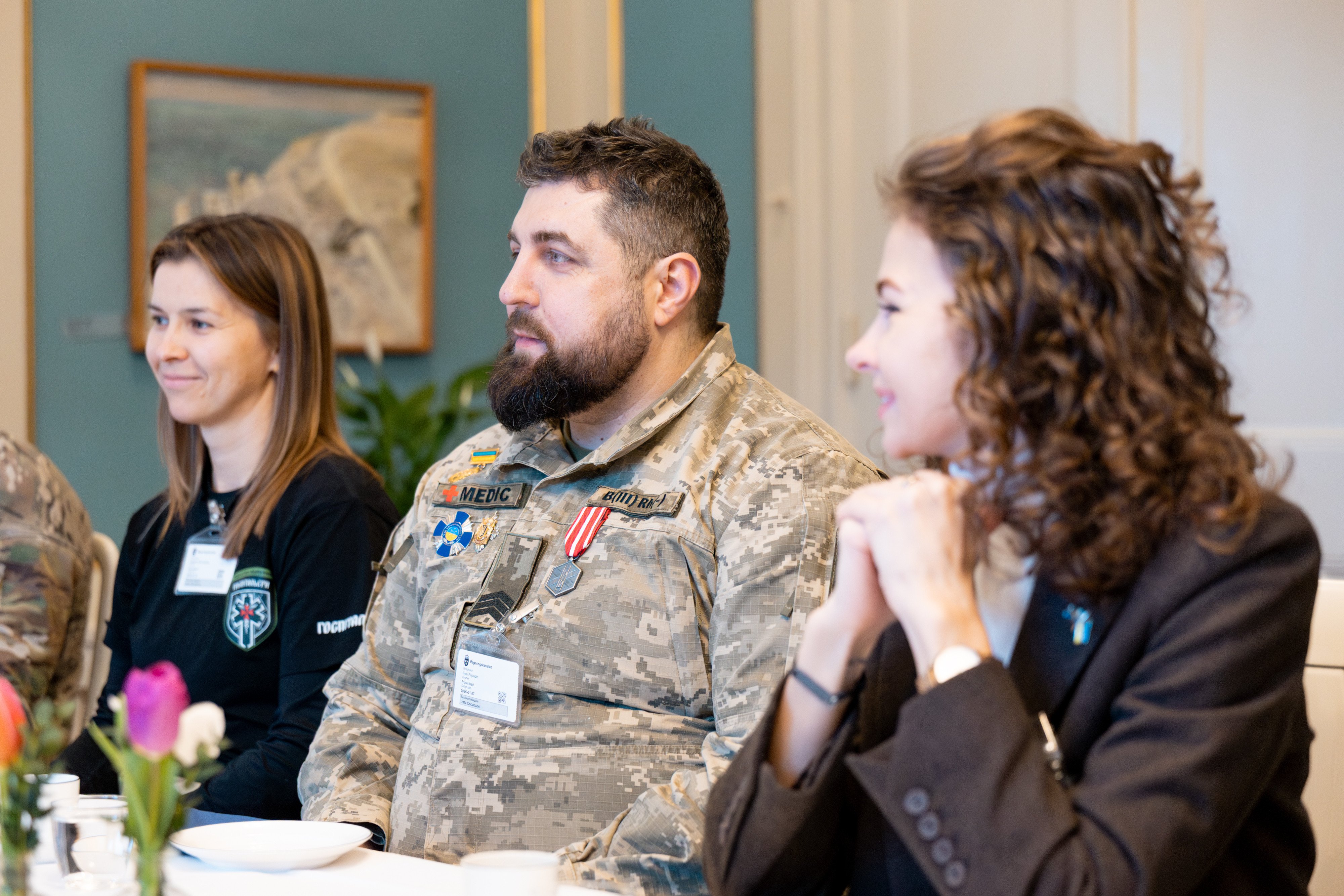
“Too many of you pay the highest price for your freedom, but also our freedom,” the minister says. “This is something that will never be forgotten in Sweden.” Stenergard explains that recent surveys showed that 96% of Swedes want both the EU and Sweden to continue supporting Ukraine.
“I was deeply moved by your tradition of leaving lanterns in the window,” Ivan, a company medic, tells her. “Because on the battlefield, a combat medic is like that lantern—drawing all the wounded to it. We’ve been at war for four years now, and my lantern has already burned out. But over these past few days, it has begun to light up again.”
We give them an opportunity to speak about their brothers and sisters in captivity. They have an opportunity to talk about their friends who have been killed, and they have an opportunity to make a list of the things their brigades urgently need.
Sebastian Lindström
Co-founder and Head of International Cooperation, Repower Foundation
Among the presents the military doctors and medics hand to the minister—flags, patches, pins—there is also a framed photograph of a young woman in military clothes.
“Lana Chornohorska, callsign ‘Sati,’ was many things,” begins Ignatius Ivlev-Yorke, who serves the Hospitallers, before handing this photo over to the minister. “Ten minutes before her death, she gave me a tangerine. We shared it between the two of us. I joked that I would tell people about the beautiful girl. So here I am, doing just that. Sati died in my arms on January 1st, 2026. There was nothing that could be done.”
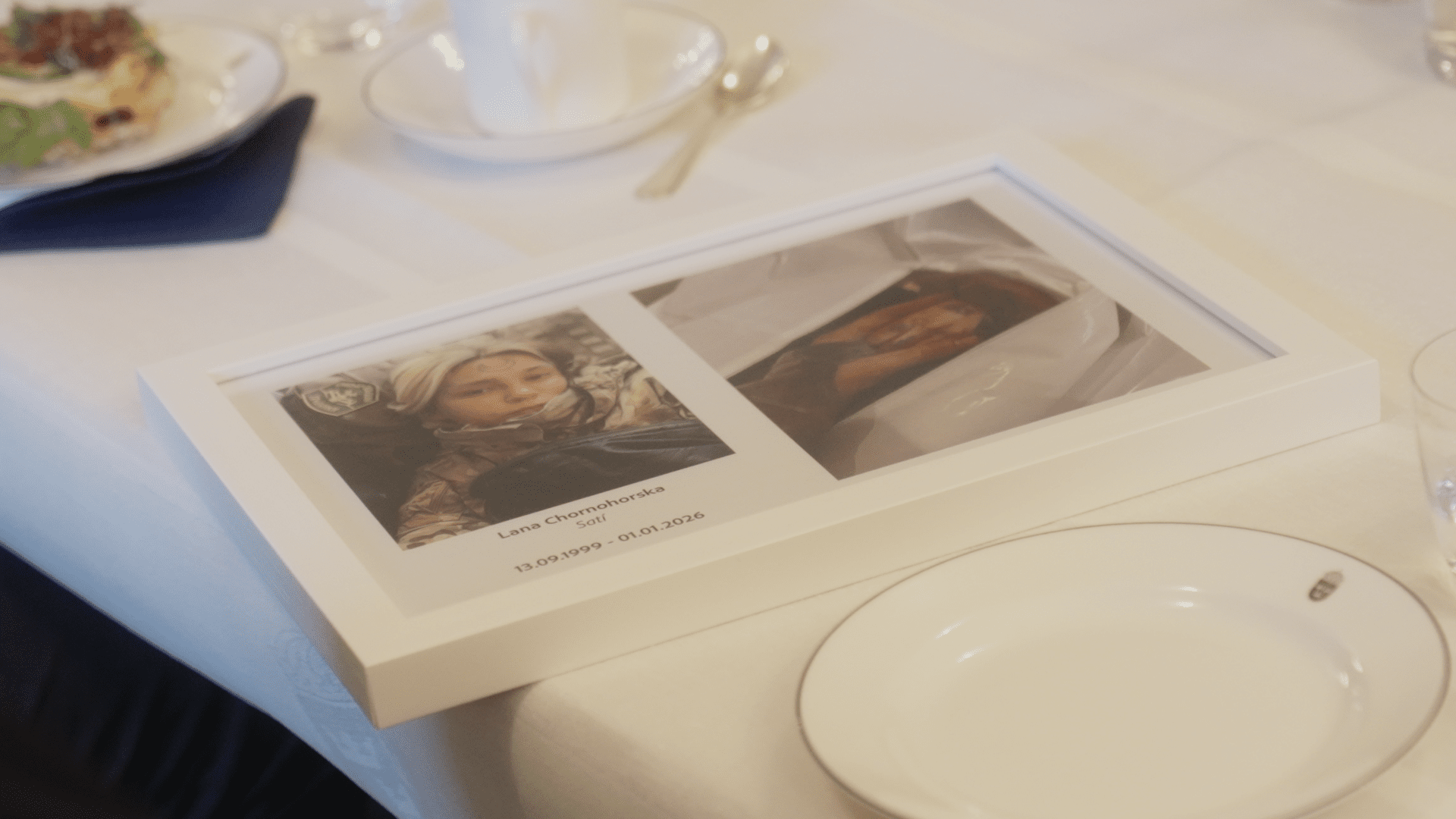
As he speaks, the minister wipes away tears. Then she stands up to hug him.
We really see that you’re suffering. We thank you so much for everything that you do.
Maria Malmer Stenergard
Sweden’s Minister for Foreign Affairs
“How can we help you right now?” one representative of the Swedish ministry asks.
While we are in Sweden, Ukraine is living through hours-long power outages caused by constant Russian attacks on civilian infrastructure. Besides obvious solutions such as generators, Kuriachyi emphasizes another crucial point:
“It is necessary to introduce tougher economic sanctions that will prevent Russia from continuing the war.”
Among those this group meets is Sweden’s Minister for Civil Defense, Carl-Oskar Bohlin. He comes to the hotel together with his team; it is his first encounter with the Repower project.
“Since I took this office in October 2022, I’ve had the opportunity to go to Ukraine two times, and I’m always struck by the real heroism shown by the Ukrainian people,” he tells the participants, emphasizing that he came not “to talk a lot to you, but to listen to you and hear your experiences firsthand.”
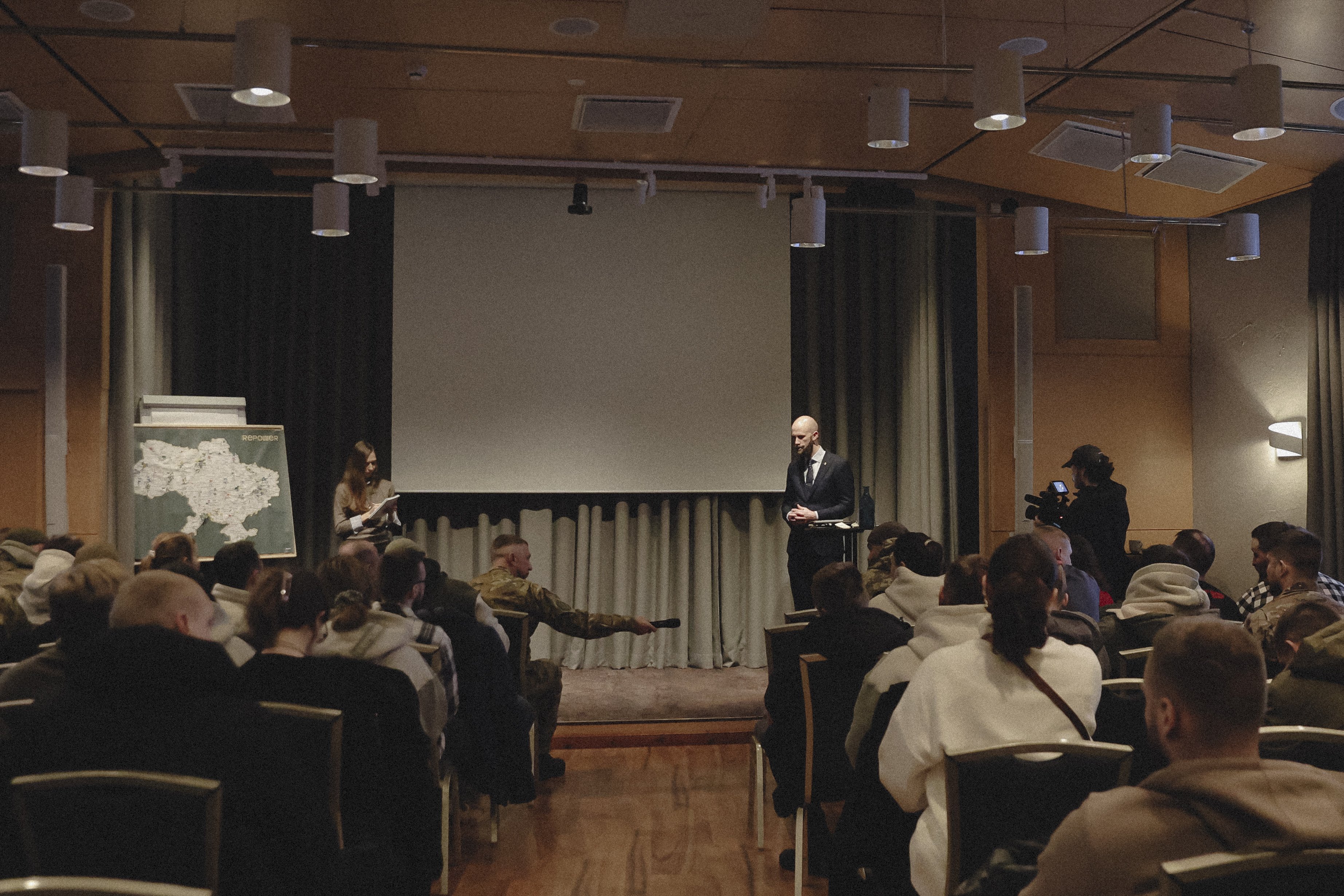
A medic with the callsign “Viking” approaches the minister to thank him for the Swedish role in the development of the AT4/NLAW and Carl Gustaf anti-tank systems. “The Russians are absolutely ‘happy’ with them,” he laughs.
Another meeting is with Swedish military medics. It is an opportunity to talk about experience and working conditions. “We hope the war will end, and then invite us—we’ll gladly come and help you gain all this knowledge,” Kuriachyi tells the Swedish colleagues. “Or let them come to us,” another medic suggests.
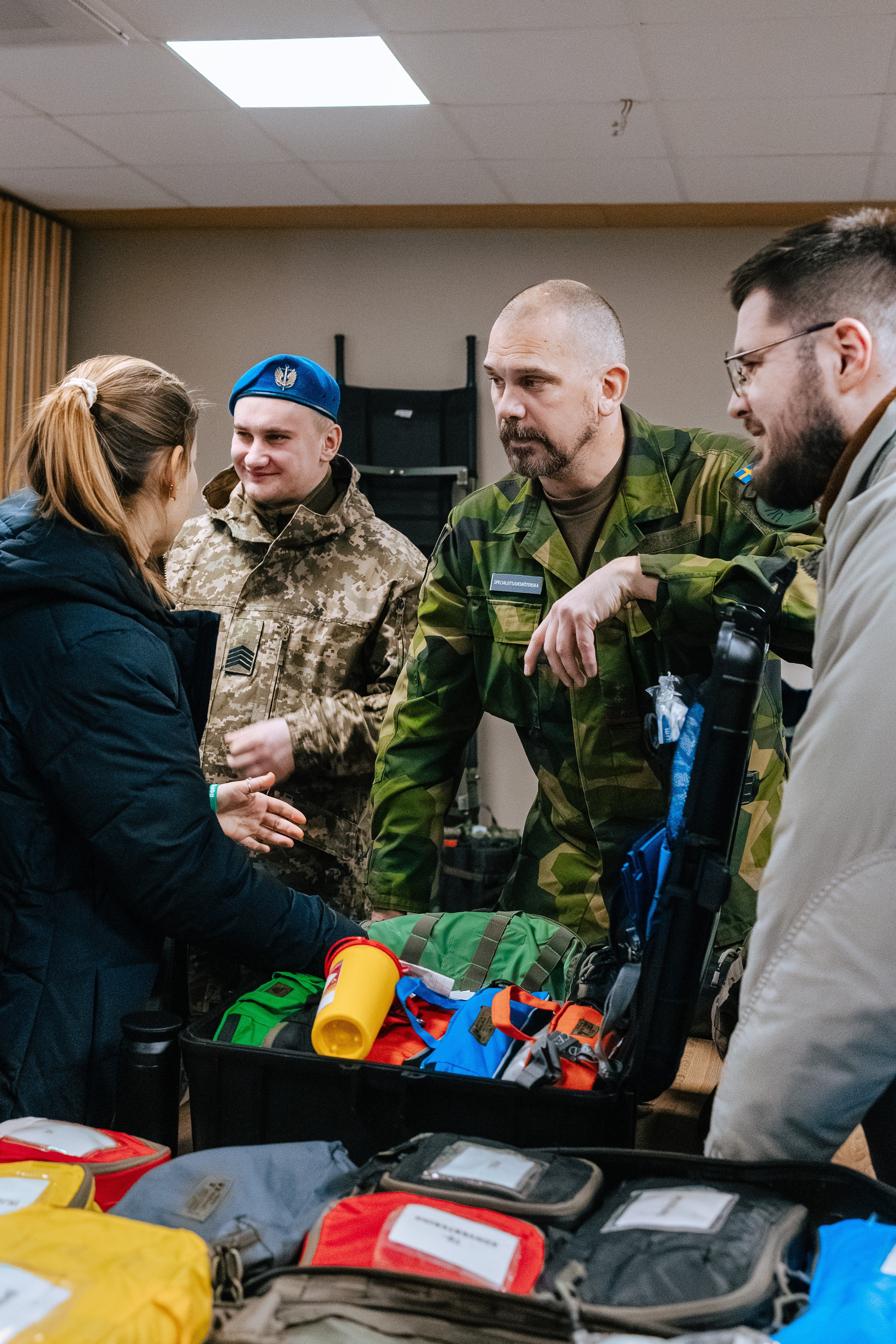
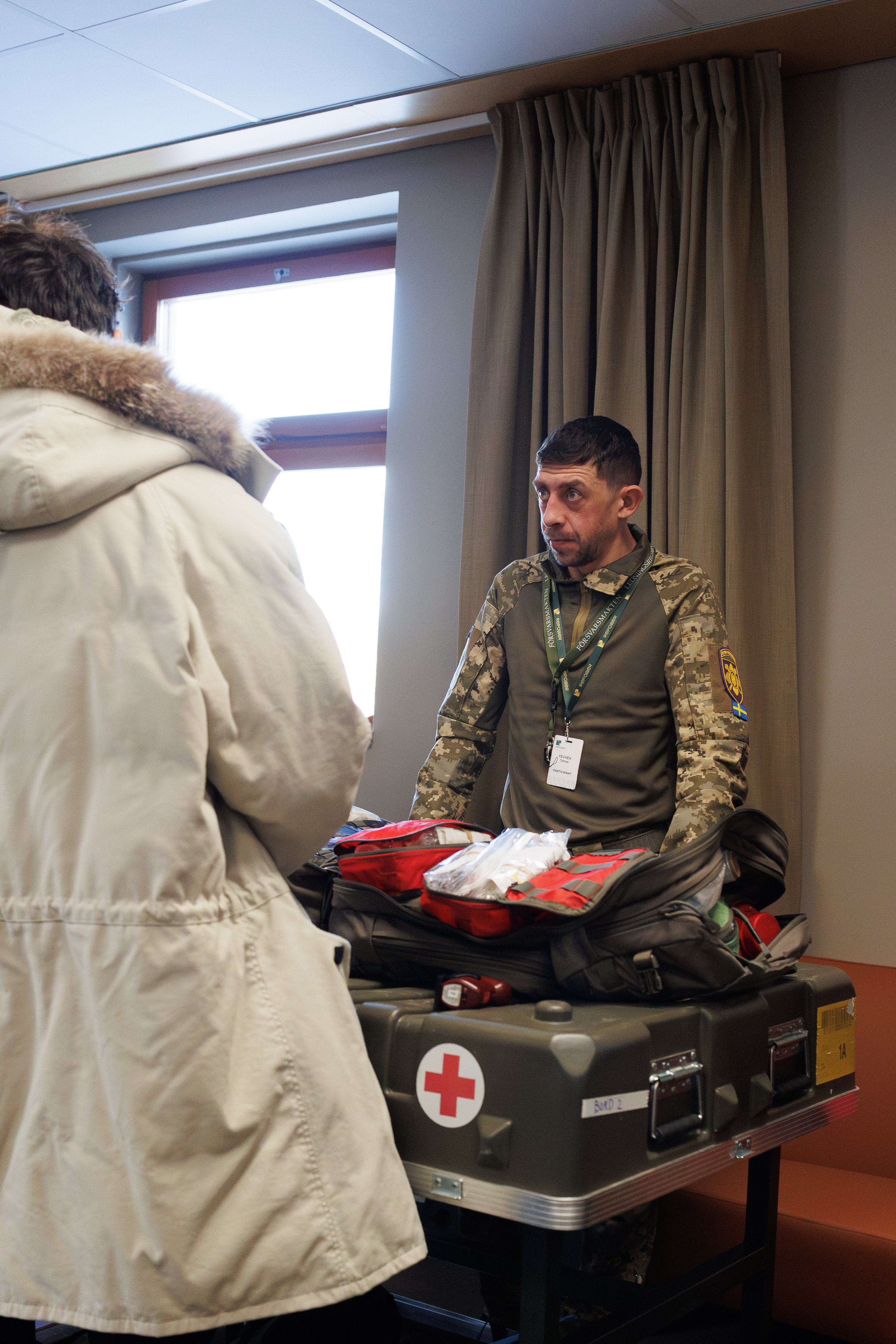
“What we gained over these last four years, they wanted to hear about our experience so they could be even better prepared,” says the head of the medical service of the 37th Marine brigade. “What interested them most was the use of electronic warfare systems and countering drones.”
For him, Repower began with a phone call just as he was boarding the plane: one of the medical evacuation vehicles had been struck by a Russian FPV drone. One of his subordinates was injured.
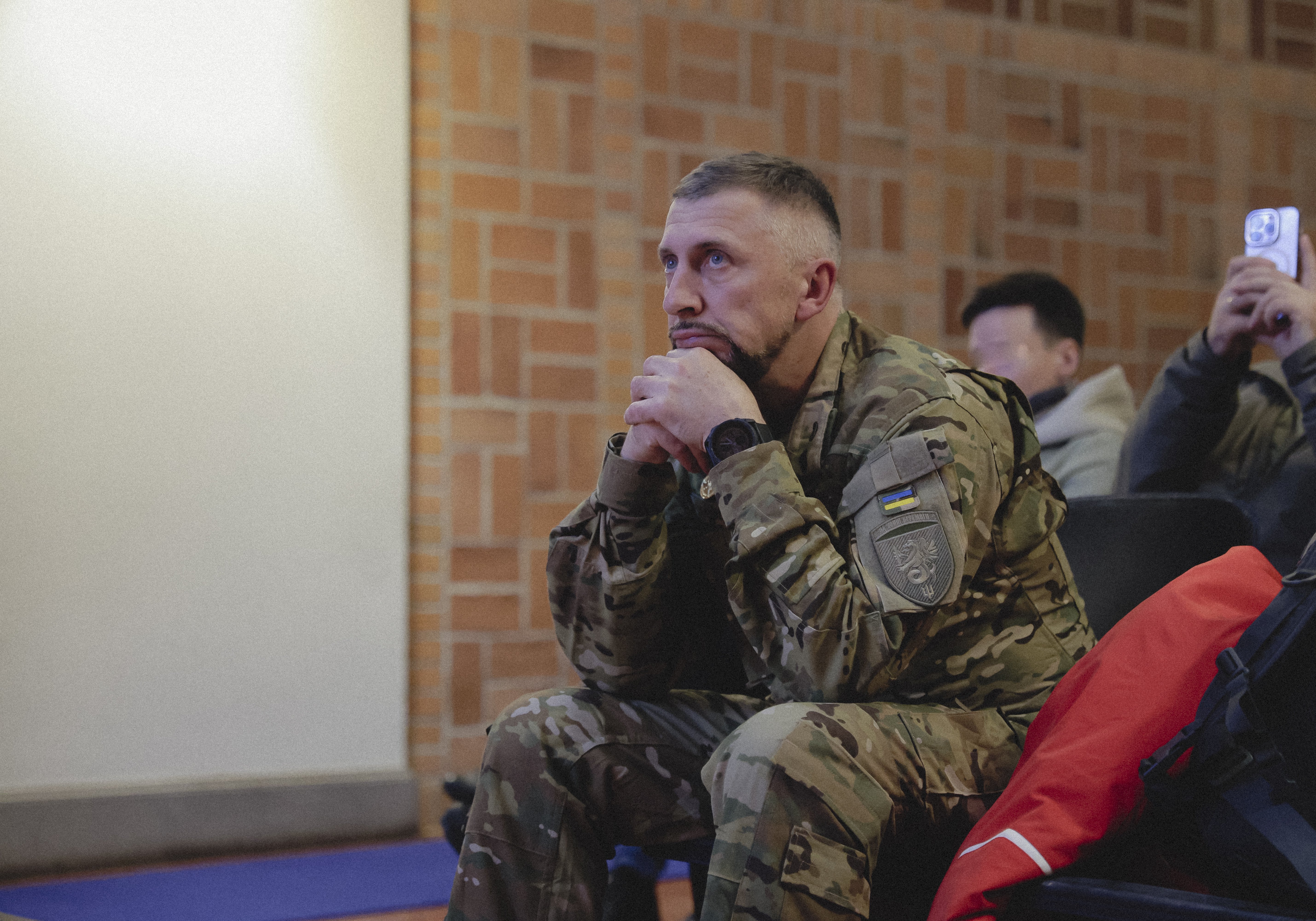
Just as Kuriachyi had predicted during our first meeting at the stabilization point, he combines everything with work. “There are many issues, and they arise both at night and during the day. There’s not much chance to rest,” he says. Even though another person is currently carrying out his duties, he remains constantly connected.
At the same time, he emphasizes that he sees changes in others and understands how much work the organizers have done to make participants feel comfortable. And although everyone will eventually have to return, this time in Sweden, he says, “will be valuable for many of them.”
Preserving memories
When a hundred-plus people approach the large open square, a bonfire is already burning, and music can be heard. The organizers call this evening special. The participants form a circle.
Serdiuk steps into the center: “This is exactly the evening when we will give you something that will serve as a symbol of our unity, of the story we created together with you—small, but so important.”
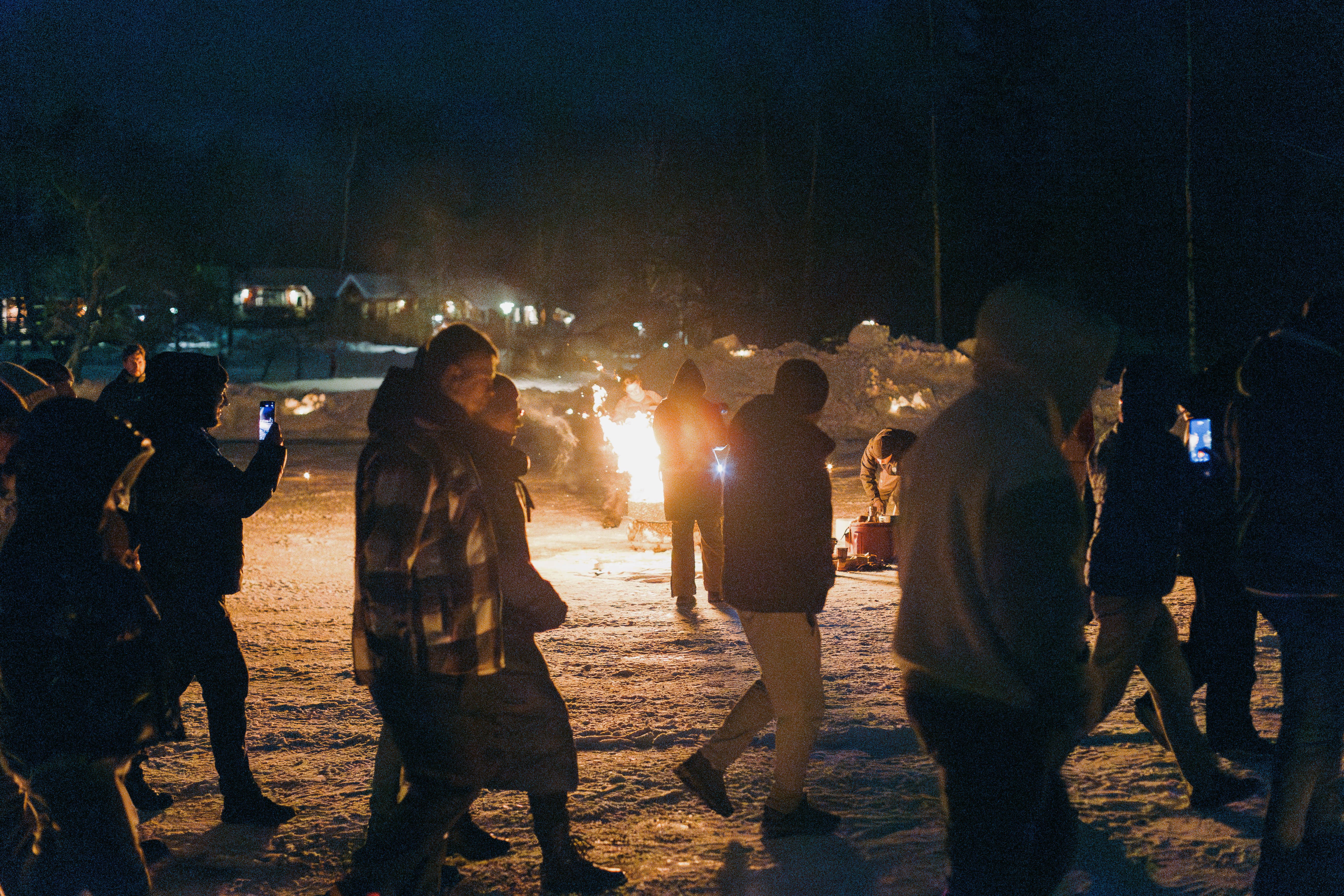
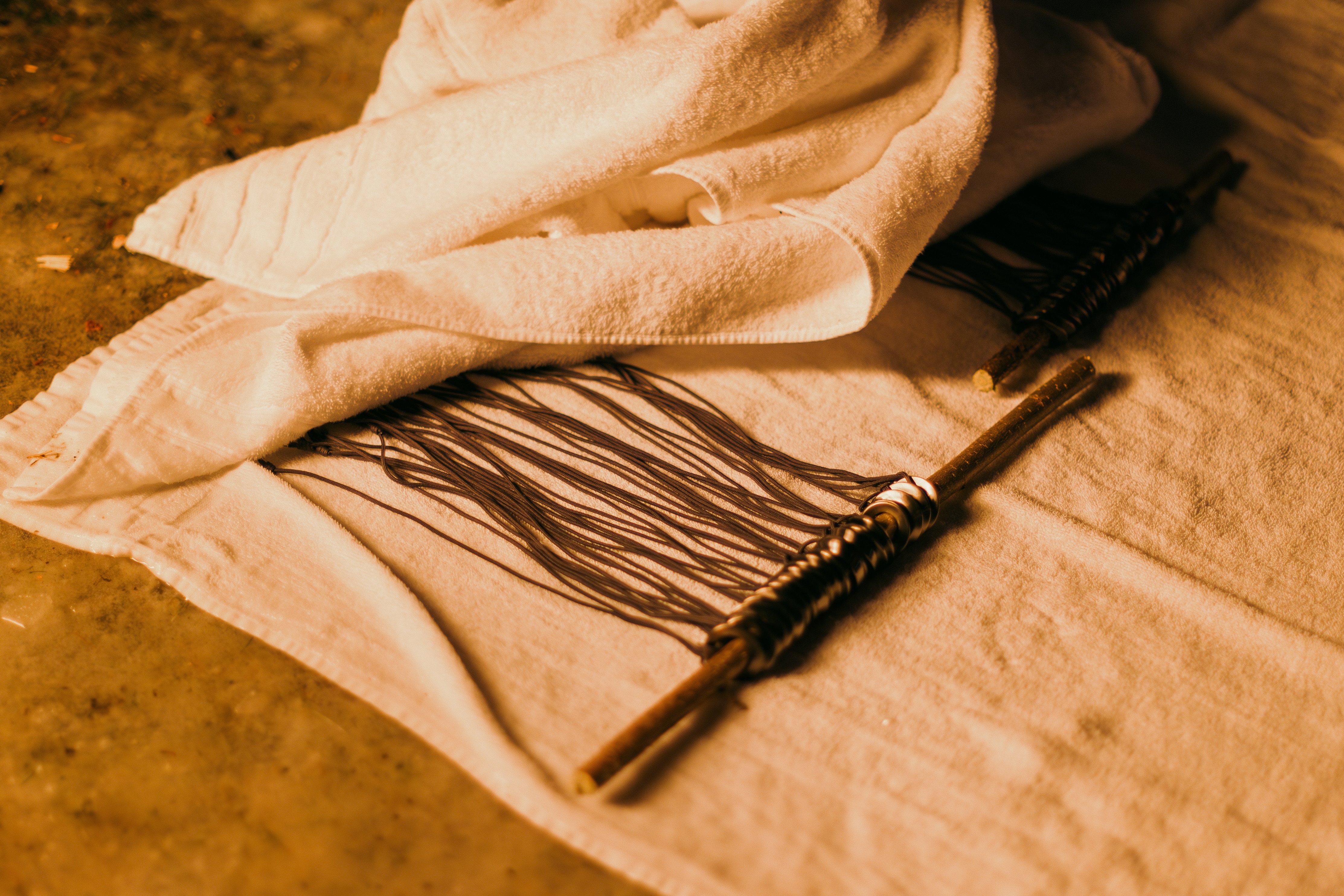
Tonight, during the ceremony, each person receives an amulet. This tradition began during the third Repower, which also took place at the same location. Since then, more than 1,300 Ukrainian medics and doctors have received one.
When you feel a good emotion—joy, love, unity—please touch this ring so it can remember that moment.
Kateryna Serdiuk
Co-founder and COO, Repower Foundation
“If it ever happens that you need those emotions later, you can touch it again, and this warmth will spread through your heart and body.” Serdiuk adds.
Creating a community is one of Repower’s goals. Participants from all projects share a common chat where they can communicate and discuss things understood only by those who have gone through the program.

“A combat medic arrives at a stabilization point, sees a doctor with the same amulet, and suddenly they have things to talk about besides work. Suddenly, they have so much to share. The whole world becomes bigger at that moment. Instead of focusing only on what is happening, they have a small light inside that starts growing, and suddenly it feels warm.”
When she sees selfies in the group chat from doctors and medics of different times—from gas stations, post offices, or even training exercises abroad—she says she feels happy.
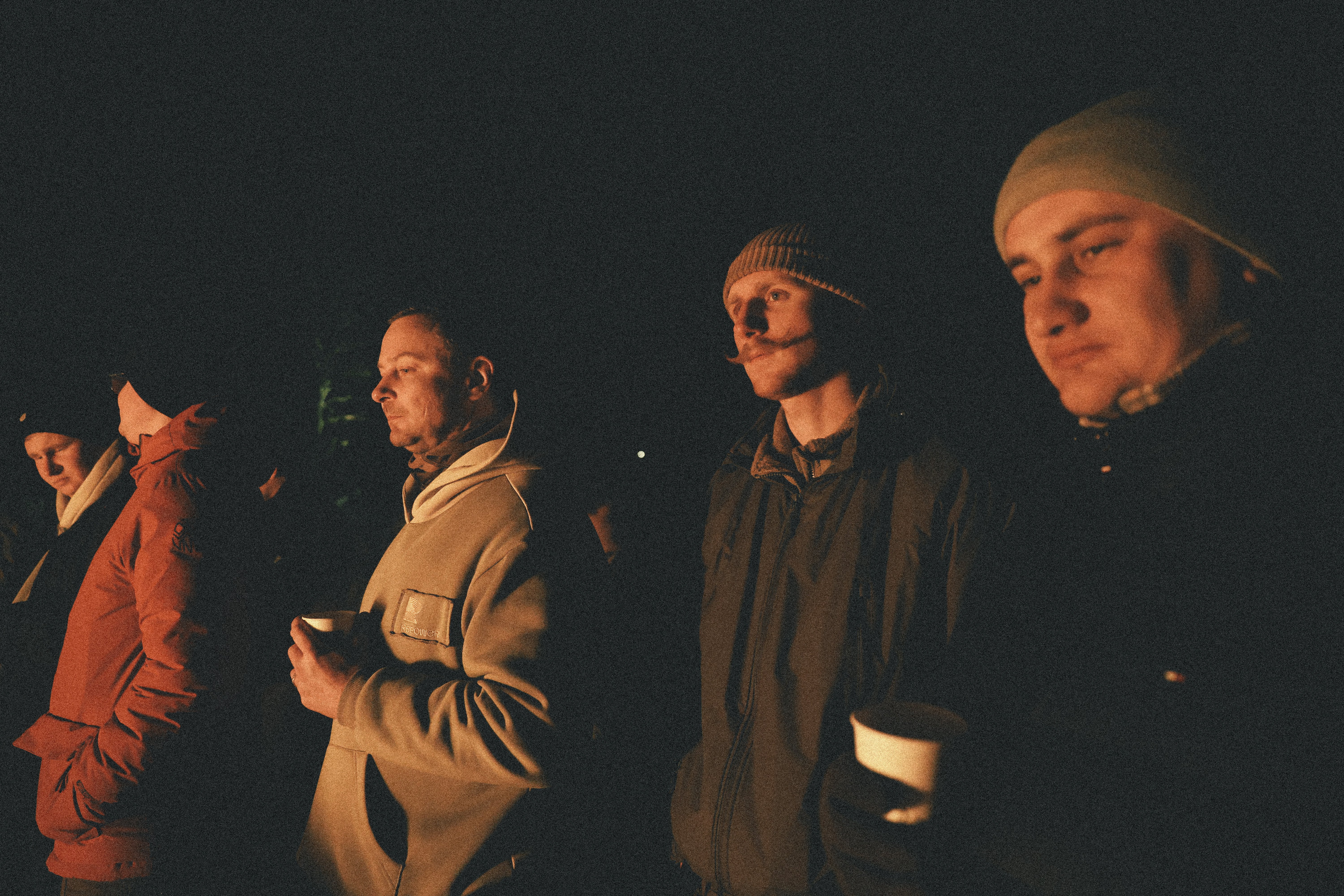
Now the goal is simply to increase the number of programs, so that as many military medics and doctors as possible can receive the support they desperately need and restore their strength. Already, the month after our return, two parallel projects are scheduled to take place.
So let us return for a moment to the beginning—to the moment when Maryna Sadykova, the head of this Foundation, explained why she would not be joining Repower for the first time.
“We work with people who are still in active service but already need help restoring their strength in order to continue their fight,” she says. “This year, we are planning to begin construction of a recovery center that will be the first of its kind in the world. That is one of the reasons why I stayed here, in Ukraine.”
Thus, she continues searching for a place as far from civilization as possible, surrounded by nature—for Ukrainian soldiers to come and be in a truly safe space.
Why Sweden?
The first pilot project of Repower—though it did not yet have that name at the time—took place in December 2022. At the beginning of Russia’s full-scale invasion, Sadykova, Lindström and Serdiuk were all working together for the same organization.
“Everyone was thinking, ‘Just another week, just another month, it's going to be over, I'll give everything—all my savings, all my resources.’ But, of course, it became clear that it wasn’t going to be over that soon,” Serdiuk recalls.
That was when the idea emerged—to give people a chance to recover their strength. Why Sweden? “Well, Sebastian—our Swedish soul of the program—had a network and many connections there. It somehow felt right. We felt such an overwhelming level of support that everyone we reached out to was giving us a thumbs-up and saying, like, ‘Just come, we can take care of you.’”
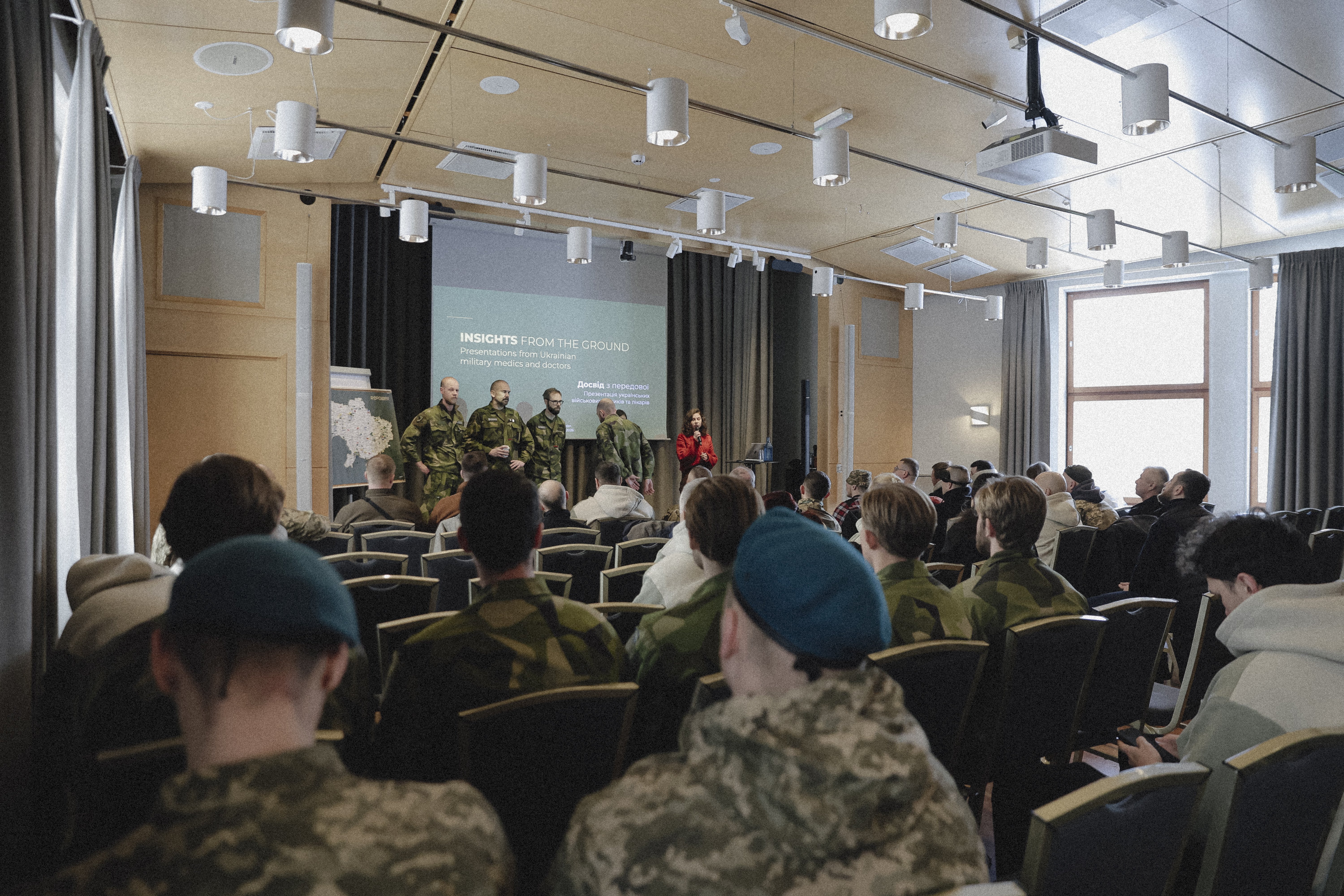
The first project involved not only military doctors and medics—the group also included civilians, such as volunteers involved in evacuation efforts and railway workers. However, after returning, the organizers faced an important question: who exactly could they help most effectively?
“Of course, everyone needs support, everyone has to address their issues, but it was clear that those who cannot simply leave on their own are the military. And then—if we were to focus on just one specific group, one project after another, who would feel the impact the most? We realized it was medics,” Serdiuk adds.
It was also after the first project that volunteers from Sweden and other countries began joining the team. “The volunteers that we are so fortunate to have with us are young and old, come from all walks of life, but they have a very clear moral compass. They want to do everything they can to support Ukraine,” Lindström says.
One of the very first volunteers was Peter, Serdiuk recalls. “Peter called us after reading a tiny article in the local newspaper about our visit. He said, ‘Hey, I saw what you are doing here. I don't have much money to support you. But maybe I can cover something for you, like transportation?’ We were extremely happy at that time, because every euro mattered. Then he said, ‘I also want to come and do anything you want—I can brew some coffee, cut buns, or just drive.’”
We meet Peter and his family during the 18th project.
“Sweden is a unique country”, underlines Ukraine’s ambassador Svitlana Zalishchuk, “because only in Stockholm do you have three demonstrations a week, where people—many Swedes—gather together to support Ukraine’s fight against Russia.”
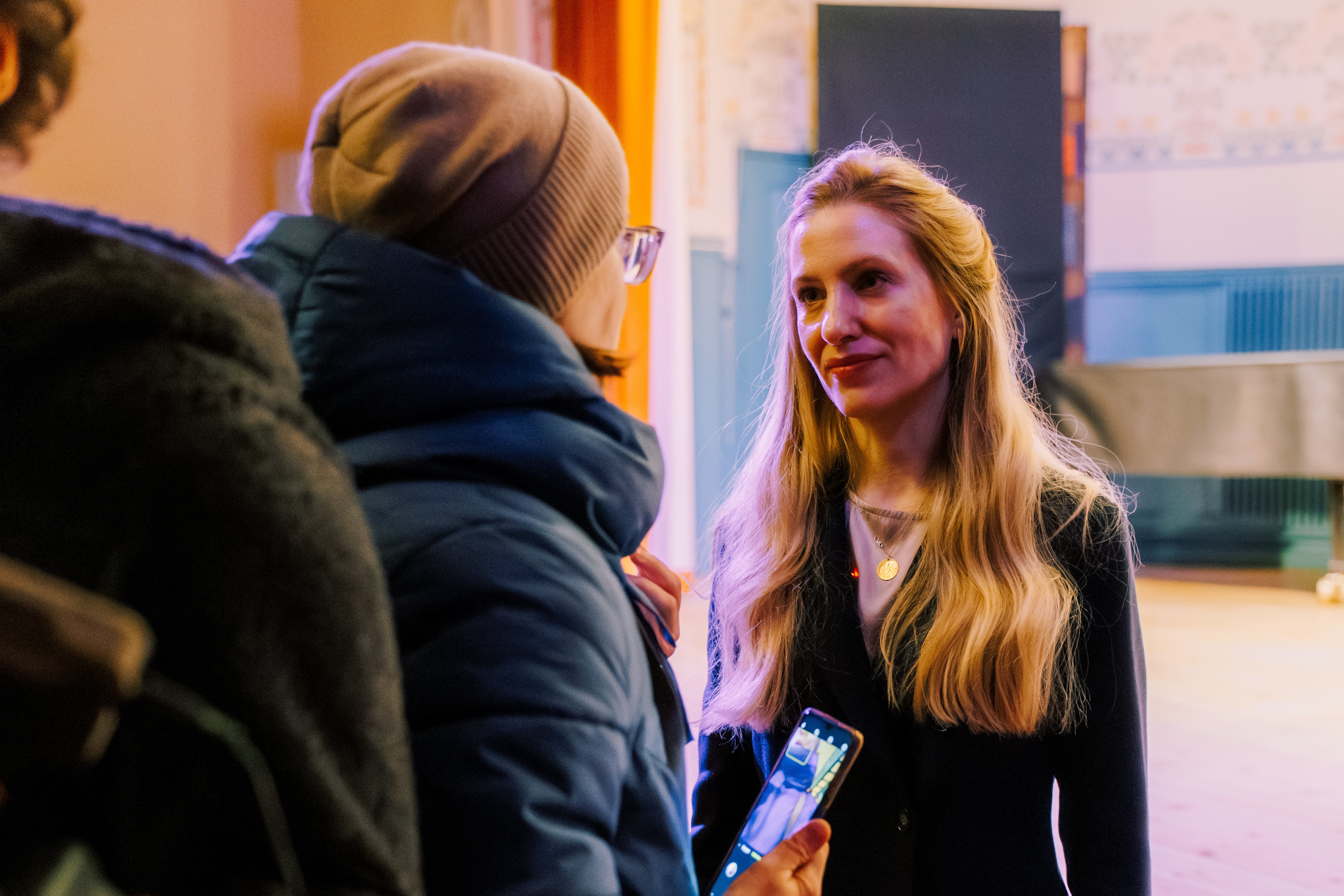
One of these demonstrations takes place outside the Russian embassy. In 2022, the square next to it was renamed and is now called “Free Ukraine.”
Returning
We drive to the stabilization point along the same road as a few weeks earlier. Just like then, our conversation with the head of the medical service is occasionally interrupted by phone calls.
“Soon after we got back here, another vehicle with its crew—including the head of the point—was hit by a Shahed drone,” Kuriachyi says. “You drop your routine work, so to speak, and direct all your efforts there.”
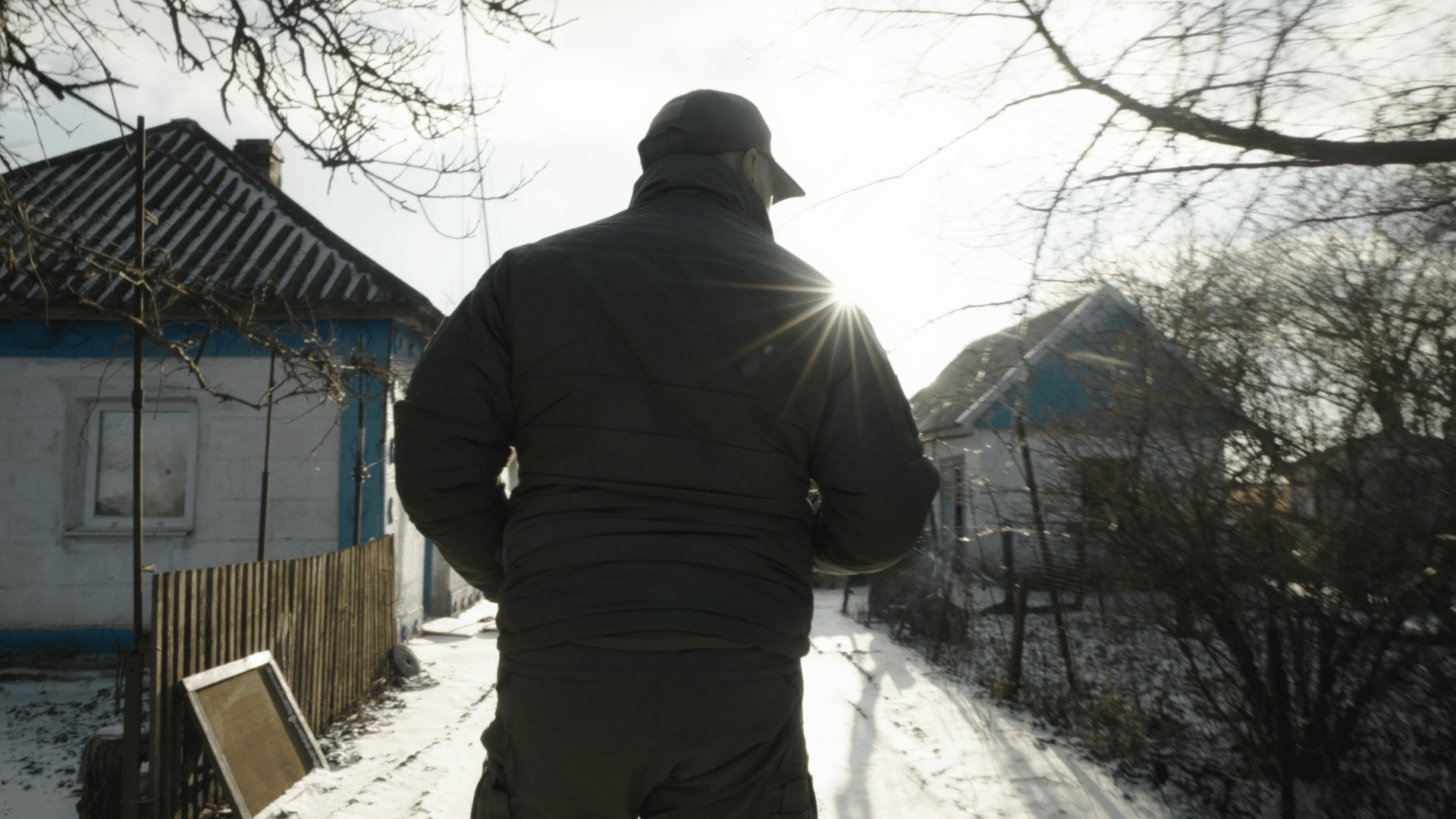
At first glance, nothing at the stabilization point has changed. But now the question we ask is different: do you feel any changes within yourselves?
Vadym jokes that he needed a few more weeks of rest after Sweden. He says, “Psychologically, I’m okay. I just haven’t fully come down yet from Repower. Those memories stay with you.”
The chief medic speaks more at length, assuring us that he rested both physically and psychologically. “But more than anything, what filled me then—and still fills me now—is pride. Pride in the fact that we have a very high standard of medical care, a high level of equipment, and most importantly, a clear understanding of what we are doing.”
Like Vadym, Kuriachyi didn’t attend an individual session with a psychologist. He says he is not used to talking about himself because “nobody really needs it; you keep your emotions to yourself because there are always people in a worse situation.” At the same time, he says very few people returned the same as they were when they arrived.
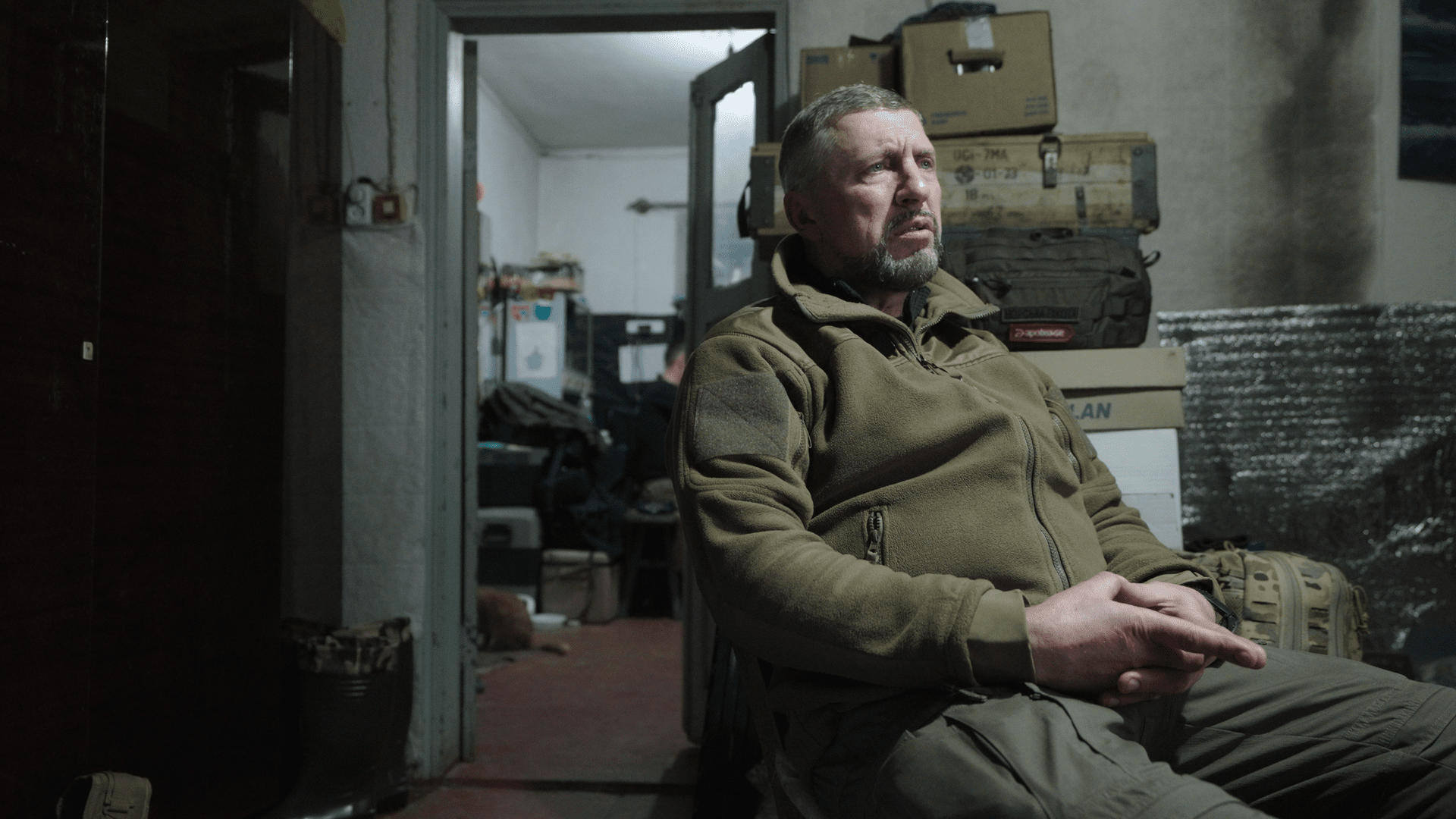
“And do you still have the amulet with you?” we ask him.
Kuriachyi says he keeps it in his car. We ask Vadym the same question. He is standing in the stabilization point with Barbarossa. Both reach under their jackets and pull out cords—holding the amulet.
“Does that amulet hold many memories?” we ask.
“I’m not in a hurry to fill up the memory card,” Vadym answers.
“We hope we’ll go to Repower again,” adds Barbarossa.
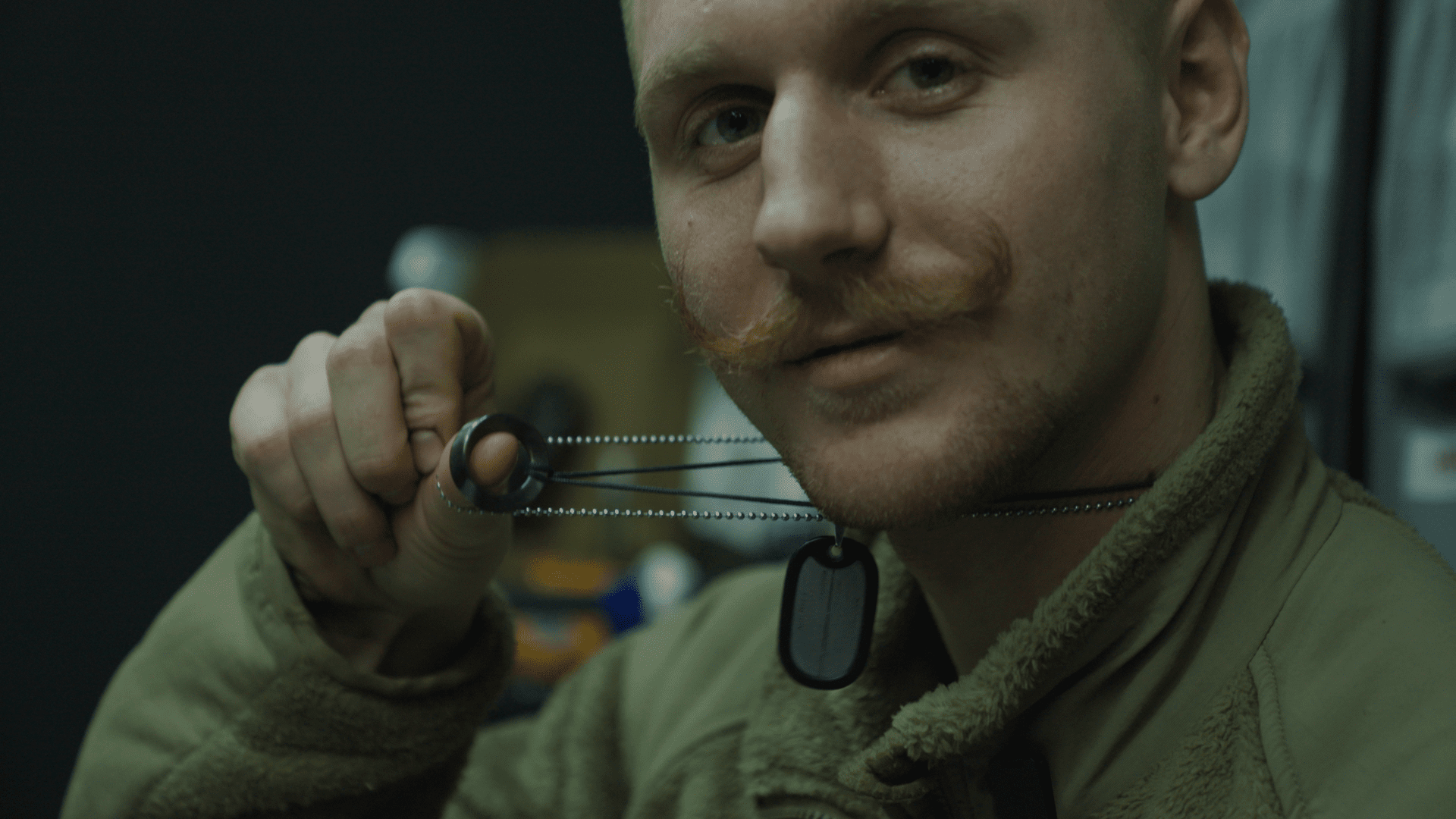
We are talking at half past one in the morning. In just a few hours, a vehicle carrying another wounded soldier will arrive—and their work will begin again.
Discuss this article:

-c439b7bd9030ecf9d5a4287dc361ba31.jpg "Photo of Katherina Popilnichenko")
-72b63a4e0c8c475ad81fe3eed3f63729.jpeg "Photo of Cyril Barabaltchouk")