- Category
- Opinion
How Ukraine Is Building an Agentic Government Under Fire

Ukraine’s digital state survived a full-scale war. The next step is building a government where citizens can state what they need, and the state delivers the outcome without queues or bureaucracy.
 Prefer U24 Media on Google
- Authors

-4258f90da45ed571f27851d158610665.jpeg "Photo of Valeriya Ionan")
When Russia launched its full-scale invasion in 2022, Ukraine's digital infrastructure kept running. Government offices were destroyed, officials displaced, missile strikes knocked out power across entire regions, and millions of people fled their homes. Through all of it, government services continued to function, because six years of building a digital state from scratch had produced something designed to work under exactly that kind of pressure. For internally displaced Ukrainians who needed to access benefits, confirm their identity, or reach state institutions while on the move, the fact that the government lived on their phone was a lifeline.
What we are building now goes further. I spent six years at the Ministry of Digital Transformation helping create the Diia ecosystem, Ukraine’s digital government app and platform, and the transition we are making now is categorically different from anything that came before. The vision is an agentic state: a model where citizens state their intentions and AI agents handle the outcome, without forms, without queues, and without the citizen needing to understand which institution handles which part of their request.
The vision is an agentic state: a model where citizens state their intentions and AI agents handle the outcome, without forms, without queues, and without the citizen needing to understand which institution handles which part of their request.
Diia AI is already delivering this, with more than one million Ukrainians using it in its first week across over 150 government services. The most requested service in its first weeks was the income certificate, which citizens can now request by simply stating that they want it, with the document delivered to their email within minutes. Diia AI is not a chatbot that answers questions and points you to a website. It completes the service inside the conversation. If a request needs human review, it routes to a person. If something goes wrong, accountability stays with the state, not with the model.
Diia is installed on 77% of Ukrainian phones, meaning essentially every adult already has the government app on their device, and that single fact puts Ukraine closer to realizing the agentic state than any other country currently attempting it. Traditional service channels remain available for those who need them—the agentic layer expands access. Most governments trying to move in this direction are missing one of two things: either citizens are not digitized enough to trust the interaction, or there is no central platform capable of carrying that level of complexity. We have both built under conditions that forced every process to be questioned and every system rebuilt faster than any peacetime strategy would have required.
On my podcast FORWARD, Luukas Ilves, who served as Chief Information Officer of Estonia and now advises Ukraine's Ministry of Digital Transformation, made an argument that has stayed with me. Estonia built one of the world's most advanced digital governments over two decades, and Ilves knows better than almost anyone what it costs to maintain a system that works. The governments most at risk in the transition to agentic AI, he said, are precisely the ones that succeeded most in the previous wave of digital transformation.

"Countries that built well-functioning digital systems trained their civil servants around those systems, earned political credibility from them, and built institutional cultures designed to protect them,” says Ilves. “When the technological model changes fundamentally, those strengths become constraints."
He calls this a competency trap. A concrete example: a country with a well-functioning digital portal for tax filing has invested years in training officials to support it, building citizen habits around it, and writing legislation that assumes it. Replacing that system with an agentic one is not a technical decision. It is a political and institutional one, and the cost of disruption rises with every year of success. The consequence, he argues, is a growing gap between what citizens experience with private-sector AI and what the state can deliver, a gap that erodes institutional trust in ways that are difficult to recover from.
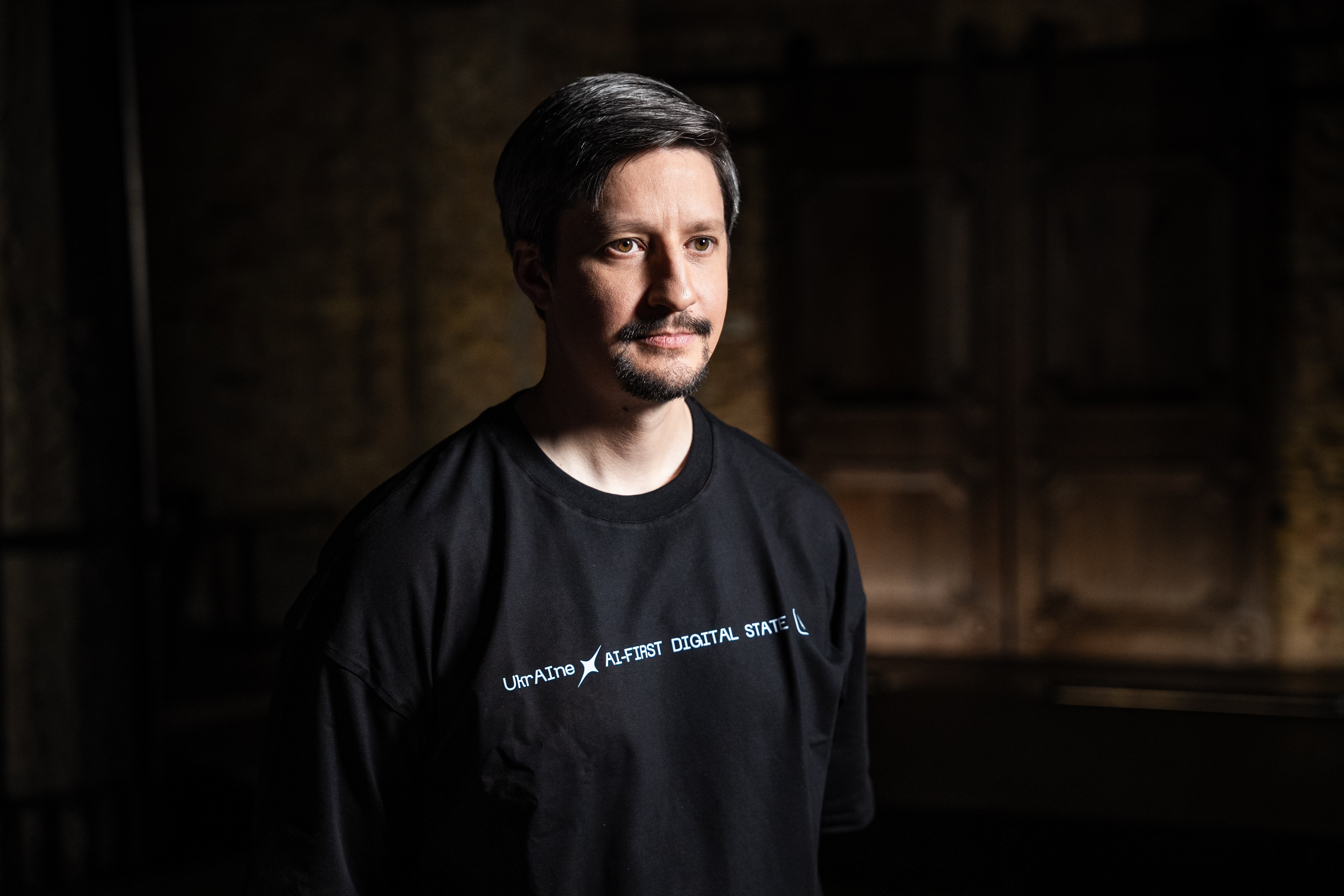
Ukraine built its digital government under conditions where there was no luxury of protecting legacy systems. Many of those systems simply did not exist, and the ones that did were being targeted. That forced a habit of continuous reinvention that is now exactly what the agentic transition demands, and it is a habit that well-functioning bureaucracies with high citizen satisfaction scores find genuinely difficult to develop.
The infrastructure we are building reflects this. Syaivo, a national large language model developed in partnership with Kyivstar, will process Ukrainian language accurately and keep sensitive government data within Ukraine's own infrastructure. An AI Factory, with NVIDIA and HP as confirmed partners, is providing sovereign computing capacity built by Ukrainian engineers. Our ambition is to be among the top three countries globally for AI adoption in the public sector by 2030, and the trajectory of the last six years, from 102nd to 5th place in digital public services, is the foundation we are building from.
On FORWARD, Oleksandr Bornyakov, who until recently served as Minister of Digital Transformation, described what the next five years will look like in practice. A citizen changing their address, registering a newborn, or accessing any government service will do so through a single conversational interface. The citizen states an intention and receives a result. Diia AI is already doing this, under wartime conditions, for over a million users.

The governments building agentic infrastructure now are accumulating experience, data, and institutional capacity that no amount of deliberation can produce. I know this because we started in 2019, continued through a pandemic, and kept building through a full-scale war. The countries that will lead the agentic era are not the ones with the most sophisticated frameworks. They are the ones who started. We started. The question for every other government is simply when they decide to.
This piece draws on a conversation recorded for FORWARD, a podcast on how international partnerships with Ukraine are actually built in practice.
Discuss this article:
-4a56a6b482ec132402c16ef6fcabf9a2.png)



-f3430f0449615e9897dff835086ac204.jpg "Ukraine Broke With a Soviet-Era Military System and Rebuilt It Around the Soldier")
-e126c16a85d580738cf2d57e760b80a3.jpeg "Photo of Vladyslav Greziev")